
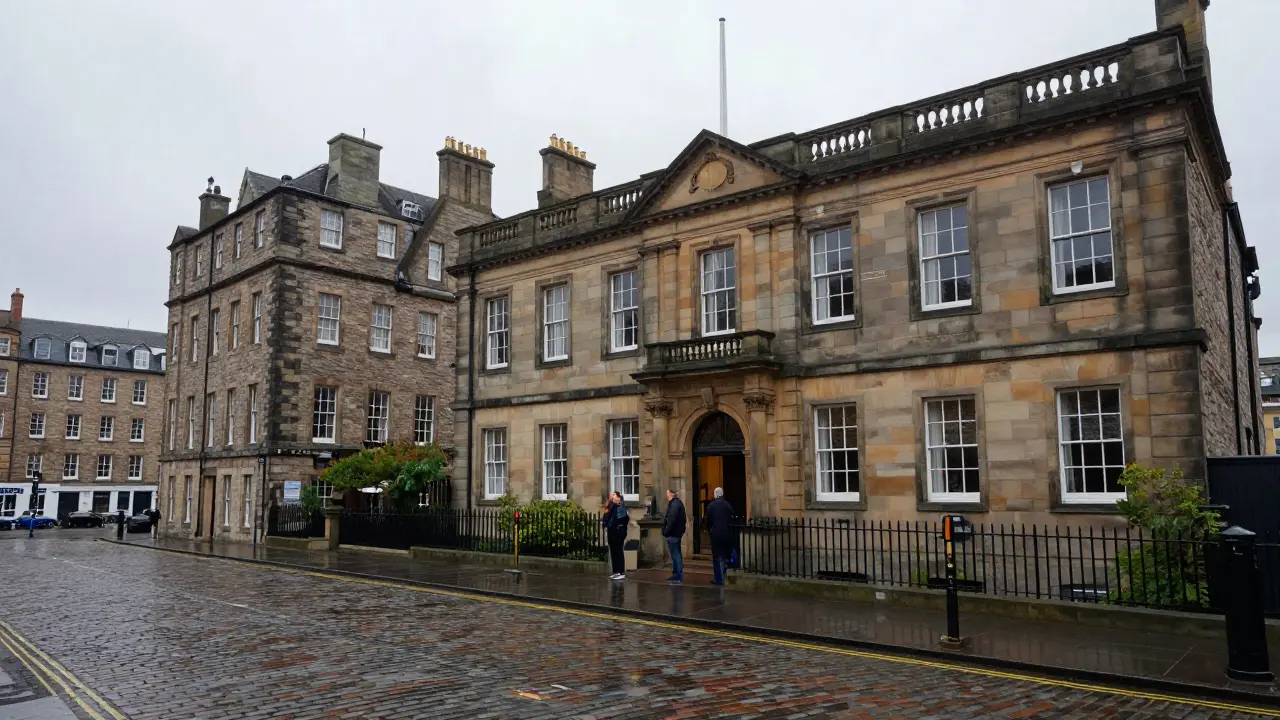
Walking up the Royal Mile in Edinburgh feels like stepping into a movie set. The architecture is stunning, the air smells of rain and old stone, but there is one building that stops most tourists in their tracks. It’s not because it looks particularly grand from the outside. In fact, it blends quietly into the historic street. But once you step inside Surgeons' Hall Museums, located at 40 Nicolson Street, you realize you are standing on ground that has witnessed centuries of human curiosity, fear, and scientific breakthrough.
This isn’t just another dusty cabinet of curiosities. It is the headquarters of the Royal College of Surgeons of Edinburgh (RCSEd), one of the oldest surgical colleges in the world. For anyone visiting Edinburgh who wants to understand how medicine evolved from bloodletting and bone-setting to modern life-saving surgery, this place is essential. Whether you are a medical student, a history buff, or someone who just wants to see what an anatomical collection looks like without feeling squeamish, here is everything you need to know about planning your visit.
The Story Behind the Walls
To appreciate what you are seeing, you have to understand where it came from. The RCSEd was founded in 1505 by King James IV of Scotland. That makes it older than many universities in Europe. For hundreds of years, surgeons were not doctors. They were tradesmen, often grouped with barbers. The "barber-surgeon" was a common figure in medieval streets, pulling teeth and lancing boils alongside cutting hair.
The move to Nicolson Street in the late 19th century marked a shift. Surgery was becoming a science. The building itself is a testament to this transition. It houses not just exhibits, but active classrooms and research facilities. When you walk through the doors, you are walking through a living institution, not a dead relic. This context changes how you view the artifacts. They aren't just objects; they are tools used by men and women who were trying to solve the ultimate puzzle: how does the human body work, and how do we fix it when it breaks?
Navigating the Anatomical Collection
Let’s address the elephant in the room. Or rather, the preserved human specimens. The Anatomical Collection is the crown jewel of the museum, and yes, it includes human remains. If you are sensitive to gore or visceral imagery, take a deep breath before entering. The presentation is clinical, respectful, and educational, not sensationalist.
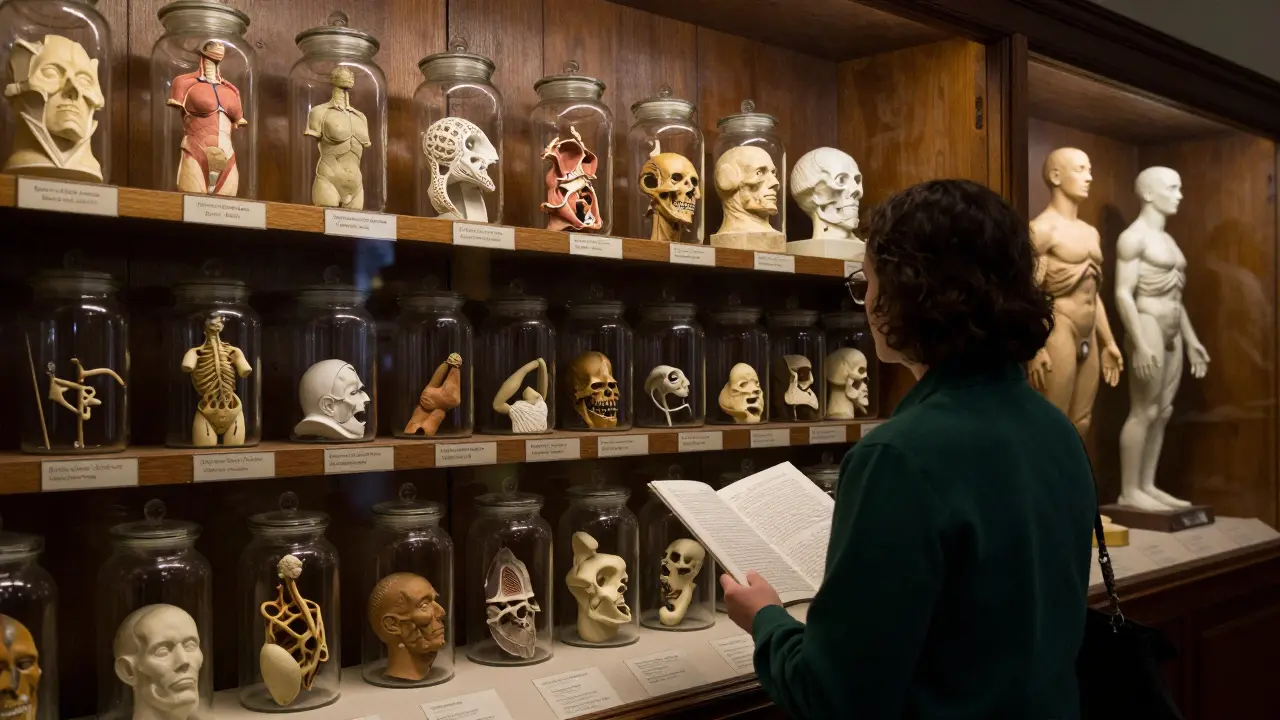
The collection features over 1,600 specimens. You will see:
- Plaster casts: Detailed replicas of muscles, nerves, and organs. These were crucial for teaching anatomy before dissection became widely available and ethical guidelines tightened.
- Preserved specimens: Jars containing various tissues and organs, preserved in formalin. These show pathologies-diseases and conditions-that affected people in previous centuries.
- Skeletal collections: Complete skeletons and individual bones, some showing signs of trauma or disease.
One of the most striking aspects is the label system. Each specimen comes with a card detailing its origin, the condition it represents, and sometimes the story of the person it belonged to. This adds a layer of humanity. You start to realize these were real people. Many of the early specimens came from unclaimed bodies or those executed for crimes, a dark chapter in medical history that the museum does not shy away from explaining.
The Surgical Instruments Gallery
If the anatomy section is about the 'what', the Surgical Instruments gallery is about the 'how'. This room is a treasure trove for anyone interested in design and engineering. The instruments range from the bizarre to the beautifully precise.
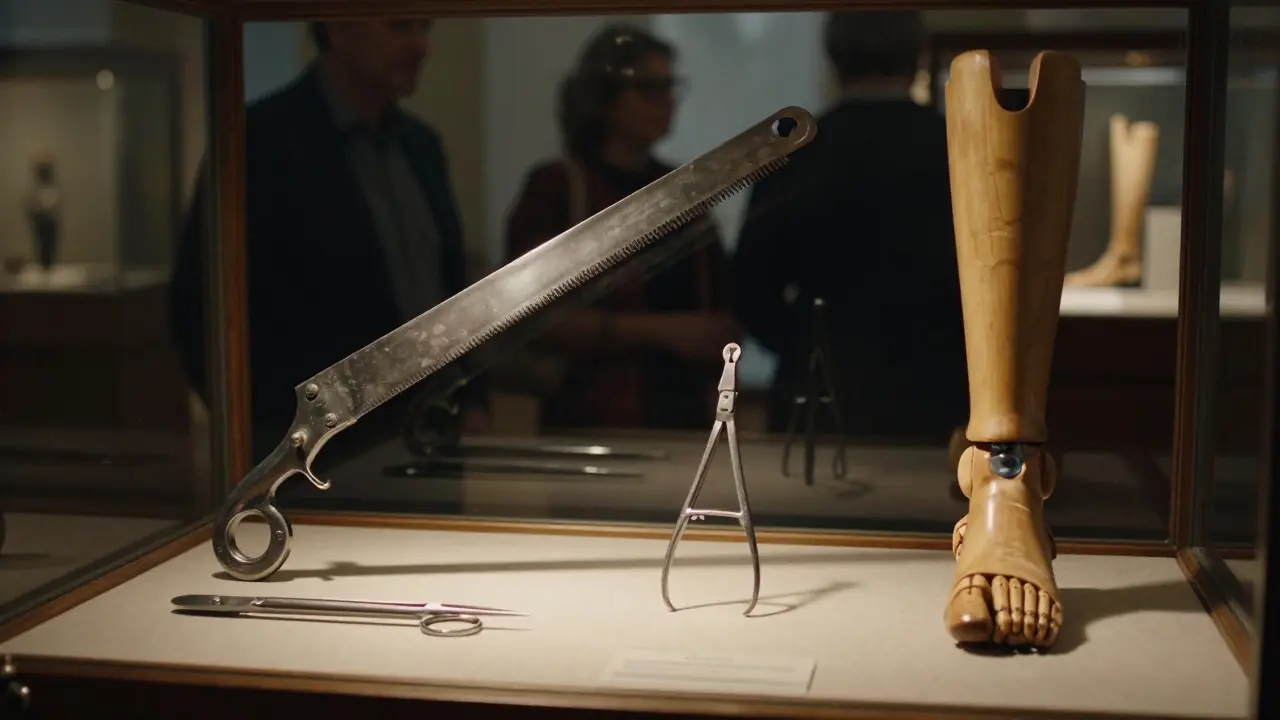
You’ll see trepanation drills used to bore holes into skulls, massive saws for amputations, and delicate forceps for eye surgery. Some of these tools look more like torture devices than medical equipment, which highlights the evolution of anesthesia. Before ether and chloroform, speed was the only mercy a surgeon could offer. The instruments reflect this urgency. Later pieces, from the 19th and 20th centuries, show a shift toward precision and specialization as understanding of physiology improved.
A particular highlight is the display of early prosthetics. Wooden legs, mechanical hands, and artificial eyes demonstrate how surgeons tried to restore function and dignity to patients long before modern bio-engineering. It’s a reminder that surgery has always been about more than just saving lives; it’s about improving quality of life.
Historical Artifacts and Portraits
Beyond the bodies and the blades, the museum holds a rich archive of art and documents. Portraits of famous surgeons line the walls, reminding visitors of the individuals behind the profession. Names like John Hunter and Alexander Monro come up frequently. Hunter, often called the father of modern surgery, revolutionized the field by emphasizing observation and experimentation over tradition.
The library and archive sections contain rare books and manuscripts. While not all are on public display, excerpts and facsimiles are available. Seeing a page from a 16th-century anatomy text, with its woodcut illustrations, gives you a sense of how knowledge was transmitted. The language is archaic, the drawings stylized, but the intent is clear: to teach and to learn.
There are also displays on the social history of surgery. How did nurses fit into the picture? What was the role of women in medical education, historically barred from many institutions? The museum touches on these themes, providing a broader context for the technical exhibits.
Practical Information for Your Visit
Planning your trip to Surgeons' Hall is straightforward, but there are a few things to keep in mind to make the most of it.
| Detail | Information |
|---|---|
| Address | 40 Nicolson Street, Edinburgh, EH8 9DW |
| Opening Hours | Tuesday-Friday: 10:00-17:00 Saturday: 10:00-13:00 Closed Sundays and Mondays |
| Admission | Free entry. Donations welcome. |
| Guided Tours | Available by booking. Recommended for groups. |
| Accessibility | Lift access available. Wheelchair friendly. |
Getting There: Nicolson Street is a short walk from Princes Street or Waverley Station. You can also take bus number 26 or 27, which stop nearby. Parking is limited in the area, so public transport is usually easier.
Time Needed: Plan for about 45 minutes to an hour if you want to read the labels carefully. If you book a guided tour, allow 90 minutes. The guides are knowledgeable and can answer specific questions about the history and science.
Etiquette: Photography is generally allowed in the main galleries, but flash is prohibited. Be respectful in the Anatomical Collection. This is a place of learning and remembrance, not a photo op. Keep voices down and follow staff instructions.
Who Should Visit?
Is this museum for everyone? Probably not. If you get dizzy looking at pictures of needles, the Anatomical Collection might be too much. However, if you have a general interest in history, science, or Edinburgh’s cultural landscape, it is a must-see.
It pairs well with other nearby attractions. The Royal Infirmary Museum is close by, offering a complementary perspective on hospital history. You can easily combine a visit to Surgeons' Hall with a walk through the Old Town, ending with dinner in the Grassmarket area.
For students and professionals, the museum offers deeper dives into specific topics. Check their website for special exhibitions or lectures. They often host events that explore contemporary issues in surgery, linking past practices to current debates.
Frequently Asked Questions
Is Surgeons' Hall suitable for children?
Yes, but with caution. Children under 12 should be accompanied by an adult. The Anatomical Collection contains human remains, which may be disturbing for younger visitors. The Surgical Instruments gallery is generally more approachable for kids interested in history and mechanics. Parents should assess their child's sensitivity to such topics beforehand.
Do I need to book tickets in advance?
No, admission is free and open to walk-ins during opening hours. However, if you wish to join a guided tour, especially for groups, booking in advance is highly recommended as spaces are limited.
Can I take photos in the Anatomical Collection?
Photography is permitted in most areas, but flash photography is strictly prohibited to preserve the specimens. Please be mindful of other visitors and maintain a respectful atmosphere. Some specific displays may have restrictions, so look for signage.
What is the connection between Surgeons' Hall and the University of Edinburgh?
The Royal College of Surgeons of Edinburgh (RCSEd) is an independent professional body, not part of the university. However, it has strong historical and academic ties with the University of Edinburgh's medical school. Many professors hold joint appointments, and the college plays a key role in postgraduate surgical training.
Are there any cafes or shops on-site?
There is no cafe within the museum itself. However, Nicolson Street and the surrounding Teviot Place area have several cafes and restaurants. There is a small gift shop selling books, medical-themed souvenirs, and educational materials related to the museum's collections.