
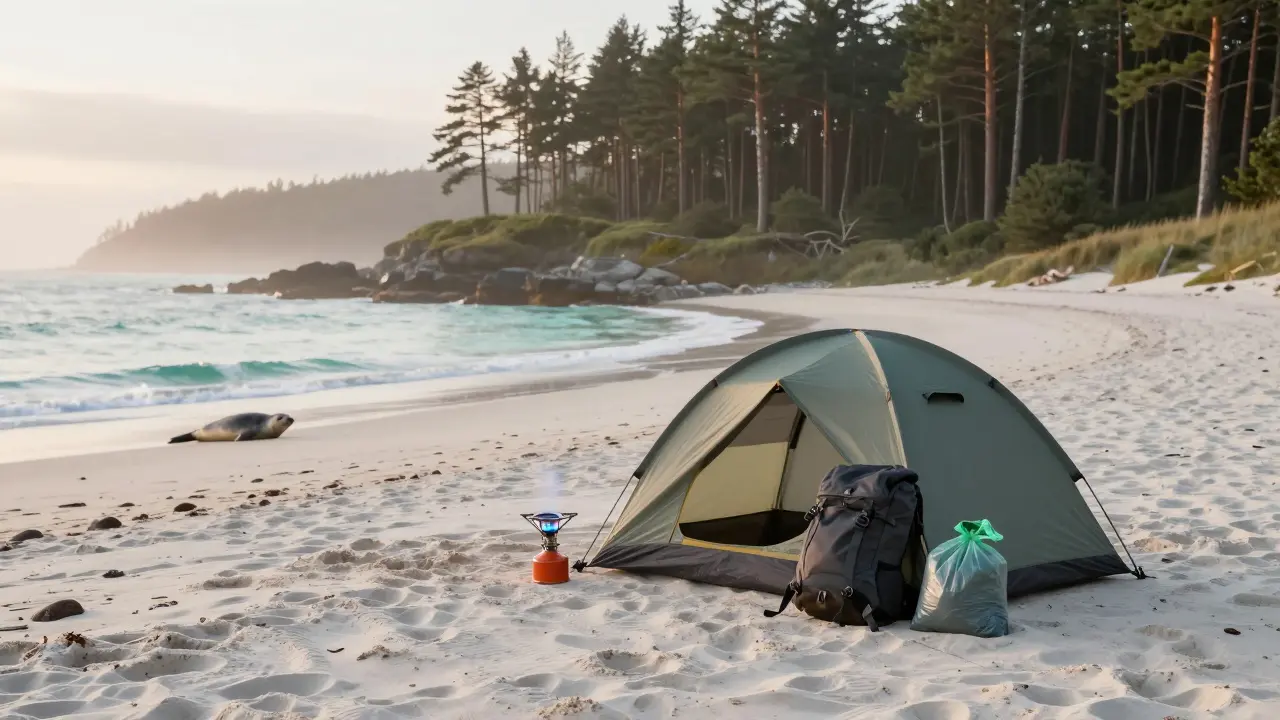
Scotland’s coastline is wild, beautiful, and surprisingly quiet-if you know where to go. Beach camping here isn’t just about setting up a tent near the water. It’s about respecting the land, the law, and the people who live there. And yes, it’s legal… but only if you do it right.
What You Can and Can’t Do
Wild camping is allowed in Scotland under the Scottish Outdoor Access Code. That means you can pitch a tent on most beaches, dunes, and coastal paths… as long as you’re not on private land marked as off-limits. But this isn’t a free-for-all. The rules are simple, but they’re strict.
You can’t camp in groups larger than four people without permission. You can’t light open fires unless you’re using a portable stove. You can’t stay more than two or three nights in one spot without asking the landowner. And you absolutely cannot leave behind trash, food scraps, or toilet paper.
There’s no official permit system, but that doesn’t mean you’re free to do whatever you want. Local councils and land managers have started cracking down on irresponsible campers-especially in places like the Isle of Arran, the Moray Firth, and the Western Isles. If you show up with a loud speaker, a BBQ, or a pile of plastic bags, you’ll get asked to leave. And you won’t be welcome back.
Leave No Trace: How to Camp Without Leaving a Trace
Leave No Trace isn’t a slogan. It’s a habit. And in Scotland, it’s the difference between being seen as a responsible camper or a nuisance.
- Pack out everything. That includes food wrappers, toilet paper, even biodegradable fruit peels. Animals don’t need your banana skins. And yes, your compostable cup still takes months to break down in salt air.
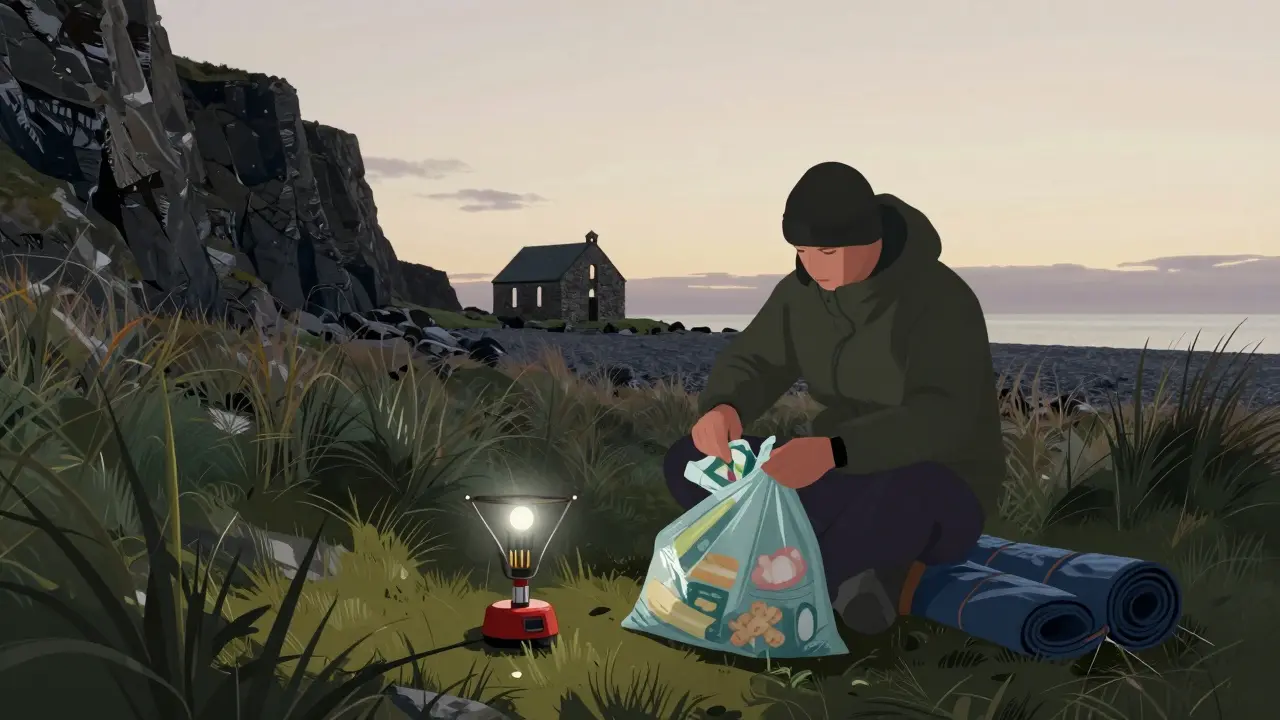
- Use a portable stove. Open fires are banned on most beaches. They damage the dune grasses, scare off nesting birds, and leave blackened rocks that never heal. A small gas stove is safer, cleaner, and just as effective.
- Waste wisely. Dig a hole at least 15cm deep and 60 meters from water sources, trails, and campsites. Cover it well. Don’t use wet wipes-even the "biodegradable" ones. They don’t break down in sand.
- Keep noise down. No music after 9 p.m. No shouting. No fireworks. You’re not in a festival. You’re in a quiet place where seals, otters, and rare birds still live.
- Respect livestock. Many coastal areas are grazed by sheep or cattle. Don’t let your dog chase them. Don’t camp near farm gates. Close them behind you.
One of the most common mistakes? Leaving behind fire rings. People think they’re helping by building a circle of stones. But those stones trap heat, kill the soil, and make it impossible for native plants to regrow. Walk away. Use your stove.
Best Beach Camping Spots in Scotland
Not all beaches are equal. Some are crowded. Some are protected. Some are downright dangerous at high tide. Here are five spots that strike the perfect balance: access, beauty, and respect.
1. Achmelvich Beach, Northwest Highlands
White sand, turquoise water, and almost no people. This beach is backed by ancient pine forest and sits at the end of a single-track road. There’s no electricity, no shops, no signs. Just you, the tide, and the sound of waves. Pitch your tent on the high ground, away from the dunes. The water is cold-swim at your own risk. But the sunrise? Unbeatable.
2. Camusdarach Beach, Morar
Known as the "Maldives of Scotland," this crescent-shaped beach has soft, pink-tinged sand and clear water. It’s part of the Glenfinnan Estate, which allows camping with permission. Email them ahead of time. You’ll get a map, a few tips, and a quiet spot away from the main path. Bring a headlamp. The path from the parking lot is steep and unlit.
3. Traigh Mhor, Isle of Barra
This is the only beach in the UK where planes land on the sand. The runway is tidal, so check the tide times before you go. The camping area is just behind the dunes, with views of the Atlantic and the island’s famous crofting cottages. No showers. No bins. Just salt air and silence. Locals here are proud of their land. Treat it with care.
4. Sandwood Bay, Sutherland
It’s a 4-mile walk in from the nearest road. That’s the point. This beach is wilder than most. No signs. No path. Just a long, empty stretch of sand ending in cliffs and a ruined chapel. It’s a pilgrimage for serious campers. You’ll need a map, a compass, and strong boots. Don’t come here unless you’re prepared to carry everything in-and everything out.
5. Traigh an Lèith, Isle of Mull
A hidden gem on the east coast of Mull. The beach faces the Sound of Mull, so you get calm water and stunning sunsets. The camping area is grassy, slightly elevated, and just far enough from the water to avoid high tides. There’s a public toilet nearby, but no running water. Bring your own. The local pub in Tobermory will let you refill water bottles if you ask nicely.
What to Pack for Beach Camping
Forget the fancy gear. You don’t need a $1,000 tent. But you do need these essentials:
- High-sided tent-wind is constant here. A dome tent will flip. Look for one with a low profile and strong guy lines.
- Windproof stove-the MSR PocketRocket or Jetboil Flash work best. Gas canisters are sold in most villages.
- Water filter or purification tablets-rainwater is safe, but beach runoff isn’t. Don’t risk it.
- Insulated sleeping pad-sand pulls heat out of your body fast. A regular foam pad won’t cut it.
- Sealed trash bags-double-bag everything. Wet sand clings to plastic. You don’t want to leave a single wrapper behind.
- Headlamp and extra batteries-the sun sets early in Scotland, even in summer.
And please, leave the inflatable pool toys at home. They don’t belong here.
When Not to Go
Some beaches are off-limits during nesting season. From April to August, many coastal areas protect rare birds like puffins, terns, and oystercatchers. You’ll see signs with black-and-white bird silhouettes. Stay away. Even if you don’t see them, they’re there.
Also avoid camping during high tides. The North Sea and Atlantic swell can rise 6 meters in places like the Firth of Forth. Check tide times on the BBC Weather Coast page. If your tent is within 50 meters of the waterline at high tide, you’re too close.
And don’t camp on beaches with red flags. Those mean dangerous currents. Even strong swimmers drown here every year.
Final Thought: You’re a Guest
Scotland’s beaches aren’t yours to use. They belong to the land, the sea, and the people who’ve lived beside them for centuries. The rules aren’t there to stop you. They’re there to protect what’s left.
If you follow them, you’ll find places where the only footprints are yours-and the seals, the gulls, and the tide.
Is beach camping legal in Scotland?
Yes, beach camping is legal under the Scottish Outdoor Access Code, which grants the public the right to access most land for recreation. But you must follow specific rules: camp in small groups (no more than four people), avoid private land, stay no more than two or three nights in one spot, and never light open fires. You must also follow Leave No Trace principles.
Can I camp anywhere on a Scottish beach?
No. While access rights are broad, there are restrictions. You cannot camp on private land marked with signs, near farms, or in protected wildlife areas. Some beaches are part of national nature reserves or military zones and are completely off-limits. Always check local notices and avoid camping near houses, boatyards, or marked trails.
Do I need a permit to camp on a Scottish beach?
No formal permit is required for wild camping on most beaches. However, some landowners-especially on islands like Arran or Mull-ask that you email them in advance for permission. This isn’t a legal requirement, but it’s a sign of respect. Many land managers keep a log of campers to prevent overcrowding. A quick message goes a long way.
What’s the best time of year for beach camping in Scotland?
Late May to early September offers the mildest weather and longest daylight hours. June and July are the most popular, but also the busiest. For solitude, aim for May, late August, or early September. Water temperatures rarely rise above 15°C, so don’t expect swimming unless you’re tough. Always check the forecast-Scottish weather changes fast.
Can I bring my dog camping on Scottish beaches?
Yes, but only if you keep your dog under control. Many beaches have seasonal restrictions during bird nesting season (April-August). Always keep your dog on a lead near livestock and never let it chase seals or birds. Clean up after your dog immediately. Some areas, like the Isle of Coll, ban dogs entirely during nesting season. Check local rules before you go.
Are there toilets or showers at beach campsites in Scotland?
Almost never. Most beach campsites are completely wild. There are no bins, no running water, and no flush toilets. You must bring your own water, use a portable stove, and dig a cathole for human waste at least 60 meters from water sources. Some popular spots like Traigh an Lèith on Mull have public toilets nearby, but don’t rely on them. Plan ahead.
Next time you think about heading to the coast, remember: the best campsites aren’t the ones with the most Instagram likes. They’re the ones where the sand still feels untouched, the air still smells like salt and seaweed, and the only noise is the tide.
Comments (13)
-
Teja kumar Baliga March 5, 2026
Scotland’s beaches are sacred spaces, not camping grounds. I’ve camped at Sandwood Bay and Traigh Mhor-no one else was there. Just the wind, the gulls, and the tide. Bring a stove, pack out everything, and leave the ego at home. It’s not about you. It’s about keeping it wild.

-
Zelda Breach March 7, 2026
Let me get this straight-you’re telling me I can’t light a fire on a beach in Scotland but I can burn down half of California and nobody cares? This is performative virtue signaling wrapped in a checklist. Who even made these rules? A committee of librarians with binoculars?

-
Alan Crierie March 7, 2026
Hi there, I just wanted to say thank you for writing this with such care. 🌿 I’ve been camping along the NW coast for years, and it’s rare to see someone explain Leave No Trace without sounding preachy. The part about fire rings? That hit me. I used to build them too-thought I was helping. Now I just carry a stove. Small changes, big difference.

-
Nicholas Zeitler March 8, 2026
One thing I’d add: always double-bag your trash-even the compostable stuff. I saw a single banana peel on Achmelvich last summer. It was still there, two weeks later. And yes, the wind? It’s not just a breeze-it’s a hurricane with a grudge. A low-profile tent with guy lines isn’t optional. It’s survival.
Also-no, your inflatable unicorn pool toy doesn’t belong here. Ever.

-
Paritosh Bhagat March 10, 2026
People think they’re being 'eco-friendly' by using a stove, but let’s be real-gas canisters are just plastic pollution with a flame. You’re still destroying the planet, just in a quieter way. Why not just go camping in a city park where the rules are simpler? At least there, someone cleans up after you.

-
Tiffany Ho March 12, 2026
I love this so much. I went to Mull last year and forgot my water filter. The pub owner gave me a jug of fresh water and even showed me where the best spot was. People here are kind. Just be quiet, be clean, and say thank you. That’s all.

-
michael Melanson March 12, 2026
Agreed with Alan. The fire ring thing ruined me. I used to think it was romantic-stone circle, cozy flames. Now I know it’s just vandalism. I’ve stopped doing it. I carry a stove. It’s lighter. It works better. And I sleep better knowing I didn’t kill the soil.

-
Kenny Stockman March 12, 2026
Been to all five spots. Traigh an Lèith is my favorite. The sunset over the Sound of Mull? Pure magic. And yeah, the pub lets you refill bottles. Just smile, ask nicely, and leave a pound in the tip jar. No big deal. The locals notice. They remember.

-
Ben De Keersmaecker March 13, 2026
There’s a subtle but critical grammatical error in the section on waste disposal: 'Dig a hole at least 15cm deep and 60 meters from water sources.' The unit should be 'metres' in British English. It’s a minor point, but precision matters-especially when advocating for environmental stewardship. Also, 'cathole' is correct, but it’s rarely defined. A brief explanation might help international readers.

-
Aaron Elliott March 13, 2026
One must question the underlying epistemology of this 'Leave No Trace' paradigm. Is the absence of human trace truly ecological preservation-or merely a performative aesthetic of purity? The romanticization of solitude in wild spaces ignores the colonial underpinnings of 'untouched' landscapes. Who defined 'wilderness'? Was it not the same forces that displaced indigenous stewardship? The answer, I fear, is not in the stove-but in the silence we refuse to hear.

-
Chris Heffron March 15, 2026
Love this. Just got back from Arran. Sent an email to the estate like it says-got a reply in 2 hours. Map, tips, even a warning about the foxes near the dunes. So simple. So human. 😊

-
Adrienne Temple March 15, 2026
My mom says the best camping is the kind you forget about. No selfies. No maps. Just the tide. I took her to Camusdarach last June. She cried. Said it felt like the world was breathing. I didn’t say anything. Just held her hand. We didn’t need to.

-
k arnold March 17, 2026
So let me get this straight-I can’t bring a BBQ, but I can fly 6,000 miles to sit on a rock and eat cold beans out of a can? This is just expensive guilt.
