
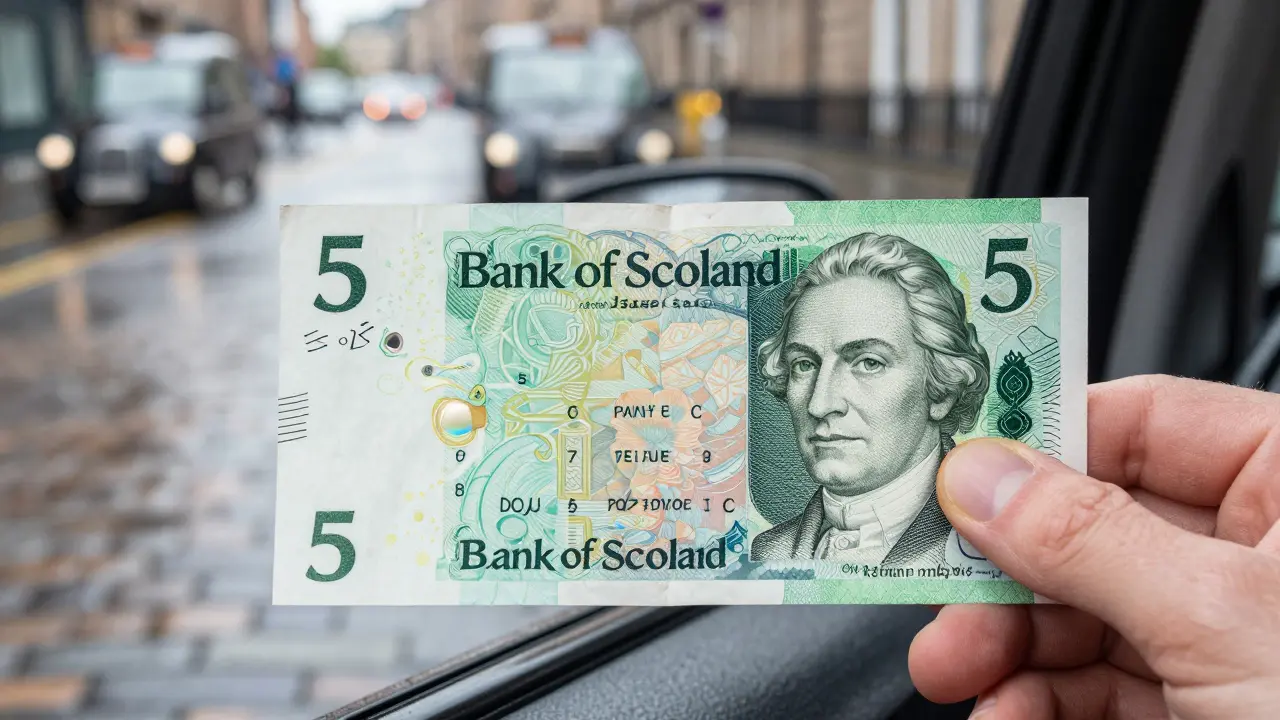
You land at Glasgow or Edinburgh airport, grab your luggage, and head straight to the first cash machine. You need a few notes for a taxi or a quick lunch. The machine spits out a crisp £5 note issued by Bank of Scotland. You hand it over, and the driver looks confused. "Where did you get this?" he asks. It happens more often than you think. Scotland has its own quirks when it comes to money that can catch even seasoned travelers off guard.
If you are visiting Scotland in 2026, understanding how money works here is crucial. You don't need to learn a new language, but you do need to know the rules of the road for pounds sterling. This guide cuts through the confusion about Scottish banknotes, where to find reliable ATMs, how card payments work, and whether you should swap cash before you arrive.
The Truth About Scottish Banknotes
First, let's clear up the biggest myth: Scottish money is not different from English money. When you use a pound in Scotland, you are using the same currency as in London, Cardiff, or Belfast. The value is identical. One pound equals one hundred pence everywhere in the United Kingdom.
However, the physical notes look different. In England, all paper money is printed by the Bank of England. In Scotland, three commercial banks have the legal right to issue their own notes. These are the Bank of Scotland, Royal Bank of Scotland, and Clydesdale Bank.
You will see distinct designs on these notes. A £5 note from the Royal Bank of Scotland might feature the poet Robert Burns, while a Bank of Scotland note could show the scientist James Watt. They feel slightly different too-often thinner or with different watermarks compared to English notes.
Here is the catch: while these notes are legal tender within Scotland, they are not always accepted outside of it. If you take a Scottish note back to England, many shops, pubs, and even some banks may refuse it. They simply aren't used to spotting counterfeits on Scottish designs. So, if you plan to travel south after your Scottish adventure, try to spend your Scottish notes there or exchange them at a major bank branch before you leave.
ATMs: Where to Go and What to Avoid
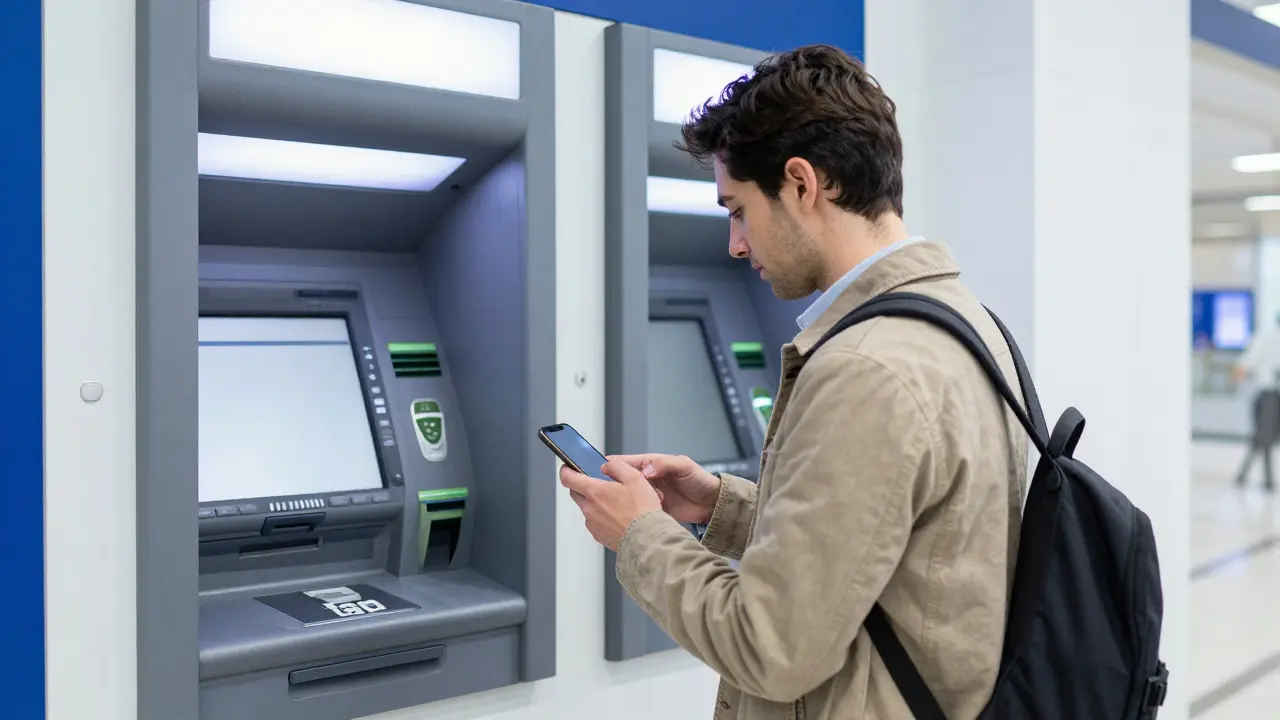
Finding an ATM in Scotland is easy, but choosing the right one matters. Your goal is to avoid hidden fees that eat into your budget. Most ATMs in Scotland belong to major networks like Plus, Cirrus, or Link. Look for logos from big banks such as Lloyds, Barclays, Santander, or NatWest.
Avoid independent ATMs found in tourist hotspots, bars, or small convenience stores. These machines often charge high withdrawal fees, sometimes upwards of £3 per transaction, regardless of how much you take out. They also might offer dynamic currency conversion (DCC), which we will discuss next.
When you withdraw cash, always choose to be charged in the local currency, which is GBP (Pounds Sterling). If the ATM screen asks, "Would you like to be charged in your home currency?" say no. This option lets the ATM operator set the exchange rate, which is usually terrible. Let your own bank handle the conversion; they typically use the interbank rate, which is much fairer.
In cities like Edinburgh and Glasgow, ATMs are plentiful. In rural areas, especially in the Highlands or Islands, they can be sparse. Plan ahead. Withdraw enough cash for a day or two when you are in a town, so you aren't stranded without funds in remote villages.
Cards Are King: Contactless and Mobile Payments
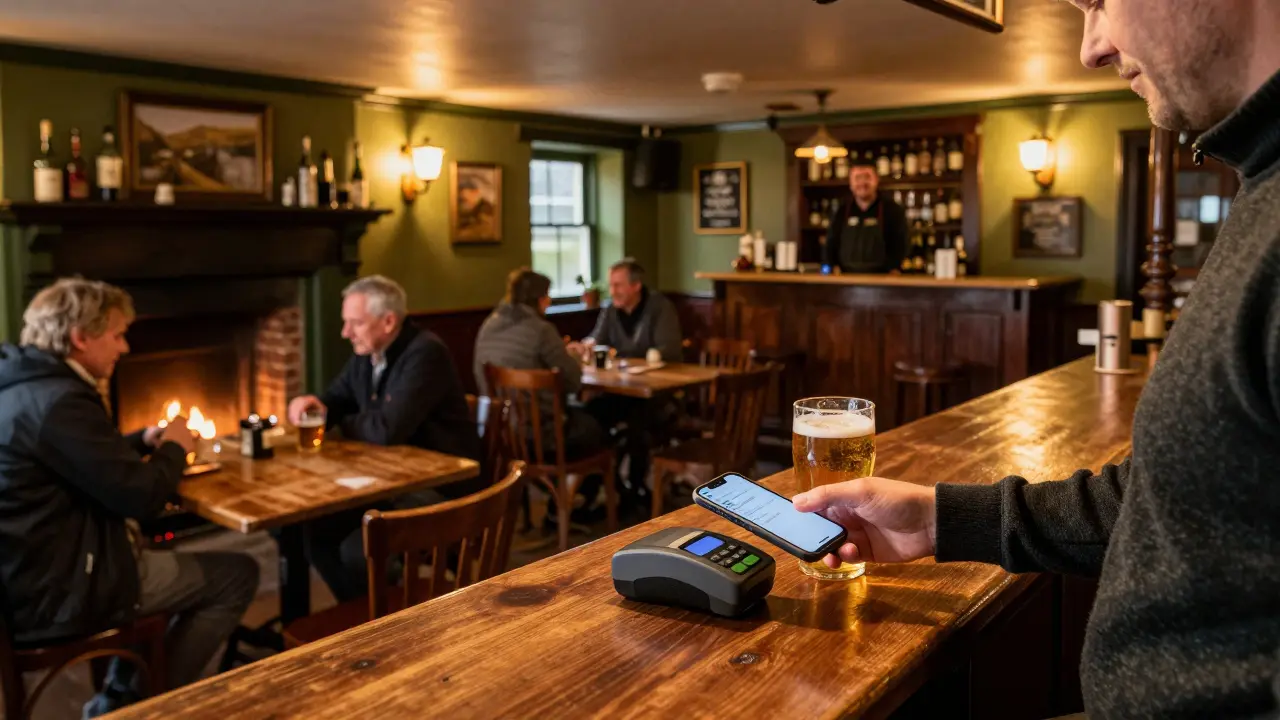
Scotland is incredibly cash-friendly, but it is also very card-friendly. In fact, most people rarely carry cash anymore. You can pay for almost everything with a contactless card or mobile wallet. From a pint in a pub to a train ticket, tap-and-go is the norm.
Visa and Mastercard are universally accepted. American Express is less common and often only available in larger hotels or department stores. Don't rely on it for everyday purchases.
Contactless limits in the UK are currently quite high. You can spend up to £100 per transaction without needing to enter your PIN. For higher amounts, the terminal will prompt you to insert your card or tap your phone again. This makes shopping for souvenirs or dining out seamless.
Mobile payments via Apple Pay, Google Pay, or Samsung Pay work just as well as physical cards. If you forget your wallet, your phone is likely enough to get you through the day. Just ensure your phone is charged.
Exchange Rates and Pre-Travel Swaps
Should you exchange money before you arrive? Generally, no. Airport currency exchanges and hotel desks offer poor rates and high commissions. You will get far better value by withdrawing cash from an ATM in Scotland or paying with your card directly.
If you must have cash upon arrival, consider ordering traveler's checks or a specific amount of pounds from your local bank branch weeks in advance. Some banks allow you to order foreign currency online with pickup at the branch, offering better rates than airport kiosks.
Keep an eye on the exchange rate between your home currency and the Pound Sterling. Rates fluctuate daily. Apps like Wise or Revolut can help you monitor rates and notify you when it's a good time to convert. However, remember that the fee structure of your own bank plays a bigger role in the final cost than minor rate fluctuations.
Tipping Culture in Scotland
Tipping works similarly to the rest of the UK. In restaurants, if service isn't included, it is customary to leave around 10-15% for good service. Check your bill first; many places add a discretionary service charge automatically, especially for larger groups. If it's included, no extra tip is needed.
For taxis, rounding up to the nearest pound or adding 10% is standard. Bartenders and coffee shop staff generally do not expect tips, though leaving loose change in a jar is appreciated. Tipping is not mandatory, but it is a nice gesture for good service.
Practical Money Tips for Your Trip
- Notify your bank: Tell your bank you are traveling to the UK to prevent them from blocking your card for suspicious activity.
- Carry a mix: Have a small amount of cash (£20-£50) for markets, bus fares, or emergencies, but rely on cards for most spending.
- Check fees: Know what your bank charges for foreign transactions. Some debit cards waive international fees entirely.
- Keep receipts: Save receipts for large purchases. If you return home with unused Scottish notes, some banks might require proof of purchase to exchange them, though this is rare for small amounts.
- Use reputable apps: Use banking apps to track spending in real-time. This helps you stay within budget when dealing with converted currencies.
Are Scottish banknotes accepted in England?
Technically, yes, but practically, often no. While they have the same value, many businesses in England are unfamiliar with Scottish designs and may refuse them to avoid counterfeit risks. It is best to spend Scottish notes in Scotland or exchange them at a major bank before leaving.
Can I use US dollars in Scotland?
No. Only Pound Sterling (GBP) is accepted for transactions. Some souvenir shops near tourist traps might quote prices in USD, but they will still charge you in pounds at a poor exchange rate. Always pay in GBP.
Is it safe to withdraw cash from ATMs in Scotland?
Yes, it is very safe. Just stick to ATMs located inside bank branches or in well-lit, busy areas. Avoid standalone machines in secluded spots or those attached to small retail outlets, as they may charge excessive fees.
Do I need to declare cash when entering Scotland?
If you are carrying £10,000 or more in cash (or equivalent in other currencies), you must declare it to customs upon entry to the UK. This applies to both EU and non-EU travelers. Failure to declare can result in seizure of the funds.
What is the best way to pay for groceries in Scotland?
Card payments are preferred. Major supermarkets like Tesco, Sainsbury's, and Asda accept all major credit and debit cards. Smaller independent grocers might have minimum spend limits for card payments, so having a little cash is helpful for small purchases.