
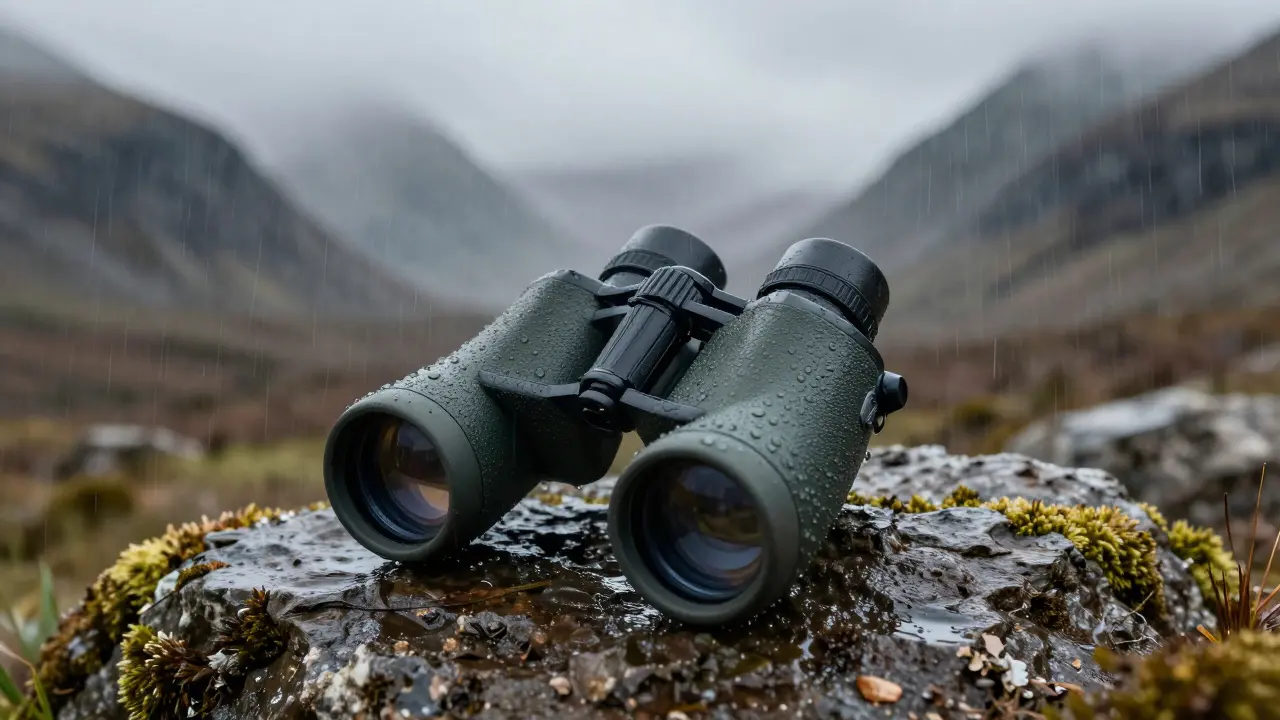
Watching a golden eagle soar over the Cuillin Hills or spotting a red deer stag rutting in the Highlands requires more than just luck. It demands the right glass. The weather in Scotland is unpredictable, often turning from bright sunshine to driving rain within minutes. This means your gear needs to be tough, clear, and ready for anything. Whether you are a seasoned photographer or a casual birdwatcher, choosing the wrong equipment can ruin an otherwise perfect moment.
Why Weather-Proofing Matters More Than Magnification
In many parts of the world, you might prioritize high magnification. In Scotland, durability comes first. You will likely face salt spray on the coast, mud in the peat bogs, and condensation when moving between cold outdoors and warm vehicles. If your optics aren't sealed properly, they will fog up internally, leaving you with nothing but a blurry mess.
Look for binoculars labeled as "fully waterproof" and "nitrogen-purged." Nitrogen purging prevents internal fogging by replacing oxygen inside the barrel with inert nitrogen gas. Brands like Swarovski, Zeiss, and Nikon offer models built specifically for harsh environments. A pair of cheap, non-sealed binoculars might save you money upfront, but they won't last a single trip to the Isle of Skye during a storm.
Choosing the Right Binoculars for Scottish Wildlife
Binoculars are your primary tool for scanning vast landscapes. For wildlife observation, especially birds, you want a balance between field of view and magnification. High magnification narrows your view and makes hand-shake more noticeable, which is frustrating when trying to track a fast-moving seabird.
- 8x42 Binoculars: These are the gold standard for general use. The 8x magnification provides a stable image, while the 42mm objective lenses gather enough light for early morning or late evening viewing. They are lighter and easier to hold steady for long periods.
- 10x42 Binoculars: Offer slightly more detail but require a steadier hand. They are better for stationary subjects like mammals on distant hillsides.
- Monoculars: If you prefer one-handed operation, a high-quality monocular can be a great alternative, though it lacks the depth perception of binoculars.
When buying, check the exit pupil size (objective lens diameter divided by magnification). An exit pupil of 5mm or larger ensures a bright image even in low-light conditions common in the Scottish Highlands.
Telephoto Lenses for Photographers
If you plan to photograph wildlife, you need reach. Most wildlife in Scotland stays at a distance. Getting too close can disturb animals and is often illegal under protection laws. A good telephoto lens allows you to capture intimate details without intrusion.
| Lens Model | Focal Length Range | Max Aperture | Weight | Best For |
|---|---|---|---|---|
| Canon RF 100-500mm f/4.5-7.1L | 100-500mm | f/4.5-7.1 | 1.63 kg | Versatility and value |
| Sony FE 200-600mm f/5.6-6.3 G OSS | 200-600mm | f/5.6-6.3 | 2.19 kg | Sony mirrorless users |
| Nikkor Z 100-400mm f/4.5-5.6 VR S | 100-400mm | f/4.5-5.6 | 1.4 kg | Lightweight hiking |
| Tamron 150-500mm f/5-6.7 Di III VC | 150-500mm | f/5-6.7 | 1.55 kg | Budget-friendly reach |
The Canon RF 100-500mm lens is a favorite among photographers visiting Scotland because it covers a wide range of focal lengths in one package. It’s relatively lightweight compared to prime super-telephotos. For Sony users, the FE 200-600mm offers exceptional sharpness and reliable autofocus, crucial for capturing fast-moving birds like puffins or terns.
Remember that crop-sensor cameras (APS-C) give you extra reach. A 500mm lens on a crop body acts like a 750mm or 800mm lens depending on the manufacturer. This is a significant advantage when photographing distant seals on rocky outcrops.
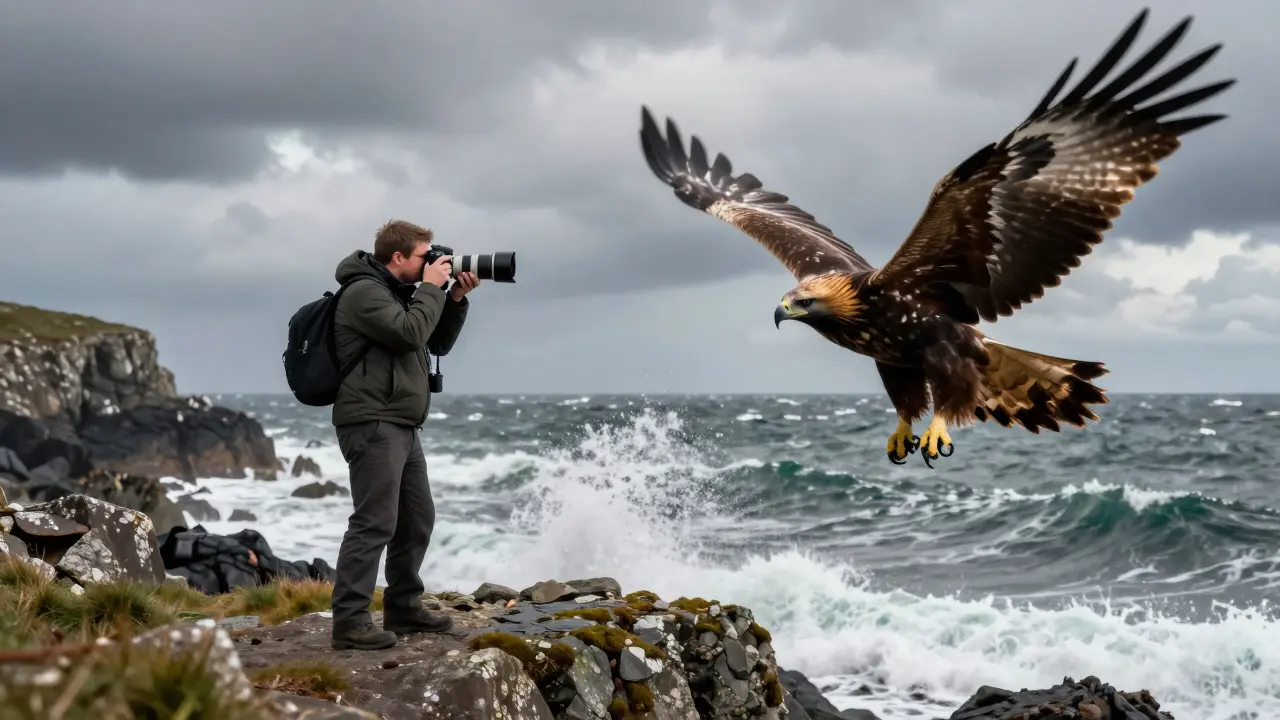
Essential Accessories for Harsh Conditions
Your camera and binoculars are only as good as the accessories protecting them. In Scotland, you cannot skip these items.
- Rain Covers: Dedicated rain sleeves for your camera bag and lens are essential. They keep water off your sensors and electronics. Many brands make custom-fit covers that allow you to operate dials and change lenses without exposing the gear to moisture.
- Lens Hoods: Not just for reducing flare, lens hoods protect the front element from accidental bumps and splashes. In wet conditions, they also help prevent raindrops from landing directly on the glass.
- Tripods and Monopods: Handholding a heavy telephoto lens for hours is exhausting. A sturdy tripod stabilizes your shots, allowing for slower shutter speeds in dim light. Look for carbon fiber models for better weight-to-strength ratio.
- Microfiber Cloths: Carry several dry microfiber cloths. Fog and rain will constantly obscure your lenses. Quick cleaning is necessary to maintain clarity.
Specific Wildlife Scenarios and Gear Recommendations
Different wildlife encounters require different approaches. Here’s how to tailor your gear setup for specific scenarios common in Scotland.
Seabird Colonies
Places like Bass Rock or St Kilda attract thousands of gannets, puffins, and kittiwakes. These birds move quickly and are often backlit by the sun. You need fast autofocus and a lens with good contrast. A 200-600mm zoom lens works well here. Use a polarizing filter to cut through glare from the sea surface.
Highland Mammals
Red deer, wildcats, and otters are elusive. They often appear at dawn or dusk. Low light is your enemy. Choose binoculars with large objective lenses (50mm or more) if you can handle the weight. For cameras, use lenses with wider maximum apertures (f/2.8 or f/4) to let in more light. ISO performance becomes critical; modern mirrorless bodies handle high ISO surprisingly well.
Coastal Seals and Otters
These animals stay close to the water. Salt spray is a major concern. Ensure your lens has a fluorine coating on the front element to repel water and oil. After shooting, rinse your gear with fresh water immediately to prevent corrosion.
Budget Considerations and Second-Hand Options
You don’t need to spend thousands to enjoy wildlife in Scotland. Entry-level binoculars from brands like Vortex or Celestron offer decent performance for beginners. Used telephoto lenses from reputable sellers can save you significant money. Just inspect the glass for fungus, scratches, or haze before buying.
Invest in quality where it counts: weather sealing and optical clarity. Cheap coatings lead to poor contrast and color fringing, making images look muddy. Test your gear in various lighting conditions before relying on it in the field.
Maintaining Your Gear
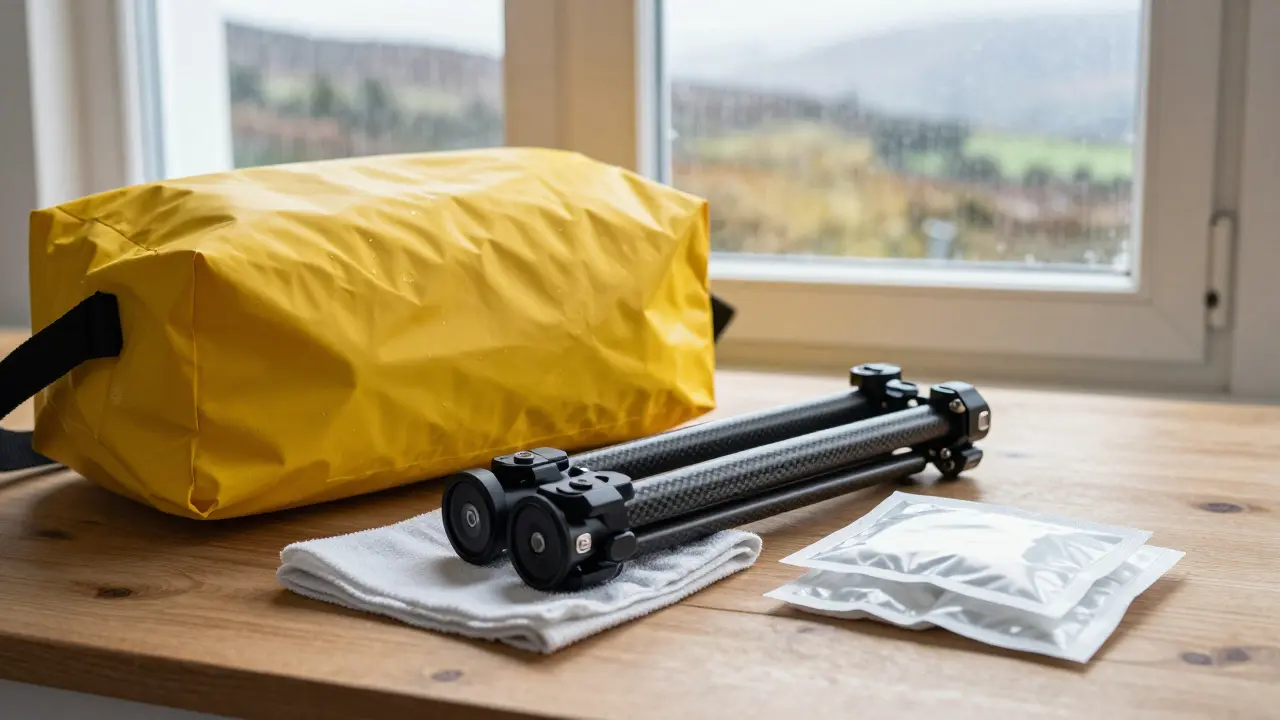
After every trip, clean your equipment thoroughly. Remove any sand or salt residue. Store binoculars and lenses in a dry place with silica gel packets to absorb moisture. Regular maintenance extends the life of your investment and ensures optimal performance when you return to the wilds of Scotland.
What is the best magnification for binoculars in Scotland?
8x42 binoculars are generally considered the best all-around choice. They provide a wide field of view and a stable image, which is crucial for tracking moving wildlife. 10x42 binoculars offer more detail but are harder to hold steady without support.
Do I need a specialized rain cover for my camera?
Yes, highly recommended. While some cameras have weather sealing, prolonged exposure to rain can damage electronics. A dedicated rain cover protects your entire setup, including the lens and battery compartment.
Which lens is better for bird photography: 100-400mm or 200-600mm?
It depends on your budget and camera system. The 200-600mm offers more reach, which is helpful for shy birds. However, the 100-400mm is often sharper, lighter, and faster focusing. For most travelers, the versatility of a 100-400mm or 100-500mm lens is ideal.
How do I prevent fogging in my binoculars?
Buy binoculars that are nitrogen-purged. This process replaces oxygen inside the barrels with nitrogen, preventing internal condensation when temperatures change rapidly. Always store them in a dry environment after use.
Is it worth buying expensive brand-name optics?
For frequent use, yes. Premium brands like Swarovski, Zeiss, and Leica offer superior edge-to-edge sharpness, color fidelity, and durability. For occasional visitors, mid-range brands like Vortex or Nikon provide excellent value and performance.
Comments (10)
-
Rubina Jadhav May 21, 2026
I just read the part about nitrogen purging. It is very important for keeping the fog away. I will check my binoculars before I go to Scotland.

-
sumraa hussain May 22, 2026
Wow!!! The weather in Scotland is absolutely wild!!! You really need tough gear!!! Salt spray is no joke!!! My old glasses died in one trip!!! Never again!!!

-
Raji viji May 24, 2026
Look, you absolute mugs, if you're dragging around a heavy tripod in the Highlands, you're doing it wrong. The article suggests carbon fiber, which is good, but let's be real: most of you won't even use it properly. You'll set it up on a rock that isn't flat, your lens will tilt, and your 'perfect shot' of a red deer will look like it's sliding down a hill. Stop buying expensive toys you don't know how to wield. Just buy a cheap monocular and sit still. The wildlife doesn't care about your f-stop.

-
Rajashree Iyer May 26, 2026
The act of seeing is an illusion constructed by light and glass. When we peer through these lenses, we are not truly connecting with the soul of the eagle; we are merely trapping its image in a cage of our own making. Is the beauty in the bird, or in the clarity of the Swarovski lens? Perhaps the fog is the true reality, obscuring our desperate need to define and capture the wild. We seek clarity, but nature offers only mystery. To purge the nitrogen is to purge the spirit of uncertainty from the barrel. How tragic.

-
Parth Haz May 26, 2026
This is a fantastic guide for anyone planning a trip. The advice on exit pupil size is particularly useful for early morning shoots. I highly recommend investing in a good rain cover as suggested. It will save you from costly repairs later. Keep up the great work sharing this information.

-
Vishal Bharadwaj May 28, 2026
lol nice try but ur missing the point. crop sensors rnt always better. sometimes full frame gives better low light performance even without reach. also why did u mention tamron first? theyr cheapo chinese junk compared to zeiss. stop listening to budget blogs. get real glass or dont bother going at all. typical tourist mindset.

-
anoushka singh May 29, 2026
Hey guys! I saw someone using a 10x42 last week and their hands were shaking so much lol. Maybe they should have bought the 8x instead? Also, does anyone know if those rain covers come in pink? Asking for a friend who definitely wants to match her camera bag.

-
Jitendra Singh May 30, 2026
I think both sides have valid points here. The durability is key, but so is the weight for hiking. I usually compromise with a mid-range zoom lens. It helps to find a balance that works for your specific needs rather than following trends.

-
Madhuri Pujari May 30, 2026
Oh please!!! Don't insult my intelligence with this basic list!!! If you can't afford a Zeiss FL II then stay home!!! You think a Vortex is enough for puffins?! HA!!! Puffins move faster than your shutter speed!!! And don't get me started on 'budget-friendly' Tamron!!! It's plastic trash!!! You want mud in your images??? Buy proper glass or admit you're a hobbyist pretending to be a pro!!!

-
Sandeepan Gupta May 31, 2026
Great breakdown of the accessories. One thing I'd add is to ensure your microfiber cloths are clean before use. Dust particles can scratch coatings. Also, when cleaning salt residue, use distilled water if possible to avoid mineral deposits. Proper maintenance really does extend the life of your optics significantly.
