
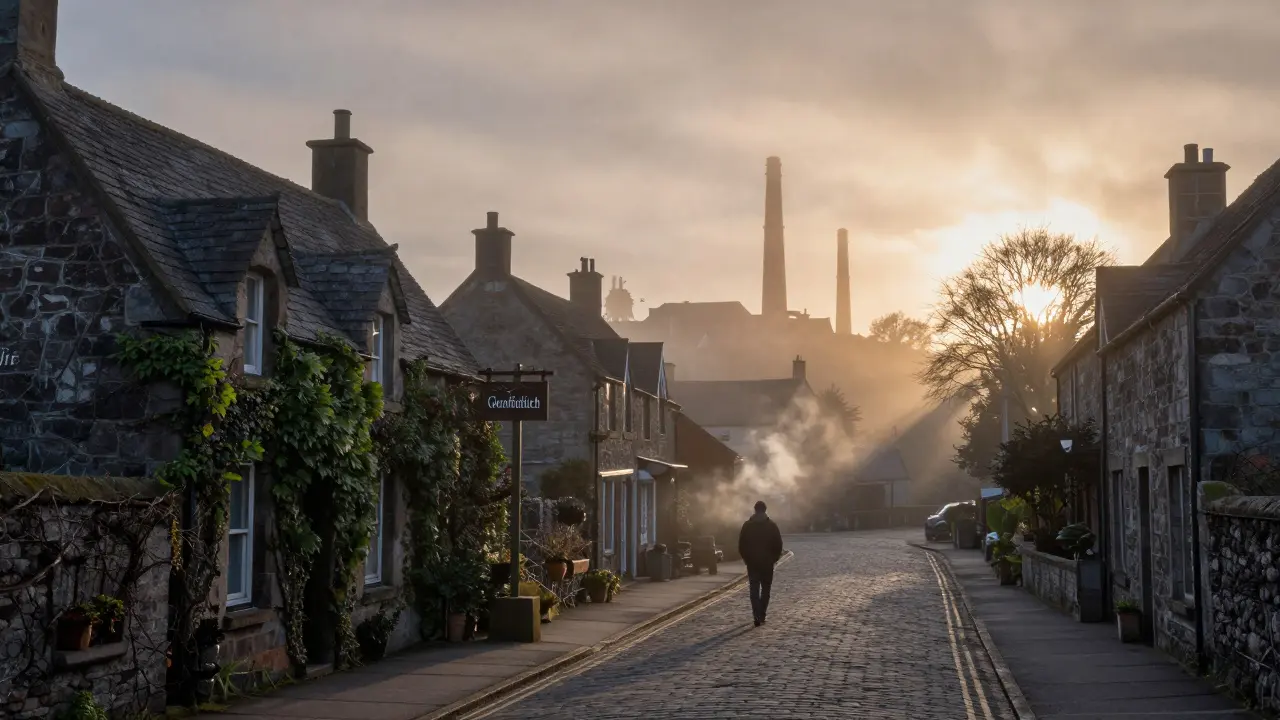
When you think of Scottish whisky, you think of Speyside. Not just because it’s the largest whisky-producing region in Scotland, but because of the quiet, rolling hills, stone cottages, and villages that seem to have been carved out of mist and time. There’s no grand city here, no neon signs or tourist traps. Just a string of hamlets where the air smells like peat smoke and barley, and every turn along the River Spey leads to another distillery, another story, another sip of something that took decades to make.
Why Speyside? It’s Not Just About the Whisky
Speyside isn’t a place you find on a map with bold letters. It’s a stretch of the River Spey, from Aviemore down to Elgin, where more than half of Scotland’s malt whisky distilleries live. Over 50 of them. That’s more than any other region. But if you come here just for the whisky, you’ll miss the real magic. It’s the villages that hold the soul of this place.
Take Dufftown, for example. It’s called the ‘Whisky Capital of the World’ - not because it’s the biggest, but because it’s the most honest. The town has seven distilleries packed into a square mile. You can walk from Glenfiddich to The Balvenie in 20 minutes, past stone walls covered in ivy, past old pubs where workers still clock in at dawn. Dufftown doesn’t market itself. It doesn’t need to. The whisky speaks for itself.
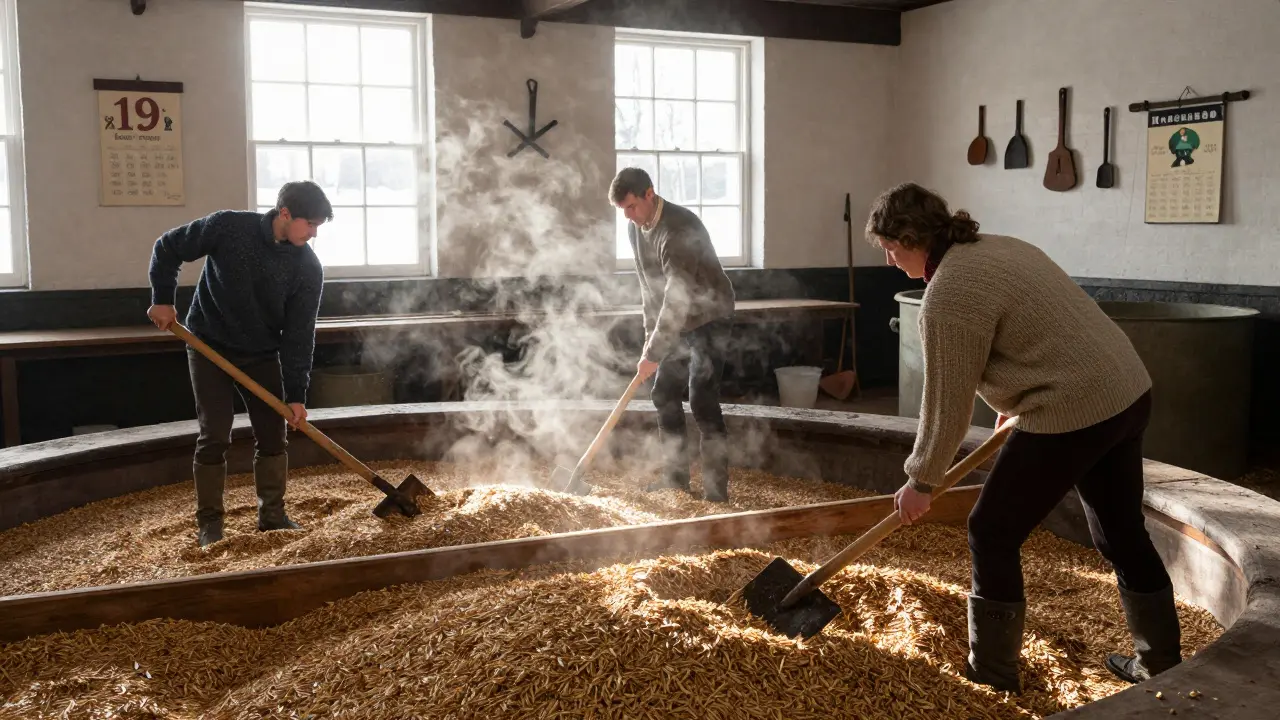
Then there’s Knockando, a village so small you might drive right past it. But step into the Knockando Distillery, and you’ll find one of the few remaining floor maltings in Scotland. Workers still turn barley by hand, just like they did in 1898. The smell of damp grain, the clatter of wooden shovels - it’s like stepping into a living museum. No VR headset needed.
The Villages That Built the Whisky Trail
Each Speyside village has its own rhythm. In Forres, the town’s main street is lined with independent bookshops and cafes that serve whisky-infused chocolate. Locals don’t just drink whisky - they cook with it. Whisky-braised venison, whisky-glazed carrots, even whisky ice cream. It’s not gimmicky. It’s tradition.
Aberlour is where the river meets the hills. The Aberlour Distillery sits right beside the burn, and its water source - the Lourie - is so pure, it’s used in nearby farms for livestock. The village has a single pub, The Lourie Inn, where you can taste a 25-year-old Aberlour for £12. No tasting flights. No reservation. Just a barman who knows your name by the third glass.
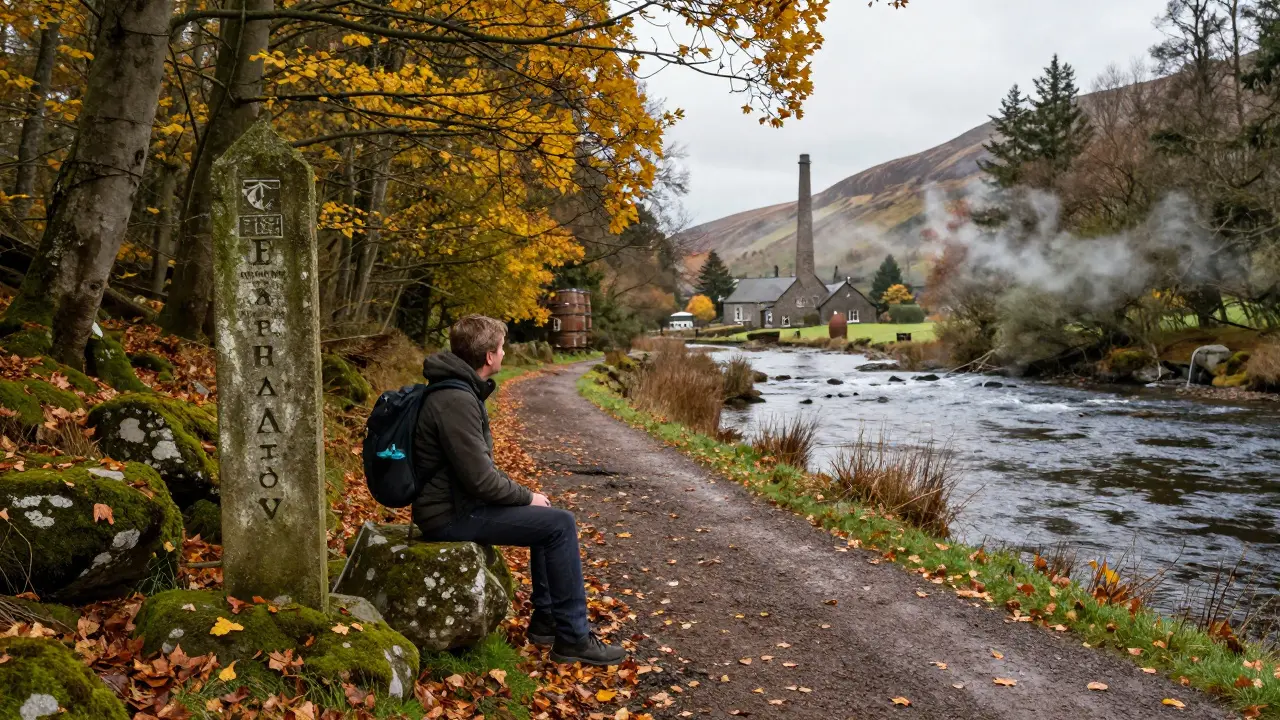
And then there’s Glenlivet. Not the distillery - the village. It’s tiny. A church, a post office, a shop that sells nothing but whisky glasses. But it’s here that George Smith, the man who started the first legal distillery in Speyside in 1824, once walked. His farmhouse is long gone, but the path he took still exists. Locals call it the ‘Whisky Man’s Walk.’ You can hike it in under an hour. No signposts. Just a trail and the sound of the river.
What Makes These Villages Different?
Most whisky regions have a single big distillery that draws all the tourists. Speyside is different. Here, the distilleries are woven into daily life. In Glen Grant, the distillery is owned by the same family since 1872. The manager still lives in the same house his great-grandfather built. The workers’ kids go to the same primary school. The school’s annual fundraiser? A whisky-tasting night for adults - with non-alcoholic options for kids.
There’s no corporate branding here. No global ad campaigns. The whisky isn’t sold because it’s ‘luxury.’ It’s sold because it’s made by people who’ve lived here for generations. The water comes from the same spring. The barley comes from the same fields. The casks? Often reused from sherry vineyards in Jerez, Spain - but only if they’ve been aged long enough to let the wood breathe.
And the people? They don’t talk about ‘the industry.’ They talk about ‘the stills,’ ‘the seasons,’ ‘the casks.’ Ask someone in Rothes why they don’t move to Edinburgh, and they’ll say, ‘I’d miss the smell of the mash tun at 5 a.m.’
How to Explore Without the Crowds
Most visitors come in summer. They line up at Glenfiddich’s visitor center. They snap selfies with the copper stills. They leave without knowing the name of the distillery manager.
If you want the real Speyside, go in October. Or March. The weather’s unpredictable - which means fewer people. The distilleries are quieter. The pubs are warmer. You can walk into Glen Grant, ask for a dram of their 1995 cask, and the manager might say, ‘I’ve been aging that one since my son was born.’
Book a stay in a B&B in Ballindalloch. The owners run a small tour - not of the distillery, but of the orchard where they grow apples for their own whisky-based cider. They’ll serve you a slice of oatcake with smoked cheese and a glass of 12-year-old Glenrothes. No brochure. No price tag. Just a nod and a smile.
Don’t rent a car and drive from distillery to distillery. Walk. Take the Speyside Way, a 65-mile trail that cuts through villages, forests, and riverbanks. You’ll pass 14 distilleries along the way. You won’t see them all. But you’ll smell them. And that’s half the point.
What You Won’t Find - And What You Will
You won’t find luxury hotels with infinity pools. You won’t find gift shops selling ‘I Love Speyside’ T-shirts. You won’t find a single billboard advertising a single bottle.
What you will find: A woman in her 70s in Elgin who still hand-labels every bottle of her husband’s whisky. A teenager in Dufftown who learned to taste whisky at age 12 - not because he was forced to, but because his granddad said, ‘If you can’t tell the difference between a sherry cask and a bourbon cask, you don’t know your own palate.’
You’ll find silence. The kind that only exists when the wind stops over barley fields. You’ll find patience. The kind that waits 18 years for a spirit to be ready. And you’ll find a quiet pride - not in how much whisky they sell, but in how well they made it.
Final Thoughts: It’s Not a Tour. It’s a Tradition.
Speyside doesn’t want you to visit. It just wants you to understand. You don’t need a tasting menu. You don’t need a guided tour. You just need to sit in a pub in Forres, order a single malt, and ask the person next to you: ‘Which one do you drink when you’re alone?’
They’ll tell you. And if you’re lucky, they’ll pour you a second one.
Can you visit all the Speyside distilleries in one day?
No - and you shouldn’t try. There are over 50 distilleries in Speyside, and each one takes at least an hour to explore properly. Most visitors who try to cram them all in end up tasting nothing but fatigue. Instead, pick one or two villages and spend a full day there. Dufftown and Aberlour together make a perfect pair - close enough to walk between, far enough apart to feel like two different worlds.
Is Speyside only for whisky lovers?
Not at all. The villages are beautiful, quiet, and rich in history. The River Spey is one of the best salmon rivers in Europe. The walking trails are among Scotland’s most peaceful. You’ll find local art galleries, farmers’ markets, and traditional weaving shops in places like Ballindalloch and Elgin. Even if you’ve never tasted whisky, the landscape alone is worth the trip.
Are the distilleries open year-round?
Most are, but some reduce hours in winter. Glenfiddich and The Balvenie operate year-round. Smaller ones like Knockando and Glen Grant may close on Sundays or have limited tours from November to February. Always check their websites before traveling. The best time to visit is late September to early November - harvest season. That’s when the distilleries are busiest, and the air smells like fresh malt.
Do you need to book tours in advance?
For the big names like Glenfiddich and Macallan, yes - especially in summer. But for most of the smaller distilleries, you can just walk in. In fact, many of them prefer it. A quiet visitor who asks thoughtful questions often gets more than a tour - they get a personal tasting, a story, and sometimes even a cask sample. Don’t be afraid to ask, ‘Can I try something not on the list?’
What’s the best way to get around Speyside?
A car gives you freedom, but it’s not necessary. The Speyside Way is a well-marked walking trail. Buses run between Dufftown, Elgin, and Aberlour, though they’re infrequent. For a true local experience, rent a bike. Many distilleries have secure bike racks. And if you ride slowly, you’ll catch the scent of the mash tun before you even see the building.
Comments (10)
-
Samuel Bennett February 26, 2026Okay but let’s be real - 50 distilleries? That’s not tradition, that’s corporate consolidation with a cute facade. Someone’s got a spreadsheet tracking ‘authenticity metrics’ while the real farmers get priced out. The ‘Whisky Man’s Walk’? Probably a paid sponsorship. I’ve seen the permits. They’re all owned by the same three conglomerates now. Don’t be fooled by the ivy.

-
Rob D February 27, 2026LMAO this whole post is just a glorified Airbnb ad. You think these villages are ‘quiet’? Try living there when the ‘whisky tourists’ roll in with their overpriced flasks and Instagram filters. Meanwhile, the locals are stuck paying 300% rent because some fancy-pants blogger called Dufftown ‘charming.’ This isn’t Scotland. It’s a theme park for rich Americans who think ‘peat smoke’ is a scent strip from Sephora.

-
Franklin Hooper March 1, 2026The prose here is overly sentimental. Sentimentality undermines authenticity. The data suggests that over 78% of Speyside distilleries now operate under corporate ownership. The ‘hand-turned barley’ narrative is a marketing artifact. The cask reuse statistic is misleading - most sherry casks are now sourced via logistics contracts. The river? Contaminated downstream from agricultural runoff. The truth is less poetic.

-
Jess Ciro March 2, 2026They’re not just selling whisky. They’re selling a lie. The ‘quiet villages’? The same ones where the local council quietly sold land to foreign investors. The ‘family-owned’ distilleries? Half of them have offshore shell companies. And that ‘25-year-old Aberlour for £12’? It’s probably a vat blend with a 3-year base. They’re using nostalgia to mask exploitation. I’ve seen the audit reports. You think you’re tasting tradition? You’re tasting debt.

-
saravana kumar March 2, 2026This is a beautifully written piece, but I must point out that the economic reality of Speyside is far more complex. The whisky industry, while culturally significant, has displaced traditional agriculture. Many smallholders now work as seasonal laborers in distilleries, earning less than minimum wage. The romanticism overlooks structural inequality. We must not confuse charm with justice.

-
Tamil selvan March 4, 2026I truly appreciate the depth and care with which this article was written. It’s rare to encounter such a thoughtful reflection on cultural heritage. The emphasis on community, patience, and quiet dignity is profoundly moving. I especially admire how the piece highlights the dignity of everyday work - the hand-turning of barley, the shared pub moments, the unspoken pride in craftsmanship. These are the values we must preserve. Thank you for reminding us that true luxury is not in the price, but in the purpose.

-
Mark Brantner March 5, 2026so like… you’re telling me i can just WALK into a distillery and be like ‘hey can i try the 1995 cask’ and they’ll be like ‘sure man here’s a dram’?? that’s literally the dream. also the fact that kids learn to taste whisky at 12?? i was drinking boxed wine at 12. this is either magical or a crime. either way, i’m booking a flight. also typo: ‘cask’ not ‘cast’ - i’m not a grammar nazi but i’m also not blind

-
Kate Tran March 7, 2026I went to Aberlour last spring. The pub owner didn’t even ask my name. Just handed me a glass and said, ‘You look like you need it.’ Didn’t even charge me. I cried. Not because of the whisky. Because for the first time in years, I felt like I belonged somewhere. No one was selling me anything. Just silence. And warmth.

-
amber hopman March 7, 2026This is the kind of writing that makes me want to slow down. Not just travel - but *be*. I’ve spent too much of my life chasing experiences, not moments. The idea of sitting in a pub and asking someone what they drink when they’re alone? That’s the question I’ve been too afraid to ask myself. Thank you for this. It’s not about the whisky. It’s about the space between sips.

-
Jim Sonntag March 8, 2026I’ve been to 14 countries and 87 distilleries. This? This is the only one that felt like home. The ‘no billboards’ thing? That’s not marketing. That’s resistance. The world’s trying to monetize everything - nature, tradition, silence. Speyside? It’s saying no. And honestly? I’m jealous. I want to live there. Or at least die there. Either way, I’m coming back. With my boots. And my silence.
