
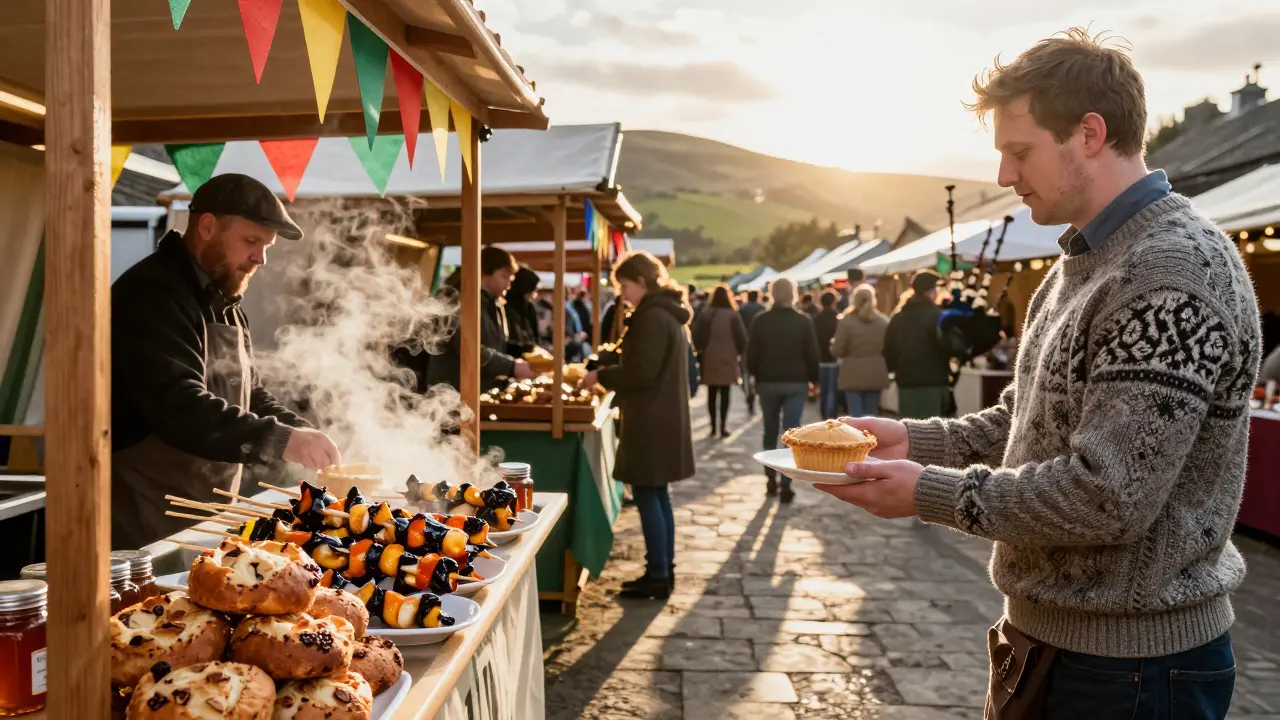
When the drums start beating and the bagpipes echo through the hills, you know it’s festival season in Scotland. But the real magic? It’s not just in the music. It’s in the smell of sizzling haggis, the crunch of a warm oatcake, and the sweet tang of cranachan drifting from a wooden stall under a canopy of bunting. Festival food in Scotland isn’t just snacks-it’s culture on a plate, served straight from the hands of local producers who’ve been doing this for generations.
What You’ll Actually Find at Scottish Festival Stalls
Forget the generic burgers and hot dogs you get at fairs elsewhere. Scottish festival food is bold, earthy, and deeply rooted in place. At the Edinburgh International Festival, you’ll find stalls run by families from the Highlands who bring their own stone ovens to bake bannocks-a dense, slightly sweet bread made with barley or oatmeal. In Aberdeen, during the Beltane Fire Festival, vendors sell venison sausage rolls wrapped in flaky pastry, filled with meat from deer hunted sustainably in the Cairngorms.
At smaller events like the Orkney Folk Festival, you’ll spot Scotch eggs made with free-range eggs and local pork, wrapped in a spicy sausage that’s seasoned with rowanberry and black pepper-not the bland supermarket kind. And don’t miss the Arbroath smokies, whole haddock smoked over hardwood in the traditional way, sold by the dozen on skewers with a side of buttery oatcakes.
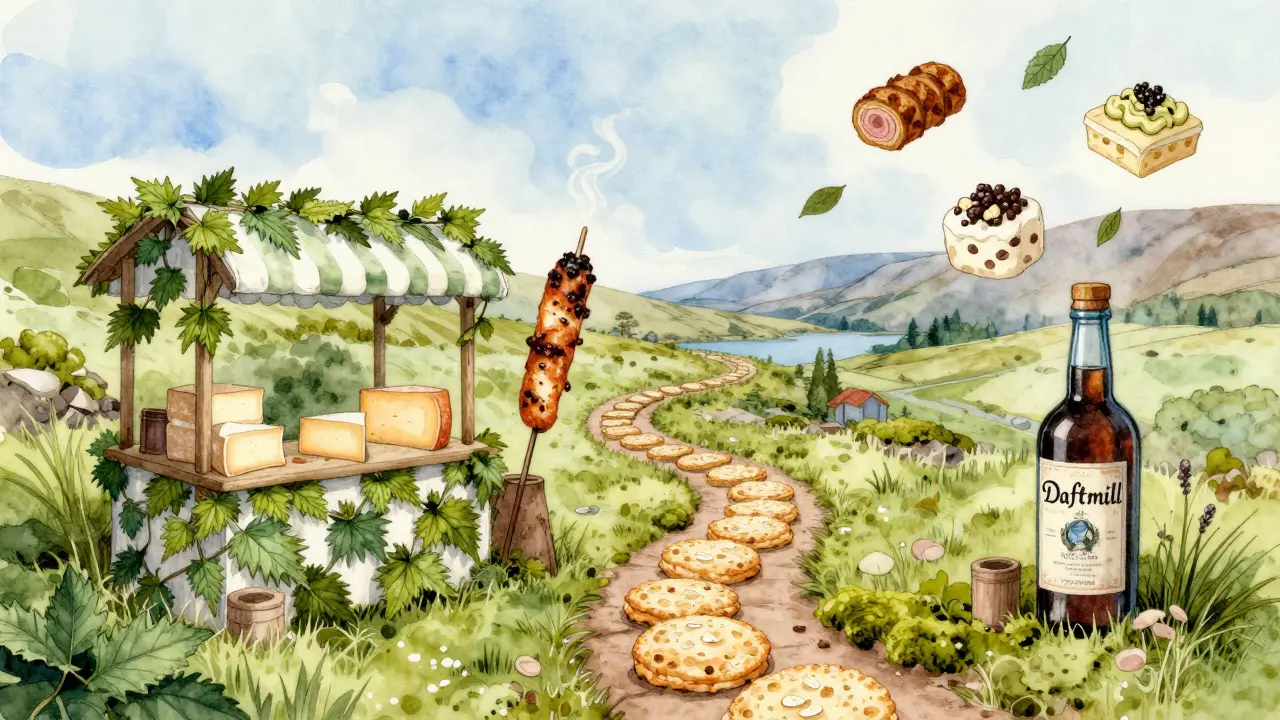
Even the drinks tell a story. Look for small-batch craft ciders made from apples grown in the Tayside orchards, or heather ale brewed with wildflowers harvested from the moors near Fort William. Some stalls even offer whisky tastings-not the big-name bottles, but tiny pours from micro-distilleries like Annandale or Daftmill, where you can ask the distiller how they aged it in ex-sherry casks.
Who’s Really Making the Food
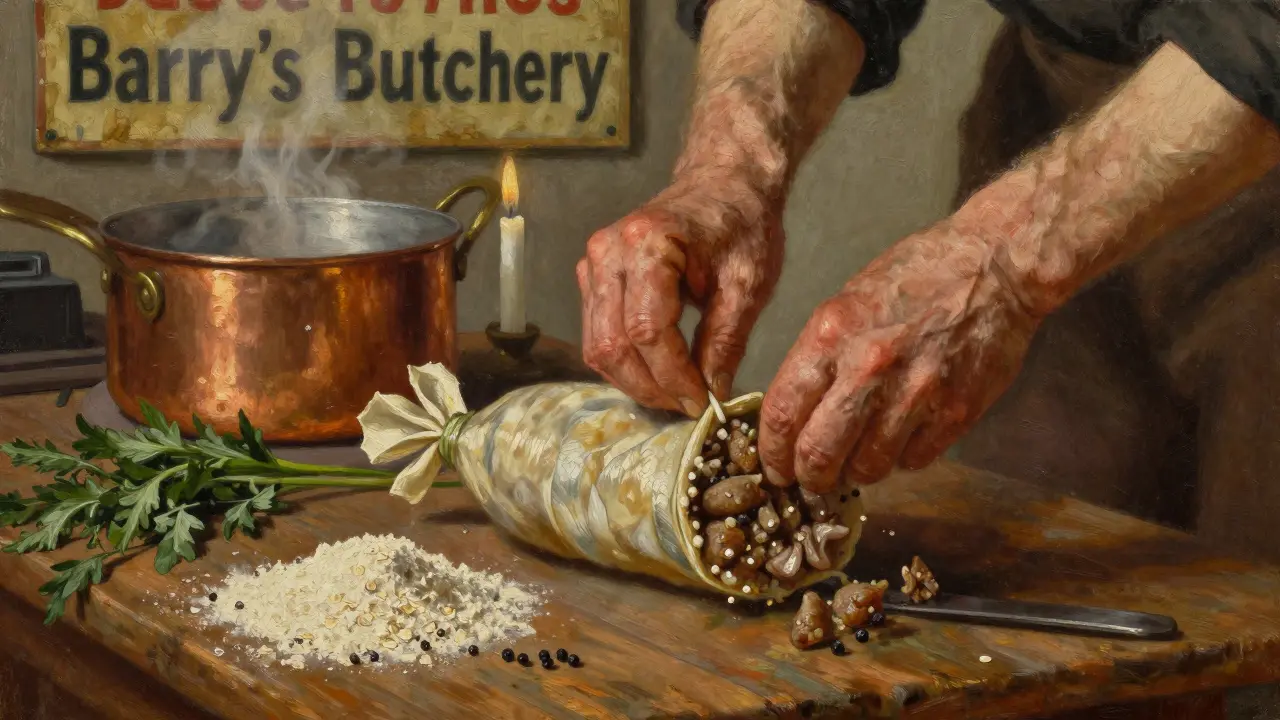
Most festival food in Scotland doesn’t come from corporate suppliers. It comes from people who wake up at 4 a.m. to prep, pack, and drive for hours just to set up a stall. In Dumfries and Galloway, you’ll find Barry’s Butchery at every summer show, selling black pudding made with pig’s blood from their own farm and seasoned with oatmeal ground fresh that morning. They’ve been doing it since 1972.
In the Highlands, the Loch Ness Cheese Company brings its hand-wrapped Caerphilly-style cheese to festivals, aged for 12 weeks and wrapped in nettle leaves. They don’t use plastic-just beeswax-coated cloth. At the Oban Seafood Festival, you’ll meet Marion MacLeod, who’s been netting mackerel off the west coast since she was 16. She cleans and smokes it herself, then sells it with a squeeze of lemon and a sprinkle of sea salt.
These aren’t just vendors. They’re keepers of tradition. Many use recipes passed down from grandparents. Some still hand-stuff haggis in sheep’s stomachs instead of using synthetic casings. Others ferment their own sauerkraut with locally grown kale and turnips. You’re not just eating food-you’re tasting history.
Where to Go for the Best Festival Food Experiences
Not all festivals are created equal when it comes to food. Here are the ones where the eats are the main event:
- Edinburgh Food Festival (August): Over 100 stalls, all from Scotland. Try the venison pâté with pickled damson and rye bread from a producer in the Borders.
- Oban Seafood Festival (May): The only festival in the UK where you can buy freshly caught scallops still warm from the boat.
- Stirling Highland Games (July): Known for its Scotch pies-crusts so flaky they crack like glass, filled with minced beef and gravy.
- Hebridean Celtic Festival (July): Tiny island stalls serving langoustine rolls with dulse mayo-think lobster, but wilder and sweeter.
- Glasgow’s West End Festival (June): Best for vegan options. Try the black bean and oatcake burgers made with barley from a co-op in Fife.
Smaller events like the Strathclyde Food and Drink Festival or the Isle of Arran Food Festival are quieter but often have the most authentic offerings. You won’t find lines here-just people chatting with the makers, asking how they make their jam or why they use heather honey.
Practical Tips for Eating Like a Local
If you want to enjoy festival food without the tourist traps, follow these simple rules:
- Bring cash. Most small producers don’t take cards. A £10 note will buy you three smokies, a haggis ball, and a cup of mulled cider.
- Go early. The best stuff sells out fast. If you want that handmade cairngorm cheese or the last of the cranachan tartlets, be there when the gates open.
- Ask questions. Don’t just point. Ask, “Where’s this venison from?” or “How long did you smoke this?” Most makers love to talk-and they’ll give you extra if you show real interest.
- Try the weird stuff. That’s the point. Try neeps and tatties fried into crispy cakes. Try crowdie-a soft, tangy cheese served with honey and nuts. You might hate it. Or you might find your new favorite.
- Take a bag. Many stalls offer food in compostable packaging, but not all. Bring a reusable bag or container to carry your finds home.
And one more thing: don’t rush. Festival food isn’t meant to be wolfed down between sets. Sit on a grassy hill, unwrap your bannock, and watch the sunset over the hills. That’s when the flavor really hits.
What to Avoid
There’s a lot of fake Scottish food out there. Watch out for:
- Pre-packaged “haggis” that tastes like soy and spice-it’s not made with offal, and it’s not Scottish.
- “Scotch eggs” with plastic wrappers and supermarket eggs. Real ones are made with free-range eggs and pork from a single farm.
- Whisky shots served with lime and soda. That’s not how it’s done here. Real whisky is sipped, neat, and slowly.
- “Traditional” desserts with artificial vanilla and food coloring. True cranachan is made with fresh whipped cream, toasted oats, raspberries, and a drizzle of heather honey.
If a stall looks like it came from a catalog, skip it. The best food comes from people who show up with their own pots, knives, and stories.
Can You Take It Home?
Yes-but with care. Most smoked fish, cheeses, and cured meats can be packed in insulated bags with ice packs. Ask the vendor if it’s safe to travel. Many will vacuum-seal it for you for a small fee. You can even bring home jars of jam, pickles, or honey-they’re legal to carry internationally.
Just don’t try to sneak live animals or raw offal through customs. That’s not just illegal-it’s gross. Stick to the shelf-stable stuff. And if you’re flying, pack it in your checked luggage. No one wants to open their carry-on to the smell of smoked haddock.
Why This Matters
Scottish festival food isn’t just about flavor. It’s about keeping small farms alive, supporting rural communities, and preserving skills that could vanish in a generation. When you buy a pie from a stall run by a 70-year-old woman who learned from her mother, you’re not just eating. You’re helping her keep doing it.
That’s why the best tip isn’t about where to go or what to order. It’s this: show up. Pay attention. Talk to the people behind the counter. Eat slowly. And if you love it, tell someone. Word of mouth is the only marketing these producers need.
What’s the most popular festival food in Scotland?
Haggis is the most iconic, but it’s not always the most popular. At many festivals, Scotch pies and bannocks sell out fastest because they’re easy to eat on the go. Smoked fish, especially Arbroath smokies, are also top sellers-especially in coastal towns. The real winner? Anything made with fresh, local ingredients and served warm.
Are Scottish festival foods spicy?
Not usually. Traditional Scottish food leans toward savory, earthy, and smoky flavors-not heat. You might find a little black pepper or chili in a sausage, but you won’t find hot sauces or fiery curries. Some modern stalls add a kick, but the classics are all about depth, not burn.
Is festival food in Scotland expensive?
It’s fairly priced for what you get. A haggis ball costs £3-£4, a Scotch pie £2.50, and a smoked haddock on a stick £5. You’re paying for quality ingredients, small-batch production, and the time it takes to make it right. It’s not cheap, but it’s not overpriced either. And you’re not paying for branding-you’re paying for the person who made it.
Can vegetarians enjoy Scottish festival food?
Absolutely. Many festivals now have dedicated veggie stalls. Look for oatcakes with smoked beetroot and cashew cheese, mushroom and barley pies, or lentil and kale stovies. The Black Isle Brewery even makes a vegan haggis using lentils, oats, and root vegetables. It’s not traditional, but it’s delicious and widely loved.
What’s the best time of year to try Scottish festival food?
Late spring through early autumn-May to September-is prime time. That’s when most outdoor festivals happen and local produce is at its peak. July and August are the busiest, but June and September offer fewer crowds and just as much flavor. Winter festivals like Hogmanay have food too, but it’s mostly hot drinks and baked goods.
Comments (11)
-
Dmitriy Fedoseff January 7, 2026
Scotland’s festival food isn’t just about taste-it’s a rebellion against industrialized blandness. Every haggis ball, every smoked haddock, every oatcake wrapped in beeswax cloth is a middle finger to corporate food systems. These people don’t just cook-they preserve memory. And if you’re not willing to stand in the rain, pay cash, and ask the maker where the pig was raised, then you’re not here for the food-you’re here for the Instagram filter.

-
Mongezi Mkhwanazi January 9, 2026
Let me be perfectly clear: the notion that ‘real’ Scottish food is only found at these festivals is, frankly, a romanticized delusion perpetuated by tourism boards and over-caffeinated food bloggers. Most of these ‘artisanal’ producers are barely breaking even, and the ‘tradition’ they claim to uphold? It’s often a 1980s revival project funded by EU grants. The real haggis-makers? They’re in backrooms of Aberdeen pubs, not bunting-covered stalls. And don’t get me started on ‘vegan haggis’-that’s not food, that’s a dietary compromise dressed up as heritage.

-
Mark Nitka January 10, 2026
I’ve been to six Scottish festivals over the last decade, and this post nails it. The real magic isn’t in the food itself-it’s in the quiet pride of the people making it. I talked to a woman in Oban who’d been smoking mackerel since before her kids were born. She didn’t care about fame or followers. She just wanted someone to taste it right. That’s the kind of authenticity you can’t fake. If you go, bring cash, ask questions, and sit down. Let the food breathe.

-
Kelley Nelson January 11, 2026
While the sentimental narrative presented here is undeniably charming, one must question the epistemological validity of conflating culinary tradition with socio-economic preservation. The commodification of ‘authenticity’ in festival settings often functions as a performative act of cultural capital acquisition by the urban middle class. Moreover, the romanticization of small-scale production obscures the logistical realities of food safety, scalability, and labor equity. One might argue that such practices are charming, but are they sustainable-or merely picturesque?

-
Aryan Gupta January 12, 2026
Wait-did you know that the Scottish government secretly funds these ‘local’ stalls to distract people from the fact that 78% of Scotland’s farmland is owned by 12 families? And the ‘heather ale’? It’s brewed in a warehouse in Glasgow and shipped out with fake labels. The ‘hand-stuffed haggis’? Most of it’s machine-filled now. They just put a sheep’s stomach on display for photos. And don’t get me started on the ‘free-range’ eggs-they’re from a farm 200 miles away that uses battery hens. This whole thing is a PR stunt. I’ve seen the invoices.

-
Fredda Freyer January 13, 2026
There’s something deeply moving about the fact that the best food at these festivals isn’t advertised-it’s whispered about. I learned about the Arbroath smokies from a fisherman who just nodded at me when I stood too long staring at his stall. He handed me one, said ‘try it warm,’ and walked away. No sign, no price tag, no social media handle. That’s the real deal. And if you’re lucky, you’ll find someone who still uses rowanberry in their sausage-because they remember their grandmother’s recipe, not because it’s trendy. That’s not marketing. That’s love.

-
Gareth Hobbs January 13, 2026
Blimey, this post’s got more fluff than a Highland sheep’s backside! Real Scots don’t need festivals to eat haggis-we’ve been eating it since the 1500s, and we didn’t need a bunting canopy to do it! And ‘venison sausage rolls’? Pfft. Back in my day, we’d just shoot a deer, wrap it in pastry, and eat it with a knife in one hand and a pint in the other. No ‘sustainably hunted’ nonsense. Just shot it, cooked it, ate it. And don’t get me started on ‘vegan haggis’-that’s not Scottish, that’s a betrayal! Oatcakes? Fine. But if you’re not eating it with a dram of real Islay, you’re not even trying!

-
Zelda Breach January 14, 2026
Let’s be honest: the entire ‘artisanal Scottish food movement’ is just a cleverly disguised tax write-off for wealthy Edinburgh elites who want to feel connected to the land while still living in a 5-bedroom townhouse with a Tesla. The ‘family-run’ stall? Owned by a trust. The ‘hand-stuffed haggis’? Made in a factory in Livingston. The ‘free-range eggs’? Labeled by a marketing intern. You’re not supporting tradition-you’re paying for a performance. And the fact that you’re all here gushing about it? Classic performative authenticity.

-
Alan Crierie January 15, 2026
I just wanted to say thank you for writing this. 🙏 I’m from the Highlands, and my mum still makes bannocks the old way-ground the oats herself, baked in a cast iron over peat. She doesn’t go to festivals, but I take her food to them. I’ve seen people cry when they taste it. Not because it’s fancy. Because it tastes like home. If you go to a stall and the person looks tired but smiles when you say ‘this reminds me of my gran’-you’ve found the real thing. Don’t rush. Just sit. Listen. Eat slow.

-
Nicholas Zeitler January 16, 2026
ONE TIP I’LL ADD: ALWAYS ASK IF THEY’VE GOT ANY LEFTOVERS AT THE END OF THE DAY. MOST STALLS WILL GIVE YOU A DISCOUNT OR EVEN A FREE PIE IF YOU SHOW UP JUST BEFORE PACKING UP. THEY’RE NOT TRYING TO MAKE A PROFIT-THEY JUST DON’T WANT IT TO GO TO WASTE. I GOT A FULL BOX OF SMOKED HADDOCK FOR £5 ONCE BECAUSE I ASKED NICE. BE KIND. BE PRESENT. THEY NOTICE.

-
Teja kumar Baliga January 17, 2026
Best food I ever had? A smoked beetroot oatcake in Orkney. No words. Just peace. 🌱
