
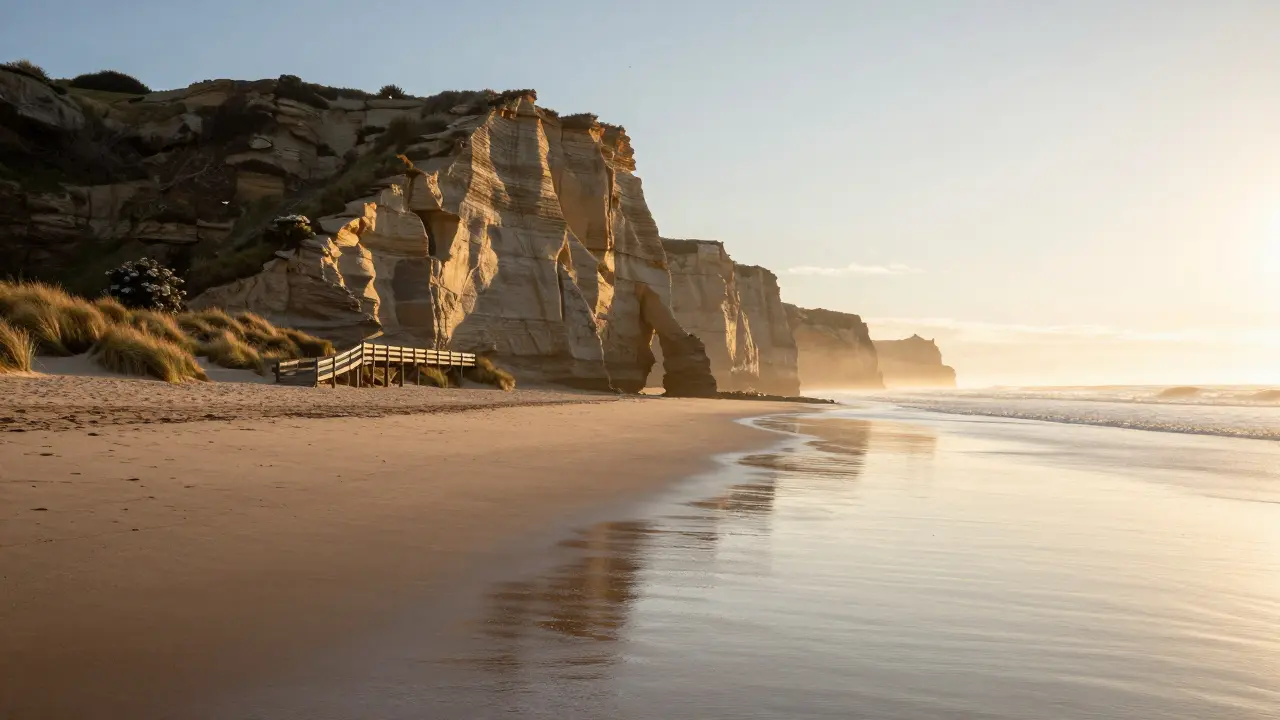
St Cyrus Beach isn’t just another stretch of sand along Scotland’s northeast coast. It’s a place where ancient cliffs hold secrets, rare birds call the dunes home, and a wooden boardwalk lets you walk above the fragile landscape without leaving a trace. If you’ve ever wondered what untouched coastal beauty looks like in Scotland, this is it.
Where the Land Meets the Sea
St Cyrus Beach sits between the villages of St Cyrus and Lunan Bay, tucked into the Aberdeenshire coastline about 25 miles north of Montrose. Unlike the busy, packed beaches further south, this one feels like you’ve stepped into a forgotten corner of the country. The tide pulls back wide, leaving behind wet sand that shines like glass under winter sun. On a calm day, you can hear the gulls cry and the distant crash of waves hitting the rocks below the cliffs.
The real star here isn’t the sand-it’s the cliffs. These aren’t just rocky outcrops. They’re a 15-million-year-old geological time capsule. Layers of sandstone and shale, tilted and folded by ancient tectonic forces, show you what this part of Scotland looked like when it was under a shallow sea. Fossils of sea urchins and shells still cling to the rock faces. Walk along the top edge, and you’ll see how erosion has carved out hollows and arches. One section, known locally as the "Hole in the Cliff," looks like nature carved its own doorway.
The Nature Reserve That Protects More Than You See
Since 1965, over 300 acres of land around St Cyrus Beach have been protected as a National Nature Reserve, managed by NatureScot. It’s not just about the beach. The reserve includes salt marshes, dunes, heathland, and freshwater ponds-all packed with wildlife you won’t find elsewhere in the region.
Over 150 bird species have been recorded here. In spring, you might spot little terns skimming low over the water, or ringed plovers running along the tideline. In autumn, thousands of migrating waders stop to rest-curlews, godwits, and dunlins-feeding on worms and crustaceans buried in the mud. The reserve is one of the few places in Scotland where you can reliably see the rare Scottish wildcat, though they’re shy and mostly active at night.
The dunes are alive with plants that survive salt spray and shifting sand. Marram grass holds the dunes together. Sea holly grows in purple spikes. And if you’re lucky, you’ll find the tiny, bright yellow flowers of the Scottish primrose clinging to the cliff base in May. These aren’t just pretty sights-they’re the foundation of a fragile ecosystem. A single footstep off the path can crush a plant that took decades to grow.
The Boardwalk That Lets You Walk Without Wrecking
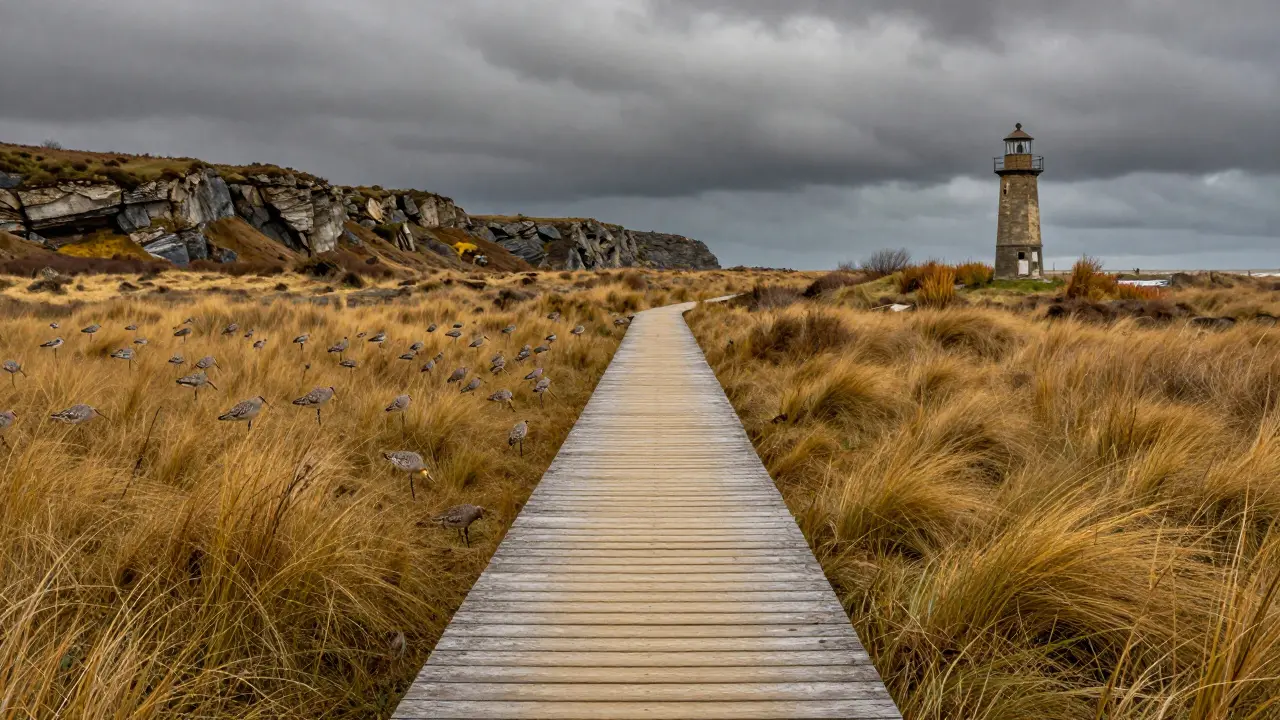
Here’s what makes St Cyrus different from most nature spots: the boardwalk. It’s not fancy. It’s made of weathered timber, worn smooth by boots and wind. But it’s genius. The 1.2-kilometer elevated path winds through the most sensitive parts of the dunes and marshes, keeping visitors above the soil and plants below.
Without this boardwalk, the foot traffic would have turned the dunes into bare, eroded patches long ago. Now, families, photographers, and birdwatchers can move through the reserve without damaging it. The path has viewing platforms where you can sit and watch the tide come in. Benches are spaced just far enough apart to give you quiet moments. You’ll see signs explaining what you’re looking at-like how the salt marsh filters runoff before it reaches the sea, or why the dunes shift with every storm.
The boardwalk ends near the old St Cyrus lighthouse, now a ruin. It was built in 1835 to guide ships away from the dangerous rocks offshore. You can still see the base, half-buried in grass. Locals say the lighthouse keeper’s cottage was torn down in the 1950s after a storm took the roof. Now, it’s just a low stone outline, a quiet reminder of how the sea claims what it wants.
What You’ll See in Every Season
St Cyrus changes with the seasons-and each version has its own magic.
Spring: The dunes bloom. Wildflowers return. Birds nest. The air smells like wet earth and sea spray. It’s the best time for birdwatching.
Summer: The beach fills with walkers, dog owners, and families. But even then, it never feels crowded. The water is cold-usually under 15°C-but some hardy swimmers still take a dip. The boardwalk is busiest here, but it’s wide enough to move past others easily.
Autumn: The light turns golden. The wind picks up. Migrating birds arrive in waves. You’ll hear the low, haunting call of the curlew echoing across the marsh. The cliffs look more dramatic against stormy skies.
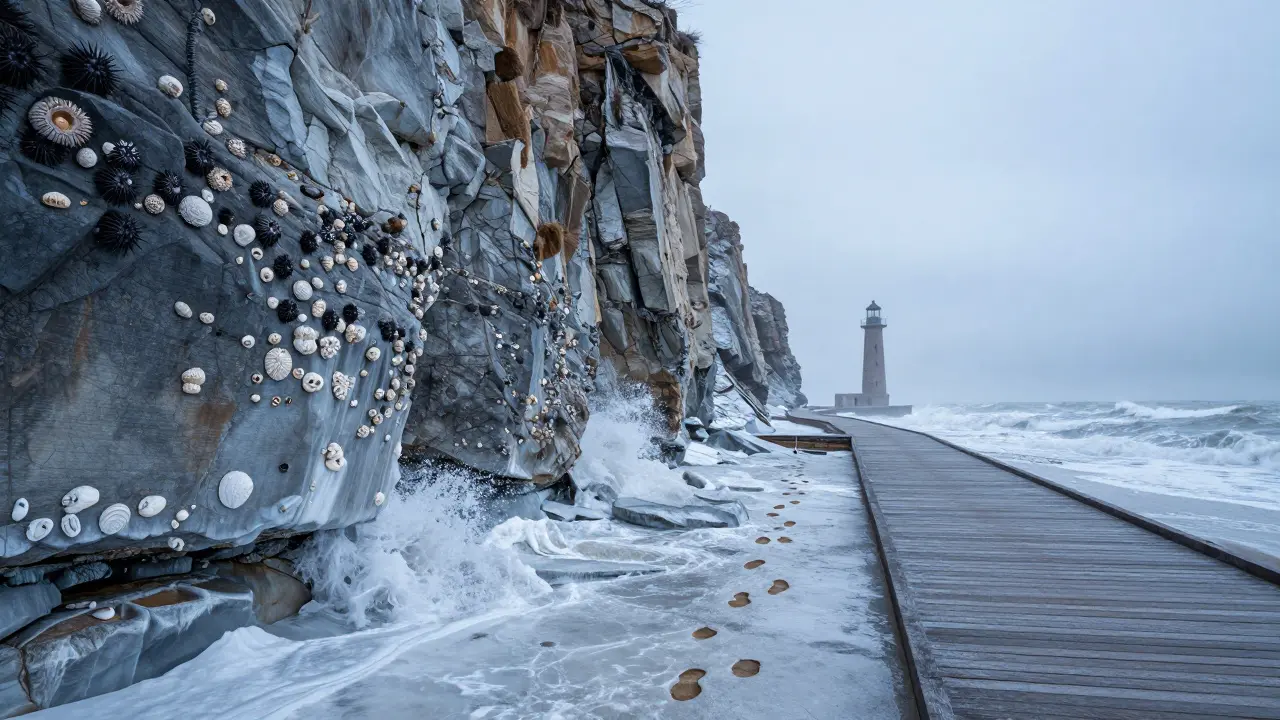
Winter: This is when the place feels truly wild. Fewer people. The sea crashes harder against the cliffs. The boardwalk is slick with rain, but the silence is worth it. On clear days, you might see dolphins offshore, or even an orca far out near the horizon. It’s not a place for sunbathing in December-but it’s perfect for solitude.
How to Get There and What to Bring
St Cyrus Beach is accessible by car. There’s a small, free parking area off the B9008 road, just past the sign for the nature reserve. It fills up on weekends, so arrive early. There’s no public transport directly to the beach, but you can take a bus to St Cyrus village and walk 1.5 miles along the coast road.
Bring sturdy shoes. The boardwalk is fine, but the trails to the cliffs are uneven. A waterproof jacket is a must-coastal weather changes fast. Pack water and snacks. There are no shops or cafes nearby. A pair of binoculars will help you spot birds from the viewing platforms. And don’t forget a camera. The light here, especially at sunset, is unforgettable.
If you’re planning a longer walk, link up with the Moray Firth Coastal Path. It runs from Montrose to Fraserburgh, and St Cyrus is one of its most scenic stretches. You can easily do a 5-mile loop: beach to boardwalk, up to the cliffs, back along the reserve trail, and return via the village.
Why This Place Matters
St Cyrus Beach isn’t just a pretty spot. It’s one of the last places in Scotland where nature still runs the show. The cliffs tell stories older than human history. The dunes protect the land from erosion. The boardwalk proves that people can visit without destroying. And the birds? They keep coming back because no one’s messed it up.
It’s a reminder that quiet places still exist. Not the kind you find on Instagram. The kind you feel in your bones-the wind on your face, the smell of salt and grass, the silence between waves. You don’t need to climb a mountain or hike for days to find wildness. Sometimes, it’s right here, along a quiet stretch of coast, waiting for you to walk slowly and listen.
Can you swim at St Cyrus Beach?
Yes, you can swim, but the water is cold year-round, rarely above 15°C even in summer. There are no lifeguards, and the currents near the cliffs can be unpredictable. Most people who swim here are experienced open-water swimmers. It’s safer to stick to the shallows unless you’re prepared for cold water conditions.
Are dogs allowed at St Cyrus Beach?
Yes, dogs are allowed, but they must be kept on a lead in the nature reserve, especially between March and August when birds are nesting. Even well-behaved dogs can scare off ground-nesting birds like ringed plovers. Stick to the boardwalk and main paths, and always clean up after them.
Is the boardwalk wheelchair accessible?
The main boardwalk is flat and wide enough for wheelchairs and mobility scooters. The surface is wooden planks with slight gaps, so it’s not perfectly smooth, but it’s navigable. Access to the cliffs and dune trails is not wheelchair-friendly due to steep, uneven paths. The parking area has designated accessible spaces.
Are there toilets or facilities at St Cyrus Beach?
No. There are no public toilets, cafes, or shops at the beach or nature reserve. The nearest facilities are in the village of St Cyrus, about a 15-minute walk away. Plan ahead and bring everything you need, including water and snacks.
What’s the best time of day to visit?
Early morning or late afternoon are ideal. The light is softer, the crowds are thinner, and the birds are most active. At sunset, the cliffs glow orange and red, and the boardwalk becomes a quiet corridor through the dunes. If you’re into photography, these hours give you the best shots.
Can you camp near St Cyrus Beach?
No, wild camping is not permitted within the nature reserve. The closest official camping sites are in Montrose or Lunan Bay, about 10-15 minutes’ drive away. There are no legal spots to pitch a tent right next to the beach.
St Cyrus Beach doesn’t shout. It doesn’t need to. It’s quiet, wild, and real. And if you take the time to walk its boardwalk, sit on its cliffs, and listen to its wind, you’ll understand why it’s worth protecting-and why you should visit before it changes.
Comments (12)
-
Sumit SM December 21, 2025
St Cyrus isn't just a beach-it's a meditation on time, isn't it? The cliffs are fossils of forgotten oceans, the boardwalk is humanity's humble apology for wanting to walk without destroying, and the silence between waves? That's the sound of the earth breathing. We think we visit nature, but really, nature visits us-reminding us we're temporary guests in a system older than language.

-
Jen Deschambeault December 21, 2025
I came here last October. The wind was howling, the dunes were shifting like sand ghosts, and I sat on that bench near the lighthouse ruins for an hour just listening. No phone. No music. Just salt air and the slow crash of waves. I didn’t know I needed that until I had it.

-
Kayla Ellsworth December 22, 2025
So let me get this straight-you’re telling me a wooden walkway is the reason this place hasn’t been turned into a McDonald’s parking lot? That’s the miracle? The real miracle is that anyone still cares enough to maintain it. Most places like this get Instagrammed to death by influencers in waterproof boots.

-
Soham Dhruv December 24, 2025
Been to st cyrus twice now. First time was in july, second in feb. Winter wins. No one around, the boardwalk creaks under your feet like it’s talking to you, and the cliffs look like they’re about to collapse into the sea. Perfect. Bring thermos of tea. And don’t forget your boots. The mud near the salt marsh is deep. Real deep.

-
Sally McElroy December 25, 2025
People talk about ‘untouched beauty’ like it’s some sacred gift-but who gave us the right to romanticize neglect? This place is only preserved because it’s inconvenient. If it had Wi-Fi, a gift shop, and a Starbucks, it’d be overrun. We don’t protect nature-we just avoid it until it becomes a photo backdrop.

-
Destiny Brumbaugh December 27, 2025
Scotland’s got a lot of pretty places but this one? It’s just dirt and rocks with a fancy sign. We got beaches in Florida with white sand and warm water and lifeguards. Why are we praising this? It’s cold, wet, and has no snacks. If this is ‘wilderness’ then I’ll take a Walmart parking lot any day.

-
Sara Escanciano December 28, 2025
They say ‘no one messed it up’-but who decided what ‘messing it up’ means? Who gets to define ‘fragile ecosystem’? That boardwalk? It’s a tourist trap disguised as conservation. They let people walk on it so they feel good about themselves while still consuming nature like a commodity. It’s performative environmentalism.

-
Elmer Burgos December 30, 2025
That comment about the lighthouse keeper’s cottage being torn down after a storm? That hit me. There’s something about places where the sea just takes back what it wants. No fanfare. No signs. Just quiet. I think we forget that the ocean doesn’t care about our rules or our trails. We’re just borrowing the land.

-
Jason Townsend December 30, 2025
Boardwalks are a government psyop. They want you to think you’re protecting nature by walking on wood-but they’re tracking your footsteps with drones. The ‘rare Scottish wildcat’? Probably a cat with a GPS collar. The fossils? Planted by the EU to distract us from the real agenda. They don’t want you to know what’s under the dunes.

-
Antwan Holder December 30, 2025
I cried when I saw the Scottish primrose. Not because it was pretty-but because I realized I’ve spent my whole life running from silence. Here, the wind doesn’t ask for your opinion. The waves don’t need your validation. The dunes don’t care if you post about them. I sat there for 47 minutes and didn’t speak a word. I think I finally remembered how to be human.

-
Angelina Jefary January 1, 2026
There’s a grammatical error in the post. It says ‘the cliffs are a 15-million-year-old geological time capsule’-but ‘cliffs’ is plural, so it should be ‘cliffs are 15-million-year-old geological time capsules.’ Also, ‘Lunan Bay’ is misspelled as ‘Lunan Bay’ in one section. This is why people can’t trust online content anymore.

-
Jennifer Kaiser January 1, 2026
It’s not about the boardwalk or the fossils or even the birds. It’s about the fact that someone, somewhere, decided to say ‘no’-no to development, no to convenience, no to turning this into a theme park. That decision, quiet and uncelebrated, is what keeps the soul of this place alive. We don’t need more Instagram posts. We need more people willing to say no.
