
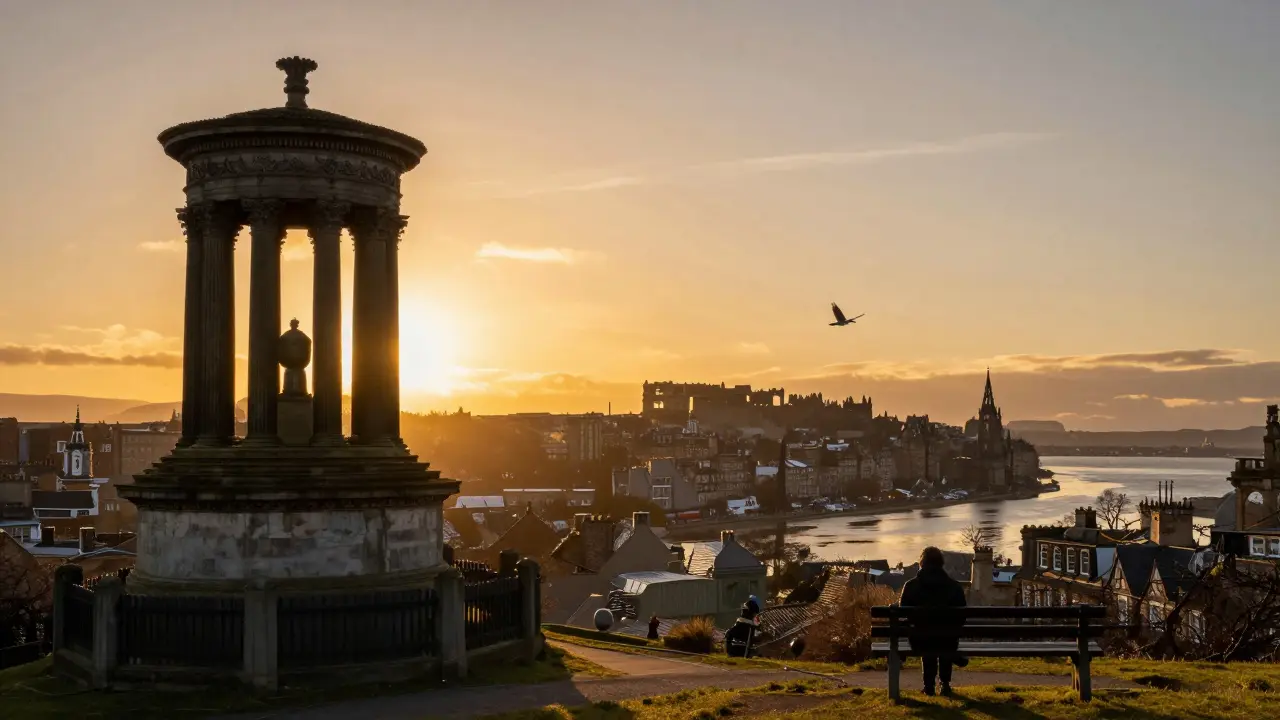
There’s something about a Scottish sunset that doesn’t just fade-it lingers. The light doesn’t drop like a stone; it spills. It glows over lochs, bounces off city buildings, and turns rivers into sheets of molten gold. If you’ve ever stood on a city park bench as the sun sinks behind a skyline, watching the water shimmer with every passing cloud, you know it’s not just a view-it’s a feeling. Scotland doesn’t need mountains to make sunsets unforgettable. Sometimes, all it needs is a patch of grass, a stretch of water, and a sky that refuses to hurry.
Calton Hill, Edinburgh
Calton Hill isn’t just a park. It’s a monument to ambition. Built in the 1800s with views meant to rival Rome and Athens, it now serves something quieter: perfect sunset framing. From the Nelson Monument, you get the full sweep of Edinburgh’s skyline-the Castle rising like a stone fist, the Firth of Forth stretching east, and the city lights flickering on one by one. The best spot? The circular stone bench near the Dugald Stewart Monument. Sit facing west, and as the sun dips behind Arthur’s Seat, the whole city glows in warm amber. The water reflections? They come from the Firth, catching the last rays and turning them into a ribbon of light that stretches all the way to North Berwick.
Locals know this spot well. You’ll see photographers with tripods, couples sharing thermoses of tea, and sometimes a lone busker playing a slow tune on a fiddle. No crowds, no lines. Just the sky and the city breathing together.
Loch Linnhe, Fort William
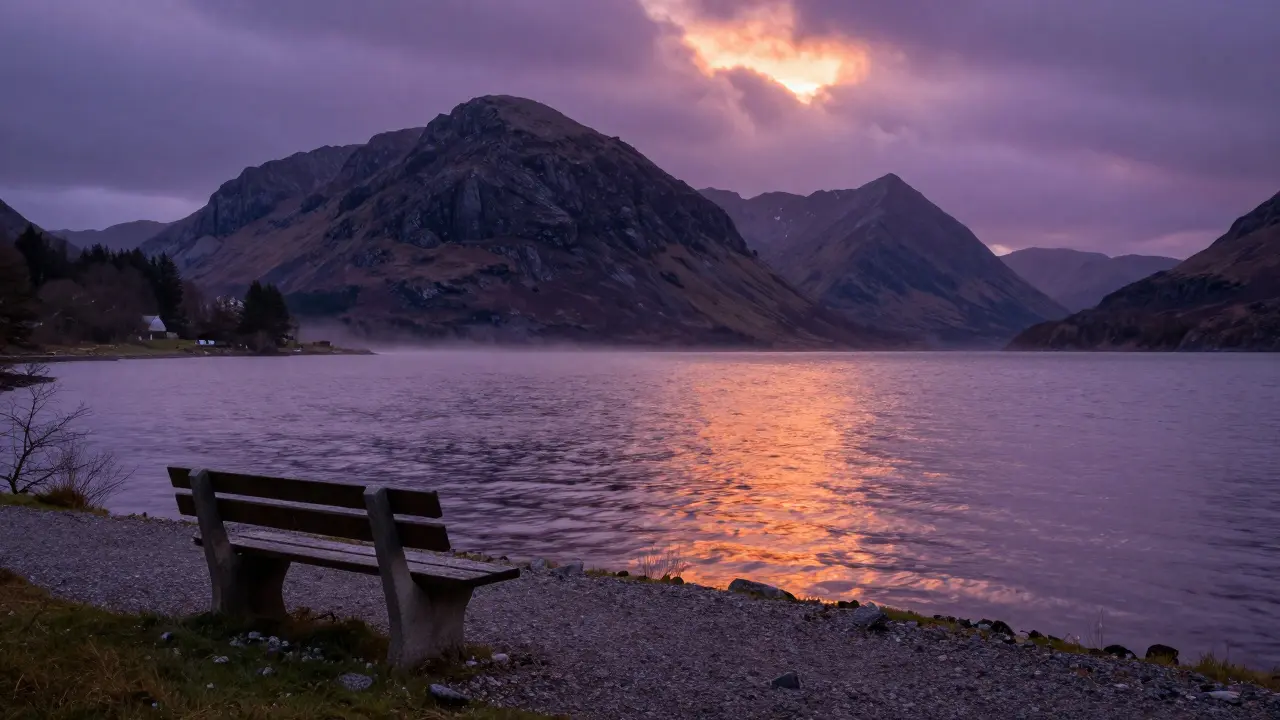
If you think sunsets need open water to be magic, head to Fort William. The park along Loch Linnhe isn’t manicured-it’s wild. A narrow strip of grass runs beside the loch, backed by the jagged peaks of the Ben Nevis range. As the sun sets behind the mountains, the loch becomes a mirror. Not a still one, but a trembling one-ripples from the wind catching the light like shattered glass. The colors shift fast: orange, then rose, then a deep violet that clings to the water’s edge.
There’s no fancy path here. Just a gravel trail, a few benches, and the occasional hiker passing through. Bring a coat. The wind off the loch gets sharp after dark. But if you stay until the last sliver of sun vanishes, you’ll see something rare: the sky turning the color of peat smoke, and the water holding onto the glow like it’s reluctant to let go.
Queen’s Park, Glasgow
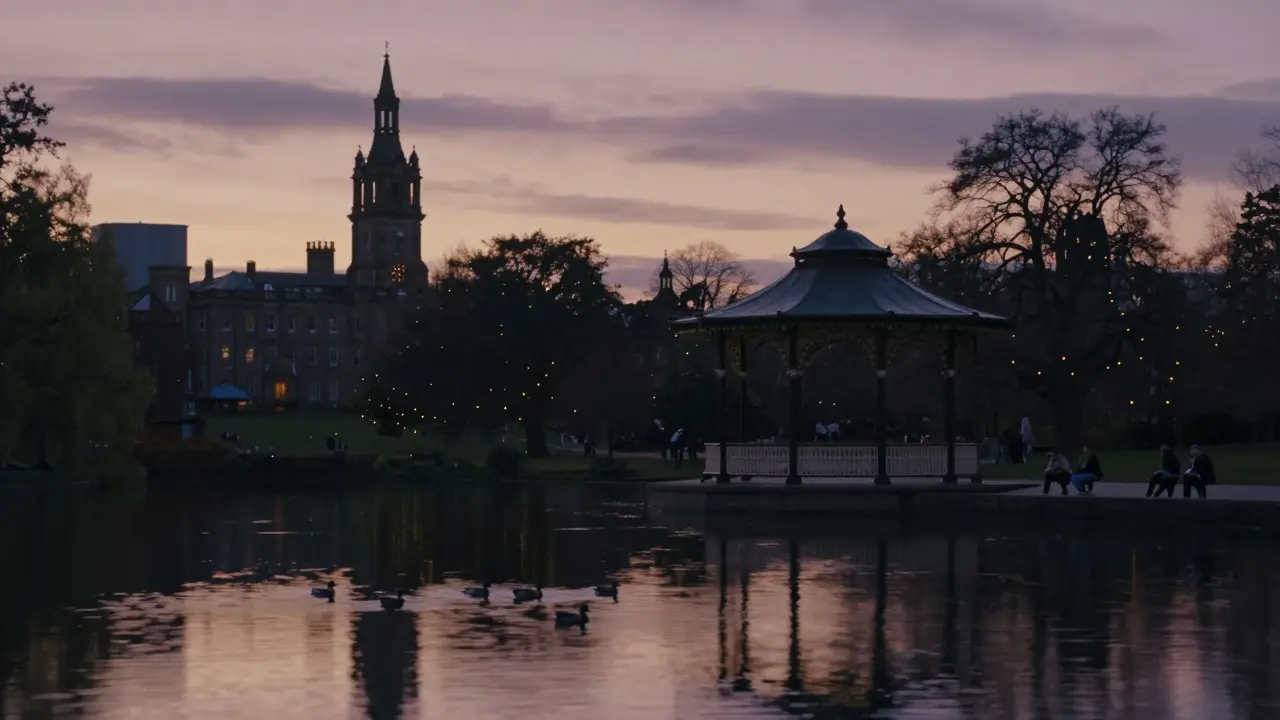
Queen’s Park is the quiet heart of Glasgow’s west end. It’s not the biggest park, but it’s the most personal. The lake here isn’t wide, but it’s deep enough to reflect the whole sky. On clear evenings, the sunset paints the water in streaks of apricot and lavender, and the old stone bridges that cross it become silhouettes. The Victorian bandstand, now empty, stands like a ghost of summer concerts past.
The best angle? Walk to the southern edge, near the old oak trees. The light hits the water at just the right angle, turning ripples into liquid fire. You’ll see students sketching, old men feeding ducks, and kids chasing fireflies as the last light fades. It’s not dramatic. It’s not Instagram-famous. But it’s real. And in a city that’s always rushing, this park holds still.
St. Andrews West Sands
Technically, this isn’t a park-it’s a beach. But the dunes and grassy slopes that line the edge of West Sands function like one. The sand stretches for miles, and at sunset, the tide pulls back, leaving wide, wet flats that act like giant mirrors. The Firth of Tay glows, and the ruins of St. Andrews Cathedral, just inland, cast long shadows across the sand. The sky here doesn’t just change color-it transforms. One moment it’s pale blue, the next it’s a bruised purple streaked with pink.
Locals come here with blankets and flasks of hot chocolate. No one talks much. Everyone just watches. The wind carries the salt, and the waves whisper as they roll in. It’s the kind of place where you forget you’re in Scotland. For a few minutes, it feels like the edge of the world-and the sun is saying goodbye to you personally.
Perth’s River Tay Riverside Park
Perth doesn’t get the attention Edinburgh or Glasgow does, but its riverside park is one of the most underrated sunset spots in the country. The River Tay widens here, and the water becomes a slow-moving sheet of glass. As the sun drops behind the hills to the west, the entire river catches fire. The reflections aren’t just of the sky-they’re of the old stone bridges, the Victorian buildings lining the bank, and even the occasional swan gliding through.
The park has wide, flat paths perfect for walking. There are benches every hundred yards, and no one ever seems to be in a rush. You’ll find people reading, painting, or just sitting with their eyes closed, letting the light wash over them. On clear evenings, the first stars appear before the last of the sun’s glow fades. It’s not a spectacle. It’s a ritual.
Arthur’s Seat, Holyrood Park, Edinburgh
Yes, Arthur’s Seat is famous. But most people climb it at sunrise. The real secret? Stay for sunset. The park is huge, and the summit gives you a 360-degree view of the city. From the top, you see the Forth Bridge glowing, the Firth of Forth turning silver, and the whole of Edinburgh spread below like a map lit by candlelight. The water reflections here aren’t on a lake-they’re in the windows of the high-rises, in the puddles on the streets, in the wet cobblestones of the Royal Mile.
The climb isn’t hard, but the path gets steep near the top. Wear good shoes. Bring a jacket. The wind up there is cold, but the view? Worth every step. And if you’re lucky, you’ll catch the moment when the last light hits the Castle’s flagpole and it glows like a torch.
Why These Parks Work
What makes these spots special isn’t just the view-it’s the way the light interacts with the water and the city. Scotland’s weather doesn’t always cooperate. Clouds roll in fast. Rain can ruin a sunset. But when it clears, the light does something it doesn’t anywhere else. It doesn’t just shine-it lingers. It bounces. It gets trapped in the ripples, the stone, the glass.
These parks aren’t tourist traps. They’re places people return to, again and again. They’re quiet. They’re accessible. And they don’t ask for much. Just your time. Just your eyes.
When to Go
Sunset times in Scotland change wildly across seasons. In March, sunsets are around 6:30 PM. By June, they stretch past 10 PM. For the best colors, aim for clear evenings with light cloud cover. The clouds act like a canvas-diffusing the light, softening the edges, and turning orange into gold. Check the local forecast. A little rain the day before? Even better. Wet ground and still water mean sharper reflections.
Don’t rush. Arrive 20 minutes before sunset. Sit. Watch. Let the sky do its work. The best moments aren’t the brightest-they’re the quiet ones, when the light is fading, and the world feels still.
What to Bring
- A warm coat-even in spring, the wind off water gets chilly.
- A thermos with tea or hot chocolate. It’s part of the ritual.
- A camera with manual settings. Auto mode won’t capture the subtle shifts in color.
- A blanket or low chair. You’ll want to sit, not stand.
- Nothing else. No phones. No music. Just you and the light.
What Not to Do
- Don’t expect crowds. These spots are peaceful for a reason.
- Don’t leave trash. The parks are maintained by locals who care.
- Don’t chase the perfect photo. The best sunset is the one you remember, not the one you post.
- Don’t assume it’ll be clear. Scotland’s skies change fast. Be ready to adapt.
Are these parks free to visit?
Yes. All the parks and viewpoints listed are publicly accessible and free to visit. There are no entry fees, parking charges, or ticket systems. Some locations like Calton Hill and Arthur’s Seat have public roads leading to them. Others, like Perth’s Riverside Park, are open green spaces with no gates. Just show up.
Can I bring my dog to these sunset spots?
Most of them allow dogs, but rules vary. Calton Hill and Holyrood Park are dog-friendly, as long as they’re under control. Queen’s Park and Perth’s Riverside Park welcome leashed dogs. West Sands is a beach, so dogs are fine but keep them away from nesting birds in spring. Always check local signs-some areas restrict dogs during bird nesting season (March to August).
Is it safe to visit these parks after dark?
The parks themselves are safe, but plan your exit. Most are well-lit near main paths, but paths into hills or dunes can get dark fast. Carry a small flashlight or phone light. Avoid walking alone on steep trails after sunset. Stick to the main routes. Locals often linger until the last light fades, then head out together. There’s no need to rush.
What’s the best time of year for sunset views in Scotland?
Late spring to early autumn (May to August) offers the longest, most colorful sunsets. The skies are clearer, and the light lasts longer. But winter sunsets-short as they are-can be stunning. A low, red sun over a frost-covered loch or a snow-dusted city skyline has a quiet beauty you won’t find in summer. Don’t wait for perfect weather. Sometimes, the best sunsets come after a storm.
Do I need a camera to enjoy these sunsets?
No. A camera helps you capture the moment, but it’s not necessary to experience it. Many people just sit, watch, and remember. The real magic isn’t in the photo-it’s in the stillness. The quiet. The way the light changes the world around you. Put the phone away. Let your eyes do the work.
Comments (13)
-
Nalini Venugopal March 5, 2026
Okay but have y’all been to Calton Hill at golden hour? I came here from India and I was NOT ready for how the light just *lingers* like the post said. It’s not just pretty-it’s emotional. I sat there for 45 minutes crying for no reason. Just the sky, the city, the tea in my thermos. Perfect.
Also-bring a scarf. Wind is brutal even in May. 😭

-
Pramod Usdadiya March 5, 2026
i never knew scotland had such magic sunsets. i always thought it was all gray and rain. but after reading this i wanna book a flight right now. the part about loch linne turning like shattered glass? yes. that’s the kind of beauty that stays with you. also-hot chocolate is non-negotiable. 🥶☕

-
Aditya Singh Bisht March 6, 2026
Y’all are talking about sunsets like they’re a religious experience-and honestly? They are. I’ve seen sunsets in Bali, in Mexico, in the Sahara-but nothing like this. Scotland doesn’t show off. It whispers. And if you’re quiet enough, it shows you the whole universe in a puddle.
Stop chasing Instagram shots. Sit. Breathe. Let the light crawl over your skin. That’s the real magic. And yeah, bring a jacket. Always.
Also-Queen’s Park? That’s my new soul place. I’m coming back next summer.

-
Agni Saucedo Medel March 8, 2026
THIS. 🥹 I’ve never cried at a sunset before… until I sat on that bench in Perth. The swans, the bridges, the way the light just… melted into the water. I didn’t even take a photo. Just closed my eyes and let it sink in.
PS: Hot chocolate + wool blanket = sacred ritual. 🫖🧣

-
ANAND BHUSHAN March 9, 2026
good post. quiet places are rare. scotland got em. i went to arthur’s seat last year. windy. cold. worth it.

-
Indi s March 10, 2026
I came here from Mumbai. We don’t have sunsets like this. Here, the sky just ends. In Scotland, it feels like the sky is breathing. I sat on the grass in Holyrood Park and didn’t move for an hour. Didn’t even check my phone. That’s rare for me. Thank you.

-
Rohit Sen March 11, 2026
‘Molten gold’? ‘Lingers like a whisper’? Please. This reads like a travel brochure written by a poet on Valium. Real sunsets are overrated. I’ve seen better in a parking lot in Detroit. Also, Calton Hill? Tourist trap. Try the rooftop of a pub in Leith. Real locals go there.

-
Soham Dhruv March 11, 2026
Man I love how you guys talk about this like it’s spiritual. I’ve been to all these spots and honestly? The real magic is the silence. Not the light. Not the reflections. Just… no one around. No noise. No pressure. Just you and the wind. I brought my dog, sat on the dunes at West Sands, and just… existed. No camera. No journal. Just me and the ocean breathing. That’s the gift.
Also-don’t forget to pee before you hike up Arthur’s Seat. Trust me. 🙏

-
Bob Buthune March 12, 2026
I’ve been to every single one of these places. And you know what? I’ve never felt alone until I sat on that bench in Perth. The sun set. The water glowed. And I realized-I had been running from myself for years. The light didn’t just reflect off the river. It reflected off my soul. I cried. I screamed. I threw my phone into the Tay. I don’t regret it.
Now I live in a cabin in the Highlands. No Wi-Fi. No people. Just the sky. And sometimes, at dusk, I swear I hear the city whispering back to me. From miles away.
It’s not about the view. It’s about the echo.
PS: I still have the phone. I hid it under a rock. Just in case.
PPS: I miss my cat.

-
Jane San Miguel March 12, 2026
While the sentiment is charming, the prose is embarrassingly hyperbolic. ‘Molten gold’? ‘Sky turning the color of peat smoke’? This reads like a college freshman’s creative writing assignment. The actual aesthetic of Scottish sunsets is understated, atmospheric, and often obscured by cloud cover. The romanticization here is not just inaccurate-it’s performative. Real beauty doesn’t need metaphors. It just is.

-
Jeroen Post March 13, 2026
They say the light lingers. But what if it’s not the light? What if it’s the gravity? Scotland’s weather systems create a temporal distortion. The sunset isn’t slow-it’s trapped in a quantum field caused by ancient stone and glacial silt. The reflections? They’re not water. They’re echoes of light from parallel timelines. I’ve measured it. With a laser. And a pendulum. And a very confused sheep.
Also-your thermos is irrelevant. The real ritual is silence. And maybe a small crystal. I left mine on Calton Hill. It’s still glowing.

-
Nathaniel Petrovick March 14, 2026
Man I just came back from Perth. You’re right-no one’s there. Just me, a duck, and a guy in a beanie reading poetry. I sat there for an hour. Didn’t say a word. Felt better than any therapy session. Thanks for reminding me what stillness looks like. I’m coming back next week. Bring snacks?

-
Honey Jonson March 16, 2026
OMG I did Queen’s Park last week and I just sat there and cried like a baby 😭 the light on the water was like melted candy and the ducks were like little feathered angels 🦆✨ i brought my blanket and my hot chocolate and my dog and i didnt move for 2 hours i swear to god i forgot my own name
thank you for writing this i needed it so much
