
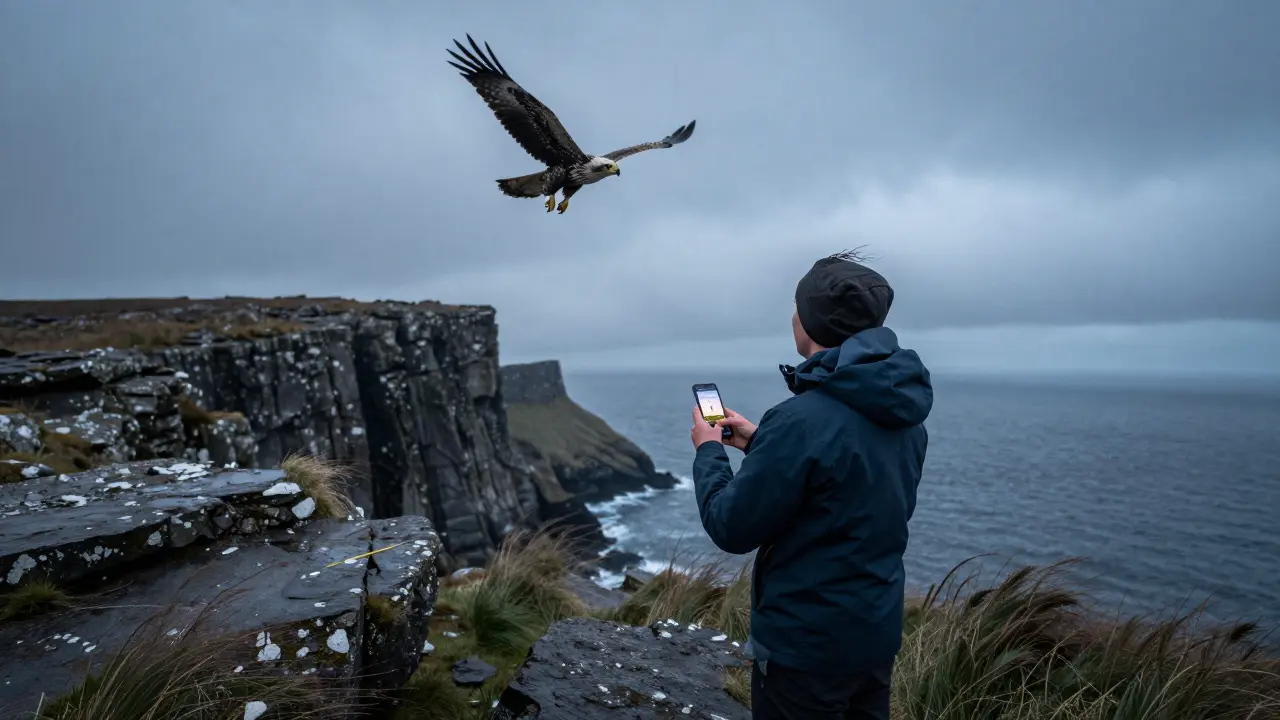
Imagine standing on the rugged coast of the Hebrides, wind whipping around you. A strange cry echoes from the cliffs above. Is it a peregrine falcon or a sea eagle? You pull out your phone, open an app, and within seconds, you have your answer. Or perhaps you’re planning to catch the Northern Lights over the Cairngorms, but the forecast is cloudy. Do you wait all night for nothing, or do you trust a real-time alert system?
Scotland’s landscape is wild, unpredictable, and breathtakingly beautiful. But navigating it requires more than just good boots. The right digital tools can turn a confusing hike into an educational adventure and a frustrating skywatching session into a magical memory. This guide breaks down the essential apps for identifying wildlife, tracking tides, and chasing the Aurora Borealis.
Identifying Scottish Wildlife with Precision
Scotland is home to some of Europe’s most unique species. From the red deer roaming the Highlands to the puffins nesting on seabird islands, visual identification can be tricky. Many birds look similar to the untrained eye, and plants often share common names that cause confusion. Digital identification tools bridge this gap.
The gold standard for bird identification remains eBird, developed by Cornell Lab of Ornithology. While primarily a database, its integrated checklist features help you filter sightings by location and date. If you are looking for image recognition, Merlin Bird ID is a free app by Cornell that uses sound and photos to identify birds instantly. It works offline, which is crucial when you lose signal in remote glens.
- Merlin Bird ID: Best for quick audio-based identification. Just hold your phone up to record the call.
- iNaturalist: Great for mammals, insects, and plants. It connects you with local experts who verify your observations.
- Seek by iNaturalist: A simpler version for casual users who want instant results without creating accounts.
For plant identification, especially if you are foraging or studying botany, Pl@ntNet offers high-accuracy plant identification using AI. However, always cross-reference with a physical field guide before consuming anything. Mistaking a toxic hemlock for a wild carrot can have serious consequences.
Tide Charts: Safety and Access
In Scotland, the sea is not just a backdrop; it is a powerful force that dictates access. Many beaches, like those in the Isle of Skye or the Outer Hebrides, are only safe or accessible at low tide. Underestimating the tide can trap hikers on rocky outcrops or cut off return routes through coastal paths.
Relying on general weather apps is not enough. You need specific tidal data. The most reliable source is the UK Hydrographic Office data, often accessed via apps like Tide Alert or My Tide Times.
| App Name | Key Feature | Offline Capability | Cost |
|---|---|---|---|
| My Tide Times | Clean interface, easy-to-read graphs | No (requires data) | Free (with ads) |
| Tide Alert | Push notifications for high/low tides | Limited | Freemium |
| Navionics Boating | Detailed charts for boaters | Yes (paid maps) | Paid subscription |
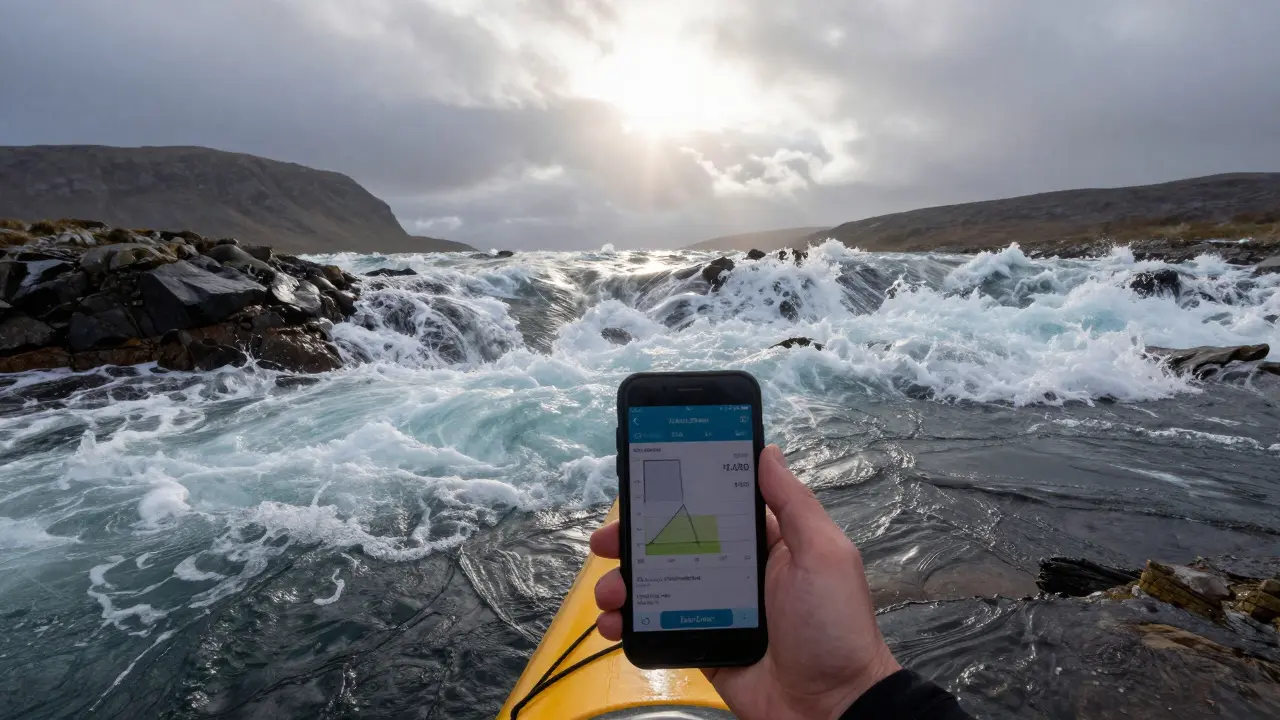
If you are kayaking or sailing, Navionics provides detailed nautical charts combined with tidal streams. For walkers, simply knowing the time of low tide is usually sufficient. Remember that "low tide" does not mean the water disappears completely. In places like the Corryvreckan whirlpool near Islay, tidal currents can be dangerous even when the water level drops.
Chasing the Aurora: Alerts and Forecasts
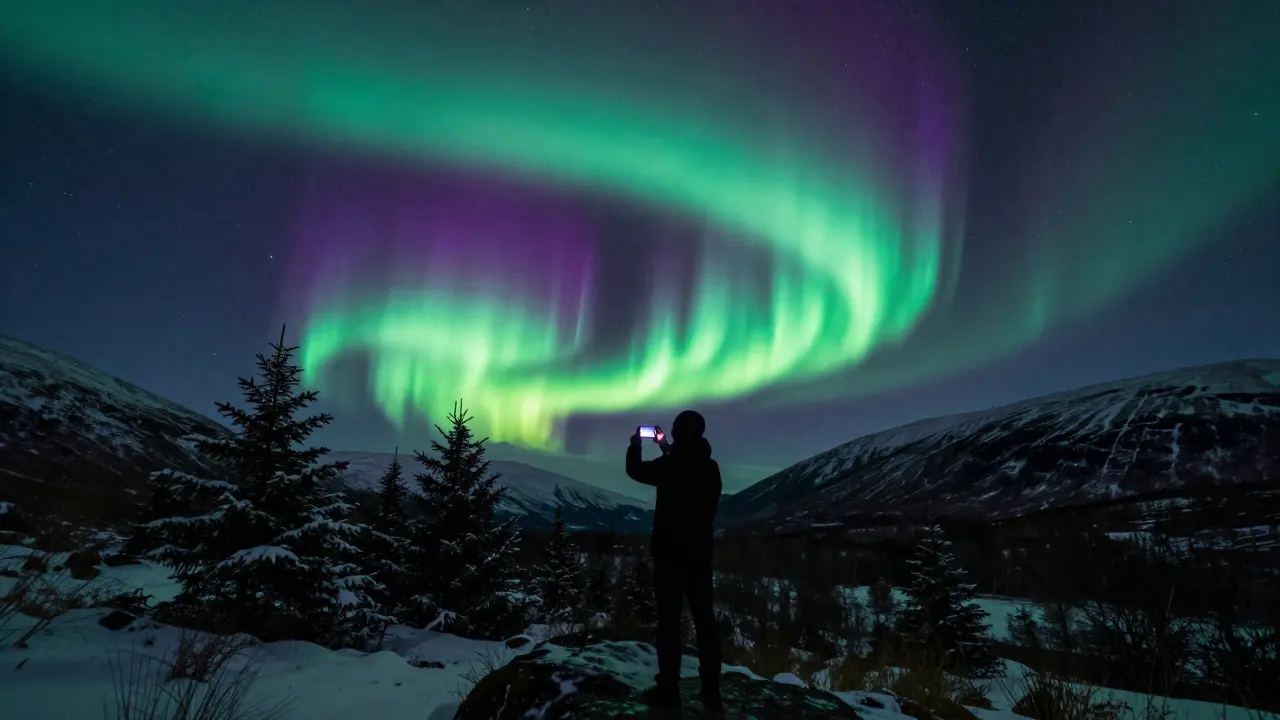
Seeing the Northern Lights in Scotland is a bucket-list item for many. Unlike Scandinavia, Scotland sits further south, meaning auroras are less frequent and require stronger solar activity. Timing is everything. You cannot rely on luck alone.
The key metric to watch is the Kp Index, which measures geomagnetic storm intensity on a scale from 0 to 9. Generally, a Kp index of 5 or higher increases the chances of seeing auroras in the northern parts of Scotland, such as Shetland or Orkney. For central Scotland, you might need a Kp of 6 or 7.
Apps like Aurora Forecast (by Space Weather Live) provide real-time Kp index updates and cloud cover predictions. Cloud cover is often the bigger enemy than solar activity. An app that combines space weather with local meteorological data is invaluable.
- Space Weather Live: Offers precise Kp forecasts and historical data.
- Windy.com: Excellent for checking cloud layers and visibility conditions.
- Aurora Hunter: Uses your camera to detect green light from auroras, helping you confirm if they are visible even if you can’t see them with the naked eye yet.
Plan your trips during new moon phases to minimize light pollution. Combine this with a clear sky forecast and a rising Kp index for the best odds.
Integrating Tools for a Seamless Experience
You don’t need to switch between five different apps constantly. The best approach is to curate a small toolkit. For a typical day in the Scottish Highlands, you might use:
- AllTrails or OS Maps for navigation and route planning.
- Merlin Bird ID for any interesting wildlife encounters.
- My Tide Times if your route involves coastal paths.
- Windy.com to check sudden weather changes and cloud cover for evening aurora hopes.
Download offline maps before you leave civilization. Signal loss is common in valleys and behind mountains. Having cached tide tables and bird libraries ensures you aren’t left guessing when connectivity fails.
Common Pitfalls to Avoid
Technology is helpful, but it has limits. Don’t stare at your screen while walking on uneven terrain. Trips and falls are far more common than missed sightings. Also, battery life drains faster in cold weather. Keep your phone warm in your pocket until you need it.
Another mistake is trusting user-generated content blindly. On platforms like iNaturalist, misidentifications happen. Always look for observations marked as "research grade" or verified by multiple users. Similarly, tide times can vary slightly depending on the specific harbor or beach due to local geography. Check the specific station closest to your location.
What is the best app for identifying birds in Scotland?
Merlin Bird ID is widely considered the best due to its accurate sound identification feature and offline capability. It is free and developed by the Cornell Lab of Ornithology.
Do I need special apps to see the Northern Lights?
While no app guarantees a sighting, apps like Space Weather Live (for Kp index) and Windy.com (for cloud cover) significantly improve your chances by helping you choose the right time and place.
Which tide app is most reliable for Scottish coasts?
My Tide Times and Tide Alert are popular choices. They provide accurate data based on UK Hydrographic Office sources. Always check the specific port or station nearest to your location.
Can these apps work without internet connection?
Merlin Bird ID works fully offline. Most tide apps require an initial download or internet connection for live updates, but some allow saving specific locations. Always prepare offline maps and data before heading into remote areas.
Is it safe to rely on apps for navigation in Scotland?
Apps are great aids, but never your sole navigation tool. Battery failure and signal loss are risks. Always carry a physical map and compass, and know how to use them.
Comments (12)
-
Jeanie Watson May 17, 2026
Great list but honestly who has time to download all these apps just for a weekend trip.

-
Jessica McGirt May 18, 2026
I have found that Merlin Bird ID is exceptionally useful for quick identifications in the field. The sound recognition feature works remarkably well even with background wind noise. It is important to note that offline functionality is a critical feature for remote areas in Scotland. I always ensure my maps are cached before heading out. Battery life can be an issue in colder temperatures so keeping the device warm is advisable. The tide information provided by My Tide Times is generally accurate for coastal planning. However, one should always verify local conditions as geography can affect tidal patterns significantly. Aurora forecasting requires patience and often involves dealing with unpredictable cloud cover. Windy.com provides excellent visualizations for atmospheric layers which helps in predicting visibility. Integration of these tools into a single workflow reduces cognitive load during exploration. Safety remains paramount when navigating rugged terrain. Technology serves as a supplement rather than a replacement for traditional navigation skills. Always carry physical backups for critical information.

-
Jeff Napier May 19, 2026
apps are just tracking you anyway why do you care about birds when the government wants your data

-
Adithya M May 20, 2026
You really need to stop spreading this nonsense about surveillance. The apps mentioned use standard location services for identification purposes only. There is no evidence linking bird watching apps to government surveillance programs. Your argument lacks logical foundation and factual support. Please cite sources if you claim otherwise. We should focus on the utility of these tools for nature conservation. Misinformation harms the community's ability to engage with technology safely. Let us discuss the actual features of Merlin or iNaturalist instead. They provide valuable data for scientific research globally. User privacy settings are transparent and controlled by the individual. Do not derail productive conversations with unfounded conspiracy theories.

-
Jeff Napier May 21, 2026
whatever you say keep your data safe i guess
-
Sibusiso Ernest Masilela May 23, 2026
This guide is utterly pedestrian and fails to capture the true essence of Scottish wilderness appreciation. Only those with refined tastes understand that technology diminishes the raw experience of nature. You amateurs rely on screens instead of developing your own observational skills. It is pathetic how modern hikers cannot identify a red deer without an algorithm. True experts use binoculars and field guides printed on high-quality paper. Your reliance on tide apps shows a fundamental lack of respect for the sea's power. One must learn to read the water oneself rather than trusting digital notifications. Aurora chasing becomes a trivial game when reduced to Kp index numbers. The soul of the landscape is lost to such mechanistic approaches. I suggest you spend less time configuring apps and more time cultivating genuine expertise. This content is unworthy of serious consideration by discerning individuals.

-
Daniel Kennedy May 23, 2026
While it is true that traditional methods have merit, dismissing technology entirely ignores its accessibility benefits. Many people find apps helpful for initial learning stages before mastering manual identification. The goal is to enhance safety and educational value not replace human intuition. Offline capabilities address connectivity issues common in remote Scottish regions. These tools democratize access to expert knowledge for casual observers. Combining tech with traditional skills creates a robust approach to outdoor activities. We should encourage diverse strategies rather than enforcing elitist standards. Everyone has their own journey in connecting with nature. Supporting inclusive practices helps grow interest in conservation efforts. Let us focus on practical advice that works for various skill levels.

-
Sibusiso Ernest Masilela May 25, 2026
Your sentimentality does not change the fact that you are weakening the spirit of exploration. Stick to your gadgets while I enjoy the real world.
-
Ronak Khandelwal May 26, 2026
I love how this post brings together different aspects of outdoor enjoyment 🌿✨ Technology can indeed bridge gaps in our knowledge. Using Seek by iNaturalist helped me discover new species during my last hike. It feels wonderful to contribute to citizen science projects through simple observations. The aurora alerts saved me from waiting in vain under cloudy skies last winter ❄️🌌 Planning ahead with reliable tide data ensures safer coastal walks. Sharing experiences within communities enriches everyone's understanding of nature. Let us continue supporting each other in exploring responsibly 🙏💚

-
Nick Rios May 28, 2026
I appreciate the detailed breakdown of offline capabilities especially for areas with poor signal. It makes sense to prepare thoroughly before venturing into remote locations. The emphasis on safety regarding tides is particularly important for inexperienced visitors. I will definitely try Merlin Bird ID for my upcoming trip to the Highlands. Knowing what to expect helps reduce anxiety about getting lost or missing key sights. Thank you for sharing these practical insights.

-
Taylor Hayes May 29, 2026
It is great to see resources that help people connect with nature safely. I often worry about battery drain in cold weather so keeping phones warm is good advice. The integration section provides a clear strategy for managing multiple tools efficiently. I think many beginners would benefit from starting with simpler apps like Seek. Gradually building confidence allows users to explore more complex features later. Community verification on platforms like iNaturalist adds reliability to identifications. Encouraging responsible usage promotes better environmental stewardship overall.

-
Sanjay Mittal May 31, 2026
The technical accuracy of this guide is commendable especially regarding Kp index thresholds for different latitudes. Users should understand that aurora visibility depends heavily on local light pollution levels too. New moon phases are crucial for optimal viewing conditions in southern Scotland. Tide prediction algorithms vary slightly between providers so cross-referencing is wise. Navionics offers superior detail for marine navigation compared to basic tide apps. Offline map caching prevents frustration when cellular networks fail unexpectedly. Proper preparation enhances both safety and enjoyment in challenging environments.
