
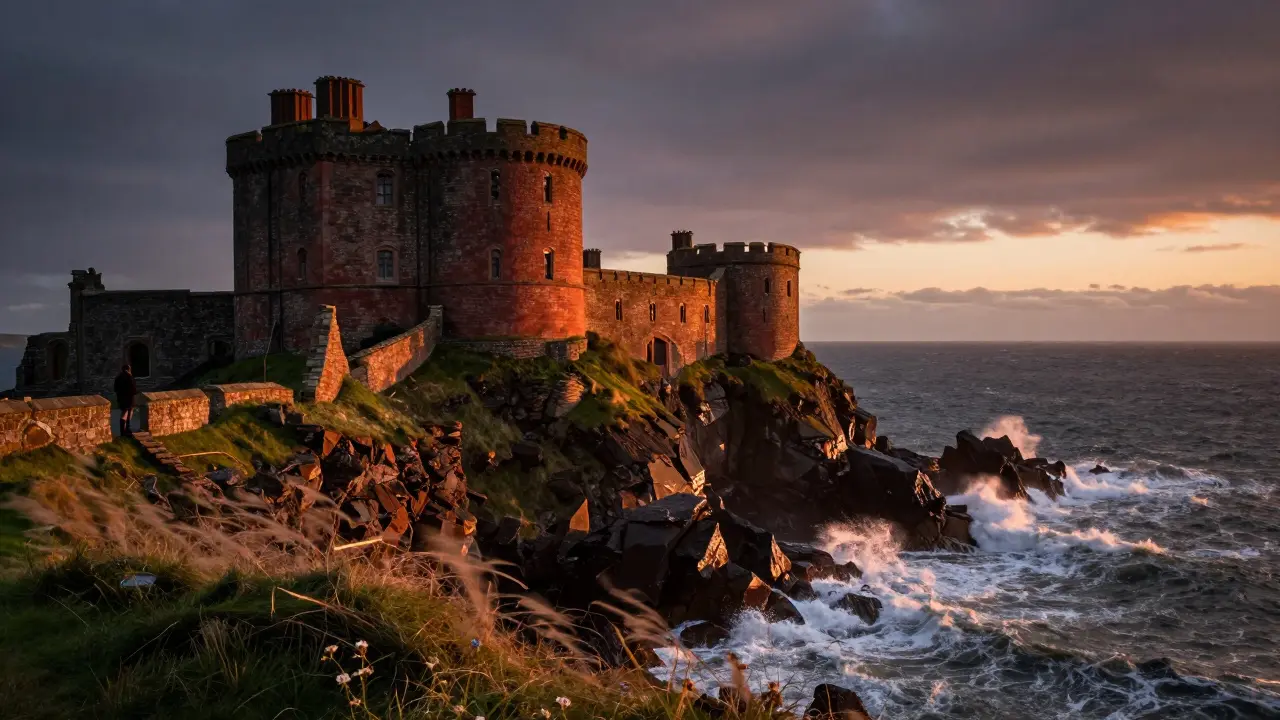
Standing on the edge of a sheer cliff above the Firth of Forth, Tantallon Castle isn’t just another ruin. It’s a red sandstone giant that once held power, wealth, and defiance against kings. Built in the 14th century, this fortress didn’t just sit on the coast-it dominated it. Its thick walls, towering keep, and dramatic drop to the sea make it one of Scotland’s most striking castle ruins. You don’t need to be a history buff to feel something here. The wind, the salt air, the silence between the broken walls-it all tells a story.
Why Tantallon Castle Stands Out
Most Scottish castles are built on hills, in valleys, or near rivers. Tantallon is different. It was built to control the sea. The Douglas family, powerful lords of the region, chose this spot because it gave them command over shipping routes between Edinburgh and the north. The castle’s three main sections-the inner curtain wall, the great keep, and the outer bailey-were designed to resist siege, not just look impressive. Unlike Edinburgh Castle, which sits on volcanic rock, Tantallon’s foundation is layered red sandstone. That stone, worn by centuries of sea spray and storms, gives the ruins a warm, almost glowing red hue at sunset.
The keep, still standing at four stories, is the heart of the castle. It was built around 1378 by William Douglas, 1st Earl of Angus. Its thick walls, up to 5 meters in places, were meant to hold out against cannons. And they did-for a while. In 1651, Oliver Cromwell’s army bombarded it with artillery for days. The keep didn’t collapse, but the castle’s defenses did. After that, it was abandoned. No one lived here again.
What You’ll See Today
Walking through Tantallon today, you don’t just see ruins-you see layers of history. The inner courtyard still holds the outline of the great hall, the kitchens, and the chapel. You can walk along the curtain walls and look down at the sea crashing against the rocks below. The outer bailey, where servants and soldiers lived, is now grassy and quiet. A few stone foundations remain, hinting at where the stables and workshops once stood.
The most dramatic spot is the cliff edge near the gatehouse. A narrow path leads out to a viewpoint where the castle seems to hang over the water. On a clear day, you can see the Bass Rock, a volcanic island just offshore, home to tens of thousands of gannets. The sound of the birds, the smell of the sea, and the wind howling through the arches-it’s unforgettable.
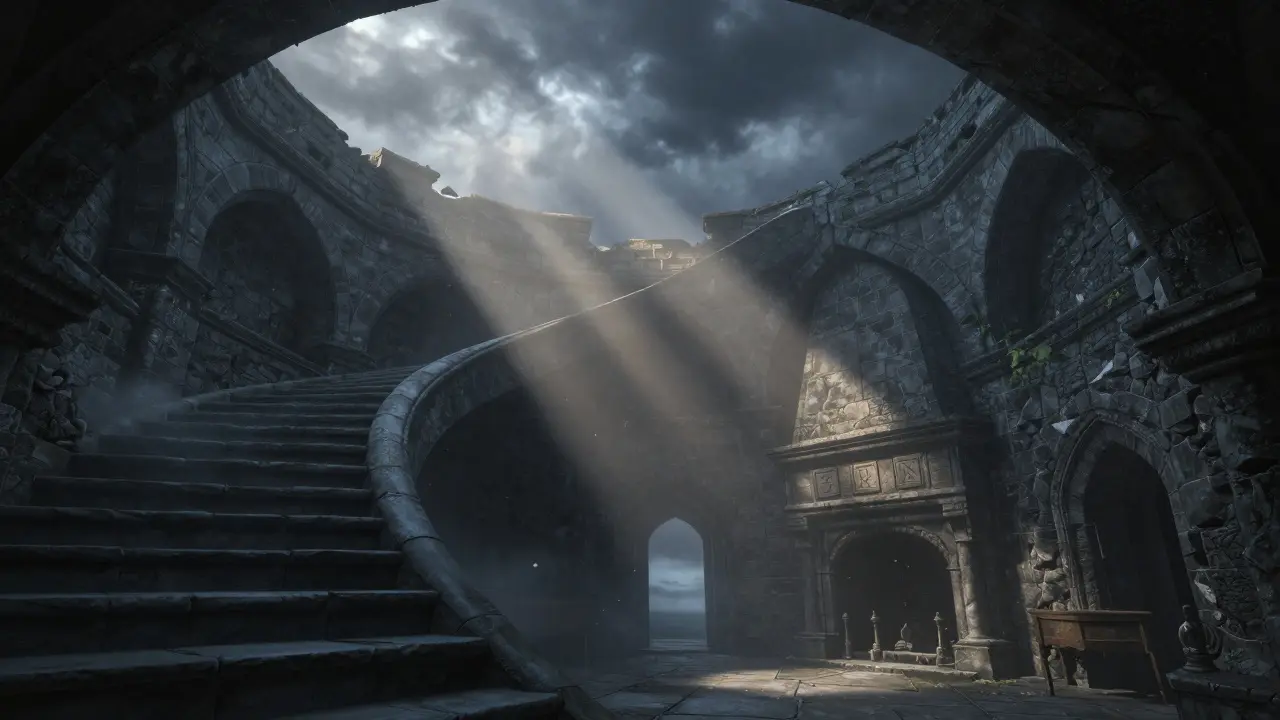
There’s no roof over the keep anymore, but you can still climb the stone stairs inside. The top floor gives you a 360-degree view: the Firth of Forth to the south, the hills of East Lothian to the west, and the ruins of the castle spread out below. The windows, once glazed and shuttered, are now gaping holes framed by stone. You can imagine the guards standing there, watching for enemy ships.
How to Get There and What to Bring
Tantallon Castle is located in East Lothian, about 30 minutes from Edinburgh by car. The nearest village is North Berwick. There’s a small parking lot right at the entrance-free for Historic Environment Scotland members, £7.50 for others as of 2026. The walk from the parking lot to the castle is about 200 meters downhill on a well-maintained path. It’s easy for most people, but the return climb can be tiring in heat or wind.
You don’t need hiking boots, but sturdy shoes matter. The paths are uneven, and some steps are worn smooth by centuries of feet. Bring a windproof jacket. Even on calm days, the sea wind here is sharp. A camera is a must. The light changes fast-morning mist, midday clarity, golden hour on the red stone. If you’re visiting in winter, gloves and a hat are essential. The wind chill here can drop below freezing.
There are no cafes or shops at the site. Bring water and a snack. The nearest toilets are in the parking area. No food or drink is allowed inside the castle ruins-this isn’t just a rule, it’s to protect the stones. The sandstone erodes faster when moisture from food or spills gets trapped in the cracks.
When to Visit
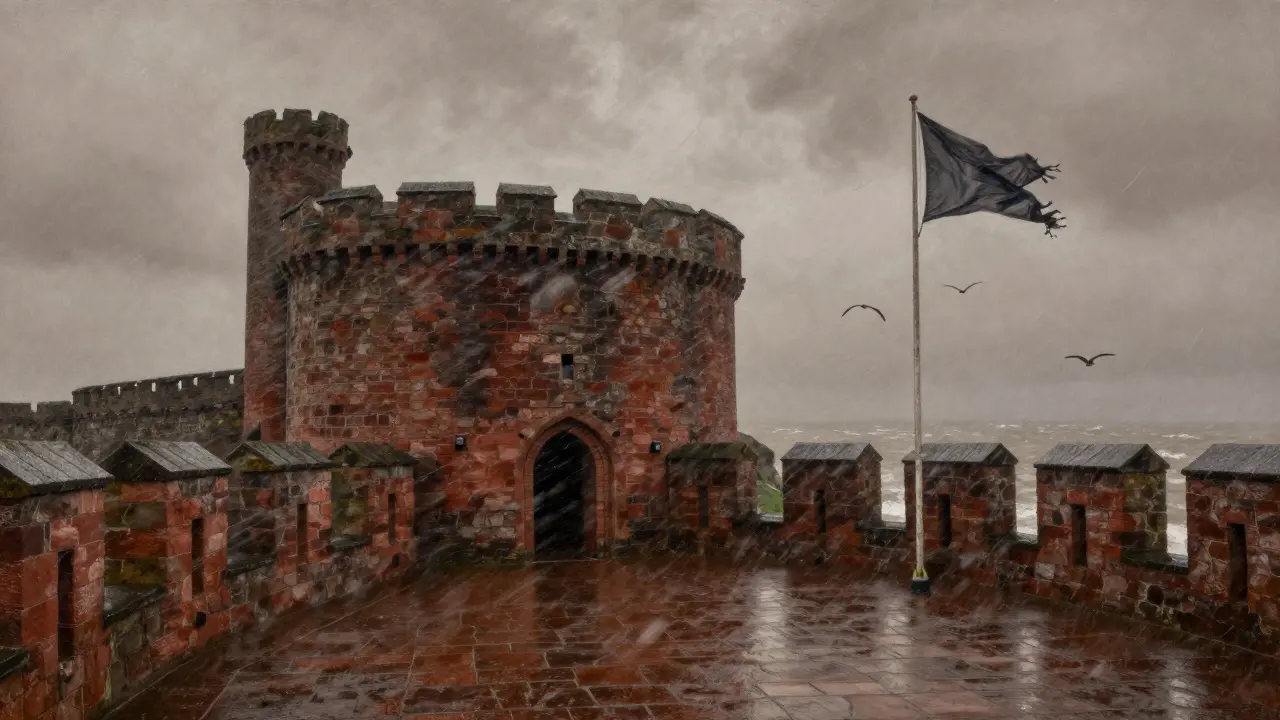
Tantallon is open year-round, but the best time depends on what you want. Spring (April-May) brings wildflowers to the grassy areas and fewer crowds. Summer (June-August) gives you the longest daylight-perfect for sunset shots from the keep. Autumn (September-October) has crisp air and fewer tourists. Winter (November-February) is raw and powerful. The sea roars louder, the wind screams through the arches, and the ruins feel alive. If you’ve seen Tantallon in sunshine, come back in a storm. You’ll see a different castle.
Don’t go if it’s been raining heavily. The paths get slippery, and the cliff edges are dangerous. The site closes temporarily after storms or high winds for safety. Check Historic Environment Scotland’s website before you go. They update it daily.
The Stories Behind the Stones
Tantallon wasn’t just a home-it was a stage for power struggles. The Douglas family held it for nearly 300 years. They defied kings, rebelled, and were punished. In 1455, King James II laid siege to the castle after the Douglases backed his rival. The siege lasted months. The castle held out. It wasn’t until 1651 that it finally fell-to cannon fire, not betrayal.
One of the most haunting stories is about the last keeper of the castle. After Cromwell’s troops took over, they left a small garrison. The story goes that the last soldier, a young man named Thomas, stayed behind after his comrades left. He lived alone in the keep for years, surviving on fish and rainwater. He carved his initials into the stone above the fireplace. You can still find them today, near the top of the inner stairwell. No one knows if he was a deserter, a fool, or a man who loved the place too much to leave.
Why It Still Matters
Tantallon Castle isn’t restored. It’s not polished. It’s not a theme park. That’s why it’s powerful. You’re not looking at a reconstruction-you’re standing where history broke. The stones remember. The wind carries the echoes of siege engines, of laughter in the great hall, of last words before surrender.
This is one of the few Scottish castles where the landscape itself is part of the story. The cliffs aren’t just a backdrop-they’re part of the defense. The sea isn’t scenery-it’s a threat. The sandstone wasn’t chosen for looks-it was chosen because it was there, strong, and local.
Visit Tantallon not to check off a tourist box. Visit to feel the weight of time. To understand how people built something to last centuries, then lost it in a single afternoon of cannon fire. It’s not just a ruin. It’s a monument to ambition, resistance, and the quiet power of the sea.
Can you walk around the entire castle at Tantallon?
Yes, you can walk most of the castle’s perimeter. The inner courtyard, the keep stairs, and the outer bailey are all accessible. The cliff edge near the gatehouse is fenced and safe for viewing, but you’re not allowed beyond the marked paths. Some areas of the inner walls are unstable, so ropes and signs keep you clear. The site is fully open to the public, with no guided tours required.
Is Tantallon Castle wheelchair accessible?
The path from the parking lot to the castle entrance is paved and suitable for wheelchairs. However, once inside, the terrain becomes uneven. The keep’s stairs are steep and narrow, and the inner courtyard has steps and slopes. There’s no elevator or ramp inside the ruins. A mobility scooter can manage the main path but won’t reach the keep or cliff views. Historic Environment Scotland offers a free mobility map and loaner wheelchairs at the visitor center in North Berwick-call ahead to arrange.
Are dogs allowed at Tantallon Castle?
Yes, dogs are welcome on leads. They must stay on paths and cannot enter the keep or inner courtyard. There’s no water station or waste bag dispenser on-site, so bring your own. The sea air and cliffs make it a great spot for dogs who like wind and open space. Many visitors bring their dogs, especially in spring and autumn. Just keep them under control-the cliff edges are not safe for even the most obedient pups.
Is there a visitor center or museum at Tantallon?
No, there’s no museum or visitor center at the castle itself. Information panels are placed around the site with maps and historical notes. The nearest visitor services are in North Berwick, about 4 miles away, where you’ll find restrooms, a café, and a small heritage center with artifacts from Tantallon’s history. Historic Environment Scotland also has a detailed online guide with photos, timelines, and audio stories you can access before or after your visit.
How long should I plan to spend at Tantallon Castle?
Most visitors spend between 1.5 and 2.5 hours. If you’re just walking the main path and taking photos, 1 hour is enough. But if you want to climb the keep, read all the panels, sit by the cliff edge, and soak in the atmosphere, plan for at least 2 hours. Add another 30 minutes if you’re bringing kids or want to explore the nearby coastal path toward the Bass Rock. The castle isn’t big, but it’s dense with detail.
Comments (15)
-
Paul Timms February 16, 2026The way the wind howls through those arches at sunset is something you can't fake. I've stood there twice, once in summer, once in winter. Different castles entirely. The stones remember.

-
Elmer Burgos February 16, 2026Man I love how this place just lets you feel the history instead of shoving it down your throat like some tourist trap. No holograms no VR just rocks and wind and time.

-
Antwan Holder February 16, 2026You ever feel like the sea is whispering secrets to the stones? Not in a poetic way. In a real way. Like the castle isn't dead. It's waiting. And the gannets? They're the last witnesses. They know what happened. They remember the screams.

-
Jasmine Oey February 18, 2026I went there last October and honestly? I cried. Not because it was sad. Because it was so beautifully unfinished. Like someone left mid-sentence and the universe just kept going. The sandstone glowed like it was on fire. I didn't take a single photo. Just stood there. For an hour.

-
Jeroen Post February 19, 2026Cromwell didn't bomb it. The British crown planted explosives in 1651 to fake a siege so they could claim it was 'enemy action' and seize the land. The Douglases were just too independent. They knew too much about the real crown secrets. The keep still holds underground tunnels. They're sealed. But not gone.

-
Angelina Jefary February 20, 2026You say 'the keep didn’t collapse' but it's 'didn't collapse' not 'didnt collapse'. And 'Cromwell’s army' needs an apostrophe. This article is full of errors. How can you trust anything if the grammar's sloppy?

-
Jennifer Kaiser February 21, 2026It's not about the stones. It's about the people who built them. They didn't have machines. No GPS. No engineering software. Just hands, sweat, and a belief that something built with care could outlive empires. That's the real miracle.

-
Jason Townsend February 23, 2026They say the last keeper was a deserter. Bullshit. He was a spy. Sent by the French to monitor English naval movements. His initials? T.F. Thomas Ferguson. French agent. They buried the whole thing. The government still doesn't want you to know.

-
Sally McElroy February 24, 2026I think we romanticize ruins too much. People lived there. They argued. They cooked. They gossiped. They died in fear. It wasn't some majestic monument. It was a home. A messy, loud, complicated home. And now we walk through it like it's a museum exhibit. We owe them more than silence.

-
Marissa Martin February 25, 2026I visited last spring. It was quiet. Too quiet. I felt watched. Not by tourists. By the stones. I swear one of the windows moved. Just a little. Like it was turning. I left right after. I don't go back.

-
Meghan O'Connor February 26, 2026The article says 'no visitor center' but the HES website clearly states there's a small kiosk with maps and a digital info screen. You're misinformed. And you call this a guide? Pathetic.

-
James Winter February 28, 2026Scotland thinks it's special because of one castle? We got Fort Knox. We got the Statue of Liberty. You got a rock with holes. Big deal.

-
Kirk Doherty March 1, 2026I went with my dog. He sat at the cliff edge and just stared out to sea. Didn't bark. Didn't move. For ten minutes. I swear he felt it too. The weight. The quiet. The story.

-
Dmitriy Fedoseff March 1, 2026In Russia we have castles that survived wars, revolutions, and centuries of neglect. But none of them sit like this-on the edge of the ocean, carved by salt and wind, not just time. Tantallon isn't just history. It's poetry written in stone by the sea itself. You can't replicate that. You can only bow to it.

-
Paul Timms March 2, 2026I read the last comment about the dog. That's exactly it. Some places don't need words. Just presence.