
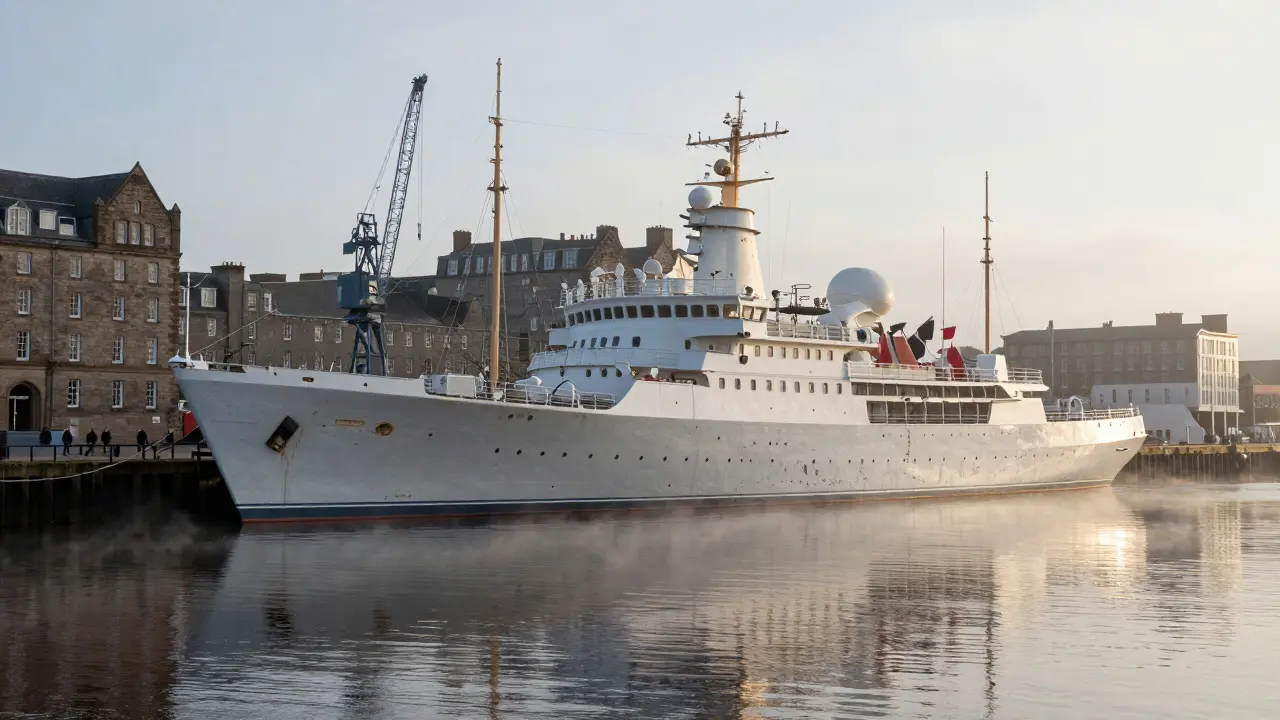
The Royal Yacht Britannia isn’t just a ship. It’s a floating palace that carried Queen Elizabeth II across the world for 44 years, hosted world leaders, and witnessed historic moments-from state visits to family holidays. Today, it’s permanently docked in Edinburgh’s Leith Harbour, open to the public as one of Scotland’s most visited attractions. If you’ve ever wondered what life was like aboard the Queen’s personal vessel, this guide walks you through everything you need to know before you step onboard.
What Makes Britannia Special?
Launched in 1953, the same year as Queen Elizabeth II’s coronation, HMY Britannia was built by John Brown & Company in Clydebank, just across the river from Glasgow. At 412 feet long and weighing 5,200 tons, it wasn’t the largest yacht in the world-but it was the most carefully designed. Unlike luxury yachts built for speed or glamour, Britannia was engineered for function, endurance, and dignity. It had to handle rough North Atlantic seas, host formal dinners for 100 guests, and still feel like a home.
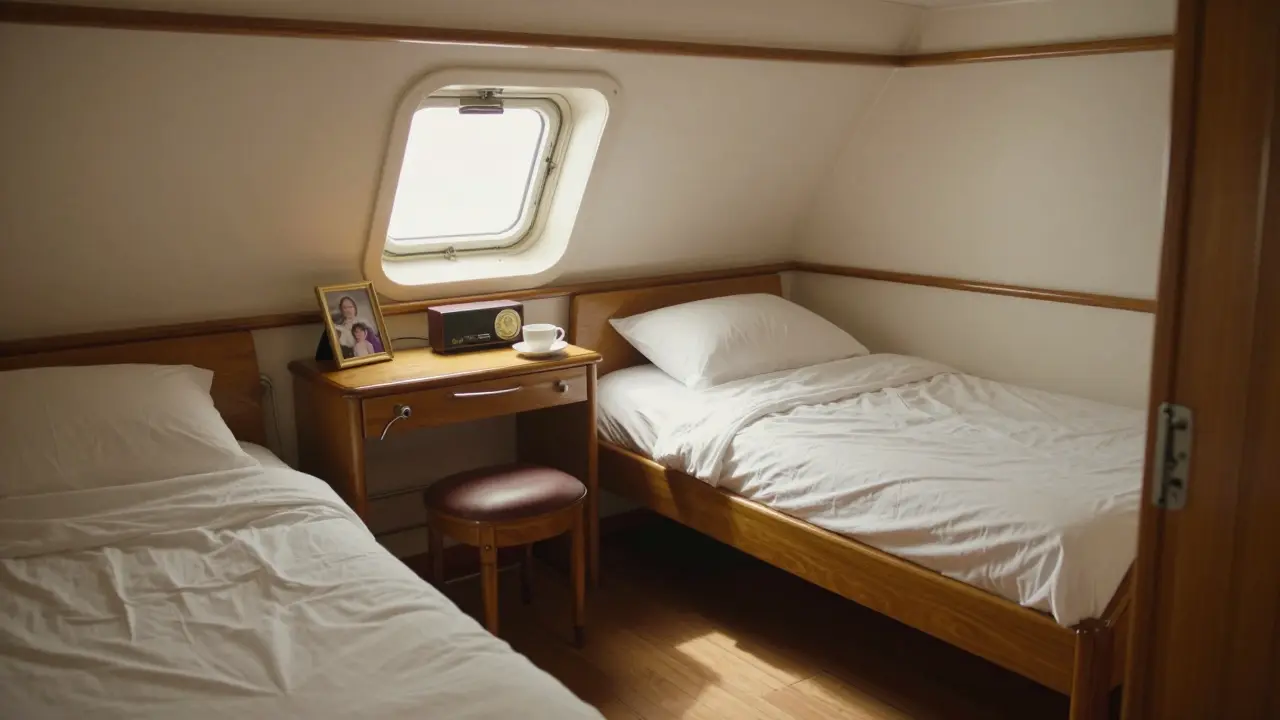
Its crew of 220 Royal Navy sailors lived and worked aboard year-round, rotating shifts so the yacht was always ready. The Queen’s stateroom was modest by royal standards: a simple bed, a small desk, and a window that opened to let in sea air. No gold-plated taps or crystal chandeliers. Just quiet comfort. Her husband, Prince Philip, had a small cabin next door, and the children-Charles, Anne, Andrew, and Edward-slept in shared quarters below deck. Even the royal family’s dogs had their own cozy beds.
Britannia made over 968 official voyages, covering more than 1,000,000 nautical miles. It carried the Queen to every Commonwealth nation, hosted the 1979 G7 summit, and was the setting for Prince Charles and Lady Diana’s honeymoon. In 1997, after 44 years of service, it was decommissioned by Prime Minister John Major. The decision wasn’t cheap-the annual upkeep was £8 million. But the public didn’t want it scrapped. So it was donated to the public, and today, over 300,000 people visit it every year.
What You’ll See Onboard
Walking through Britannia feels like stepping into a living museum. Every room tells a story. The State Dining Room, where the Queen hosted heads of state, still has the original silver service and crystal glasses. You can sit at the table where President Reagan and Prime Minister Thatcher shared a meal. The Bridge, where the Captain steered the ship, still has the same wheel and navigation charts from the 1980s.
The Queen’s Cabin is the most visited spot. It’s small, tidy, and surprisingly ordinary. A wooden wardrobe, a framed photo of the royal family, and a radio that played BBC World Service. The bathroom had a shower with a curtain, not a glass enclosure. No jacuzzi. No spa. Just practicality.
Downstairs, the crew’s quarters show how the Royal Navy lived. Bunks stacked three high, shared washrooms, and a mess hall where meals were served at 7 a.m., 12:30 p.m., and 6 p.m.-no exceptions. Even the Royal Marines who guarded the yacht had their own sleeping area. The engine room, now silent, still has the original steam turbines. You can see the brass valves and dials that kept the ship moving through storms and calm seas alike.
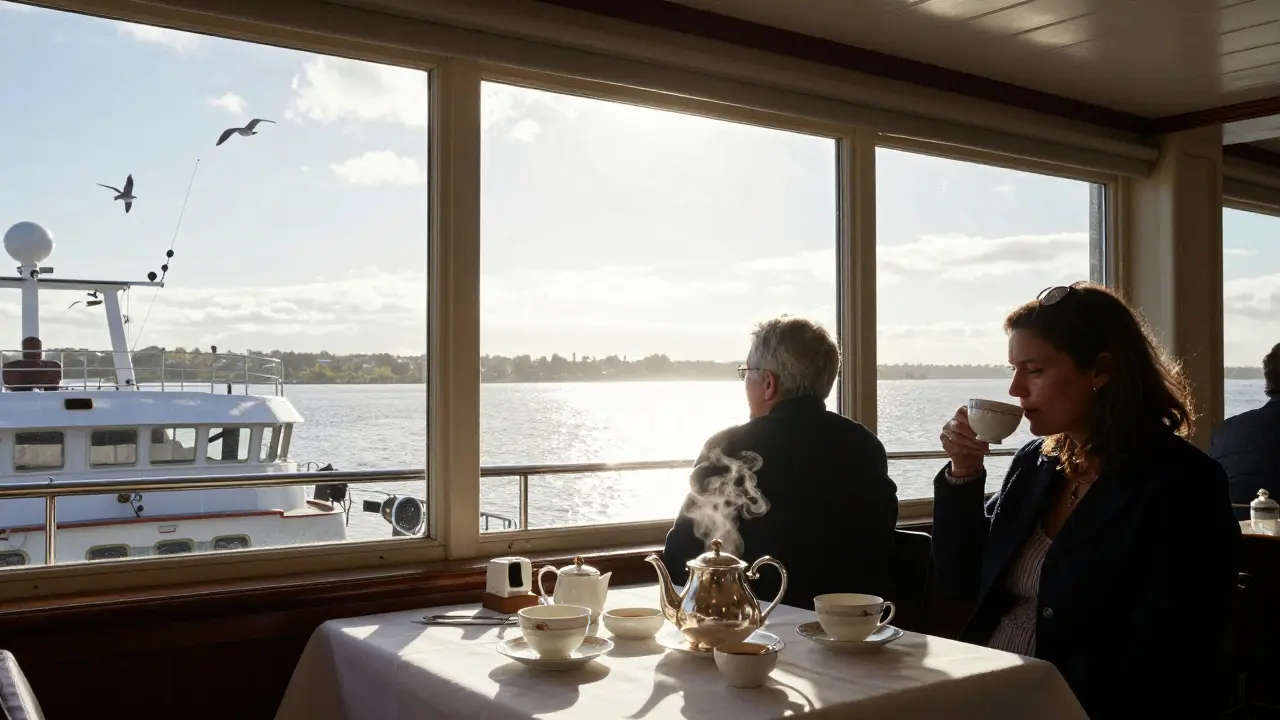
Don’t miss the Royal Deck Tea Room. It’s not just a café-it’s a tribute. The tea service uses the same china the Queen used during her voyages. Sip Earl Grey while looking out over the Firth of Forth, just as she did on summer afternoons.
How to Plan Your Visit
Britannia is open daily from 9 a.m. to 6 p.m., with extended hours in summer. Tickets must be booked online in advance-walk-ups are rarely allowed, especially in peak season. Adult tickets cost £20.50, children £10.25, and families (two adults, up to three kids) get a £5 discount. Seniors and students pay £17.50. Annual passes are available for £35, perfect if you live nearby.
The best time to go is early morning or late afternoon. Midday brings the biggest crowds, especially during school holidays. Weekdays are quieter than weekends. If you’re coming from Edinburgh city center, take the Lothian Bus 22 or 45-it drops you right at the entrance. The walk from Waverley Station is about 25 minutes along the Water of Leith.
There’s no parking on-site, but the nearby Ocean Terminal car park has 1,200 spaces. It’s a five-minute walk to the yacht. If you’re using a ride-share app, ask to be dropped at the Britannia entrance on Ocean Drive. GPS sometimes gets confused and sends you to the shopping mall next door.
What You Won’t Find
There’s no gift shop with £500 royal memorabilia. The shop sells postcards, mugs, and books-nothing over £30. You won’t find live reenactors in period uniforms. No actors pretending to be the Queen. Britannia keeps it real. The audio tour is narrated by former crew members, not actors. One retired stoker talks about fixing boilers in a storm. A steward recalls serving the Queen her breakfast at 7:30 a.m., every day, without fail.
You won’t see the Queen’s personal items on display-no crown, no gloves, no letters. The focus is on the ship, the crew, and the everyday life aboard. That’s what makes it powerful. This wasn’t a stage. It was a home.
Why It Matters
Britannia represents a quiet kind of service. It didn’t make headlines every day. It didn’t need to. It was the silent backdrop to decades of diplomacy, family moments, and national pride. The Queen never flew on a private jet when she could sail. She preferred the rhythm of the sea. She once said, "Britannia is the one place where I’m not a monarch-I’m just a wife and a mother."
That’s why people come here. Not to gawk at royalty, but to feel something real. To understand how a woman who ruled for 70 years found peace on a ship with no guards at the door, no red tape, just salt air and quiet.
Nearby Attractions
While you’re in Leith, don’t miss the Scottish Maritime Museum, just a three-minute walk away. It has a full-size 19th-century steam tug and exhibits on Edinburgh’s shipping history. The Shore, a historic waterfront street lined with pubs and restaurants, is perfect for lunch. Try the haddock and chips at The Fish Market or a whisky tasting at The Port House.
If you have time, hop on the ferry to North Berwick. It’s a 20-minute ride across the Firth of Forth. From there, you can walk to the Bass Rock, where tens of thousands of gannets nest. It’s a world away from the yacht-but still part of the same coastal story.
Final Thoughts
Britannia isn’t about grandeur. It’s about consistency. The same teapot used for breakfast in 1955 was still in use in 1997. The same crew trained new sailors year after year. The same ropes were tied the same way. It’s a reminder that even the most powerful people live by routines, by quiet habits, by the rhythm of everyday life.
Visiting Britannia doesn’t just show you a ship. It shows you a way of life-one that valued duty over spectacle, service over status, and family over fame. And that’s why, even today, people stand in silence in the Queen’s cabin, not because they’re in awe of royalty-but because they’ve found something deeply human.
Is the Royal Yacht Britannia really the Queen’s yacht?
Yes. HMY Britannia was the official royal yacht of Queen Elizabeth II from 1954 until its decommissioning in 1997. It was operated by the Royal Navy and used for both state duties and private family trips. It was the only royal residence that moved.
Can you sleep on the Royal Yacht Britannia?
No, you cannot sleep on the yacht. It is a static museum now, permanently docked in Edinburgh. All cabins are open for viewing but not for overnight stays. There are no guest accommodations available.
How long does a visit to Britannia take?
Most visitors spend between 1.5 and 2.5 hours touring the yacht. The audio tour is about 45 minutes, but many people linger in the Queen’s cabin or the tea room. If you’re taking photos or reading all the plaques, allow up to three hours.
Is Britannia wheelchair accessible?
Yes. Most areas of the yacht are wheelchair accessible via ramps and lifts. The Bridge and Engine Room have limited access due to historic design, but there are high-resolution video displays and detailed descriptions for those who can’t reach them. Wheelchairs are available to borrow at the entrance.
Are photos allowed onboard?
Yes, non-flash photography is allowed throughout the yacht. Tripods and selfie sticks are not permitted. The Royal Deck Tea Room has a designated photo spot with a view of the Firth of Forth and the yacht’s stern.
Is there a guided tour?
There’s no live guided tour, but the free audio guide is included in your ticket. It’s available in 12 languages, including Scottish Gaelic. The narration is delivered by former crew members, giving personal insights you won’t find in books.
Can children visit Britannia?
Yes. Children under 16 get discounted tickets, and there’s a free family activity pack with puzzles and quizzes about life aboard the yacht. Many kids are fascinated by the crew’s bunks and the royal dog beds.
Why was Britannia decommissioned?
The British government decided the annual cost of £8 million was too high for a vessel that no longer served strategic or diplomatic needs. After the Cold War, air travel made sea voyages less practical. The Queen herself was reportedly heartbroken but understood the decision. The public campaign to save it led to its preservation as a museum.
Is the Royal Yacht Britannia the only royal yacht ever?
No. The British royal family has had over 80 royal yachts since the 17th century. Britannia was the 83rd and the last. Before it, the most famous was HMY Victoria and Albert, which carried Queen Victoria. After Britannia, no royal yacht has been commissioned.
What happened to the crew after Britannia was retired?
Most crew members returned to active duty in the Royal Navy. A small team stayed on to help with the transition to a museum. Some now work as volunteers or tour guides at Britannia. Others have written memoirs or appeared in documentaries. Their stories are part of what makes the visit so authentic.