
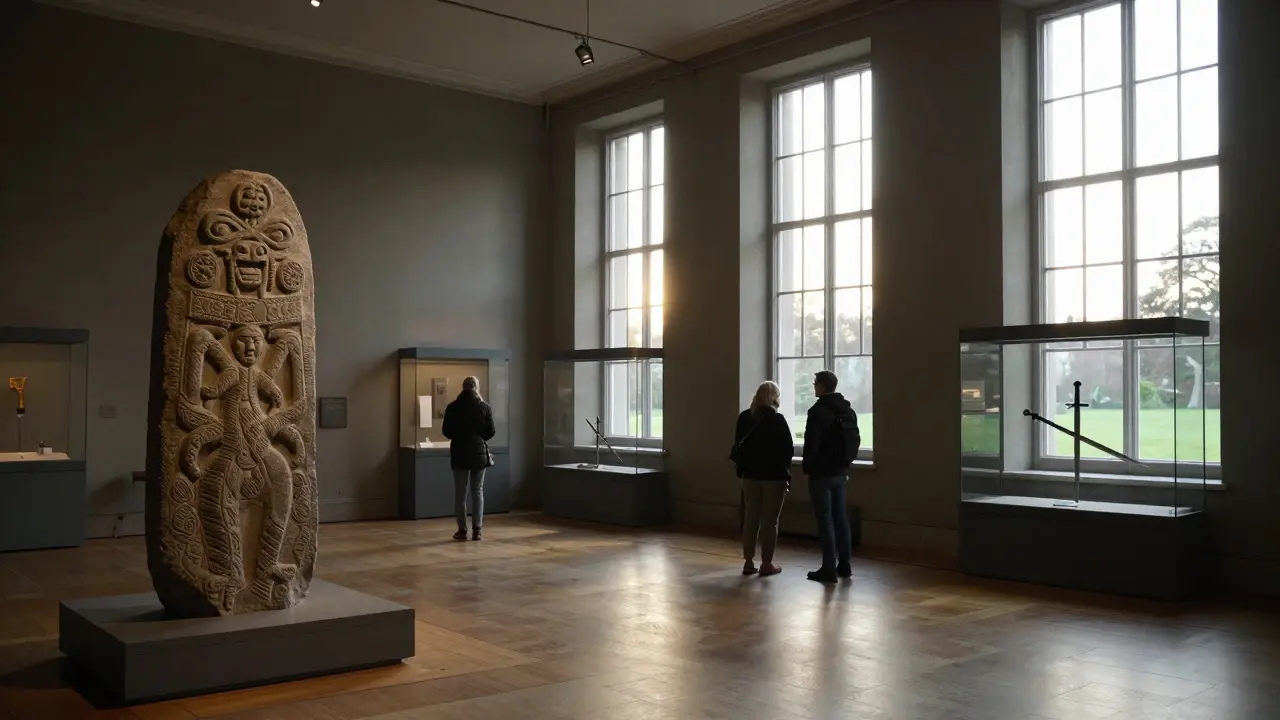
Walking into a Scottish museum feels like stepping into a time machine. Whether you're standing in front of a Pictish stone in Aberdeen, a Viking sword in Edinburgh, or a Jacobite portrait in Glasgow, you want to capture it. But before you raise your phone or adjust your tripod, you need to know the rules. Photography in Scottish museums isn't just about snapping a picture-it’s about respecting artifacts, protecting them from damage, and honoring the experience of others.
Why Photography Rules Exist in Scottish Museums
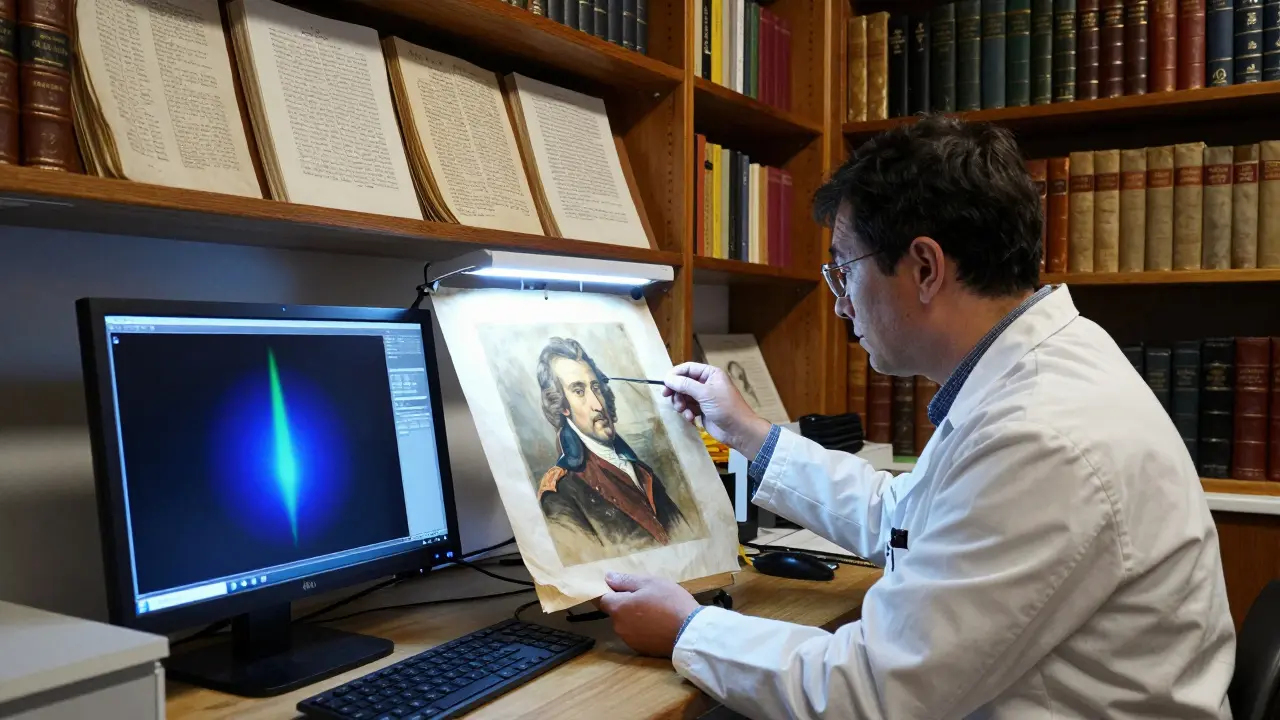
It might seem harmless to take a quick photo with your phone. But museums aren’t just buildings with old stuff inside. They’re controlled environments where even small changes can cause big problems. Flash photography, for example, isn’t just annoying-it’s harmful. The intense burst of light from a camera flash contains ultraviolet (UV) and infrared (IR) radiation. Over time, repeated exposure degrades pigments in paintings, fades textiles, and weakens paper documents. The National Museum of Scotland tested this in 2023 and found that objects exposed to frequent flash photography showed measurable color loss after just 500 flashes. That’s not theoretical-it’s happening right now in galleries across the country.
Heat and humidity from camera batteries and body heat also matter. A crowded gallery with dozens of people using phones all day raises the temperature slightly. For delicate items like medieval manuscripts or ancient leather bindings, even a 0.5°C change over months can accelerate decay. That’s why many museums limit the number of people allowed in a room at once, and why some restrict photography entirely.
What You Can and Can’t Photograph
Rules vary between institutions, but most Scottish museums follow a simple pattern:
- Allowed: General gallery shots without flash, using natural light. Most museums permit this in permanent exhibitions.
- Restricted: Flash, tripods, selfie sticks, and professional lighting equipment. These are almost always banned.
- Prohibited: Photographing specific objects-usually loans, fragile items, or works under copyright. Look for signs with a camera and a red slash.
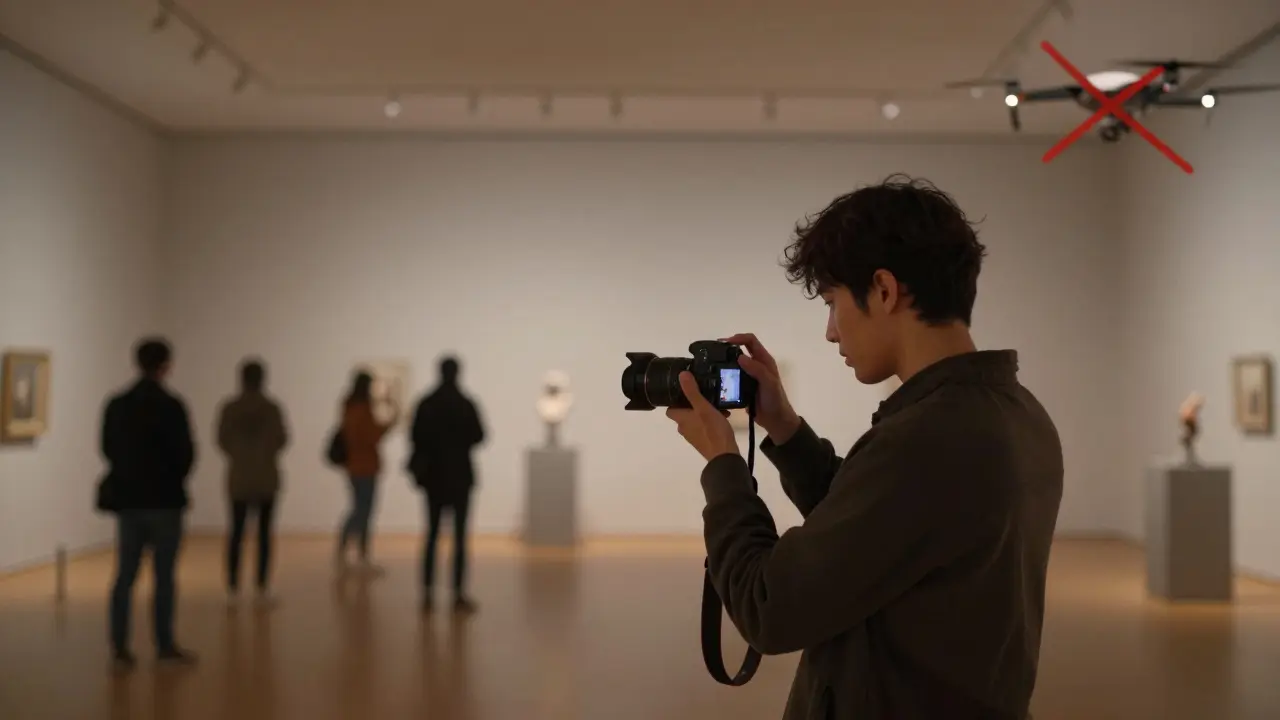
- Always forbidden: Using drones inside or near museum buildings. This isn’t just about safety-it’s about noise and disturbance.
For example, the V&A Dundee allows photography in its main galleries but blocks it entirely in the James McNeill Whistler: The Sixties exhibition because the watercolor works are extremely light-sensitive. The Kelvingrove Art Gallery and Museum in Glasgow bans photography in its Iron Age Gold display due to conservation concerns. Always check the museum’s website before you go. Most list their photography policy under "Plan Your Visit" or "Visitor Guidelines".
Lighting: The Invisible Enemy
Even if you turn off your flash, ambient lighting in museums is carefully calibrated. Museum lighting uses LED fixtures with specific color temperatures (usually between 2700K and 3500K) and low UV output. These settings are chosen to preserve color and texture without damaging materials. When you take a photo, your camera’s auto-white balance tries to compensate for the low light, often leading to inaccurate colors. That’s why museum photos often look too yellow or too green.
Here’s a trick that works: use manual white balance. Set it to "Tungsten" or "Incandescent" if your camera allows it. This will give you more accurate colors than letting the camera guess. If you’re using a phone, try switching to "Pro" or "Manual" mode in your camera app. Lower the ISO to 100-200 to reduce noise, and keep the shutter speed above 1/60s to avoid blur. Don’t rely on zoom-move closer instead. Zooming in digitally adds pixelation and loses detail.
Some museums, like the Scottish Poetry Library in Edinburgh, have installed low-light ambient lighting to encourage photography without flash. They even offer free photo guides on their website showing the best angles and lighting conditions for each exhibit. Take advantage of those.
Etiquette: It’s Not Just About Rules
Photography isn’t just a technical issue-it’s a social one. Imagine you’re standing in front of a 1,000-year-old cross from Iona, and someone behind you is holding up a selfie stick, blocking your view, while their phone camera flashes every few seconds. That’s not just rude-it’s disrespectful to the object and everyone else there.
Here’s what good etiquette looks like:
- Don’t block walkways or crowd around objects. Move to the side if you need to adjust your shot.
- Keep your voice down. A quiet museum is part of the experience.
- If you’re taking a group photo, move to a designated area. Most museums have open spaces near entrances or cafes for this.
- Don’t touch glass cases or lean on display rails. Even a slight pressure can shift the structure over time.
- Respect signs. If a room says "No Photography," don’t ask for permission. The answer will be no.
At the National Museum of Scotland, staff are trained to gently remind visitors-not to scold, but to educate. One visitor in 2024 was caught using a ring light on a Roman coin display. Instead of being kicked out, they were invited to a 10-minute talk on conservation science. That’s the culture here: education over punishment.
Special Cases: What About Kids, Groups, and Professionals?
Children often get more leeway, but not because rules are looser-they’re just harder to enforce. Still, parents should teach kids early: no flash, no touching, no blocking. Many museums, like the Museum of Edinburgh, offer free photography workshops for families. These teach kids how to shoot without flash and how to appreciate the artifacts.
Group visits (school trips, tour groups) usually need to book ahead. Some museums, like the Stirling Smith Art Gallery, require groups to submit a photography request form at least two weeks in advance. Even then, only non-flash, handheld shots are allowed.
Professional photographers-those with cameras larger than a DSLR or with lighting gear-need written permission. This isn’t about stopping art; it’s about protecting collections. Commercial shoots require insurance and a fee. But if you’re a student, artist, or researcher, many museums offer free access with a letter of intent. The University of Glasgow’s Hunterian Museum, for example, allows photography for academic use with a signed agreement.
What Happens If You Break the Rules?
Most museums don’t confiscate phones. They don’t even call the police. But they will ask you to stop. If you refuse, you’ll be asked to leave. Repeat offenders may be banned for six months to a year. It’s rare, but it happens.
One visitor in 2025 was banned from all National Museums Scotland sites after using a drone to film inside the Scottish War Blinded Museum. Even though the drone didn’t hit anything, the noise disrupted a dementia therapy session happening nearby. That’s the kind of consequence no one talks about-but you should know it.
Best Practices for Great Museum Photos
If you want photos that look good and stay legal:
- Go early. Museums are quietest in the first hour after opening.
- Use natural light. Stand near windows or skylights. Avoid areas with direct sunlight on artifacts.
- Shoot in RAW format if possible. It gives you more control over color and exposure later.
- Use a neutral gray card or white paper to set manual white balance on your camera.
- Don’t crop too tightly. Leave space around artifacts so you can adjust composition later.
- Download the museum’s app. Many, like the National Museum of Scotland, have built-in audio guides with photo tips for each exhibit.
And remember: the best photo isn’t always the one you take. Sometimes it’s the one you don’t. The quiet moment you spend studying a 17th-century tartan, noticing how the threads catch the light-those memories stick longer than any digital file.
Comments (13)
-
Geet Ramchandani February 10, 2026
Let me get this straight - we’re supposed to tiptoe around ancient artifacts like they’re fragile glass sculptures while some dude in the corner is filming a TikTok dance with his ring light? The whole system is a joke. Museums charge $25 just to walk in, then act like you’re committing a war crime if you snap a pic without a PhD in conservation science. I’ve seen toddlers touch the glass, tourists lean on display cases, and staff do nothing - but flash a single time? Instant ban. This isn’t preservation, it’s performative control. They’d rather you leave without memories than risk a 0.0001% chance of pigment degradation. Give me a break.

-
Pooja Kalra February 11, 2026
There is a quiet violence in how we treat history. We remove it from context, place it behind glass, and then demand silence - not because it demands it, but because we are afraid of what it might say if we truly listened. Photography becomes a transaction: I see, therefore I own. But the cross from Iona does not need your lens. It needs your stillness. Your breath. Your unmediated presence. You cannot capture time. You can only be present within it. And most of you are too busy trying to post it to feel it.

-
Sumit SM February 13, 2026
Okay, so - flash = bad. Got it. But let’s be real: UV radiation from a phone flash is negligible compared to the sun that hits these objects every day through skylights. And yet, museums allow natural light in, but ban flash? That’s not science - that’s optics theater. Also, why is it okay to have 500 people in a room with body heat, sweat, and breath - all of which emit infrared and moisture - but one person with a phone is a threat? The real issue is crowd control, not conservation. They’re using ‘damage’ as an excuse to manage behavior. And honestly? I’m tired of being treated like a child.

-
Jen Deschambeault February 13, 2026
Just wanted to say - thank you for writing this. I’ve been to three Scottish museums this year, and I didn’t know half of this. I used to take flash pics without thinking. Now I use natural light, keep my distance, and even take notes instead of photos sometimes. It changed how I experience the exhibits. I feel more connected. Less like a tourist. More like a witness. If you’re reading this and you’ve never tried it - give it a shot. You might be surprised.

-
Kayla Ellsworth February 15, 2026
So let me summarize: museums are terrified of a 200-millisecond burst of light from a phone, but are totally chill about thousands of people breathing on a 1500-year-old manuscript. Also, they banned drones because someone once filmed a therapy session? That’s the most plausible excuse I’ve ever heard. Next, they’ll ban laughter because it might vibrate a vase. Honestly, I’m just here for the irony. The very people who want to preserve history are the ones making it inaccessible to the people who care about it.

-
Soham Dhruv February 15, 2026
bro honestly the best advice here is go early like they said. i went to kelvingrove at 9am on a tuesday and had the whole iron age gold room to myself. no one around, perfect light from the windows, and i got like 15 legit shots without even trying. also manual white balance is a game changer. i used to think my pics looked weird because my phone was broken. turns out it was the lighting. thanks for the tips. i’ll actually use them now.

-
Bob Buthune February 16, 2026
I remember the first time I saw the Pictish stone in Aberdeen. I stood there for 27 minutes. Didn’t take a photo. Didn’t say a word. Just… stared. And I cried. Not because it was beautiful. But because I realized - this thing outlived empires. Wars. Religions. Entire languages. And now we treat it like a backdrop for a selfie. We’re not preserving history. We’re commodifying it. Every flash is a tiny death. Every zoom is a theft. Every post is a erasure. I don’t care about your 10K followers. The stone doesn’t care either. It’s been silent for 1,500 years. It doesn’t need your lens. It needs your silence.

-
Jane San Miguel February 17, 2026
It is profoundly concerning that the author of this article fails to acknowledge the fundamental epistemological flaw in the museum’s photographic policy: the assumption that visual documentation is inherently reductive. This is a colonial mindset - one that privileges the aesthetic over the archival, the performative over the pedagogical. True preservation requires open access to high-resolution, metadata-rich imagery - not restrictions based on emotional aesthetics. The museum’s fear of flash photography is not conservation; it is cultural gatekeeping disguised as stewardship. One cannot preserve the past by excluding the present from its representation.

-
Jeroen Post February 17, 2026
Flash doesn’t damage artifacts. The real threat is the museum’s own lighting system. LEDs emit blue light. Blue light breaks down organic pigments faster than UV. They’re lying to you. The flash ban is a distraction. The real villains are the museum directors who refuse to upgrade to proper museum-grade lighting because it costs money. And don’t get me started on the ‘no tripod’ rule - that’s just to keep you from taking decent photos so you have to buy their overpriced postcards. This whole thing is a scam.

-
Honey Jonson February 19, 2026
omg i love this so much i just went to the national museum and used the tips and my pics actually look good now?? like not blurry or yellow?? also i stopped using zoom and just walked closer and wow the details are insane. i even got a pic of the weave on a 400 year old tartan and it looked like a painting. thanks for the advice!! i dont even care about posting it anymore i just like looking at it on my phone now lol

-
Destiny Brumbaugh February 19, 2026
Scottish museums are so woke they’d rather let a 1000-year-old artifact fade than let someone take a photo with their phone. Meanwhile, they let protesters smash windows and spray paint the walls but won’t let a kid snap a picture? This is not preservation - this is cultural self-hatred. We’re supposed to be proud of our history, not treat it like a guilty secret. If you’re afraid of photography, maybe you shouldn’t have a museum in the first place.

-
Sara Escanciano February 21, 2026
There is no moral high ground in museums. There is only power. The rules are not about conservation - they are about control. Who gets to document history? Who gets to decide what is worth seeing? Who gets to be the witness? The answer is always the same: those with institutional authority. The ban on flash is a ban on autonomy. The ban on tripods is a ban on agency. And the ban on drones? That’s a ban on perspective. You don’t preserve history by silencing the people. You preserve it by letting them see it - fully, freely, without permission.

-
Elmer Burgos February 22, 2026
hey just wanted to say i appreciate this post a lot. i’m a teacher and i took my class to the hunterian last week and we used the tips here - no flash, manual white balance, stayed quiet - and the kids were actually quiet for once. like, really quiet. one girl said it felt like they were in a cathedral. that’s the magic of museums when you do it right. thanks for reminding us it’s not about the photo - it’s about the moment.
