
When you walk through the iron gates of Drum Castle Garden, you’re not just stepping into a garden-you’re walking into a story that’s been growing for over 600 years. Nestled in the rolling hills of Aberdeenshire, just a short drive from Dundee, this isn’t your average public garden. It’s a living archive of Scottish horticulture, military history, and quiet resilience. The walled garden, built in the 17th century, still grows the same fruit trees and vegetables that fed the Drum family and their servants. The paths winding through it don’t just lead to roses or rhododendrons-they lead back to the 1600s.
The Walled Garden: A Time Capsule in Brick and Soil
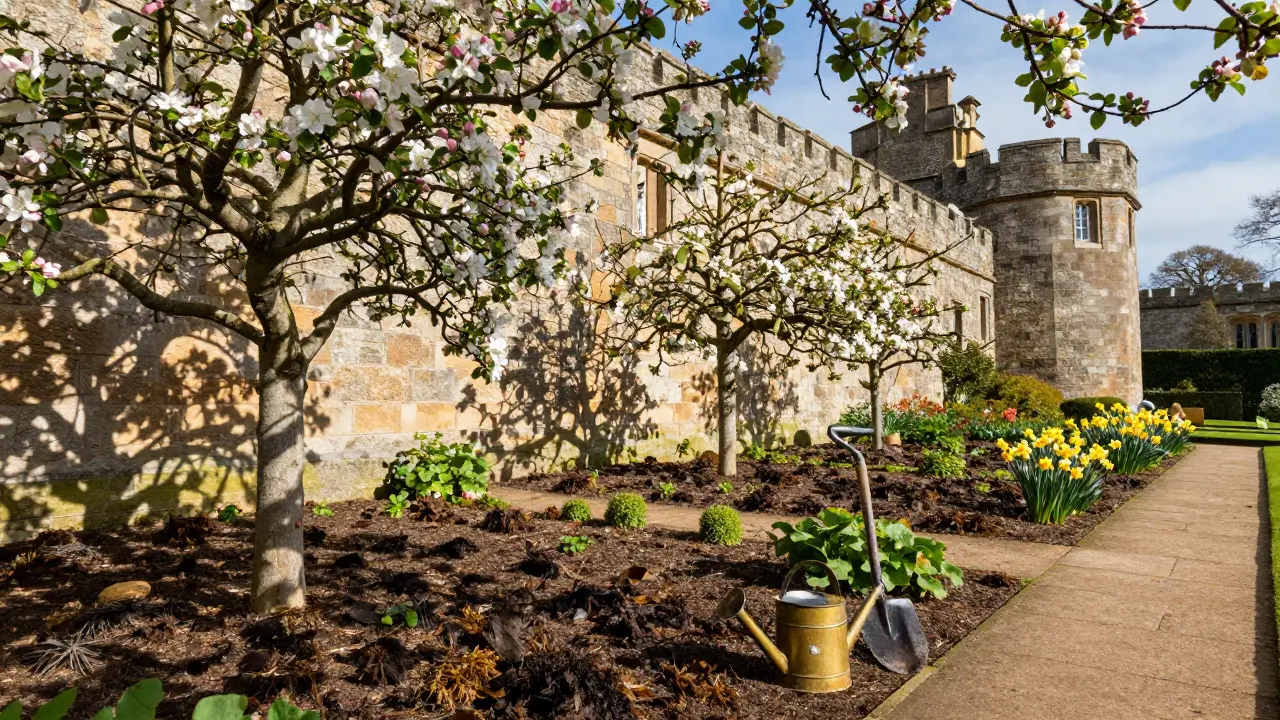
The walls of Drum Castle Garden aren’t just decorative. They’re functional. Built from local sandstone, they rise nearly three meters high, trapping heat and shielding delicate plants from the North Sea winds. Inside, you’ll find fruit trees trained against the walls-pears, apples, and plums-pruned in the classic espalier style that was common among Scottish landowners in the 1700s. These aren’t ornamental trees. They’re productive. The garden still produces fruit used in the castle’s kitchen, just as it did when the Drums were raising their children here.
Look closely at the soil. It’s not just dirt. It’s a carefully layered mix of manure, seaweed, and ash-ingredients used by 18th-century gardeners to enrich the ground without modern fertilizers. The gardeners today still follow the same seasonal schedule: planting bulbs in October, pruning fruit trees in January, and harvesting potatoes in September. There’s no digital timer here. No automated irrigation. Just hands, hoes, and history.
The Trails: Forest Paths That Remember the Past
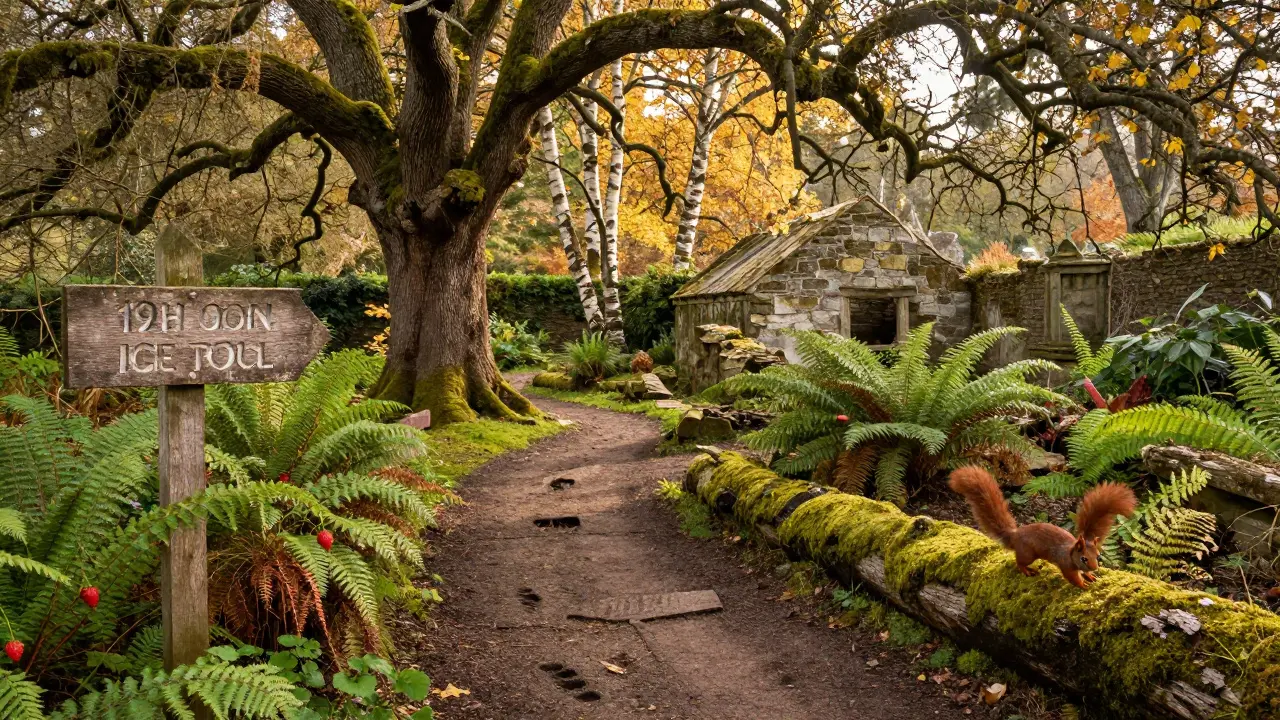
Beyond the walls, the garden opens into over 10 kilometers of woodland trails. These aren’t manicured walking paths meant for strollers. These are old deer tracks turned into footpaths, lined with ancient oaks, birch, and hazel. Some trails were once used by the Drum family for hunting. Others led to hidden stone shelters where gamekeepers once waited for foxes or deer.
One trail, marked only by a worn wooden sign, leads to the ruins of a 19th-century ice house. It’s not much to look at now-a sunken stone chamber covered in moss-but back then, it was vital. Ice was cut from the nearby loch in winter, stored here under layers of straw, and used to keep food cool all summer. You can still see the original drainage channels carved into the rock.
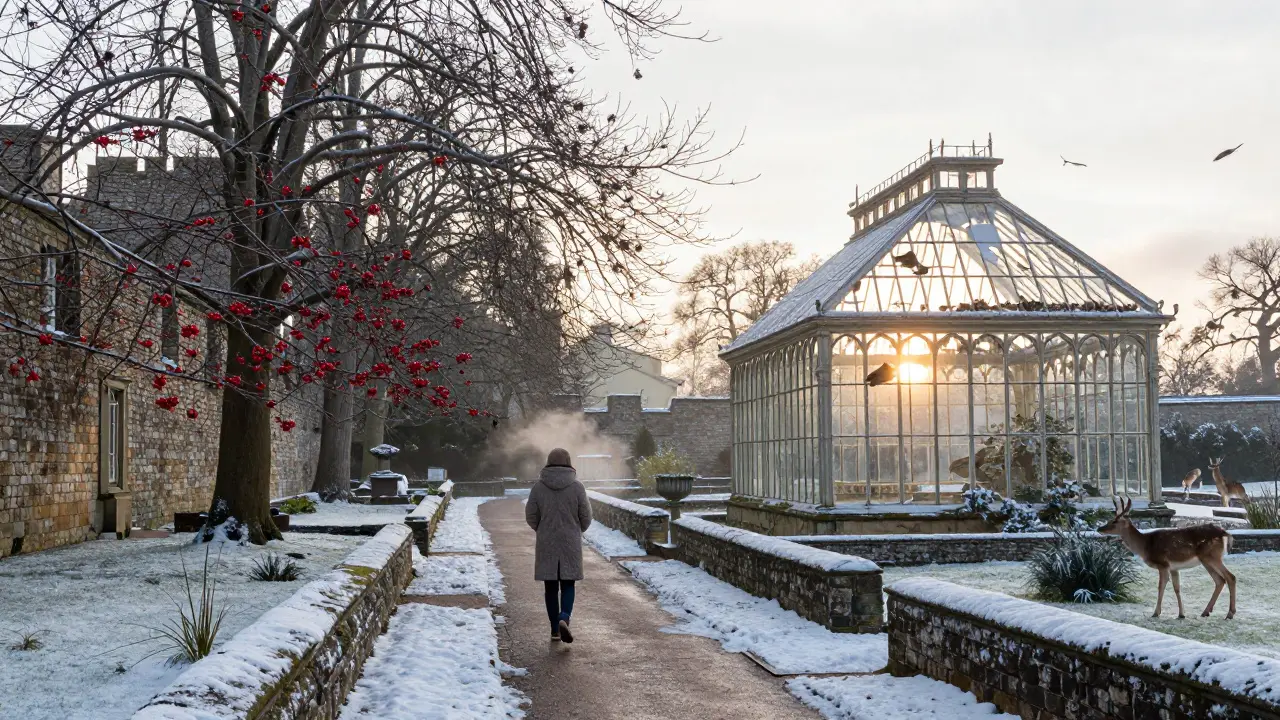
Another path takes you past the remains of a Victorian glasshouse, its broken panes now home to nesting sparrows. The glasshouse once grew exotic plants like pineapples and bananas-luxuries brought in by wealthy landowners who wanted to show off their wealth. Today, it’s a quiet place where the only sounds are the wind and the occasional rustle of a red squirrel.
Seasons at Drum Castle Garden
What you see at Drum Castle Garden changes dramatically with the seasons. In April, the walled garden explodes into color. Daffodils line every path, and the old apple trees bloom in soft pink and white. By May, the rhododendrons burst into purple and crimson, their thick leaves hiding the stone benches where visitors still sit and read.
Summer brings the scent of roses-over 150 varieties, many of them heirloom types no longer sold in nurseries. The gardeners keep seeds from the best blooms each year, replanting them in the same beds. One rose, called ‘Drum’s Pride,’ was bred right here in the 1920s and still thrives today.
Autumn is when the garden feels most alive. The leaves turn gold and rust, and the scent of ripe apples fills the air. The harvest festival, held every October, draws locals who come to press cider and bake pies using fruit picked that morning. In winter, the garden sleeps-but not quietly. The walls still hold warmth. The holly berries glow red against the snow. And if you walk the trails at dawn, you might see deer stepping softly through the mist.
Why Drum Castle Garden Stands Out
There are plenty of gardens in Scotland. But few have kept their original purpose so faithfully. At Kew or Edinburgh’s Royal Botanic Garden, plants are curated for science and display. At Drum Castle, plants are grown for survival, tradition, and memory.
It’s also one of the few walled gardens in Scotland that still uses its original tools. You’ll find hand-forged trowels, wooden rakes, and brass watering cans-some over 100 years old-on display in the gardener’s shed. The current head gardener, a woman who grew up in the village nearby, learned her craft from her grandmother, who worked here in the 1950s. She doesn’t just know how to prune a plum tree. She knows why it was pruned that way in 1847.
The castle itself, a 14th-century tower house, is open to visitors, but most people come for the garden. And they leave with more than photos. They leave with a sense of continuity. This isn’t a museum. It’s a working landscape. The soil remembers. The trees remember. The people who walk here now? They’re just the latest chapter.
Visiting Drum Castle Garden
You don’t need a tour. You don’t need a guide. The garden is designed to be explored at your own pace. Open daily from 10 a.m. to 5 p.m. (last entry 4 p.m.), April through October. Winter visits are by appointment only-call ahead if you want to walk the trails in snow.
Admission is £12 for adults, £6 for children under 16. Under-fives get in free. There’s no parking fee. The car park is a grassy field, just past the old stable block. Bring sturdy shoes. The trails are uneven. The ground can be muddy after rain.
There’s a small tearoom in the old kitchen garden, serving tea, scones, and soup made with vegetables grown on-site. They don’t sell ice cream. They don’t sell souvenirs. They do sell seed packets of heirloom vegetables-carrots, kale, and turnips-that you can grow at home.
What to Bring and What to Skip
- Bring: A notebook, a camera with a zoom lens, waterproof boots, and a thermos of tea.
- Bring: A copy of the free trail map-available at the gate. It shows hidden benches, old wells, and the best spots to watch birds.
- Don’t bring: Dogs. They’re not allowed in the walled garden or on the woodland trails. (Service animals are permitted.)
- Don’t bring: Loud music, drones, or bikes. This isn’t a park. It’s a place to listen.
How to Get There
Drum Castle is located near the village of Drumoak, about 15 miles northwest of Aberdeen. From Dundee, take the A90 north to the A947, then follow signs for Drumoak. The drive takes about 45 minutes. There’s no public transport directly to the gate, but local taxis from Aberdeen or Dundee can be arranged in advance.
If you’re staying overnight, the nearby village of Insch has a handful of B&Bs with rooms that overlook the garden. Book early-many guests come just for the sunrise walks.
Why This Garden Matters
Most gardens today are about beauty. Drum Castle Garden is about endurance. It survived wars, famines, and decades of neglect. When the family left the castle in the 1940s, the garden was nearly lost. A group of local volunteers saved it-digging out ivy, repairing walls, planting seeds from old records. They didn’t restore it to look pretty. They restored it to work.
That’s rare. In a world where everything is replaced, upgraded, or deleted, Drum Castle Garden still grows the same way it always has. The apples are still picked by hand. The paths are still worn by the same footsteps. And if you sit quietly on one of those stone benches, you might hear the echo of someone else doing the same thing-300 years ago.
Is Drum Castle Garden open all year?
The garden is open daily from April to October, 10 a.m. to 5 p.m. The walled garden and trails are closed in winter, but you can book a guided winter walk by calling ahead. The castle interior is open year-round on weekends, but access to the garden is limited to the main paths only.
Can I bring my dog to Drum Castle Garden?
No, dogs are not allowed in the walled garden or on the woodland trails. This is to protect the historic plantings and wildlife. Service animals are permitted, but must be kept on a leash at all times. There’s a designated dog-walking area near the car park if you need to leave your pet.
Are the trails suitable for children?
Yes, but not all trails are easy. The main path through the walled garden is flat and paved, perfect for strollers. The woodland trails have uneven ground, roots, and steep sections. Children under 10 should be supervised. There’s a free activity sheet for kids at the entrance-find hidden stones, identify bird calls, and track animal prints.
Is there food available at Drum Castle Garden?
Yes, the tearoom serves hot drinks, homemade soup, and scones with jam made from garden raspberries. All ingredients come from the garden or local farms. There’s no restaurant, no takeaway, and no coffee chains. It’s simple, seasonal, and quiet. You can also bring your own picnic to eat on the grass near the old kitchen garden.
How is Drum Castle Garden funded?
It’s run by the National Trust for Scotland, but it doesn’t rely on government funding. Most of its budget comes from visitor admissions, seed sales, and donations from local supporters. The garden employs five full-time staff and a team of volunteers who help with pruning, planting, and guiding tours. Every pound spent here goes back into keeping the garden alive.
If you’ve ever wondered what a living history looks like, Drum Castle Garden is your answer. It doesn’t shout. It doesn’t need to. It just grows.
Comments (15)
-
Sam Rittenhouse December 16, 2025
This place is more than a garden-it’s a quiet rebellion against the rush of modern life. No billboards, no Wi-Fi hotspots, no influencers posing with lattes. Just soil, sweat, and centuries of hands that knew how to listen to the land. I came here last fall and sat on that stone bench by the ice house for an hour. Didn’t move. Didn’t check my phone. Felt like I was breathing the same air as someone in 1823. That’s rare.

-
Peter Reynolds December 16, 2025
the fact they still use the same tools and seasonal schedule is wild. no apps, no sensors, just old knowledge passed down. i wish more places did this instead of turning everything into a tourist trap

-
Zach Beggs December 17, 2025
heard about this place from a friend who works at the National Trust. they don’t advertise much but the locals treat it like sacred ground. the seed packets they sell? i planted the kale last year and it outperformed anything i bought at Home Depot. weirdly satisfying.

-
Kenny Stockman December 17, 2025
man i love that they don’t sell ice cream. like… why would you? this isn’t a theme park. it’s a place where the apples still taste like apples. and the tea? warm, strong, and served in chipped mugs. perfect.

-
Antonio Hunter December 17, 2025
The continuity of horticultural practice at Drum Castle Garden represents an almost anthropological preservation of pre-industrial agrarian knowledge systems. The use of seaweed and ash as soil amendments, the espalier pruning techniques inherited from 18th-century Scottish estate management, and the absence of mechanized irrigation all serve as living artifacts of a cultural ecology that has been systematically erased across the Western world. It’s not nostalgia-it’s resilience.

-
Paritosh Bhagat December 17, 2025
you know what’s funny? people talk about this place like it’s some mystical relic but honestly if you just google ‘historic walled gardens UK’ you’ll find 50 others doing the same thing. and don’t get me started on the ‘no dogs’ rule-how is that protecting wildlife? the deer don’t care if a golden retriever walks by. also, why is everything spelled with extra vowels? ‘Drum’s Pride’? really? it’s just a rose.

-
Ben De Keersmaecker December 18, 2025
the grammar in the original post is flawless, but i’m impressed by how precisely the language mirrors the garden’s ethos-no fluff, no exaggeration, just clear, deliberate phrasing. even the punctuation feels intentional. like the way they use em dashes to slow you down, like walking a path where every step matters. this isn’t marketing. it’s poetry.

-
Aaron Elliott December 19, 2025
One must question, however, the romanticization of labor. The notion that ‘hands, hoes, and history’ are inherently superior to modern agricultural science is a fallacy rooted in nostalgia. The absence of automated irrigation does not signify ‘resilience’-it signifies inefficiency. And while the heirloom roses may be aesthetically pleasing, their yield is statistically inferior to hybrid cultivars. One cannot conflate tradition with progress.

-
Chris Heffron December 19, 2025
love this place. the way the moss grows on the ice house walls? so pretty. 😌 also the tea is better than any cafe in Aberdeen. and yes, i brought my own thermos. no one judges you for that here. 🍵

-
Adrienne Temple December 21, 2025
i came with my 7-year-old and she spent 20 minutes just watching a squirrel dig up a buried acorn. we didn’t even make it to the rose garden. but she drew a picture of it when we got home and labeled it ‘the secret tree.’ i think that’s what this place does-it lets you find your own story, not just read someone else’s.

-
Sandy Dog December 22, 2025
okay but imagine this: you’re walking through the mist at dawn, the dew clinging to your boots, the scent of apples hanging in the air like a memory you didn’t know you lost… and then-out of nowhere-a deer turns and looks at you. not scared. not running. just… seeing you. like you’re part of the story now. i cried. i didn’t even know i could cry over a garden. but this one? it holds your grief. it holds your joy. it holds everything you didn’t know you needed to remember.

-
Nick Rios December 24, 2025
the fact that they still press cider the old way? that’s the real magic. not the roses, not the ice house. it’s the quiet rhythm of people still doing things because they matter, not because they’re trendy. i’ve been to gardens with laser-guided sprinklers and holographic info panels. this one? it just whispers.

-
Amanda Harkins December 24, 2025
it’s weird how a place can feel like home even if you’ve never lived there. maybe it’s the smell of wet earth after rain, or the way the light hits the stone walls at 4 p.m. i don’t know. but i came back three times last year. each time, i sat on the same bench. never talked to anyone. didn’t need to.

-
Jeanie Watson December 25, 2025
eh. it’s nice. but i saw a better garden in Vermont. same old trees, same stone walls. they even had a tea room. but theirs had gluten-free scones. also, their ice house had a plaque that actually made sense. this one just says ‘1820.’ that’s it. no story. no context. just moss.

-
Tom Mikota December 26, 2025
Let’s be honest: this isn’t ‘resilience.’ It’s inertia. They’re not preserving history-they’re avoiding progress. Who cares if the trowel is 100 years old? Buy a new one. Use a soil moisture sensor. Stop glorifying inefficiency as ‘authenticity.’ And for heaven’s sake, someone needs to fix that broken glasshouse. It’s not romantic-it’s a safety hazard.
