
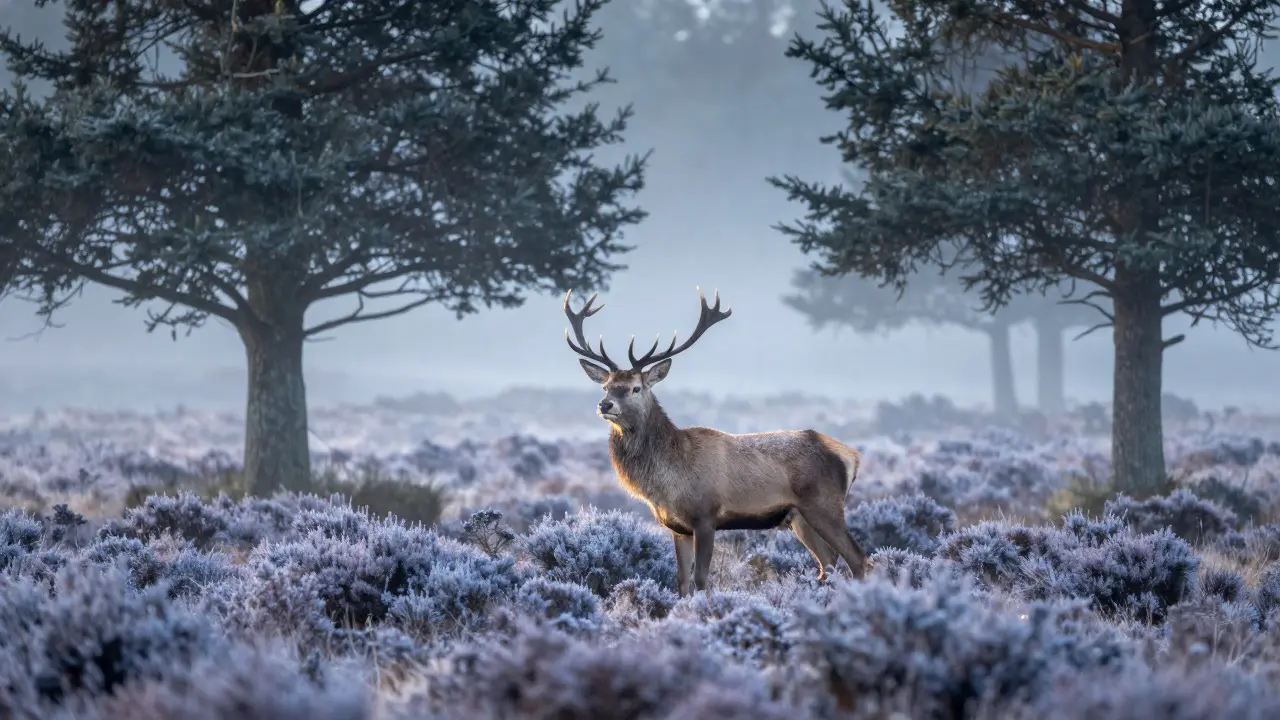
On a misty morning in the Cairngorms, when the frost still clings to the heather and the air feels too still for birdsong, some walkers swear they’ve seen it-a white stag, standing motionless between the pines, its antlers catching the weak sun like silver. Then, just as quickly, it vanishes. No tracks. No droppings. Just silence.
This isn’t just a trick of the light. The white stag of the Cairngorms is woven into the land’s oldest stories, older than the castles, older than the roads that wind through the mountains. It’s not just a rare deer. It’s a ghost, a guardian, a symbol. And if you’re serious about wildlife watching here, you need to understand the myth before you look for the animal.
What Is the White Stag?
The white stag isn’t albino. It’s not even a genetic fluke you’d find in a zoo. In the Cairngorms, the white stag refers to the red deer is the largest land mammal in Scotland, with males called stags and females called hinds. Cervus elaphus. These deer are common in the highlands, but their winter coats sometimes turn a pale, almost cream color-not pure white, but enough to stand out against the dark pines and snow. Add low light, mist, and a hungry imagination, and you’ve got a legend.
But the myth goes deeper. Celtic tribes who lived here over 2,000 years ago believed the white stag was a messenger between worlds. To see one meant you were being tested. To follow it meant you were on a sacred path. Some stories say it led warriors to hidden springs. Others say it appeared only to those who had lost something-hope, a loved one, their way home.
The Cairngorms: A Landscape of Secrets
The Cairngorms National Park isn’t just a place. It’s a living archive. At 1,748 square miles, it’s the largest national park in the UK. But what makes it special isn’t just the size. It’s the silence. The way the wind moves through the ancient Caledonian pines. The way the snow settles on the granite peaks like powdered sugar. And the way the deer move-slow, deliberate, almost unseen until they’re right beside you.
The red deer here aren’t just surviving. They’re thriving. The population hovers around 20,000, and genetic studies show they’re one of the most genetically distinct herds in Europe. Why? Because the Cairngorms have been protected for centuries. Even during the Highland Clearances, when forests were cleared for sheep, these deer were left alone. Locals called them the "ghosts of the mountains," and they weren’t wrong.
Today, the Cairngorms are one of the last places in Britain where you can still see red deer in their natural, wild state-not in fenced reserves, not on guided tours, but out on the open moorland, where they’ve lived since the last Ice Age.
Myths That Still Walk the Trails
One of the most enduring tales comes from a 17th-century farmer near Aviemore. He claimed his daughter, lost in a snowstorm, followed a white stag for three days. When she returned, she could speak no language anyone understood-until she began singing a lullaby her grandmother had whispered to her as a child. The song had been lost for generations. No one knew how she remembered it.
Another story, recorded by a Royal Society of Edinburgh naturalist in 1821, tells of a hunting party that tracked a white stag for hours. They cornered it near the River Avon. When they fired, the stag didn’t run. It turned, looked each hunter in the eye, then stepped into a rock fissure-and vanished. The men swore the rock had been solid before. After that, no one hunted in that valley again.
These aren’t just fairy tales. They’re cultural memory. In places where written records are scarce, stories become maps. The white stag is a symbol of resilience. Of something wild that refuses to be tamed. And in the Cairngorms, where the land remembers everything, that matters.
Where to See Red Deer-Real Ones
If you want to see the real animals, not the myth, here’s where to go:
- Loch an Eilein-Just outside Aviemore, this quiet loch is one of the best spots at dawn. The deer come down to drink, and the mist rolls in like smoke. Bring binoculars. A telephoto lens won’t hurt.
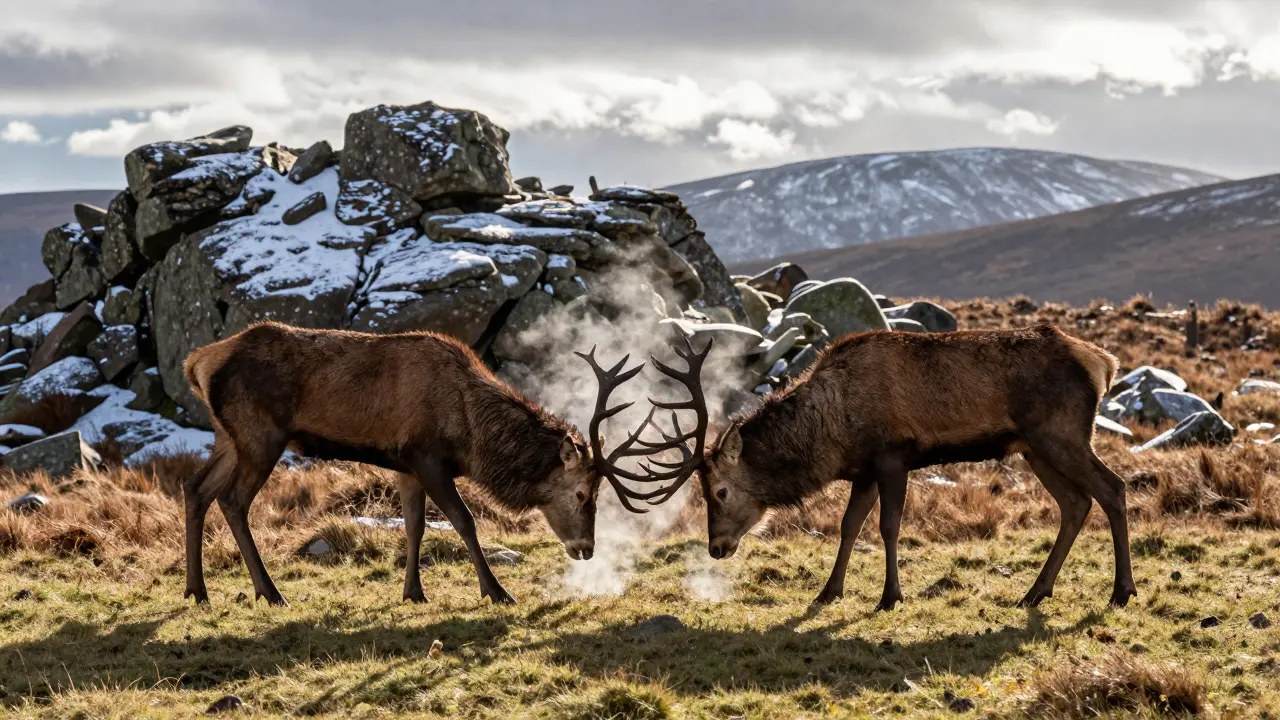
- Coire na Ciste-A high corrie near the Cairngorm Summit. Access is tough, but if you hike up in late autumn, you’ll see stags locking antlers in ritual battles. The sound echoes for miles.
- Strathmore Forest-A lesser-known area near Glenlivet. Few tourists come here. The deer are bolder. You might see a doe with her calf just yards from the path.
Best time? October to December. That’s rutting season. The stags are vocal, active, and visible. Winter is good too-snow makes their tracks easy to follow. But avoid summer. The midges will eat you alive, and the deer vanish into the heather.
Respect the Land, Not Just the Legend
Some people come to the Cairngorms hoping to see the white stag. They wander off trails, leave food out, shout into the woods. That’s not wildlife watching. That’s trespassing on a sacred space.
The red deer here are protected under the Wildlife and Countryside Act 1981. Disturbing them during rutting season is a fineable offense. But more than that-they’re part of a story older than laws.
If you want to honor the myth, don’t chase it. Sit quietly. Wait. Listen. The real magic isn’t in seeing the stag. It’s in realizing you’re standing in the same place where someone, centuries ago, felt the same awe. The same fear. The same wonder.
Why the Myth Still Matters
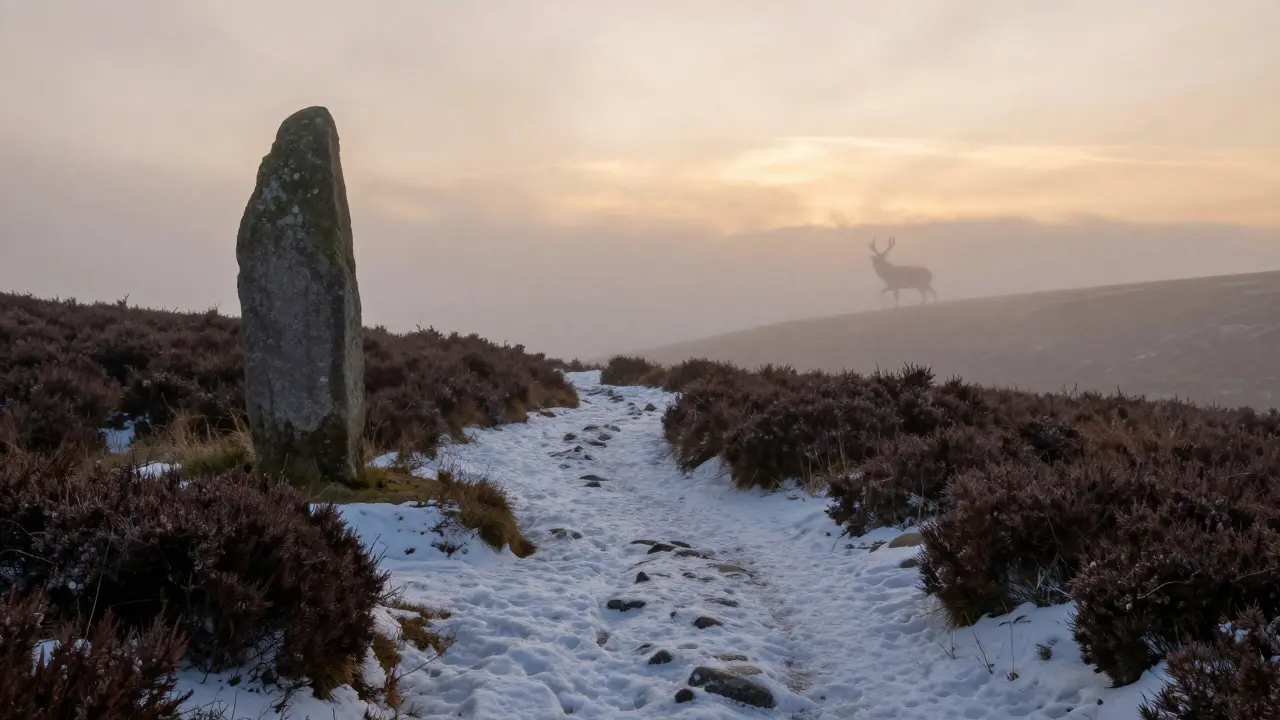
Science tells us the white stag is a rare color variation. That’s true. But science doesn’t explain why, every year, at least three people report sightings in the same spots-always near ancient standing stones, always at dawn, always when the air is still.
Maybe it’s coincidence. Maybe it’s light. Maybe it’s the mind playing tricks. But maybe, just maybe, the land still holds something we can’t measure. A presence. A memory. A guardian.
The white stag doesn’t need to exist to be real. It lives in the silence between heartbeats. In the way the wind stops when you’re alone on the moor. In the way your breath catches when you see a shadow move-and you know, deep down, it wasn’t just a deer.
That’s why you come to the Cairngorms. Not to tick a box. Not to snap a photo. But to remember what it feels like to be small in a world that’s older than you.
Comments (8)
-
Kayla Ellsworth February 8, 2026So let me get this straight-you’re telling me the real magic isn’t the deer, it’s the silence between heartbeats? Cute. I’ll bring my yoga mat and a journal next time. Maybe I’ll meditate into a hallucination too.
Meanwhile, the actual deer are just trying to eat moss without being screamed at by tourists with telephoto lenses.

-
Soham Dhruv February 9, 2026i just went to loch an eilein last week and saw three hinds grazing like nothing happened. no mist no silver antlers just deer being deer.
the myth is pretty but the real thing? way more beautiful. no need to romanticize what’s already wild enough.

-
Bob Buthune February 9, 2026I’ve been to the Cairngorms three times and every single time I felt it-the weight of something older than me, watching. Not just deer. Not just land. Something… sentient.
That farmer’s daughter? She didn’t just remember a lullaby. She was *given* it. The stag didn’t lead her home. It returned her to a memory her soul had forgotten.
And the hunting party? They didn’t see a rock fissure open. They saw the boundary between worlds thinning. That’s not coincidence. That’s resonance.
I’ve sat on that same rock near the River Avon. I didn’t see a stag. But I felt its breath on my neck. And I cried. Not because I was scared. Because I knew-I wasn’t alone. The land remembers. And if you’re quiet enough? It’ll whisper back.
Science can measure the color of fur. But it can’t measure the echo in your chest when you realize you’re standing where a thousand generations felt the same awe. That’s not myth. That’s ancestry.

-
Jane San Miguel February 10, 2026The notion that cultural memory supersedes zoological fact is both romantically naive and intellectually irresponsible. The red deer (Cervus elaphus) exhibits seasonal pelage variation due to melanin reduction under photoperiodic stress-not metaphysical intervention.
Furthermore, attributing narrative agency to non-sentient fauna is a classic anthropomorphization fallacy. One might as well claim the wind is grieving when it howls through the pines.
That said, the phenomenological experience of awe is valid. But let us not confuse subjective epiphany with objective reality. The stag is not a guardian. It is a mammal. With antlers. And a digestive system.

-
Kasey Drymalla February 11, 2026they dont want you to know the truth. the white stag is a government drone. camouflaged deer body with a drone inside. thats why no tracks. thats why it vanishes.
theyve been using it to monitor people who go off trail. if you see it you get flagged.
thats why they say dont chase it. because if you chase it they know you know.
theyre watching you right now. even while you read this.

-
Dave Sumner Smith February 11, 2026You say the deer are protected. But who protected them from the scientists who came in with drones and DNA samplers? Who protected them from the tourists who leave energy drinks and wrappers in the heather?
They say the myth is cultural memory. But what if the myth is a warning? What if the white stag doesn’t appear to the lost? What if it appears to the ones who are about to be lost?
And why do all the sightings happen near standing stones? Coincidence? Or are those stones markers? For what? For who?
Someone in 1821 wrote about a rock that wasn’t solid before. That’s not folklore. That’s a classified report. And they buried it. Because they know. And they don’t want you to.

-
Cait Sporleder February 12, 2026The linguistic and anthropological dimensions of this myth are profoundly compelling. The persistence of the white stag motif across Celtic, Pictish, and post-medieval Scottish oral traditions suggests a deeply embedded symbolic archetype-likely tied to liminality, the sacred hunt, and the threshold between the mortal and the numinous.
Notably, the 17th-century Aviemore account mirrors the motif of the 'animal guide' in shamanic traditions, particularly the deer as psychopomp in Siberian and Nordic cosmologies. The fact that the daughter recalled a lullaby previously lost implies not merely memory, but ancestral transmission-possibly through epigenetic memory or, more plausibly, through intergenerational oral continuity encoded in emotional resonance.
Furthermore, the geological anomaly described by the Royal Society naturalist may warrant re-examination: rock fissures in the Cairngorms are often formed by cryoturbation or glacial stress fractures. A sudden, localized micro-fracture, misinterpreted under low-light conditions, could easily be perceived as a vanishing act.
But perhaps, as you suggest, the truth is not in the mechanism-but in the meaning. The myth endures because it answers a question science cannot: Who are we, in the face of a landscape that remembers us better than we remember ourselves?

-
Paul Timms February 12, 2026I’ve sat on that rock near the River Avon too. Didn’t see a stag. Didn’t need to.
