

When you land on the Shetland Islands, the wind hits first. Not the kind that rustles leaves, but the kind that pushes back, like the North Sea is trying to remind you who’s really in charge. This isn’t just another Scottish island group. It’s a place where Viking runes still whisper in the soil, where cliffs drop 300 feet straight into ocean foam, and where fewer than 23,000 people live across 100 islands-many of them connected by narrow causeways and single-lane roads that feel like they were carved by hand.
More Viking Than Scottish
Shetland wasn’t always part of Scotland. It was Norwegian until 1472, when it was pledged as collateral in a royal dowry-and never returned. That history isn’t buried in museums. It’s in the place names: Lerwick comes from Leirvik, meaning "mud bay." Scalloway is Skeggló, or "sheltered bay." Even the local dialect, Shetlandic, still carries Old Norse grammar. You’ll hear phrases like "hoo’s yir?" instead of "how are you?" and see words like "bairn" for child.
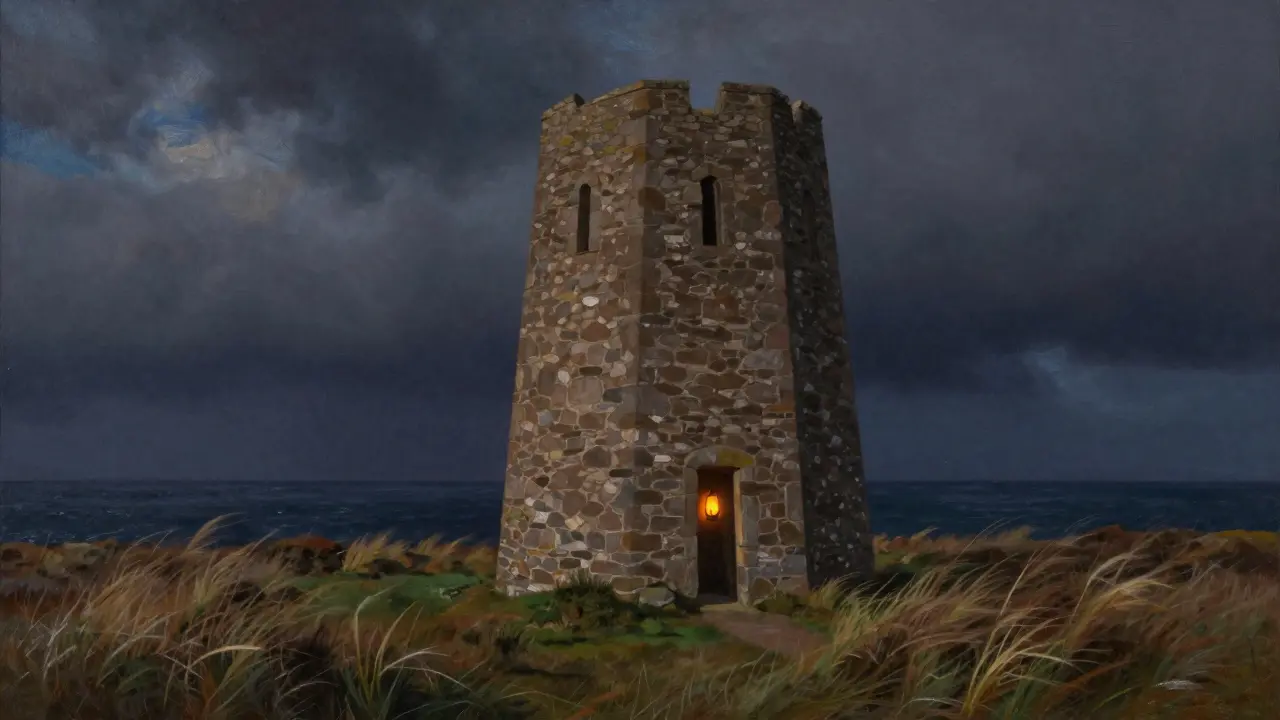
Walk into the Broch of Mousa, a 2,000-year-old stone tower that still stands nearly 13 meters tall. No mortar. Just stacked stone, built by Iron Age people who likely had Norse ancestors. Climb inside. The walls are thick enough to block wind, and the narrow staircase still lets you peer out over the sea. This isn’t a reconstruction. It’s the real thing. No fences. No audio guides. Just you, the echo, and the gulls.
The Cliffs That Defy Gravity
Head to Noss, a tiny island just off Bressay. Its cliffs rise like the spine of a sleeping dragon. At Windy Nook, you’ll stand on a ledge where puffins nest in spring, their bright beaks bobbing like floating tulips. The drop below isn’t just steep-it’s vertical. One wrong step, and you’re gone. That’s why locals don’t walk near the edge without a rope. Or at least a sense of humility.
At Cliff of Eshaness, the sea has carved arches so thin they look like they’ll collapse with a sigh. Walk the coastal path here in summer, and you’ll see razorbills diving into waves, guillemots perched on narrow ledges, and seals that watch you like you’re the odd one out. The rocks aren’t just rock. They’re layers of ancient lava, folded by tectonic forces 400 million years ago. This isn’t scenery. It’s geology in motion.
Life at the Edge of the World
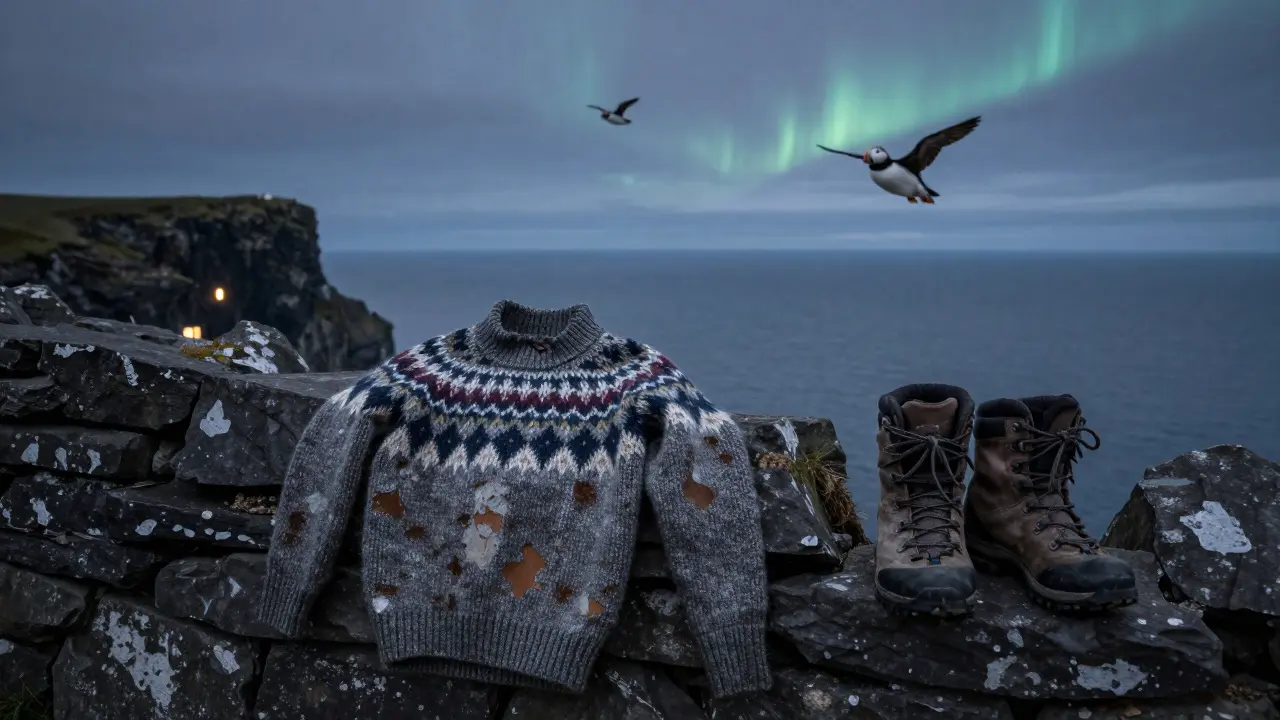
There’s no Starbucks in Shetland. No Uber. No 24-hour convenience stores. But there are Shetland wool sweaters, hand-knitted by women who’ve been doing it since their grandmothers. The wool is so fine and dense it can keep you warm even when the wind hits -10°C. You’ll find it in tiny shops in Scalloway and Lerwick, priced at £80 for a simple hat. People don’t buy them as souvenirs. They buy them because they’re the only thing that keeps you alive in winter.
Electricity here isn’t from the grid alone. It’s from wind turbines that spin year-round, solar panels that barely work in December, and diesel backups that cough to life when the storms roll in. In 2025, Shetland became the first UK region to run entirely on renewable energy for over 200 days straight. The community didn’t wait for government grants. They installed their own turbines, wired their own homes, and taught each other how to fix them.
People here don’t leave because they can’t. They leave because they choose to. Most who grow up here stay. Why? Because the rhythm of life is different. Fishermen set out before dawn. Farmers check sheep in snowdrifts. Kids ride bikes to school past abandoned crofts-small stone houses left empty since the 1950s. There’s no rush. No noise. Just the sound of waves, the cry of curlews, and the occasional hum of a tractor.
What to See, What to Skip
Don’t miss the Shetland Museum in Lerwick. It’s small, but it holds the Stennis Stone, a 5,000-year-old carved stone with symbols older than Stonehenge. The museum doesn’t just display artifacts-it tells stories. Like how the Norse brought the Shetland pony here, a breed so tough it could pull sleds through snowdrifts and still survive on a handful of grass.
But skip the guided bus tours. They cram you into vans and rush you past three sites in four hours. Instead, rent a car. Drive the A970 from Lerwick to Brae. Stop at every pull-off. Talk to people. Ask about the Up Helly Aa festival in January, where 1,000 men in Viking costumes burn a longship under fireworks. It’s not a show. It’s a ritual. People train for months. They wear handmade armor. They sing in Old Norse.
If you go in summer, take the ferry to Unst, the northernmost island in the UK. There, you’ll find the Hermaness National Nature Reserve. Walk the trail to the cliffs. Watch the fulmars glide on air currents so strong they seem to hover without flapping. You won’t see another soul for hours. That’s the point.
Why This Place Still Exists
Shetland doesn’t market itself. It doesn’t need to. It’s too remote. Too wild. Too real. You won’t find influencers posing on the cliffs. No sponsored posts. Just a few locals with cameras, taking photos of their children playing on the beach, or their dogs chasing puffins.
This isn’t a destination for people who want comfort. It’s for those who want connection-to land, to history, to silence. The Norse didn’t come here to escape. They came because the sea offered them a new life. Today, the same sea still offers that. To those who listen.
Can you visit Shetland in winter?
Yes, but it’s not for everyone. Winter in Shetland means 5 hours of daylight, gales that knock over trees, and roads that freeze overnight. But it’s also when the islands feel most alive. The Up Helly Aa festival in late January draws crowds from across Europe. Locals open their homes for hot soup and storytelling. If you’re prepared for cold, wind, and no WiFi, you’ll get a rare glimpse of real island life.
Are there accommodations for solo travelers?
Absolutely. There are B&Bs in Lerwick, croft stays on Unst, and even a few self-catering cabins with wood stoves and sea views. Many are run by families who’ve lived there for generations. Ask for a room with a view of the water. You’ll get a warm welcome, homemade jam, and advice on where the puffins are nesting this year. No booking sites needed-just call ahead.
Is it safe to hike the cliffs alone?
It’s not recommended. The cliffs are unstable. Rocks fall without warning. Paths are narrow, and weather changes in minutes. Even locals carry ropes and know the safest routes. If you’re hiking, go with someone, wear a helmet, and check the weather forecast from the Met Office Shetland station. Never rely on your phone signal-it drops out near the coast.
What’s the best way to get to Shetland?
Fly into Lerwick Airport from Edinburgh, Glasgow, or Aberdeen. Flights are frequent but small-usually 12-seat planes. The ferry from Aberdeen takes 12 hours and runs three times a week. It’s slower, but you’ll see seals, whales, and the sunrise over the North Sea. Many locals take the ferry just to feel the wind on their faces.
Can you see the Northern Lights in Shetland?
Yes. Shetland is one of the best places in the UK to see the aurora. With almost no light pollution and skies that stay dark for 18 hours in December, you’ll often see green ribbons dancing above the hills. Bring a warm coat, a thermos of tea, and patience. The best spots are on the west coast-Hillswick, Walls, or the beach at Skaw.
If you’re looking for a place that still feels untouched by the modern world, Shetland is it. Not because it’s stuck in the past, but because its people chose to hold on to what matters. The wind, the sea, the silence, and the stories. All of it. And if you go, you’ll carry some of it with you-long after the ferry leaves.
Comments (10)
-
Ian Maggs March 13, 2026
The wind doesn't just hit you-it rearranges your bones.
Shetland isn't a place you visit; it's a place that visits you, in your dreams, years later.
The Norse didn't conquer this land-they surrendered to it.
And now, after centuries, the land is still teaching us how to be small, how to listen, how to endure without screaming.
Modern life pretends it can tame nature.
Shetland laughs.
It's not romantic.
It's not curated.
It's just... there.
And that's why it survives.
Not because it's pretty.
But because it refuses to be anything else.
That's the real Viking legacy-not swords or ships-but stubbornness.
And humility.
And silence.

-
Emmanuel Sadi March 14, 2026So let me get this straight-you’re telling me people live here voluntarily? Like, no Netflix, no Uber Eats, and they still think it’s worth it? I mean, I’ve seen pictures of the cliffs. They look like they were drawn by a toddler who just discovered gravity. And the wind? Sounds like a 747 trying to take off in a closet. I’m glad I’m not missing out.

-
Nicholas Carpenter March 14, 2026
Shetland’s quiet power is something most of us spend our lives running from.
But here, the land doesn’t ask you to be entertained.
It asks you to be present.
And that’s the rarest gift of all.
I’ve traveled to 37 countries.
Only here did I feel like I was being welcomed-not as a tourist, but as a guest.
That’s not marketing.
That’s humanity.
And honestly? We could all use a little more of it.

-
Chuck Doland March 15, 2026
The linguistic continuity of Shetlandic, as a direct descendant of Old Norse, represents one of the most remarkable unbroken cultural lineages in Western Europe.
It is not merely a dialect, but a living archive of pre-Norman, pre-Scots, pre-English linguistic structures.
The retention of syntactic features such as subject-verb inversion in interrogatives (e.g., "hoo’s yir?") demonstrates a resilience that defies the homogenizing pressures of globalized media.
Furthermore, the architectural preservation of structures such as the Broch of Mousa-constructed without mortar, enduring millennia-exemplifies an engineering ethos predicated not on spectacle, but on durational integrity.
It is not nostalgia.
It is continuity.
And it is, in every meaningful sense, revolutionary.

-
Madeline VanHorn March 16, 2026I mean, it’s cute that they still wear wool sweaters. But £80 for a hat? That’s just a cash grab. I’ve been to Iceland. Way better. And way more authentic. Plus, they have hot springs. And Starbucks. Shetland? Feels like a postcard someone stuck in a drawer and forgot about.

-
Glenn Celaya March 17, 2026Cliffs? Yeah right. Probably just rocks with a sign saying "DANGER" that nobody reads. And "Up Helly Aa"? Sounds like a frat party with a Viking costume. I bet the whole thing is staged for tourists. People who live here are just stuck. No one chooses this. They just ran out of options.

-
Wilda Mcgee March 19, 2026
You know what’s wild? The fact that these islands run on renewable energy because the people decided to, not because someone in a government office told them to.
That’s not just sustainability.
That’s rebellion.
And it’s beautiful.
I’ve lived in cities my whole life.
Here, people don’t wait for someone else to fix things.
They just do it.
With their hands.
With their neighbors.
With their kids watching.
That’s the kind of community I’d die for.
And I’m not even from there.

-
Chris Atkins March 20, 2026The ferry from Aberdeen is the way to go. No rush. Just you, the sea, and maybe a whale or two. I took it last summer. Saw a minke breach right next to the boat. No one screamed. No one took a selfie. Just quiet awe. That’s Shetland. No flash. Just feeling. And the wool sweaters? Worth every penny. They don’t just keep you warm. They feel like a hug from the land.

-
Jen Becker March 21, 2026I tried to go once. Wind was so bad my hat flew off. I cried. Then I got stuck for 12 hours at the airport. No WiFi. No coffee. Just a man in a wool hat saying "hoo’s yir?" I left. Never going back.

-
Ryan Toporowski March 23, 2026If you’re thinking about going, DO IT. 🌊🏔️☀️
Even if you’re scared.
Even if it’s cold.
Even if you think you won’t like it.
You will.
Trust me.
I’ve been there 3 times.
Each time, I left a little piece of my noise behind.
And took a piece of the silence with me.
You’ll thank yourself later. 💪❤️
