
Summer on Skye isn’t just busy-it’s packed.
If you’ve ever driven up the A87 in July and found yourself stuck behind a caravan with a roof box full of inflatable ducks, you know what I mean. Skye in summer draws over 500,000 visitors each year, and most of them show up between late June and mid-August. The Fairy Pools, Old Man of Storr, and Quiraing aren’t just Instagram backdrops-they’re battlegrounds for parking spots and photo angles. But here’s the truth: you don’t need to fight the crowds to love Skye. You just need to plan smarter.
When exactly is peak season on Skye?
Peak season isn’t just July and August. It starts in late June, when school holidays kick in across the UK, and doesn’t ease until the first week of September. The busiest days? Fridays and Saturdays, especially when the weather is clear. On a perfect summer Saturday, you’ll see more cars on the A87 than you do in the rest of the year combined. The Skye Bridge sees up to 8,000 vehicles a day in peak weeks. That’s more than double the island’s resident population.
Want to beat the worst? Aim for midweek. Tuesday and Wednesday are quiet by comparison. Even better? Arrive before 9 a.m. or after 5 p.m. The main sites empty out fast once tour buses leave. The Quiraing, for example, can go from packed to peaceful in under an hour after lunch.
Where to park-and where NOT to park
Parking on Skye isn’t just about finding a spot. It’s about not getting fined, towed, or stuck in a muddy ditch.
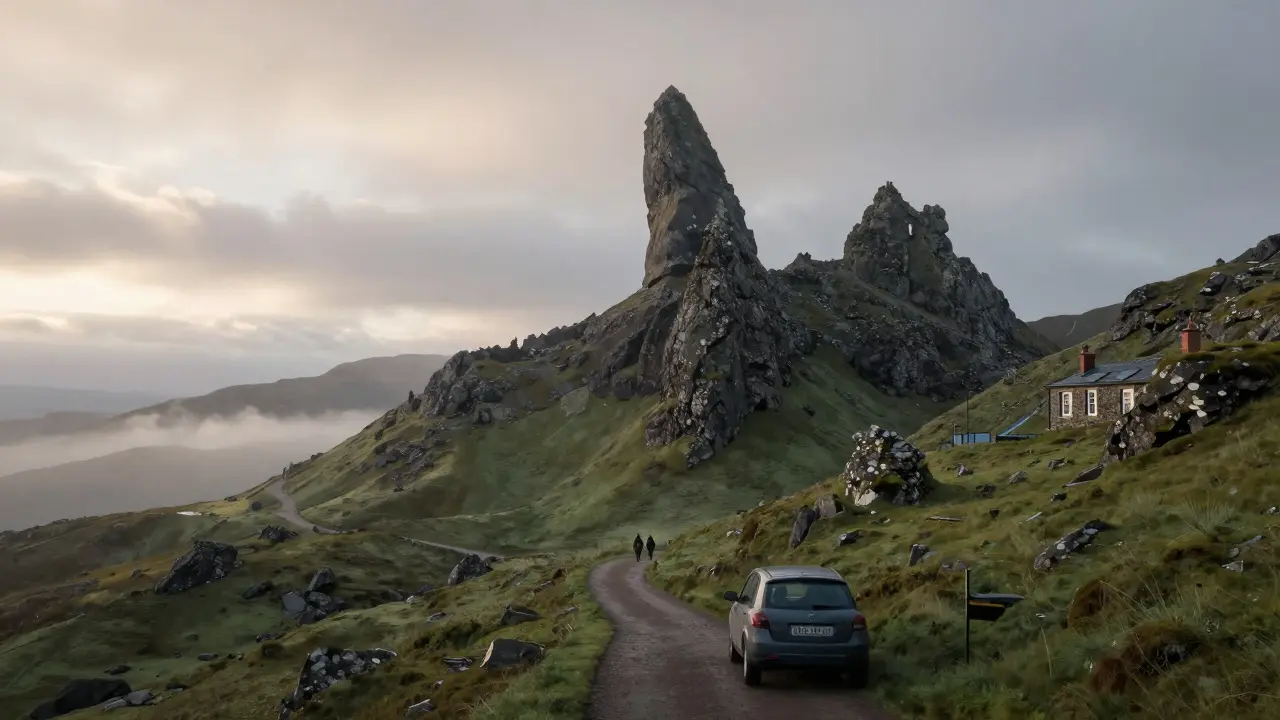
- Old Man of Storr: The main car park fills by 8 a.m. If you’re late, don’t try to squeeze into the overflow lot-it’s a 15-minute walk uphill on loose scree. Instead, park at the Staffin Hotel (open to non-guests) and walk the 1.2 miles along the old road. Fewer people know about this route, and the views are just as good.
- Fairy Pools: The official car park holds 40 cars. When it’s full, people park on the single-track road. That’s not just illegal-it’s dangerous. Use the Carbost car park (signposted from the A87) and walk 2.5 miles. It’s longer, but you’ll pass waterfalls and sheep, not other tourists.
- Quiraing: The main car park fills by 10 a.m. There’s a smaller lot at Flodigarry, 2 miles away, with a steep but quiet trail up the backside. Locals use it. Tourists don’t. You’ll have the ridge to yourself.
Never park on single-track roads, grass verges, or private driveways. The Highland Council fines up to £100 for blocking access. And yes, they’ve started using drones to catch violators.
How to avoid the crowds without missing the magic
You don’t have to skip Skye to avoid the chaos. You just need to shift your expectations.
Instead of chasing the famous spots at noon, try this:
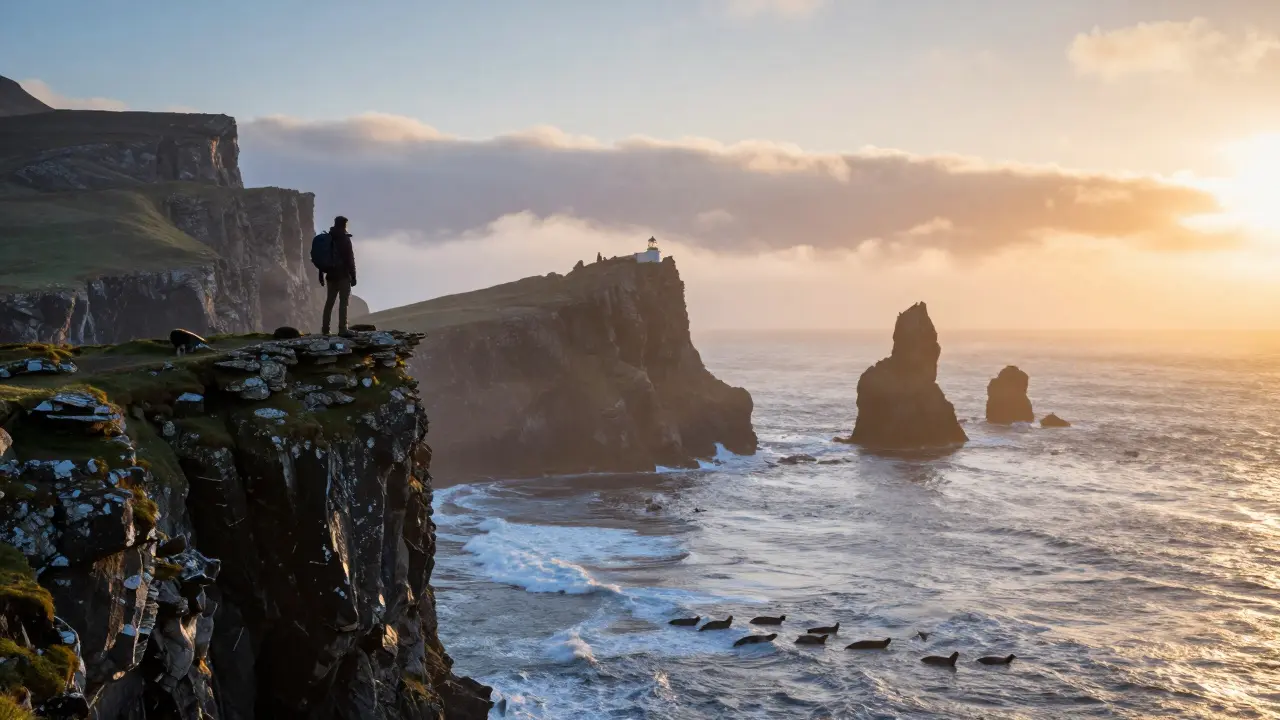
- Start your day at Neist Point at sunrise. It’s the farthest west point on Skye, and most people don’t make it here before 11 a.m. You’ll have the cliffs, the lighthouse, and the seals all to yourself.
- Visit Portree after 7 p.m. The town’s main square empties out once the day-trippers leave. Grab a pint at the Red Cuillin and watch the lights reflect off the harbor. No queues. No noise.
- Take the Sligachan to Glen Brittle walk instead of the Quiraing. It’s less known, less crowded, and just as dramatic-with waterfalls, black cliffs, and a view of the Cuillin Ridge that doesn’t require a selfie stick.
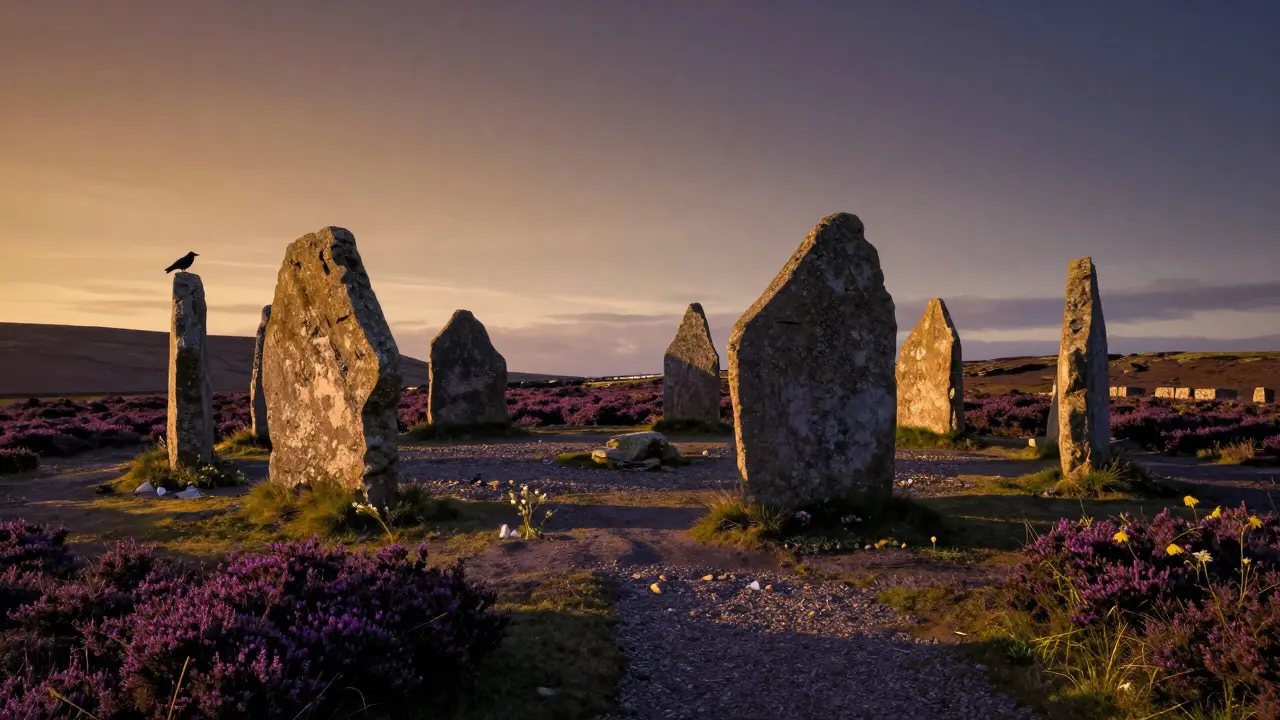
And if you’re willing to drive 20 minutes off the main road, try Clachan of the Seven Sisters-a hidden stone circle with no signs, no crowds, and no entry fee. Locals still leave offerings of pebbles and wildflowers there. No one else does.
What to bring-and what to leave at home
Summer on Skye doesn’t mean warm weather. It means wind, rain, and sudden fog. Even on sunny days, temperatures drop fast above 200 meters.
- Bring: Waterproof boots (not sneakers), a windproof jacket, a power bank (phone batteries die fast in the cold), and snacks. There are no shops near the main trails.
- Leave behind: Your expectations of convenience. There’s no Wi-Fi on the Quiraing. No ATMs near the Fairy Pools. And don’t count on finding a toilet after 6 p.m. at any trailhead.
Also, leave the drones at home. They’re banned on most of Skye’s protected sites. The National Trust for Scotland fines up to £1,000 for flying them near wildlife or heritage sites.
Alternative routes and hidden gems
Most visitors stick to the A87 and the main four sites. But Skye has dozens of quiet corners.
Try these instead:
- Broadford to Dunvegan via the B8011: This coastal road has zero traffic, stunning sea views, and a hidden beach called Camas Daraich where you can swim in July if you’re brave enough.
- Uig to Sleat Peninsula: Take the ferry from Uig to Tarbet (Sleat). It’s a 15-minute crossing, costs £5 for a car, and you’ll be on the quietest side of Skye. The Beinn na Caillich walk here has zero crowds and views of the Inner Hebrides you won’t find in any guidebook.
- Portree to Kilmuir: Walk the Old Manse Path-a 3-mile trail through heather and abandoned crofts. No signs. No crowds. Just sheep and silence.
How locals really spend summer on Skye
Most islanders leave Skye during peak season. They go to the mainland, to family homes, or just to the quietest corner of the island they can find.
But those who stay? They know the rhythms.
They go to the Portree Market on Wednesday mornings for fresh fish and local cheese. They hike the Wester Ross trails on the mainland on weekends, then come back for a pint at the Isle of Skye Brewery on Tuesday nights. They know that the best time to see the Northern Lights isn’t winter-it’s late August, when the crowds are gone and the sky is still dark enough.
You don’t need to fight the crowds to feel like you’re on Skye. You just need to move like someone who belongs here.
Final tip: Book your accommodation early-or skip the hotel entirely
Hotels and B&Bs on Skye book out 6-9 months in advance. If you wait until June to look, you’ll be sleeping in a caravan park in Broadford or driving back to the mainland every night.
Instead:
- Book a self-catering cottage in Elgol or Portnalong-they’re quieter and cheaper.
- Try wild camping. It’s legal under the Scottish Outdoor Access Code if you follow the rules: stay under 3 nights, no fires, pack out everything, and avoid farmland and buildings.
- Use the Highland Council’s official campsite map-it lists legal, safe spots with toilets and water.
And if you’re not into camping? Stay in a hostel. The Skye Hostel in Portree has dorms for £25 a night and a kitchen you can use. No one else thinks of it. That’s why it’s still got space.
What to do if you’re stuck in traffic
It happens. You’re on the A87. The cars are lined up. The sun’s out. Everyone’s frustrated.
Here’s what to do:
- Turn off the engine. Seriously. Idling wastes fuel and adds to the pollution.
- Get out. Walk 100 yards to the nearest viewpoint. There’s always one. You’ll see more in 5 minutes than you will stuck in a car for an hour.
- Take a photo. Not of the traffic. Of the sky. Of the hills. Of the way the light hits the sea. That’s what Skye is really about.
You didn’t come here to sit in a car. You came to feel something bigger.
What happens after August?
By mid-September, the buses stop running. The gift shops close. The parking tickets stop being issued.
And then? Skye becomes what it always was: wild, quiet, and deeply alive.
That’s the secret most tourists never find. The island doesn’t need you to come in July. It just needs you to come-on your own terms, in your own time, with your own pace.
Comments (14)
-
NIKHIL TRIPATHI January 30, 2026This is actually one of the most useful guides I've read all year. I'm planning a trip next month and was terrified of the crowds. The parking alternatives alone are worth the read. Thanks for writing this.
Also, the bit about leaving drones at home? 100% agree. Saw one nearly scare a lamb off a cliff last summer. Not cool.

-
Tarun nahata January 31, 2026YESSSSS. The Quiraing at 6am? Pure magic. I showed up at 5:45 and had the whole ridge to myself. Saw a golden eagle glide right over the rock spires. Felt like I was in a fantasy movie. No selfies. No noise. Just wind and wonder. THIS is Skye.

-
ANAND BHUSHAN February 1, 2026I went in August. Parking was chaos. But I did the Sligachan to Glen Brittle walk. Quiet. Beautiful. No one there. Best decision I made.

-
Indi s February 2, 2026This helped me so much. I was ready to give up on Skye after seeing the photos online. But your tips made it feel real again. Thank you.

-
Nalini Venugopal February 3, 2026Just a quick note - 'Neist Point' should be capitalized as 'Neist Point' throughout. Also, 'B8011' is correct, but 'B 8011' is sometimes used in older signage. Minor, but for accuracy's sake.

-
Rakesh Dorwal February 4, 2026You people are being naive. This whole guide is a cover-up. The UK government doesn't want you to know that the Fairy Pools are actually a secret military testing site. That's why they ban drones and fine people for parking. The 'sheep' you see? Drones. The 'quiet trails'? Surveillance corridors. They're monitoring us. And you're just walking right into it.
They even control the weather. That's why the fog rolls in exactly when you're about to take a photo. It's not nature. It's control.

-
Aryan Jain February 4, 2026THEY DON'T WANT YOU TO KNOW THIS BUT THE ISLAND ISN'T EVEN REAL.
It's a hologram projected by the EU to distract us from the real ancient ruins under the North Sea. That's why the parking spots vanish at night. The tech is powered by moonlight and stolen Scottish bagpipe melodies. I saw a guy in Portree crying because his phone couldn't load the map. He knew. He knew the truth.
Bring a compass. And a prayer.

-
Rubina Jadhav February 5, 2026I read this before my trip. Did the carbost walk. Saw the sheep. Didn't see anyone else. Felt peaceful. Thank you.

-
Pramod Usdadiya February 6, 2026i went to clachan of the seven sisters and left a pebble like u said. no one was there. just me and the wind. it felt right. i think the old ones were happy. ps: i miss spelled clachan but u know what i mean 😊

-
Agni Saucedo Medel February 8, 2026This is the best post ever 🌿✨ I did the Uig to Sleat ferry and cried a little at the view 🥹 Thank you for reminding me that magic still exists. Also, wild camping was life-changing. No Wi-Fi? Perfect. 🏕️💙

-
Rohit Sen February 9, 2026You're all missing the point. The real secret is that Skye isn't a place. It's a state of mind. If you're still thinking about parking lots and trail times, you're not ready for it. Go meditate in a London subway instead.

-
Shivani Vaidya February 10, 2026The clarity and depth of this guide are commendable. It reflects a profound understanding of both the ecological sensitivity and cultural significance of the region. One must approach such landscapes with humility and restraint, not as consumers of scenery but as guests of the earth. Thank you for articulating this so thoughtfully.

-
Vimal Kumar February 12, 2026Hey everyone - if you're thinking of camping, just remember: leave no trace. Not just trash - no chalk marks, no cairns, no carved initials. The land remembers. I’ve seen places ruined by well-meaning tourists. Skye’s beauty isn’t in the selfie. It’s in the silence after you’ve walked away.
And if you’re staying in Portree? Try the hostel. Seriously. It’s got character, and the owner makes the best porridge you’ll ever eat. I went back twice just for that.

-
Aditya Singh Bisht February 13, 2026YOU CAN DO THIS. I went alone in July. Thought I’d hate it. Got stuck in traffic for 90 minutes. Got out. Walked to a cliff. Sat there. Watched the sun hit the sea. Felt alive for the first time in years. Skye doesn’t care if you’re late. It just wants you to show up. So go. Bring your heart. Leave your ego. And let the wind take what doesn’t belong to you. 💪🌄
