
The Gallery of Modern Art Glasgow isn't just another museum. It’s a bold statement carved into the heart of the city, where centuries-old stone meets raw, unfiltered modern expression. Housed in a former neoclassical bank on Royal Exchange Square, the building itself was once a temple to finance. Today, it’s a temple to ideas - messy, challenging, and alive.
Open since 1996, the Gallery of Modern Art (GoMA) doesn’t chase permanence. Its collections change. Sometimes it’s a single artist’s entire life’s work. Other times, it’s a swarm of installations made from recycled plastic, broken electronics, or found objects from Glasgow’s streets. You won’t find centuries-old oil paintings here. Instead, you’ll see video projections that make the walls breathe, sculptures that hum with hidden motors, and soundscapes that echo through empty rooms like ghosts.
What You’ll See: The Collections That Stick With You
GoMA doesn’t organize art by date or style. It organizes by feeling. One floor might be all about isolation - a room filled with silent, faceless mannequins staring at walls covered in handwritten letters. The next could be pure chaos: a wall of flashing LED screens, each showing a different protest, concert, or street dance from around the world.
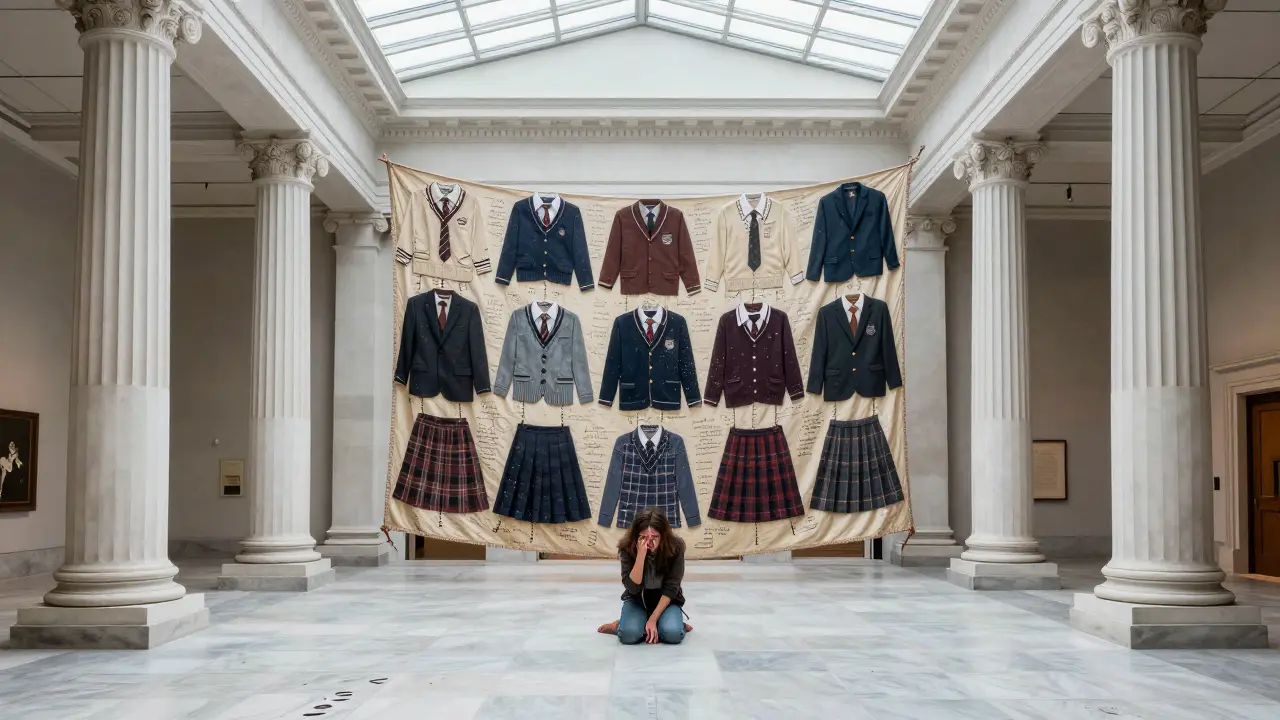
In 2024, the gallery hosted a major exhibition called “The Weight of Silence”, featuring work from over 40 artists across Africa, Asia, and Latin America. One piece stood out: a 12-meter-long tapestry made entirely from discarded school uniforms from war-torn regions. Each stitch held a name, a date, a location. Visitors could touch it. Many did. And many cried.
Another permanent fixture is the “Glasgow Collection” - a rotating archive of work by artists who live, work, or were born in the city. You’ll find pieces from the 1980s punk scene, abstract paintings from women who worked in shipyards during WWII, and digital animations created by teenagers using free software in public libraries. It’s not curated for fame. It’s curated for truth.
The Building: A Bank Turned Temple
The building was finished in 1810 as the Royal Exchange. Its columns, pediments, and grand staircase were meant to inspire trust in money. Now, they frame art that questions everything.
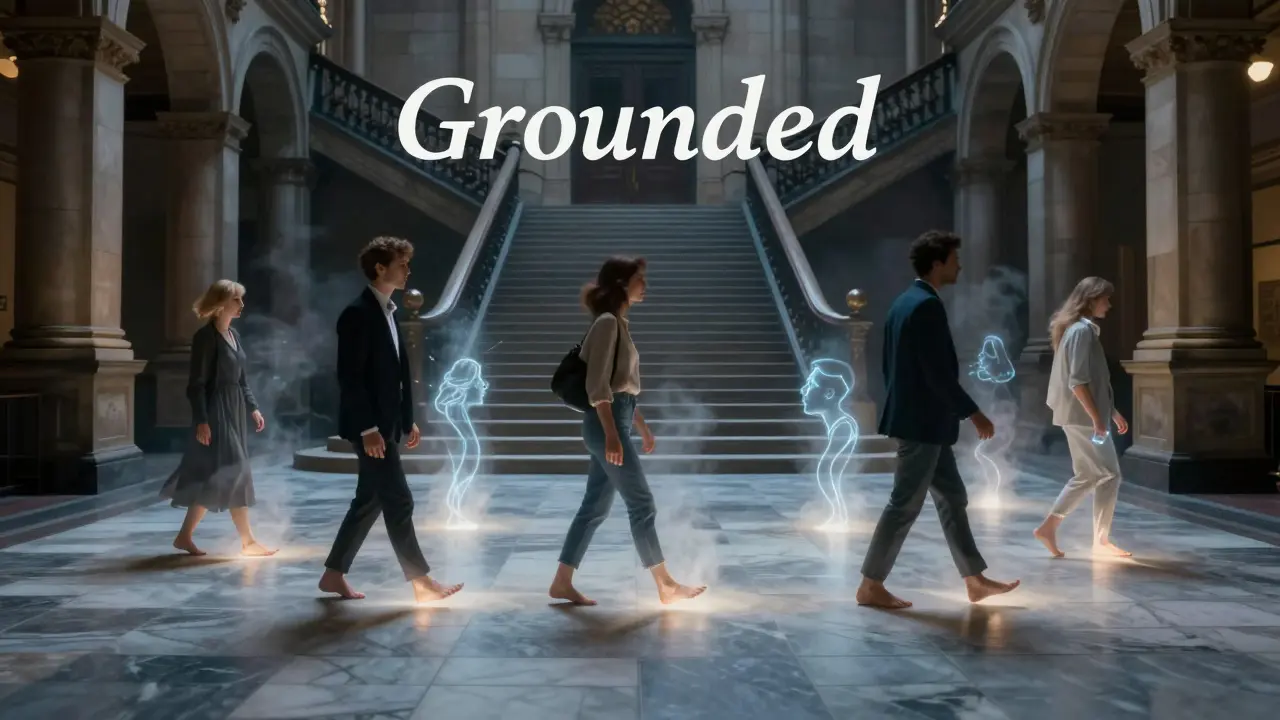
The original marble floors still hold the scuffs from bankers’ shoes. Today, they’re scuffed again - this time by barefoot visitors who walk barefoot through a sound installation called “Grounded”, where each step triggers a different voice whispering memories of Glasgow’s past. The old vaults? Now they’re projection rooms. One held a 360-degree film of a single tree growing over 20 years, filmed from the same spot in a Glasgow park. No music. Just wind.
The glass roof added in 2010 lets in natural light, but it’s not just for show. The gallery uses it to power half its lighting. Solar panels disguised as skylights feed energy into the city grid. The building doesn’t just house art - it lives with it.
How It Feels to Be There
GoMA doesn’t ask you to understand. It asks you to feel.
Most museums whisper. GoMA shouts - softly, sometimes. You might walk into a room and find nothing but a single chair facing a blank wall. A sign says: “Sit. Wait. Listen.” You sit. After 12 minutes, a faint heartbeat begins to pulse from the walls. It’s not recorded. It’s live - pulled from sensors in a hospital in Govan, where a premature baby is being monitored.
There are no audio guides. No QR codes. No apps. Just you, the art, and the space between.
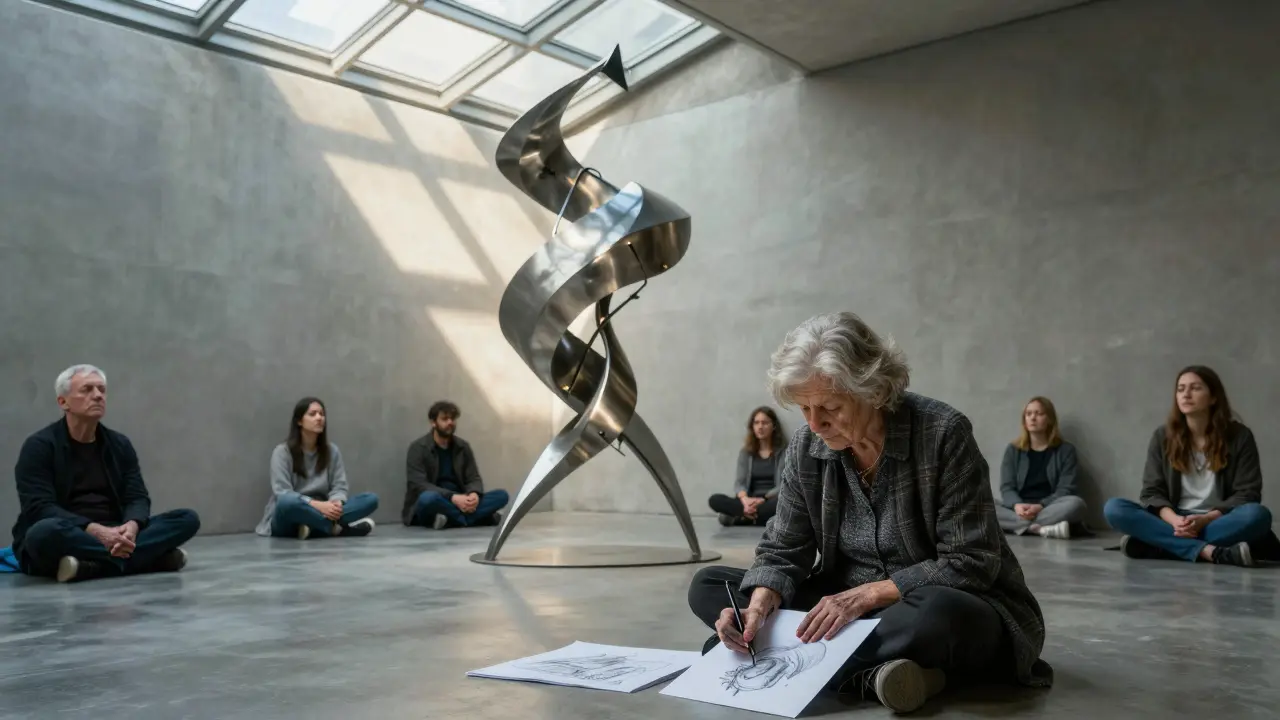
On weekends, you’ll find people sketching on the floor. Not tourists. Locals. Students. Retirees. One woman, 78, comes every Tuesday. She brings her own pencils and draws the same sculpture - a twisted metal form called “The Unraveling” - every time. She says she’s trying to draw the sound it makes. No one else has figured out what that sound is. Maybe that’s the point.
Why It Matters
GoMA doesn’t sell tickets to art. It sells space. Space to be confused. Space to be bored. Space to be moved without knowing why.
In a world where everything is algorithmically curated - your music, your news, your feed - GoMA is a glitch. It doesn’t know who you are. It doesn’t care. It just shows you something strange, and lets you sit with it.
It’s not about being “cultured.” It’s about being human. The gallery has no elite entrance. No velvet ropes. No dress code. Just a door. And inside, the world as it is - not as we pretend it is.
What’s Next
By summer 2026, GoMA will open its first outdoor pavilion - a floating structure on the River Clyde, made from reclaimed steel from the city’s last shipyard. It will host live performances, poetry readings, and silent film screenings with no screens. Just shadows, light, and the sound of passing boats.
They’re also working with local schools to train teenagers as “art guides.” Not tour guides. Guides. They don’t explain. They ask questions. “What does this make you think of?” “Where do you feel it in your body?” The answers aren’t right or wrong. They’re just real.
GoMA doesn’t want you to remember the art. It wants you to remember how you felt when you saw it.
Is the Gallery of Modern Art Glasgow free to visit?
Yes. Entry to all exhibitions at the Gallery of Modern Art Glasgow is completely free. There are no tickets, no donations required, and no hidden fees. The gallery is publicly funded and open to everyone, every day except Christmas Day and New Year’s Day. Even special events and workshops are free, though some require advance booking.
Where is the Gallery of Modern Art Glasgow located?
The Gallery of Modern Art Glasgow is located at Royal Exchange Square, in the heart of the city center. It’s directly across from the City Chambers and just a five-minute walk from Glasgow Central Station. The nearest subway stop is St. Enoch, on the Green and Blue lines. The building is hard to miss - a grand white stone structure with tall columns and a large glass roof.
How long should I plan to spend at GoMA?
There’s no rush. Most visitors spend between 90 minutes and three hours. If you’re just browsing, an hour is enough. But if you sit with a few pieces - really sit - you could easily spend half a day. Some people come back multiple times in one week. The exhibitions change every few months, so there’s always something new.
Can I take photos inside the gallery?
Yes, photography is allowed for personal use in most areas. No flash, no tripods, and no selfie sticks. Some installations have restrictions - usually because they’re sensitive to light or sound. Signs are clearly posted. If you’re unsure, ask one of the staff. They’re happy to help.
Is GoMA accessible for people with disabilities?
Absolutely. The building is fully wheelchair accessible, with lifts to all floors. Audio descriptions, tactile tours, and British Sign Language (BSL) guided sessions are available on request. There are quiet rooms for visitors who need sensory breaks, and the gallery offers free companion tickets for those who require support. Staff are trained to assist with all needs.
If you’re in Glasgow and you’re looking for something that doesn’t ask you to be impressed - just present - go to GoMA. Bring nothing. Leave something behind.
Comments (14)
-
Gareth Hobbs March 18, 2026This is pure socialist propaganda disguised as art. A bank turned into a temple of chaos? More like a taxpayer-funded dumpster fire. They're letting people touch tapestries made from war uniforms? Next they'll let toddlers scribble on the Mona Lisa. I've seen enough of this Marxist nonsense. Glasgow used to be a city. Now it's a performance art piece for people who hate capitalism.

-
Zelda Breach March 19, 2026The gallery claims to be about 'feeling' but every installation is meticulously calculated to trigger emotional responses. The heartbeat from the hospital? The whispering floor? The 'Unraveling' sculpture that 78-year-old woman draws? This isn't art. It's behavioral engineering. They're not curating experience. They're programming vulnerability. And the fact that it's free? That's the real manipulation. You don't pay money. You pay your dignity.

-
Alan Crierie March 19, 2026I love how this place treats art like a conversation instead of a commodity. The fact that there are no audio guides, no QR codes, no apps... it's radical in the best way. I went last month and sat with that one chair facing the blank wall. Twelve minutes later, the heartbeat started. I didn't cry. But I felt something I haven't felt in years. Quiet. Real. Not curated. Not optimized. Just... there. We need more spaces like this. Not less.

-
Nicholas Zeitler March 21, 2026I'm so glad they're training teens as 'art guides' instead of tour guides. That's the whole point. Not explaining. Not lecturing. Just asking: 'What does this make you think of?' That's how real learning happens. I work with at-risk youth in Chicago, and we tried something similar last year. Kids who wouldn't speak in class started talking about color, texture, emotion. Not because they were 'smart'-because they were allowed to be human. This is the future of education.

-
Teja kumar Baliga March 21, 2026In India, we have temples where people touch statues, leave flowers, whisper prayers. This gallery is the same. Not sacred in the religious sense-but sacred in the human sense. The tapestry of school uniforms? I cried too. Not because I understood it. Because I felt it. Art doesn't need explanation. It needs presence. Thank you for sharing this.

-
k arnold March 21, 2026Yeah right. A bank turned into a 'temple of ideas.' What a load of pretentious nonsense. They probably spent $20 million on solar skylights and then hired three interns to hang up some broken electronics. 'The Weight of Silence'? Sounds like a therapy group that got a grant. I've seen better art in a Brooklyn garage sale.

-
Tiffany Ho March 23, 2026I went to GoMA last winter and it changed how I see things. I sat in that room with the chair for 20 minutes. The heartbeat came. I didn't know what to feel. But I felt something. I didn't need to understand it. Just be with it. I think we forget how to just be. This place reminds us. It's quiet. It's real. I wish more places were like this.

-
michael Melanson March 24, 2026The glass roof powering half the lighting? That’s actually impressive. Not just aesthetic. Functional. Sustainable. The building itself is a statement. I appreciate that they didn’t just stick a modern art wing onto an old building. They let the old and new talk to each other. That’s rare.

-
lucia burton March 25, 2026The institutional framework here is a radical departure from the neoliberal commodification of cultural capital. By removing transactional barriers-monetary, linguistic, epistemological-they create what I would term a post-hegemonic aesthetic space. The absence of audio guides isn't Luddite nostalgia; it's an epistemological intervention. The tactile tapestry? A phenomenological reclamation of embodied memory. This isn't just curation. It's counter-hegemonic praxis.

-
Denise Young March 26, 2026I love how they're not trying to 'educate' people. They're just... letting them feel. The fact that they're using solar panels disguised as skylights? That’s genius. It’s not just sustainable-it’s poetic. The building doesn’t scream 'I’m green.' It just is. And the teens as guides? That’s the future. Not experts. Not lecturers. Just humans asking questions. No right answers. Just real ones.

-
Sam Rittenhouse March 28, 2026I read that woman draws the same sculpture every Tuesday because she’s trying to draw the sound it makes. That’s the most beautiful thing I’ve heard in years. Not because it’s profound. Because it’s true. Some things can’t be explained. But they can be felt. And if you’re lucky, you can try to draw them. That’s all any of us ever really want-to make the invisible visible. Even if we fail.

-
kelvin kind March 28, 2026Free. No tickets. No pressure. Just a door. I went on a rainy Tuesday. Sat on the floor. Watched people stare at walls. Didn’t feel weird. Felt... okay. That’s rare.

-
Ian Cassidy March 30, 2026The solar skylights are cool. But honestly? The best part is the barefoot walk. You feel the floor. You hear the whispers. You forget you’re in a museum. It’s like the building forgot too.

-
Zach Beggs April 1, 2026I came in thinking it was just another artsy place. Left thinking maybe I’ve been too busy trying to understand everything. Sometimes you just need to sit. And listen.
