
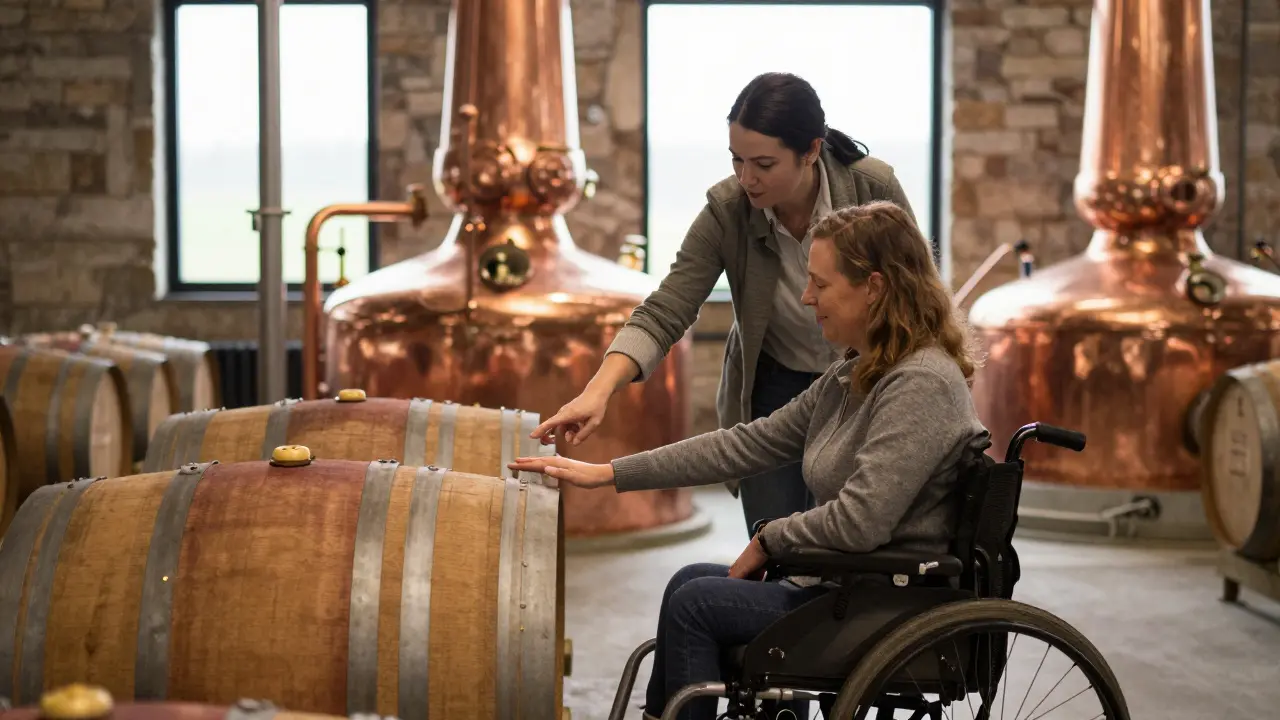
Planning a whisky tour in Scotland? If you use a wheelchair or have mobility challenges, you might wonder: are distilleries actually accessible? The short answer is yes - but not all of them. Over the last five years, Scotland’s whisky industry has made real progress. Many of the biggest names now offer fully accessible tours, but others still lag behind. This isn’t just about ramps and elevators. It’s about clean restrooms, clear signage, staff training, and space to move. If you’re planning a visit, here’s what you need to know before you book.
What Makes a Distillery Truly Accessible?
Accessibility isn’t a checkbox. It’s a series of connected experiences. A ramp at the front door means nothing if the tasting room has narrow aisles or a step leading to the bar. A lift that breaks down on tour day doesn’t help anyone. True accessibility means every part of the experience works for everyone.
Look for these key features:
- Level or ramped entry with no steps
- Wide doorways (at least 90cm) for wheelchairs
- Accessible restrooms with grab bars and enough turning space
- Low counters for tasting and purchasing
- Audio descriptions or visual guides for those with hearing or vision impairments
- Staff trained to assist without assuming needs
Some distilleries go further. At Glengoyne is a single malt Scotch whisky distillery located in Dumfries and Galloway, known for its unpeated whisky and scenic location near the Highlands, they offer guided tours with tactile samples - you can feel the texture of oak barrels and smell the peat smoke up close. At The Glenfiddich is a Speyside single malt Scotch whisky distillery in Dufftown, Scotland, owned by William Grant & Sons, and one of the best-selling single malts in the world, visitors can use a tablet with voice navigation to explore the warehouse without climbing stairs.
Top Accessible Distilleries in Scotland (2026)
Not all distilleries are equal. Some have been designed with accessibility in mind from the start. Others have retrofitted over time. Here are the current leaders based on visitor reports, official disclosures, and recent site visits:
| Distillery | Location | Accessible Tour? | Restrooms | Special Features |
|---|---|---|---|---|
| Glengoyne | Loch Lomond | Yes - full tour | Yes, modern | Tactile barrel samples, quiet tour option |
| The Glenfiddich | Dufftown, Speyside | Yes - elevator access | Yes, spacious | Audio tour tablets, no stairs in warehouse |
| Tomintoul | Speyside | Yes - all areas | Yes, with hoist | Free wheelchair loan, flat paths |
| Edradour | Perthshire | Partially - ground floor only | Yes, basic | Small group tours, staff help with steps |
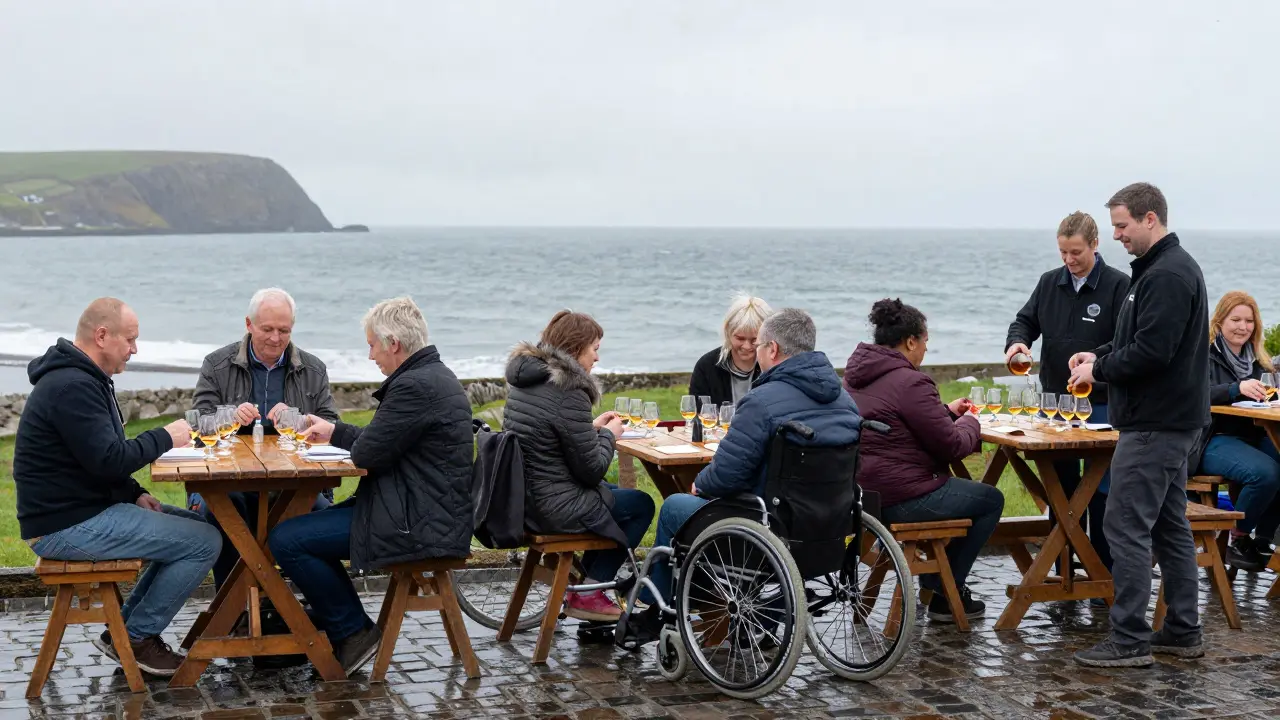
| Caol Ila | Islay | Yes - ramped entry | Yes, clean | Outdoor tasting area with level access |
| Oban | Oban, Argyll | Yes - full access | Yes, modern | Seated tasting with sea views |
| Johnnie Walker (Edinburgh) | Edinburgh | Yes - full tour | Yes, accessible | Interactive digital exhibits, sign language tours |
Notice the pattern? The bigger names - especially those with visitor centers built after 2015 - tend to lead. Smaller, historic distilleries often struggle with old stone buildings and narrow corridors. But even some of those are improving. Tomintoul, for example, started offering free wheelchair loans in 2023 after feedback from a visitor with spinal cord injury. Now, nearly 30% of their guests use them.
What to Ask Before You Book
Don’t assume. Always call or email ahead. Websites lie. Photos lie. Staff might not know the full picture.
Here’s exactly what to ask:
- Is the entire tour route accessible? (Ask about stairs, narrow hallways, uneven ground)
- Are restrooms on the same level as the tour start? (Many have them in the basement)
- Do you offer any adaptive equipment? (Wheelchairs, mobility scooters, hearing loops)
- Can you accommodate service animals?
- Is there a quiet or low-sensory option? (Some tours are loud, bright, and crowded)
- Can I bring a companion for free? (Most offer free entry for carers)
One visitor from Glasgow told me she booked a tour at a famous Speyside distillery only to find out halfway through that the tasting room had two steps. The staff didn’t know. She had to sit outside while the group tasted. That’s not accessibility - that’s an accident waiting to happen.

Common Pitfalls to Avoid
Even good distilleries make mistakes. Here’s what not to do:
- Don’t rely on Google Maps photos - they’re often outdated
- Don’t assume a ramp means full access - check width and slope
- Don’t skip the restroom check - it’s the #1 reason tours get cut short
- Don’t book during peak hours - crowded spaces become dangerous
- Don’t assume staff know the rules - ask for a manager if unsure
Some distilleries have “accessible” signs but still require you to leave your wheelchair at the door and use a provided stool. That’s not inclusion. That’s compromise.
Real Stories: What Works
In 2024, a group of wheelchair users from Dundee took a two-day whisky tour across the Highlands. They visited seven distilleries. Four were fully accessible. Two were partially - one had a ramp but no accessible restroom. One was a disaster: no warning, no help, no options.
But the best experience? Tomintoul. They met them at the gate, offered a loaner wheelchair, gave them a private tour with extra time, and let them taste from a low table with a view of the river. The guide didn’t rush. He explained the wood types, the aging process, even let them touch the casks. One visitor said, “For the first time, I felt like I belonged.”
How to Plan Your Trip
Start with the VisitScotland Accessibility Guide - it’s updated yearly and lists verified accessible venues. Then:
- Choose 2-3 distilleries max. Too many in one day = exhaustion.
- Book morning tours. Less crowded, more staff attention.
- Call ahead - don’t just email. Ask for the accessibility coordinator if there is one.
- Bring a power bank. Mobility scooters and wheelchairs need charging.
- Ask about parking. Accessible parking should be closest to the entrance.
- Check the weather. Wet cobblestones are slippery, even with good tires.
Many distilleries now offer “accessible only” tours on quiet days. Ask if they have them. You’ll get more time, more attention, and less noise.
What’s Still Missing?
Progress is real, but gaps remain. Most distilleries still don’t offer:
- Sign language tours
- Braille tasting notes
- Audio descriptions for blind visitors
- Staff trained in disability awareness
- Consistent policies across locations
There’s no national standard. Each distillery sets its own rules. That’s why your voice matters. If you had a good experience - leave a review. If you hit a wall - tell them. Feedback drives change.
Final Thoughts
Whisky isn’t just about the drink. It’s about place, story, and connection. If you’re in a wheelchair, that story shouldn’t stop at the front door. Scotland’s distilleries are slowly learning how to open wider. You don’t have to settle for less. Ask for better. Plan ahead. And know this: you belong in every tasting room, every warehouse, every view of the Highlands.
Are all Scottish distilleries wheelchair accessible?
No. While many major distilleries have improved accessibility since 2020, older or smaller sites still have steps, narrow doors, or inaccessible restrooms. Always check directly with the distillery before booking. Don’t rely on website claims - call or email to confirm.
Can I bring my own wheelchair or mobility scooter?
Yes, most distilleries allow personal wheelchairs and mobility scooters. Some even offer loaner wheelchairs for free. But check the size limits - some narrow corridors can’t fit large scooters. Tomintoul and Glengoyne both list their max dimensions on their accessibility pages.
Do distilleries provide accessible restrooms?
Most newer visitor centers do. But older distilleries often have restrooms in basements or separate buildings. Always ask if the restroom is on the same level as the tour start. If it’s not, the tour may not be fully accessible, no matter what the website says.
Are there guided tours for people with vision or hearing impairments?
A few do. Johnnie Walker in Edinburgh offers sign language tours and audio descriptions. Glengoyne provides tactile samples for blind visitors. But this is rare. If you need these services, contact the distillery at least two weeks in advance. They often need time to prepare materials or arrange a specialist guide.
Can I bring a companion for free?
Almost all major distilleries in Scotland offer free entry for a companion or carer when accompanying a person with a disability. You may need to show proof - like a Blue Badge or disability card - so bring it with you.
What should I do if a distillery says they’re accessible but it’s not?
Speak to a manager on site. If they don’t help, leave a detailed review on Google and VisitScotland. Many distilleries respond to feedback. In 2025, three distilleries upgraded their facilities after public complaints. Your voice makes a difference.
For more information on accessible travel in Scotland, check VisitScotland’s official accessibility guide. It’s updated every year and includes verified listings, transport tips, and local resources.
Comments (9)
-
Patrick Sieber January 17, 2026
Just got back from Tomintoul last month. They handed me a loaner chair like it was no big deal, no paperwork, no awkwardness. The guide even paused so I could run my hand along the barrel staves. That’s the kind of detail that turns a tour into a memory.
Most places just check the ramp box. Tomintoul checked the heart box.

-
Santhosh Santhosh January 17, 2026
I’ve been to five distilleries across Scotland over the past two years with my mobility scooter. The biggest issue isn’t the ramps or the doors - it’s the staff who assume you’re there just for the photos, not the experience. At one place, they offered me a stool outside the tasting room because ‘the floor might be too rough.’ I didn’t need a stool. I needed them to stop treating me like a fragile exhibit.
Glengoyne was the first place where the staff asked me what I wanted to feel, smell, taste - not what I could handle. That shift in mindset? That’s accessibility. Not concrete and handrails. It’s dignity.

-
Veera Mavalwala January 19, 2026
Oh sweet mercy, another ‘accessible’ guide that reads like a corporate PR draft wrapped in a velvet bow. Let’s be real - most of these distilleries are 200-year-old stone tombs with a ramp slapped on like an afterthought. The ‘tactile samples’ at Glengoyne? Cute. But if your wheelchair can’t fit past the cask storage corridor, you’re not accessing anything. You’re being politely tolerated.
And don’t get me started on ‘quiet tours.’ That’s just a fancy way of saying ‘we’ll let you in after the loud, drunk tourists leave.’ What you’re really getting is exclusion with a side of artisanal whisky.
Scotland’s whisky industry is still playing dress-up with inclusion. They’ve got the signs. They’ve got the brochures. But they haven’t got the guts to tear down the walls - literal or metaphorical.

-
Ray Htoo January 21, 2026
Really appreciate this breakdown. I’m planning a trip next spring and was worried I’d have to pick between ‘authentic’ and ‘accessible.’ Turns out you don’t have to choose.
Johnnie Walker’s sign language tours and audio tablets? That’s next level. I’ve never seen a distillery treat sensory access as seriously as tech access. And the fact that they’re doing it in Edinburgh - a city that still has cobblestone alleys that could break an ankle - makes it even more impressive.
Also, the ‘free companion’ policy is huge. My sister comes with me everywhere and I hate that she has to pay just to be there. That’s not accessibility - that’s exploitation disguised as tourism.

-
Natasha Madison January 21, 2026
Who’s funding all this ‘accessibility’? Because I’m pretty sure the EU is pushing this on Scotland to weaken British heritage. You think they care about wheelchairs? No. They care about control. The moment you start modifying historic buildings for ‘inclusion,’ you erase their soul.
And why do we need ‘tactile samples’? Can’t people just drink the whisky like normal? This is cultural dilution dressed up as progress. Next they’ll be adding subtitles to bagpipe music and serving tea with the dram.
Check the source. Who wrote this guide? Who profits? It’s not about accessibility. It’s about rewriting tradition to fit a globalist agenda.

-
Sheila Alston January 22, 2026
It’s so disappointing that people still think ‘ramps’ equal inclusion. You can’t just slap on a ramp and call it a day. That’s not inclusion - that’s performative charity. Real inclusion means you stop treating disabled people as an afterthought and start designing experiences with us from the beginning.
And why do distilleries still make you ask for help? Why isn’t it just… there? Like water. Like light. Like a door that opens. Why does it have to be a favor? Why does it have to be a ‘special request’? It’s not special. It’s basic human decency.
And yes, I’ve been turned away. More than once. And every time, I left not because I couldn’t get in - but because I realized I wasn’t meant to be there.

-
sampa Karjee January 22, 2026
Let’s be honest - most of these distilleries are glorified theme parks now. Glengoyne’s ‘tactile samples’? A gimmick. Johnnie Walker’s ‘digital exhibits’? A corporate spectacle. You’re not experiencing whisky. You’re experiencing a sanitized, market-tested version of it, wrapped in accessibility branding to attract grants and tourism dollars.
Real whisky is made in old stone buildings with uneven floors and steep stairs. That’s not a flaw - that’s the point. The grit. The history. The imperfection.
Trying to ‘fix’ these places for wheelchair users doesn’t make them better. It makes them ordinary. And ordinary is the enemy of authenticity. If you can’t handle a step, maybe you shouldn’t be here. Not because you’re unworthy - but because whisky isn’t a theme park. It’s a ritual. And rituals demand respect, not ADA compliance.

-
Kieran Danagher January 23, 2026
Tomintoul’s free wheelchairs? Brilliant. But here’s the kicker - they didn’t buy them. They got them secondhand from a hospital. Cleaned them. Painted them. Put a wee tartan ribbon on the handle. That’s not accessibility. That’s heart.
Meanwhile, some of these ‘modern’ distilleries spend £50k on a glass elevator but forget to put a grab bar in the loo. The difference? One’s a statement. The other’s a sentence.
Don’t confuse investment with intention. The ones who care don’t advertise it. They just do it.

-
OONAGH Ffrench January 25, 2026
Accessibility is not a feature. It is a condition of belonging
Every ramp is a quiet promise
Every low counter is a whispered welcome
Every trained staff member is a step away from isolation
Scotland’s distilleries are not just selling whisky
They are selling a story
And stories should not have doors that only some can open
Let them open wide
Let them stay open
Let them be ordinary
Because belonging should never be exceptional
