
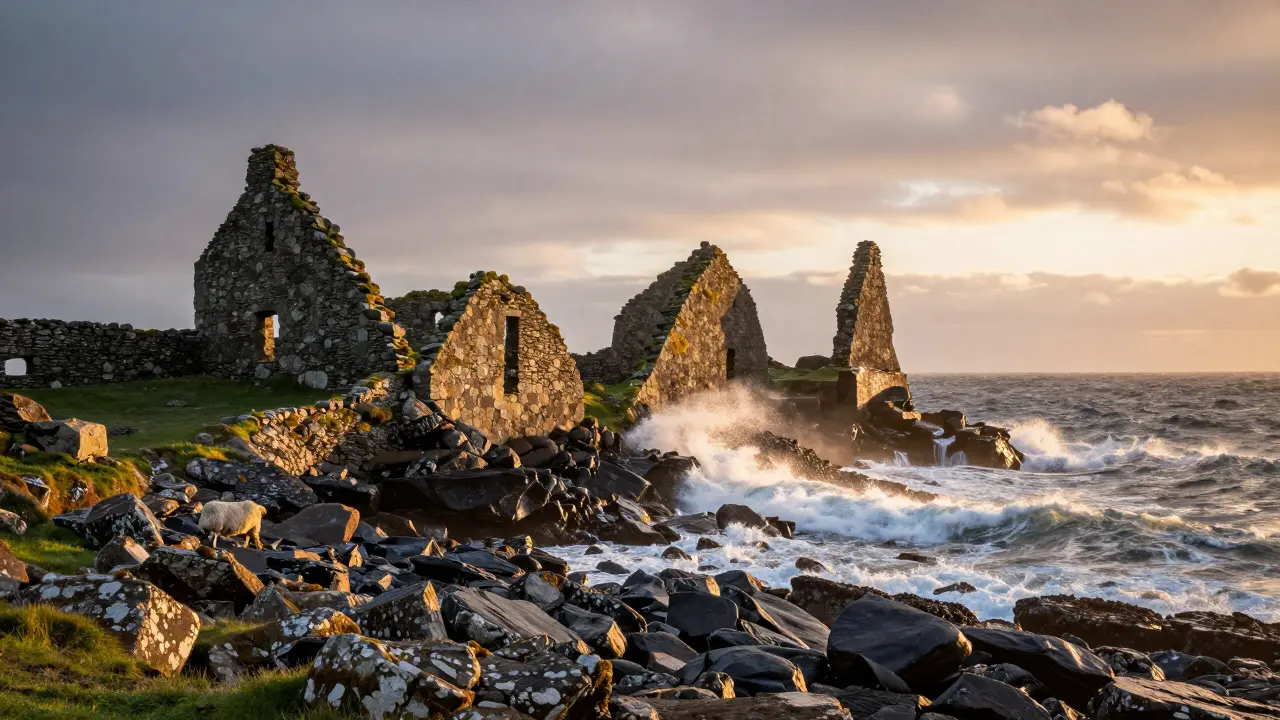
Most people snap photos at Edinburgh Castle or Stirling Castle-crowded, polished, and packed with tour groups. But if you’ve ever driven through the Scottish Highlands and spotted a crumbling tower peeking out from a hillside, you know the real magic isn’t in the restored ones. It’s in the ruins nobody talks about. The ones where the wind still howls through broken battlements, where moss eats away at ancient stone, and where you’re more likely to meet a sheep than another tourist.
The thrill of the unknown
There’s something about a castle ruin that pulls at you. Not because it’s grand, but because it’s silent. No audio guides. No gift shops. Just the echo of history you have to imagine yourself. These places weren’t built for Instagram. They were built to survive war, famine, and betrayal. And somehow, they still stand.
Take Castle of Mey-no, wait, that’s the one everyone visits. We’re talking about Caisteal Maol in Kyleakin, Skye. It sits on a rocky spit, half-swallowed by the sea. The walls are gone, but the foundations are still sharp, like teeth in a jawbone. Walk around it at sunset, and you’ll see why it was once a stronghold for the Lords of the Isles. No signs. No parking lot. Just a dirt track and a gate that doesn’t lock.
Where to find them
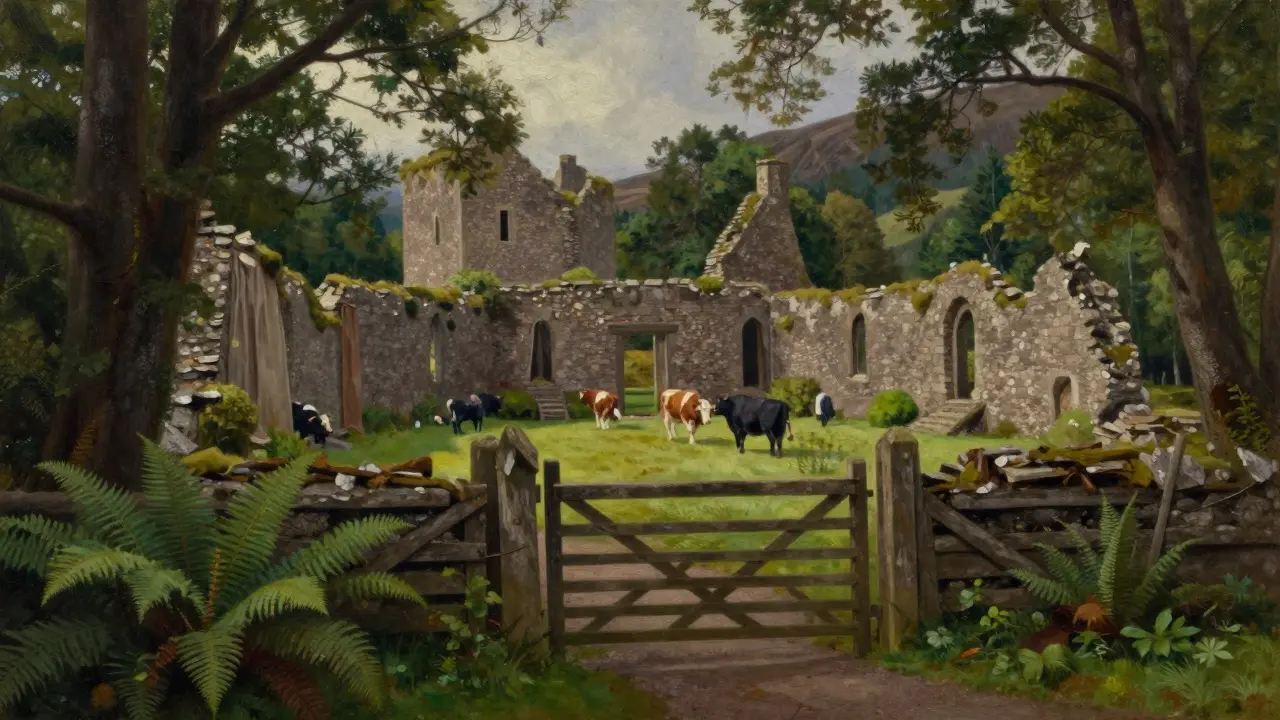
You don’t need a map with GPS coordinates. You need a sense of curiosity and a car with decent tires. Start in the north. Drive from Inverness toward Applecross. Near the village of Gairloch, look for Armadale Castle ruins. Not the big Victorian garden you’ll see on the main road-the real ruin is behind it, tucked into the woods. The keep is gone, but the curtain wall still wraps around the courtyard. Local farmers still use the old gate as a cattle barrier.
Head east to Aberdeenshire. There’s Castle of Kinnaird, near Brechin. It’s not on most guidebooks. The tower’s been reduced to a 15-foot stump, but the vaulted basement still holds its original arches. You can stand inside and touch the same stones that felt the breath of 15th-century guards. No plaque tells you that. You just feel it.
And then there’s Redcastle on the Moray Firth coast. It’s been abandoned since the 1700s. The roof collapsed long ago. But the chimney still stands, crooked and proud. Walk down to the beach at low tide, and you’ll see the old stone quay where supplies were once unloaded. The locals call it "the ghost castle." Few know why.
Why these places survived
Why didn’t these castles get torn down? Why didn’t developers build housing on them? The answer’s simple: they were too hard to reach. Too expensive to fix. Too dangerous to live in.
Many of these ruins were never meant to be permanent homes. They were watchtowers. Safe havens during raids. Built on cliffs, islands, or in the middle of nowhere because that’s where the threat came from. When the wars ended, nobody moved back in. The land was too poor. The winters too brutal. So they just… faded.
That’s why they feel so real. No restoration team came in to paint the walls or lay down fake straw in the great hall. No VR headset lets you "experience" the past here. You’re standing where someone actually lived, feared, and died. No filters. No reenactors. Just stone and silence.
What to bring
Don’t show up in hiking boots and expect to climb. These ruins aren’t tourist attractions-they’re wild places. Bring:
- Sturdy shoes with grip-moss-covered stones are slippery even in dry weather
- A flashlight-even in daylight, interiors are pitch black
- Water and snacks-no cafes nearby
- A paper map or offline GPS-cell service vanishes in the glens
- A jacket-even in summer, the wind cuts like a knife
And leave nothing behind. No litter. No graffiti. No stepping on fragile walls. These ruins have lasted 500 years. They don’t need your help to fall apart.
Stories in the stones
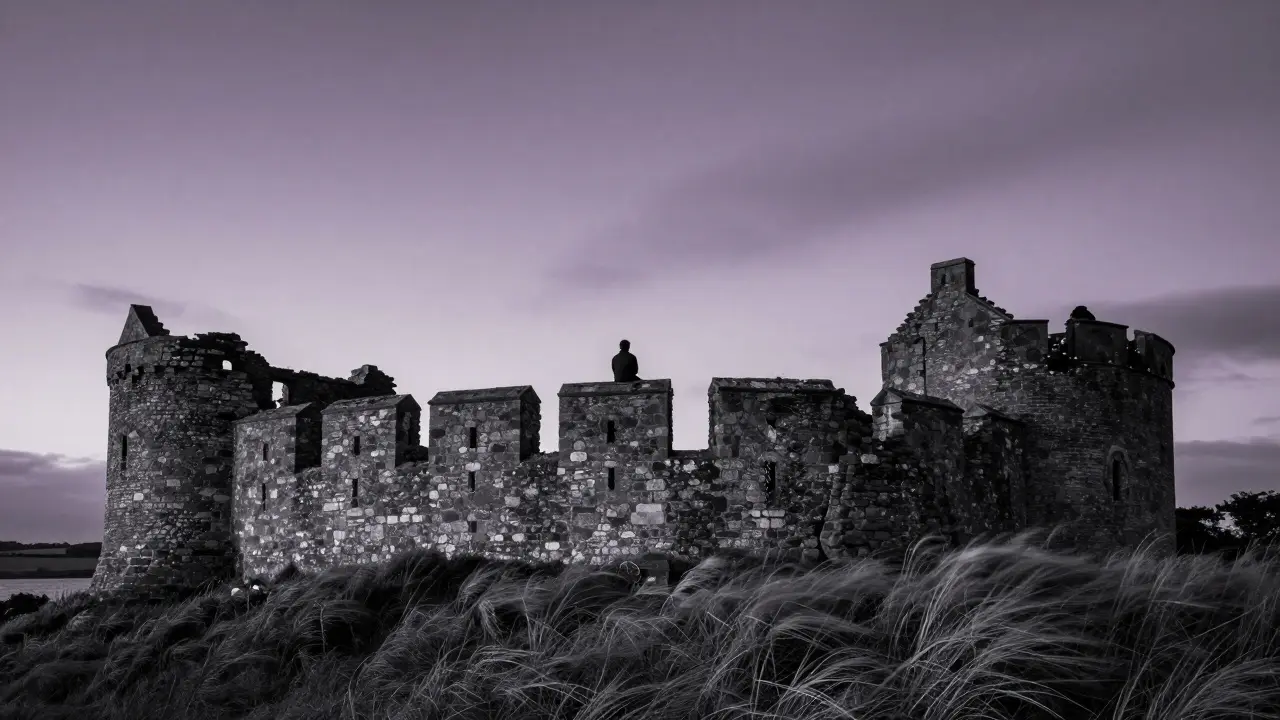
At Finlarig Castle, near Killin, the main tower is just a shell. But if you sit on the east wall at dusk, you can still hear the faint clink of a chain. That’s not your imagination. In the 1600s, a disgraced nobleman was imprisoned here-and chained to the wall. His name was Sir Robert Drummond. He died of starvation. His descendants still visit. No one knows why.
At Dunstaffnage Castle, just outside Oban, the walls are thick enough to stop cannon fire. But the real story is in the chapel. It’s tiny-barely big enough for a priest and two mourners. The altar still stands. The stone cross is cracked, but the carving of a hand holding a heart is still visible. No one knows who it belonged to. But locals say if you touch it on the anniversary of the winter solstice, the air changes.
These aren’t legends. They’re fragments of lives that slipped through history’s cracks. And you’re the first person in decades who might notice them.
The road trip route
Plan a five-day loop from Dundee. It’s not about distance. It’s about stillness.
- Day 1: Dundee to Aberdeenshire - Stop at Castle of Kinnaird. Drive through the Cairngorms. Sleep in a B&B near Brechin.
- Day 2: Brechin to Gairloch - Take the A9 north, then head west on the A832. Find Armadale Castle ruins. Walk the old cattle track to the sea.
- Day 3: Gairloch to Skye - Cross the bridge. Visit Caisteal Maol at sunrise. Eat fish and chips in Kyleakin. No tourists. Just fishermen.
- Day 4: Skye to Oban - Take the ferry to Mallaig, then drive south. Stop at Dunstaffnage. Walk the cliffs at dusk. Look for the chapel cross.
- Day 5: Oban to Dundee - Detour to Finlarig Castle. Sit on the wall. Listen. Drive home.
This isn’t a race. Don’t rush. Spend hours at one ruin. Let the wind tell you its story.
Why this matters
There are over 1,200 castle ruins in Scotland. Most are unnamed on maps. Few have plaques. But they’re still there-waiting. Not for tourists. Not for history books. For the quiet ones. The ones who don’t need to post about it to feel it.
These places remind us that power doesn’t last. Castles were built to show strength. But time doesn’t care about stone or steel. It only cares about what’s left behind. And what’s left behind isn’t glory. It’s silence. And in that silence, you hear something deeper than any guidebook ever could.
Are these castle ruins safe to explore?
Most are safe if you’re careful. But they’re not maintained. Walls can be unstable, floors may collapse, and moss makes stone slippery. Never climb on crumbling sections. Stick to open areas. Always check the weather-rain makes ruins dangerous. If you feel unsure, don’t go further.
Can I camp near these ruins?
Scotland has a right to roam law, but camping on castle grounds isn’t allowed. Most ruins are on private land or protected historic sites. Pitch your tent at least 100 meters away. Use designated campsites or wild camp responsibly-away from walls, and never light fires near stone.
Do I need permission to visit?
No. Most of these ruins are on public land or accessible via public footpaths. But some are on private property. If you see a gate or a "No Trespassing" sign, respect it. You can still see them from the road. The best views are often from a distance.
What’s the best time of year to go?
Late spring (May-June) and early autumn (September) are ideal. Days are long, crowds are low, and the light is golden. Winter is dramatic but risky-ice on stones, short days, and roads that freeze. Summer is busy at popular sites, but the hidden ones stay quiet year-round.
Are there any ghost stories tied to these ruins?
Every ruin has one. But they’re not spooky tales-they’re echoes of real pain. The chain at Finlarig. The heart carving at Dunstaffnage. The silent chapel at Kinnaird. These aren’t haunted by spirits. They’re haunted by memory. People lived, suffered, and died there. That weight doesn’t vanish. You feel it when you’re alone.
What to do next
Start small. Pick one ruin near you. Drive there. Don’t take photos. Just sit. Listen. Let the wind do the talking. When you come back, you won’t need to tell anyone what you found. You’ll already know.
Comments (12)
-
Kristina Kalolo January 2, 2026
I drove past Caisteal Maol last October. Didn’t even know it was there until my GPS died. Found it by accident. Sat there for an hour just listening to the waves. No one else around. Felt like the whole world had forgotten it existed-and maybe that’s why it still stands.

-
ravi kumar January 2, 2026
This is the kind of post that reminds me why I love travel. Not the flashy stuff. Not the checklists. Just quiet places where time doesn’t move the same way. I’ve been to Kinnaird. The basement arches? Unreal. You can still feel the breath of the men who built it. No sign. No crowd. Just stone and silence. Perfect.

-
Megan Blakeman January 4, 2026
Oh my gosh, this is so beautiful… I cried a little reading about Dunstaffnage’s chapel… the heart carving… I just… I need to go there… right now… like, pack a bag and drive tonight… it’s not about seeing ruins, it’s about feeling them… and you described it so perfectly… thank you…

-
Akhil Bellam January 5, 2026
Let’s be real-most people who post about ‘hidden’ ruins are just trying to sound profound while taking selfies from 50 feet away. You? You actually get it. The fact that you didn’t mention Instagram once? That’s rare. Most ‘adventurers’ treat ruins like theme park rides. You treat them like sacred ground. That’s not a road trip-it’s a pilgrimage.

-
Amber Swartz January 5, 2026
Okay but what if you die in one of these ruins? Like, what if the wall collapses and your body just… stays there? For years? No one finds you? I’m not saying it’ll happen-but what if it does? And then your ghost haunts it forever? And then some poor soul comes along and hears your whispers? And then they get traumatized? And then they start a TikTok? I’m just saying… we need a safety protocol.

-
Robert Byrne January 7, 2026
Correction: You said ‘Redcastle’ on the Moray Firth. That’s wrong. It’s Redcastle Ruins, and it’s not on the Moray Firth coast-it’s on the Cromarty Firth. Moray Firth is further east. And you missed the fact that the quay was used by the Clan Ross for smuggling brandy in the 1780s. Also, ‘ghost castle’? That’s a local nickname, not a title. Fix your geography. And stop romanticizing decay. These aren’t poems-they’re hazardous structures.

-
Tia Muzdalifah January 8, 2026
omg i just drove through gairloch last month and totally missed armadale ruins bc i thought it was just a garden… but now im going back… just me and my thermos and my dog… no pics… just sitting on the wall like you said… and yeah… the wind really does talk… i heard it…

-
Zoe Hill January 9, 2026
I love how you said ‘leave nothing behind’… I’ve seen so many people leave water bottles and snack wrappers… it breaks my heart… I brought a small bag on my trip to Finlarig and picked up three plastic bags and a broken phone charger… no one else did… but it felt right… like I was helping the stones rest a little easier…

-
Albert Navat January 9, 2026
From a heritage conservation standpoint, your post is dangerously romanticized. These ruins are not ‘quiet’-they’re underfunded, understudied, and vulnerable to erosion, vegetation encroachment, and vandalism. You’re encouraging unregulated access without mentioning the need for heritage surveys, geotechnical assessments, or community stewardship programs. This isn’t poetry-it’s a liability. Someone’s going to get hurt. Or worse-someone’s going to turn this into a viral trend. And then we lose them all.

-
King Medoo January 11, 2026
Look… I’ve been to 87 castles in 14 countries. And let me tell you-this is the only post I’ve ever read that didn’t make me want to throw my phone into the sea. You didn’t sell it. You didn’t glamorize it. You didn’t even use a single emoji… and yet… you made me feel something I haven’t felt since I was 12 and my grandpa took me to Tintagel. That’s rare. That’s sacred. That’s the difference between a tourist and a witness. Thank you for being a witness.

-
Rae Blackburn January 13, 2026
They’re not ruins. They’re surveillance points. The government built them to track dissenters. The chains at Finlarig? That was a black site. The heart carving? It’s a symbol for a secret society that still exists. They monitor who visits. They know you read this. They’re watching right now. Don’t go. Don’t post. Don’t even think about it. The wind doesn’t talk. It whispers coordinates.

-
LeVar Trotter January 15, 2026
For anyone reading this and thinking, ‘I’m not the kind of person who does this’-you are. You don’t need to be a historian, a hiker, or a photographer. You just need to be still. Sit on a wall. Let the silence settle into your bones. That’s all. No one’s keeping score. No one’s grading you. Just go. One ruin. One quiet hour. That’s enough. And if you come back changed? That’s not a win. That’s a homecoming.
