
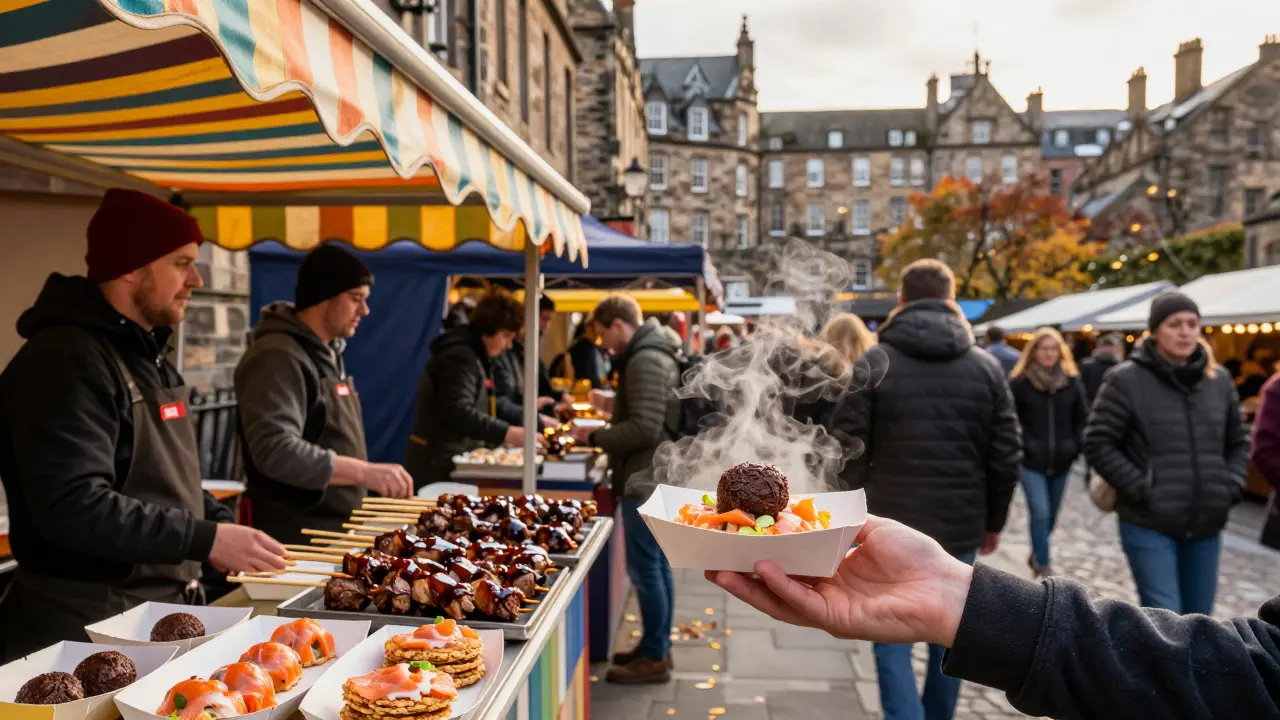
When you think of Scottish food, you probably picture haggis, neeps, and tatties. Maybe a plate of Cullen skink or a buttery scone. But if you’ve walked through Edinburgh’s Grassmarket on a Saturday morning, or stood in the rain outside a Glasgow food truck at 8 p.m. with a steaming box of haggis bon bons in your hands, you know Scotland’s food scene has changed. It’s not just about tradition anymore-it’s about flavor, speed, and local pride served on a paper plate.
Where to Find Real Scottish Street Food
The best Scottish street food doesn’t live in fancy restaurants. It’s in the corners of farmers’ markets, outside train stations, and parked beside historic buildings with a sign that says ‘Made Today’ in bold letters. In Edinburgh, the Scottish Street Food Company runs the biggest weekly market at Grassmarket. You’ll find more than 40 vendors each weekend. Some sell reinvented haggis-wrapped in puff pastry, fried, and dipped in whisky cream sauce. Others offer venison sausage rolls made with meat from the Highlands, or oatcakes topped with smoked salmon and pickled beetroot.
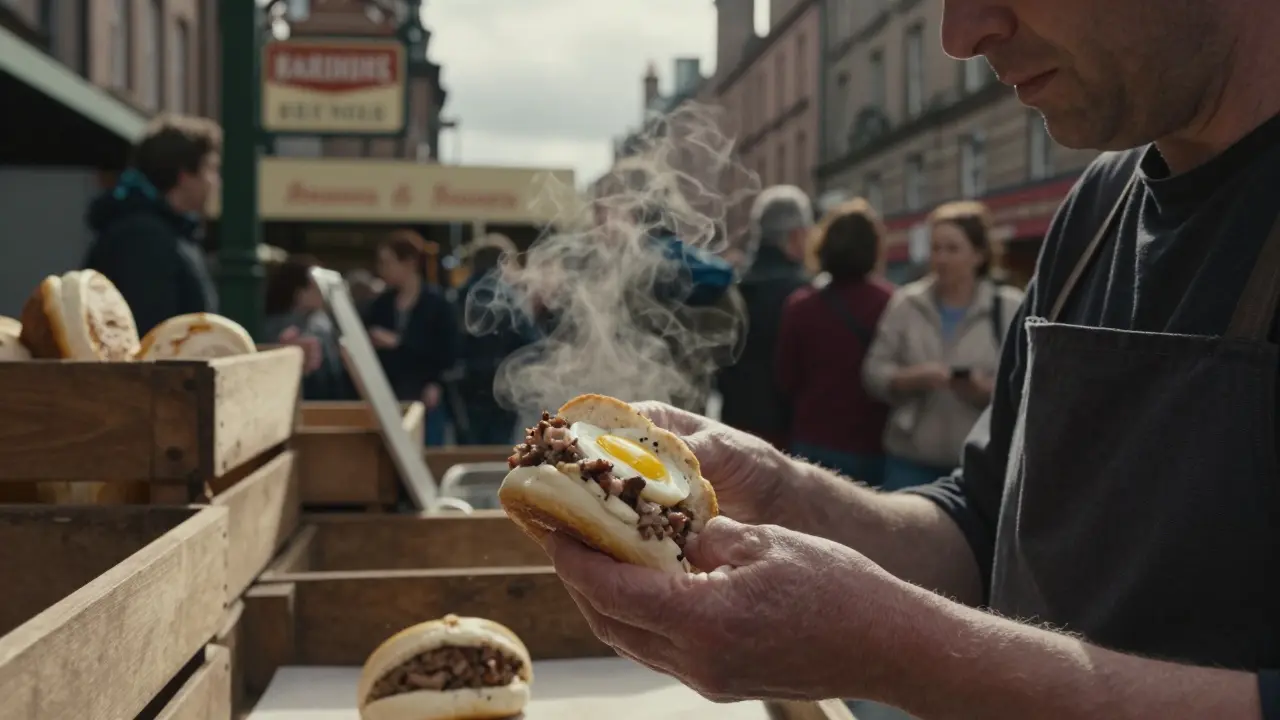
In Glasgow, the Barras Market on Saturdays is where locals go. Not for antiques, but for the food stalls. There’s a woman named Moira who’s been making her famous ‘Scotch Egg Bao’ for eight years. It’s a Chinese-style steamed bun stuffed with a soft-boiled egg, minced beef, and a hint of black pepper, all wrapped in a dough made with barley flour. She doesn’t have a website. People find her by word of mouth-and by the line that wraps around the stall.
On the west coast, Oban’s Fish Market isn’t just for tourists. Every morning at 7 a.m., fishermen unload their catch, and by 9 a.m., food trucks are serving fish and chips made with freshly caught haddock, battered in a mix of ale and sparkling water. The secret? They use local seaweed salt. It’s not fancy. But it tastes like the sea.
The Rise of the Scottish Food Truck
Five years ago, food trucks in Scotland were mostly burgers and hot dogs with a kilt sticker on the side. Now, they’re pushing boundaries. In Dundee, where I live, the North Sea Nosh truck has become a weekend ritual. They serve fish cakes made with mackerel caught off the Angus coast, mashed with roasted garlic and dill, then fried in rapeseed oil. Each one comes with a dollop of pickled red cabbage and a drizzle of buttermilk dressing. They sell out by noon every Saturday.
Why the shift? Young chefs are leaving London and returning home. They’ve seen how other countries treat street food-as a canvas, not a compromise. They’re using Scottish ingredients not because it’s trendy, but because it’s better. Venison from Perthshire. Oats from Fife. Smoked trout from Loch Fyne. Cheese from the Isle of Mull. These aren’t just ingredients. They’re stories.
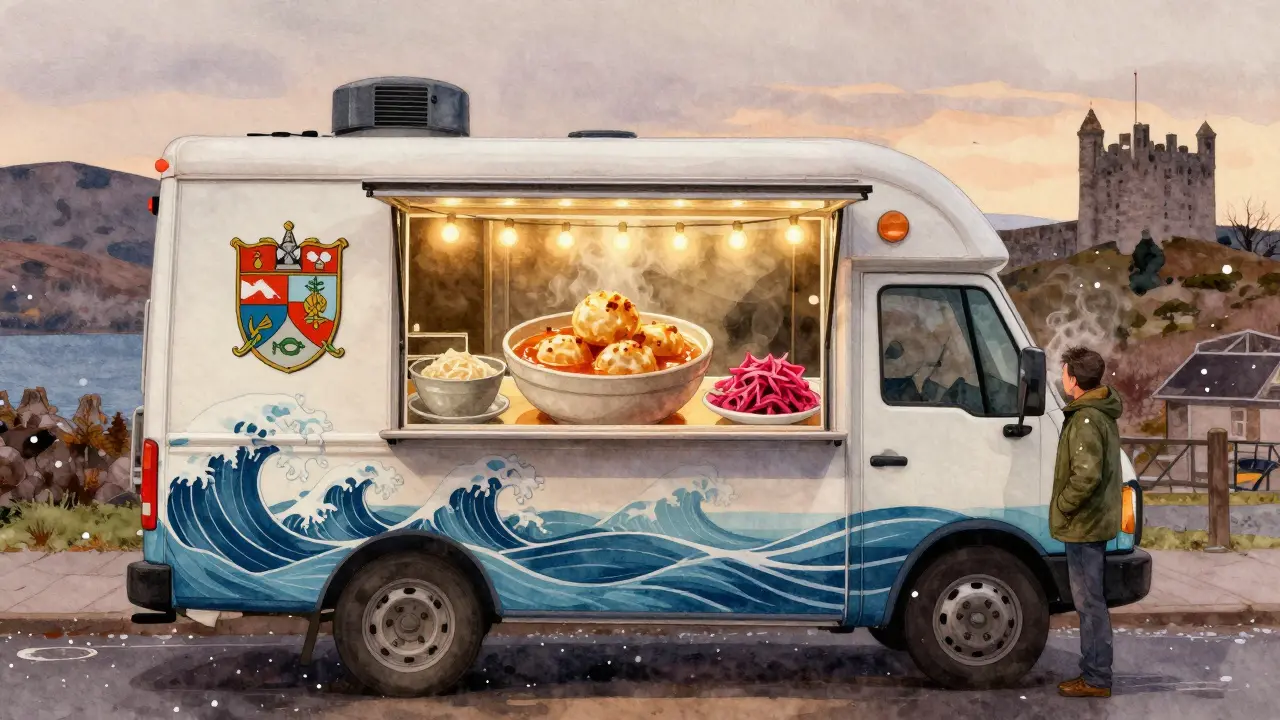
One truck in Inverness, called Hebridean Heat, makes a dish called ‘Cullen Skink Dumplings.’ It’s a dumpling filled with creamy smoked haddock soup, served in a broth made from the same fish bones. The owner, Eilidh MacLeod, trained in Copenhagen before coming back to the Highlands. She told me: ‘I didn’t leave Scotland to become French. I left to learn how to make Scottish food louder.’
New Scottish Cuisine Isn’t About Replacing Tradition
It’s about expanding it. You won’t find anyone in Scotland trying to erase haggis. But you will find chefs turning it into tacos. Or stuffing it into a croissant. Or fermenting the offal into a umami paste to top roasted carrots.
At The Larder in Leith, a small eatery that started as a food truck, they serve ‘Haggis Wellington’-a puff pastry parcel filled with haggis, mushroom duxelles, and a red wine reduction. It’s not traditional. But it’s undeniably Scottish. And it’s the dish that gets ordered most.
Even the humble Scotch egg has been reimagined. The version at Loch Fyne Food Co. uses a duck egg, wrapped in a sausage made with venison and rowanberry, then coated in crushed oatmeal. It’s served with a side of whipped neeps. No ketchup. No brown sauce. Just the taste of the land.
This isn’t fusion for the sake of it. It’s a conversation between old and new. Between the grandmother who still makes oatcakes by hand and the 26-year-old chef who learned to smoke fish using a DIY smoker made from an old washing machine drum.
What Makes Scottish Street Food Different
It’s not just the ingredients. It’s the attitude. In Scotland, street food doesn’t need to be fancy to be respected. It needs to be honest.
Compare it to London. In London, street food often tries to mimic global trends-Mexican tacos, Thai noodles, Korean fried chicken. In Scotland, the trend is the opposite. Every dish asks: ‘What’s here? What’s fresh? What’s ours?’
The result? A food culture that’s growing faster than most people realize. In 2024, a report from the Scottish Food and Drink Federation showed that street food sales increased by 42% in three years. The number of licensed food trucks jumped from 187 to 412. And 78% of those vendors use at least one ingredient sourced within 50 miles of their location.
That’s not marketing. That’s survival. And pride.
Where to Eat Scottish Street Food in 2026
If you’re planning a trip and want to taste the real Scotland beyond the castles and kilts, here’s where to go:
- Edinburgh - Grassmarket Market (Saturdays and Sundays). Try the whisky-glazed venison skewers from Highland Smokehouse.
- Glasgow - Barras Market (Saturdays). Look for Moira’s Scotch Egg Bao. Bring cash. She doesn’t take cards.
- Dundee - North Sea Nosh truck (Saturdays, outside the V&A). Order the mackerel fish cakes. Eat them by the water.
- Oban - Fish Market stalls (daily, 8 a.m. to 2 p.m.). Get the haddock and chips with seaweed salt. Sit on the pier.
- Inverness - Hebridean Heat truck (Fridays and Saturdays). The Cullen Skink Dumplings are worth the wait.
- St Andrews - The Pier Market (weekends). Their smoked salmon croissants are the best in Fife.
Don’t just go for the food. Go for the people. Ask the vendor where they got the ingredients. Ask if they’ve been doing this for years. You’ll hear stories about grandmothers, fishing boats, and snowstorms that kept them from selling for a week. That’s the real Scottish street food experience.
Why This Matters
Scotland’s street food isn’t just about eating well. It’s about reclaiming identity. For decades, Scottish cuisine was seen as heavy, boring, or worse-something to laugh at. But now, young cooks are turning that around. They’re not trying to be French or Italian. They’re not copying New York or Tokyo. They’re making food that only Scotland can make.
And it’s working. Tourists come for the castles. They stay for the food. Locals come for the nostalgia. They stay because it tastes better than they remembered.
The next time someone says Scottish food is just haggis and whisky, hand them a fish cake made with mackerel from the North Sea, wrapped in oatmeal, and served with pickled beetroot. Let them taste the change.
Is Scottish street food only available in cities?
No. While cities like Edinburgh and Glasgow have the most vendors, you’ll find food trucks and pop-up stalls in smaller towns too. Places like Pitlochry, Stornoway, and Selkirk host regular food markets. Many vendors travel to rural festivals and Highland games. If you’re heading into the countryside, check local event calendars-they often list street food vendors.
Are Scottish street food vendors expensive?
Not at all. Most dishes cost between £5 and £10. A full meal-like a fish cake, a side of neeps, and a drink-usually runs under £15. That’s cheaper than a pub lunch in most places. The value comes from the quality: fresh, local ingredients, handmade, and cooked to order.
Can you find vegan or gluten-free Scottish street food?
Yes. Many vendors now offer plant-based options. Look for jackfruit haggis rolls, mushroom and oat patties, or roasted root vegetable boxes with oat-based sauces. Gluten-free versions of traditional dishes are common too-like gluten-free oatcakes, buckwheat batters for fish, and quinoa-based stuffing. Always ask the vendor; most are happy to customize.
What’s the most surprising Scottish street food dish?
One that catches people off guard is the ‘Cranachan Tart’ from Loch Lomond Bites in Balloch. It’s a tart made with toasted oats, whipped cream, raspberries, and a drizzle of heather honey-but the crust is made from crushed shortbread and ground whisky barrel char. It tastes like a dessert and a history lesson in one bite.
When is the best time to visit for Scottish street food?
Summer and early autumn (May to October) are peak seasons, with the most markets and trucks open. But winter has its charm too. Many vendors operate year-round, especially around Christmas markets. The food tastes even better in the cold-warm, hearty, and comforting. Just bring a coat and an appetite.
Comments (14)
-
Kieran Danagher January 11, 2026
Scottish street food used to mean a greasy sausage roll and a pint of something warm. Now? It’s a Michelin-level revelation wrapped in parchment paper. The fact that someone in Inverness is turning Cullen Skink into dumplings? That’s not innovation-that’s reverence with a blowtorch.

-
Ray Htoo January 12, 2026
I came to Scotland thinking I’d eat haggis and die happy. Left with a box of oatmeal-wrapped mackerel cakes and a new appreciation for how food can carry history without being stuck in it. The seaweed salt? Genius. The fact that no one’s trying to impress anyone? Even better.

-
Shivam Mogha January 14, 2026
Best fish and chips I’ve ever had. Pier. 7 p.m. Rain. Perfect.

-
OONAGH Ffrench January 15, 2026
The shift isn’t about fusion it’s about return the land speaks the chefs listen

-
Veera Mavalwala January 16, 2026
Let me tell you something about this so-called ‘revival’-it’s not revolution, it’s rebranding. You think those chefs are honoring tradition? They’re selling trauma as artisanal. Haggis in a croissant? That’s not culinary evolution, that’s cultural cosplay with a side of overpriced beetroot. And don’t get me started on the ‘whisky barrel char’ crust-that’s not a dessert, it’s a gimmick wrapped in a pretentious hashtag. People don’t want history, they want Instagrammable nostalgia. The grandmother who makes oatcakes by hand? She’s probably crying in her kitchen while some 26-year-old with a drone and a beard films his ‘authentic’ experience. This isn’t pride. It’s performance.

-
poonam upadhyay January 18, 2026
Okay but WHY is EVERYONE ignoring the fact that 78% of vendors use local ingredients?? That’s not ‘proud’ that’s just basic survival-unless you’re living in a city where the only soil is concrete and the only fish is frozen and shipped from Iceland?? And don’t even get me started on the ‘Cranachan Tart’-who thought burning wood chips and calling it ‘whisky barrel char’ was a good idea?? That’s not flavor-that’s arson with a dessert license!! And the fact that people are lining up for it?? The apocalypse is here and it’s wearing a kilt and serving pickled neeps.

-
Patrick Sieber January 18, 2026
My aunt in Pitlochry runs a little stall at the Highland games. She makes venison pies with rowanberry jam inside. No website. No social media. Just a tarp, a cooler, and a sign that says ‘Made by Maggie’. People drive two hours for it. That’s the real thing. The rest? Just noise with better lighting.

-
mani kandan January 19, 2026
The quiet power of this movement lies not in the spectacle, but in the silence between the vendor and the customer. No branding. No influencers. Just a plate, a story, and the weight of generations in every bite. This is food as belonging, not as trend.

-
Natasha Madison January 19, 2026
Who funded this? Who’s behind these ‘food trucks’? I’ve seen the same trucks in three different countries now-same logos, same packaging, same ‘artisanal’ labels. This isn’t Scottish. It’s corporate rebranding disguised as heritage. They’re using the Highlands as a backdrop for a global food trend. You think that woman in Oban really caught that haddock herself? Or did some distributor ship it in from Norway under a ‘local’ label? The government’s pushing this to attract tourism. Don’t be fooled.

-
Sheila Alston January 21, 2026
It’s so beautiful how Scotland is reclaiming its identity through food. I used to think Scottish cuisine was just… sad. But now? Now I see it as quiet strength. The way they use seaweed salt instead of iodized crap? The way they let the fish speak for itself? It’s not about being fancy-it’s about being honest. And honesty? That’s the rarest ingredient of all.

-
Sheetal Srivastava January 21, 2026
Let’s be real-this ‘movement’ is just a performative act of cultural capital accumulation by middle-class millennials who’ve never seen a real Scottish winter. The ‘heather honey’? Sourced from a co-op in Kent. The ‘whisky barrel char’? Industrial byproduct repackaged as terroir. The ‘local’ venison? Slaughtered in a USDA-certified facility in Ayrshire and trucked in from a corporate supplier. This isn’t authenticity-it’s commodified nostalgia with a side of performative virtue signaling. And the fact that people are paying £12 for a ‘Scotch Egg Bao’ made with barley flour? That’s not food. That’s a tax on gullibility.

-
Bhavishya Kumar January 22, 2026
Grammatically speaking the phrase ‘made today’ in bold letters is correctly punctuated however the use of the Oxford comma in the sentence regarding venison sausage rolls is omitted which diminishes the syntactic clarity of the list structure and undermines the professional tone expected in culinary journalism

-
Rahul Borole January 23, 2026
It is imperative to acknowledge the remarkable socioeconomic transformation catalyzed by the Scottish street food sector. The 42% increase in sales and the proliferation of licensed vendors reflect a resilient, community-driven economic model predicated on hyperlocal sourcing, artisanal craftsmanship, and the reclamation of indigenous culinary identity. This paradigm shift represents not merely a culinary evolution, but a profound reassertion of cultural sovereignty in the face of global homogenization.

-
sampa Karjee January 24, 2026
Of course the ‘new Scottish cuisine’ is just a pretentious facsimile of Nordic minimalism with a kilt. You think the chef in Inverness didn’t spend three years in Copenhagen learning how to make ‘elevated’ haggis? This isn’t Scottish. It’s Scandinavian with a Scottish accent. And the people who eat it? They’re not tasting heritage-they’re paying for the illusion of authenticity. Real haggis doesn’t come in a croissant. It comes from a kitchen where your grandmother still stirs the pot with a wooden spoon. The rest? Just marketing.
