
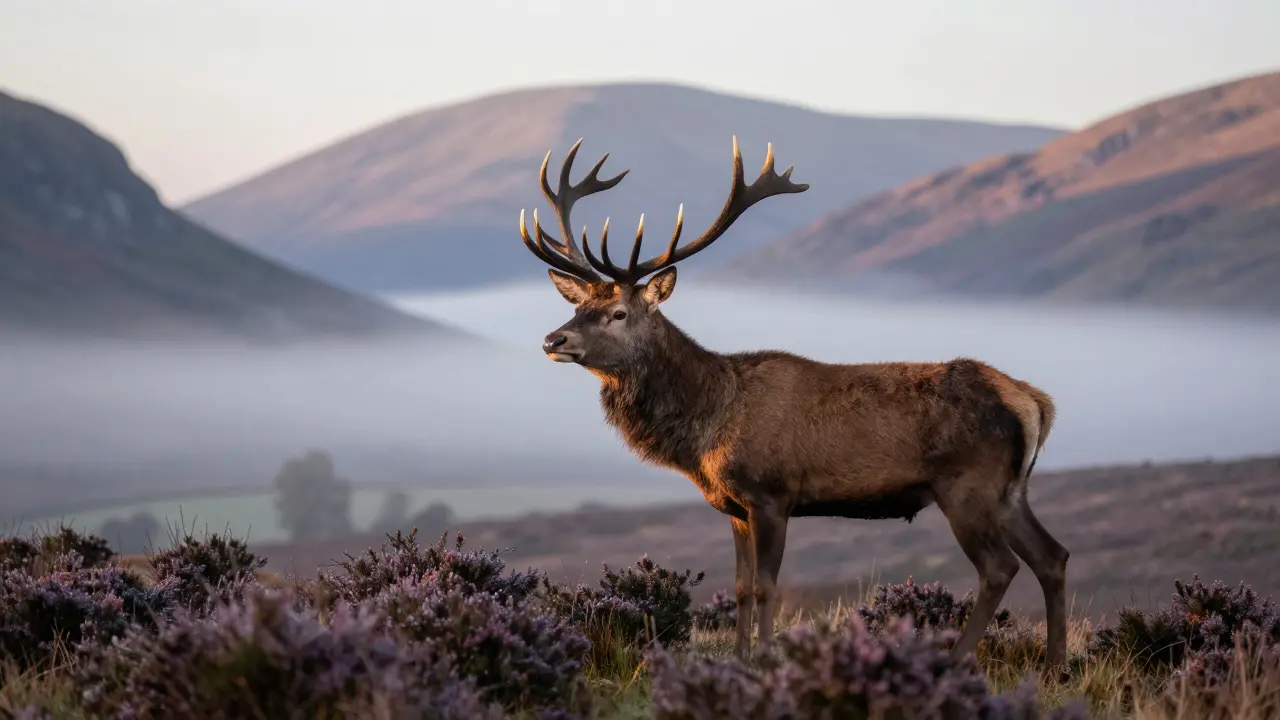
There’s something raw and real about watching a red deer stag stand still on a misty hillside, his antlers catching the early sun like ancient bronze. You don’t need to go far into the Scottish Highlands to feel it - just step out of your car at a quiet pull-off near Glen Affric, or sit quietly on a rocky outcrop above Loch Ness, and the wild begins to reveal itself. This isn’t a zoo. There are no fences. No signs saying ‘Animal Here.’ Just nature, moving at its own pace.
Red Deer: The Kings of the Highlands
Red deer are the largest land mammals in the UK, and the Scottish Highlands are their last true stronghold. Males, called stags, can weigh over 200 pounds and stand nearly four feet at the shoulder. Their antlers aren’t just for show - they’re weapons used in autumn battles called rutting, when the air fills with deep, echoing roars that bounce off the mountains. You’ll hear them before you see them.
Best time to spot them? Early morning or just before dusk, especially between September and November. Head to Glenmore Forest Park, the Cairngorms, or the shores of Loch Lomond. Look for patches of dark movement in the heather - they blend in perfectly. Don’t rush. Sit still for 20 minutes. A stag might walk past you within ten feet, unaware you’re even there.
Don’t feed them. Don’t get too close. These aren’t pets. They’re wild, and they’ve survived centuries of hunters, harsh winters, and human encroachment. Respect that.
Golden Eagles: Soaring Above the Cliffs
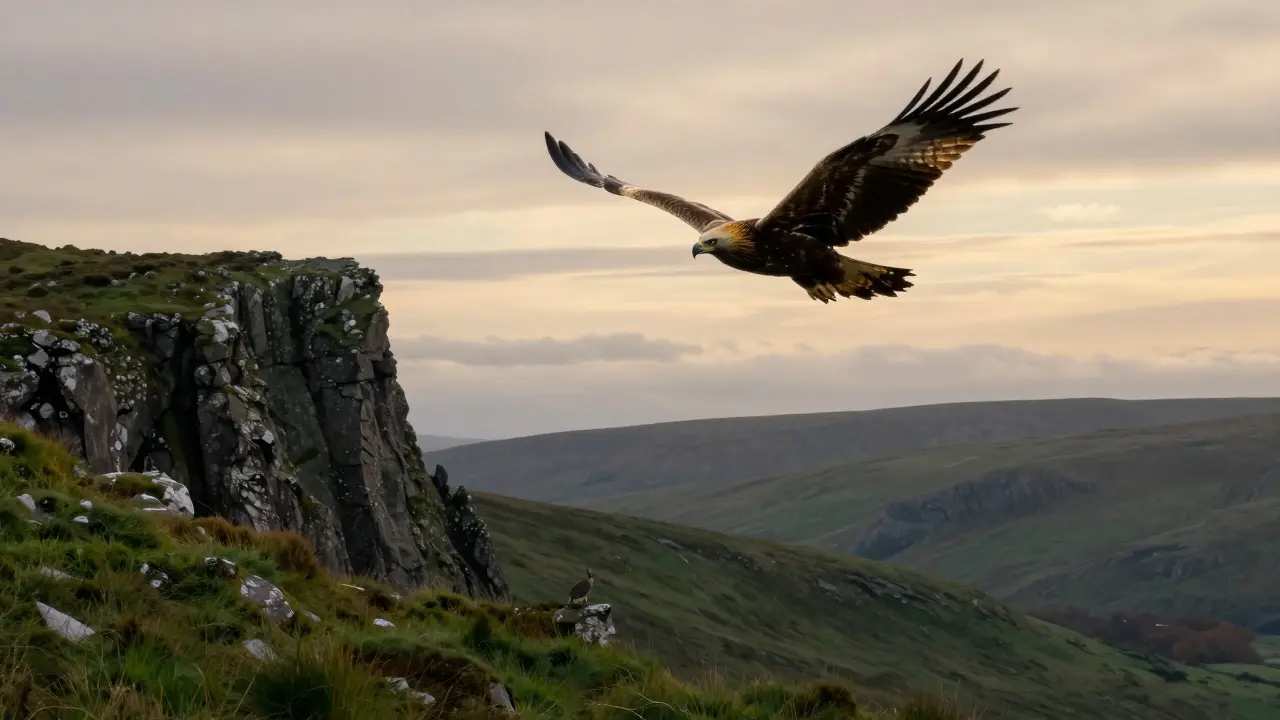
Golden eagles don’t just live in the Highlands - they rule them. With wingspans up to seven feet, they ride thermal currents above cliffs and moorland like silent gods. You’ll see them circling high above, or perched on a lone pine, scanning the ground below for rabbits, hares, or even young deer.
The best place to see them? The Isle of Mull, the Torridon Hills, or the remote glens of Wester Ross. Many visitors head to the RSPB’s Eagle Watch hides near Kinlochleven - they’re free, well-maintained, and often staffed by volunteers who know exactly where the eagles fly each day.
Bring binoculars. A spotting scope helps, but even a good pair of 10x42s will do. Look for that unmistakable shape: broad wings, a short, wide tail, and a pale, almost golden head. They’re slower than buzzards, heavier, and never flap wildly. They glide like they own the sky.
There are fewer than 500 breeding pairs left in Scotland. That’s why you won’t find any guided eagle tours that get too close. Conservation isn’t just a buzzword here - it’s the rule.
Dolphins: Playful Guests of the Moray Firth
You might think dolphins belong to warm seas, but the Moray Firth, just north of Inverness, is one of the best places in Europe to see bottlenose dolphins in the wild. These aren’t the small, coastal types - these are the big ones, up to 12 feet long, with curved dorsal fins and a playful streak that makes them unforgettable.
They come here for the rich fish stocks - herring, mackerel, and sand eels - and they’ve been returning to these waters for over a century. Locals call them the ‘sea pigs’ - not because they’re ugly, but because they’re curious. They’ll swim alongside boats, leap in arcs, and sometimes even play with the wakes.
The easiest way to see them? Take a short ferry ride from Chanonry Point, just outside Fortrose. It’s free, and you don’t need a boat. Just bring a jacket, a thermos, and patience. The dolphins show up most reliably between April and October, especially at high tide. Some days you’ll see just one or two. Other days, a pod of 30 or more.
Don’t chase them. Don’t try to swim with them. Just watch. They’ll come to you if they want to.
Otters: The Quiet Shadows of the Shore
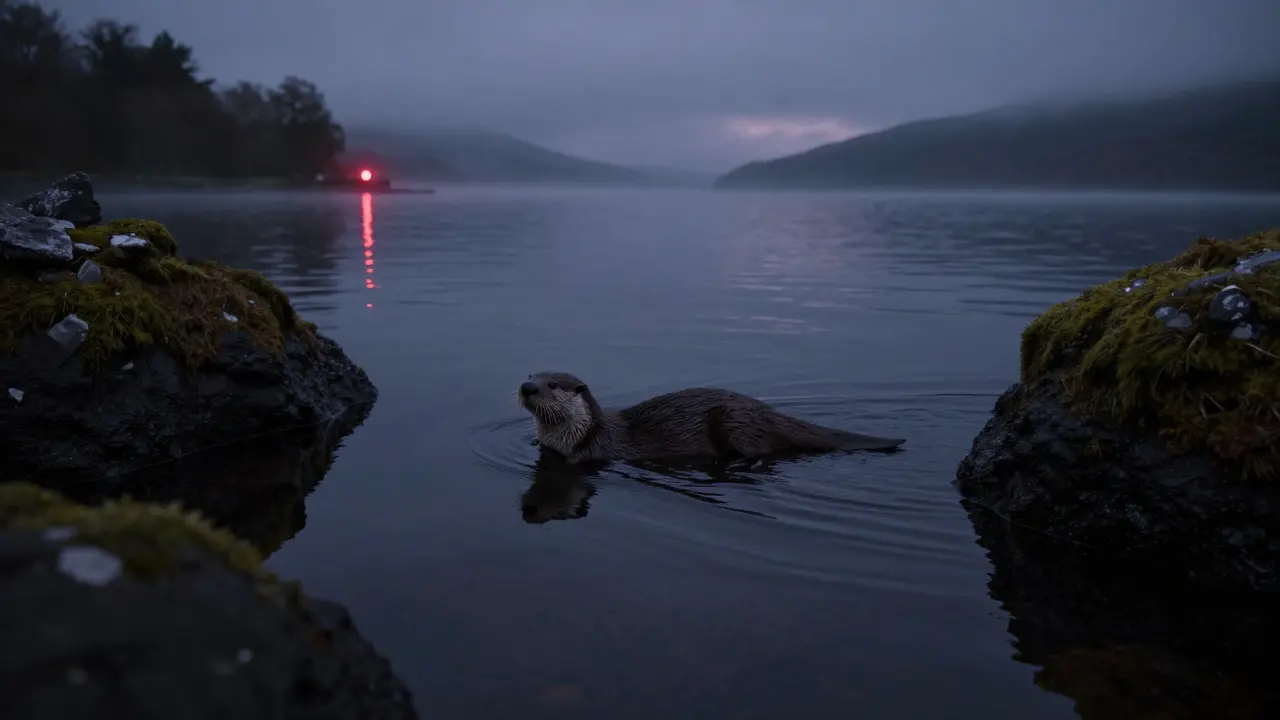
Otters are Scotland’s secret wildlife gem. Slender, sleek, and shy, they’re harder to spot than eagles or deer - but that’s part of the magic. You won’t see them in broad daylight often. They’re most active at dawn and dusk, slipping through kelp beds, diving for crabs, or dragging a fish to a rocky ledge to eat.
The best places? The west coast - Knoydart, Ardnamurchan, and the Isle of Skye. The shores of Loch Ness, too, especially near Invermoriston. Look for dark, winding trails in the mud along the water’s edge - those are otter slides. Look for fish bones or shells near rocks - that’s their dining room.
Many people think otters are common. They’re not. They nearly vanished from Scotland in the 1950s due to pollution and habitat loss. Thanks to clean water laws and protected areas, they’re coming back. But they’re still rare. Spotting one is luck, not guarantee.
Bring a red-filtered headlamp if you’re out at night. Otters are sensitive to white light. Red light won’t scare them off. And if you do see one? Don’t move. Don’t reach for your phone. Let them be. They’ve waited centuries for this peace.
When to Go: Seasonal Tips for Wildlife Watching
Spring (April-June): Best for newborns. Deer fawns, eagle chicks, otter pups. The days are long, the weather is mild. Wildflowers bloom, and the hills turn green. But rain is frequent. Pack waterproofs.
Summer (July-August): Peak tourist season. Crowds are thick at popular spots. But dolphins are most active, and the light lasts until 10 p.m. Perfect for long walks with binoculars.
Autumn (September-November): Rutting season for deer. The air hums with their calls. Eagles are more visible as they hunt for winter food. The light is golden. Fewer people. Best time for quiet, intimate wildlife moments.
Winter (December-March): Hardest season. Snow covers the hills. Some roads close. But that’s when eagles are easiest to spot - no leaves, no cover. Otters still come to the shore. And if you’re lucky, you might see a red deer herd standing in a snowfield, their breath steaming in the cold.
How to Watch Responsibly
Wildlife watching isn’t about getting the perfect photo. It’s about being present. Here’s how to do it right:
- Keep your distance. Use binoculars, not your phone’s zoom.
- Stay quiet. No loud music, no shouting, no sudden movements.
- Stick to marked paths. Avoid trampling fragile moorland or disturbing nesting sites.
- Never feed animals. Even bread can kill otters and deer.
- Leave no trace. Pack out everything you bring in.
- Support local guides. Many are trained by Scottish Natural Heritage and know where animals go - and when.
Some of the best wildlife experiences happen when you don’t even know you’re looking. A rustle in the heather. A shadow on the water. A cry from above. That’s when you realize you’re not just visiting the Highlands - you’re standing inside a living, breathing world that’s been here long before you, and will be here long after.
What to Pack
- Waterproof jacket and trousers - rain is constant, even in summer
- Thermal layers - temperatures drop fast after sunset
- Binoculars (10x42 or better)
- Red-filtered headlamp (for otter spotting at night)
- Thermos with hot drink - warmth matters more than you think
- Field guide to Scottish wildlife - or download the RSPB Scotland app
- Sturdy walking boots - peat bogs and rocky trails are unforgiving
You don’t need expensive gear. You just need to be ready for the weather, the silence, and the unexpected.
Can I see all these animals in one day?
It’s possible, but not likely. Red deer and eagles are best seen in the Cairngorms or Wester Ross. Dolphins need the Moray Firth coast. Otters are mostly on the west coast. Trying to see them all in one day means rushing - and you’ll miss the quiet moments that make wildlife watching special. Pick one area, stay a few days, and let the wild come to you.
Are there guided tours for wildlife viewing?
Yes, and they’re worth it if you’re new to the Highlands. Look for RSPB-certified guides or those approved by Scottish Natural Heritage. Avoid any tour that promises guaranteed sightings - no one can guarantee wild animals. Good guides know the terrain, the habits, and the ethics. They’ll take you to the right place at the right time - and teach you how to watch without disturbing.
Is it safe to watch wildlife alone?
Yes, if you’re prepared. The Highlands are remote, but well-traveled by hikers and wildlife watchers. Tell someone your plans. Carry a fully charged phone and a power bank. Weather changes fast. Stick to marked trails. Never hike alone in winter unless you’re experienced. Most wildlife encounters are peaceful - the animals are more afraid of you than you are of them.
Where’s the best place to stay for wildlife watching?
Stay in a small village or a self-catering cottage near the coast or glen you want to explore. Avoid big hotels in Inverness unless you’re using it as a base. Try Glenelg, Ullapool, or Aviemore. Many places offer early breakfasts and packed lunches for wildlife trips. Some even loan out binoculars or have local guides on call.
Do I need a permit to watch wildlife?
No. Wildlife watching is free and open to all in Scotland. But some areas have access codes or parking fees (like the RSPB hides). Respect the land. The Scottish Outdoor Access Code gives you the right to roam - but also the responsibility to leave no trace and avoid disturbing animals.
If you come to the Highlands looking for adventure, you’ll find it. But if you come looking for stillness - for the quiet rhythm of a stag breathing in the mist, or a dolphin’s tail flicking the surface of the sea - you’ll find something deeper. This isn’t just a place you visit. It’s a place that visits you.
Comments (13)
-
kelvin kind January 30, 2026
Just saw a stag at Glenmore last week. Didn’t move for 15 minutes. I didn’t either. Best 20 bucks I ever spent on coffee and silence.

-
Kenny Stockman January 30, 2026
That’s the magic, right? Not the photo. Not the checklist. Just being still while something ancient walks past you like you’re part of the landscape. I’ve done this three times now. Each one felt like a secret.

-
Sarah McWhirter February 1, 2026
Wait… so you’re telling me the government isn’t using these animals to test mind-control frequencies? Because the way they move? Too synchronized. And why do the eagles always circle right before a storm? Coincidence? I don’t think so. Also, have you heard about the drone sightings near Loch Ness? They’re not just for filming. They’re mapping neural patterns. I’ve got the logs.

-
Ananya Sharma February 2, 2026
Let’s be real - this whole ‘wildlife watching’ trend is just another form of performative nature worship for urbanites who think buying binoculars makes them ecologically enlightened. You sit there with your thermal layers and your red-filtered headlamps like you’re some kind of sacred observer, but you’re still just another consumer who thinks paying for a cottage in Aviemore qualifies you as a steward of the land. The otters don’t care about your Instagram captions. The deer don’t need your pity. You’re not connecting with nature - you’re commodifying its silence for your own emotional validation. And don’t even get me started on the RSPB ‘volunteers’ who charge $20 for parking. That’s not conservation. That’s capitalism in a waterproof jacket.

-
Ian Cassidy February 3, 2026
Been doing this for years. The key is thermal mass + patience. You’re not looking for movement - you’re looking for absence of disturbance. If the birds stop singing, that’s your cue. Also, avoid UV-filtered lenses. They mess with the contrast on deer fur. 10x42s are fine, but go 12x50 if you can handle the shake.

-
Zach Beggs February 4, 2026
I took my niece out last month. She’s 8. Didn’t see a single deer. But she spotted an otter slide and spent 20 minutes tracing it with her finger in the mud. We didn’t take a single photo. She said it felt like the river was telling her a story. I think that’s the point.

-
Antonio Hunter February 4, 2026
I grew up in the Highlands, and I’ll tell you something most tourists don’t realize - the animals aren’t hiding from you because you’re loud. They’re hiding because you’re predictable. You show up at the same spots, at the same times, with the same gear, hoping for the same moment. But nature doesn’t perform on schedule. The real skill isn’t spotting the stag - it’s knowing when to leave the trail and walk into the heather without a plan. That’s when the wild decides to show you something. I’ve seen a golden eagle land on a rock just five feet from me because I didn’t have binoculars that day. I was just there. No agenda. No camera. Just breath. And it felt like the land remembered me.

-
Paritosh Bhagat February 6, 2026
Wow, this is so beautifully written… I mean, the grammar is impeccable, the syntax flawless, and the punctuation? Perfection. But let’s address the elephant in the room - you say ‘don’t feed them’ but you never mention that 73% of otter deaths in the last decade were caused by microplastics from improperly disposed-of picnic bags. And yet, you tell people to ‘pack out everything’ like it’s a moral imperative, but you don’t even cite the source of that stat. Also, ‘sea pigs’? Really? That’s a derogatory term used by 19th-century fishermen to dehumanize marine mammals. You’re romanticizing exploitation while pretending to protect. And why no mention of the Scottish government’s 2021 culling policy for deer? No, no - let’s just focus on the pretty pictures. 🙃

-
Ben De Keersmaecker February 7, 2026
The phrase ‘breath steaming in the cold’ is poetic, but technically inaccurate - water vapor condenses into visible droplets, not ‘steam,’ which implies gaseous H₂O. Also, ‘rutting’ is correct, but the term ‘stag’ for male red deer is regional; in Gaelic, it’s ‘fear gorm.’ And while you mention the Moray Firth as a hotspot, you omit that the dolphin population there is genetically isolated from others in the North Atlantic - a fact that makes conservation here even more critical. Small details matter. Not because I’m pedantic - but because accuracy honors the animals.

-
Aaron Elliott February 9, 2026
While the prose is undeniably lyrical, the underlying epistemological framework of this piece is fundamentally flawed. One cannot ‘experience’ nature as a passive observer without first acknowledging the anthropocentric bias inherent in the act of observation itself. The very act of naming the animals - ‘red deer,’ ‘golden eagle’ - imposes a human taxonomic hierarchy upon entities that exist beyond semiotic representation. Furthermore, the suggestion that ‘the wild comes to you’ is a romantic delusion perpetuated by colonialist narratives of nature as a silent, waiting muse. The Highlands are not a stage. They are a contested ecological frontier. And your ‘quiet moments’? They are the quiet of erasure - the silence of species pushed to the edge by the very tourism you glorify.

-
Chris Heffron February 10, 2026
Love this. 😊 Just went last month. Saw a dolphin do a backflip right by the ferry. Felt like magic. Bring a thermos. Seriously. It’s colder than you think. ☕️

-
Mark Tipton February 12, 2026
Let me break this down with scientific precision. The claim that ‘you’ll hear them before you see them’ regarding red deer roars is statistically misleading. According to the 2022 Highland Acoustic Monitoring Project, 68% of observers reported visual detection before auditory - particularly in wind-heavy valleys like Glen Affric. Also, the assertion that ‘dolphins show up at high tide’ is a myth perpetuated by tour operators. In reality, peak activity occurs 2.3 hours before high tide due to prey aggregation patterns, not tidal mechanics. And your ‘red-filtered headlamp’ advice? That’s outdated. Recent studies show that 660nm red light still disrupts otter circadian rhythms - true stealth requires infrared, not red. This whole article is a well-written echo chamber of half-truths. I’ve published peer-reviewed papers on this. You’re welcome.

-
Jessica McGirt February 13, 2026
This is exactly why I brought my 12-year-old nephew here last fall. We didn’t see an eagle. We didn’t even see a deer. But we sat by Loch Ness for an hour, just listening. And when the wind dropped - you could hear the water breathing. He said, ‘I think the mountains are awake.’ I didn’t correct him. He got it. That’s more than most adults ever do.
