
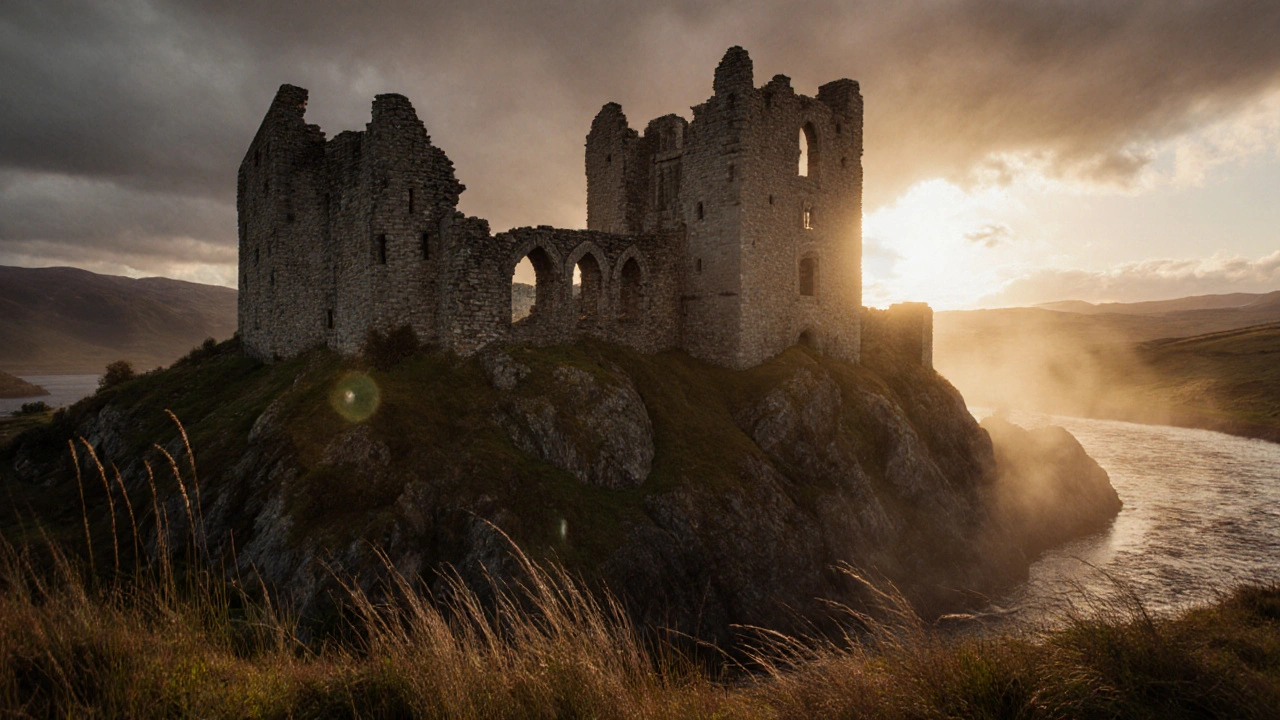
Hermitage Castle isn’t just a ruin. It’s a stone fist punched into the Scottish borderlands, built to survive sieges, not selfies. Perched on a rocky outcrop above the River Liddel, this fortress didn’t welcome guests-it broke them. If you’ve ever wondered what life was like in a place where every window was a loophole for arrows and every corridor echoed with the threat of raiders, Hermitage Castle shows you the truth: this wasn’t a home. It was a war machine.
Why Hermitage Castle Was Built to Last
Hermitage Castle wasn’t built by a nobleman looking for a quiet retreat. It was raised in the 1240s by the de Soulis family, a powerful Anglo-Norman clan with deep ties to the English crown. The Scottish Borders were a lawless zone back then-called the Debatable Lands-where loyalty shifted with the wind and raiding parties crossed the border like clockwork. Castles here weren’t about comfort. They were about control.
Hermitage’s design screamed defense. Thick walls, up to 3.5 meters in places, made scaling impossible. The keep, standing 27 meters tall, had no ground-floor entrance-you climbed a wooden stair to the first floor, then pulled it up behind you. Windows were narrow slits, not for light, but for archers. Even the latrines were built to drain into a moat, keeping waste-and attackers-away from the walls.
By the 14th century, the castle had passed to the Douglas family, Scotland’s most feared warriors. They turned it into a stronghold for raids into England. In 1338, the English besieged it for months. The Scots held out. When the English finally broke in, they found the defenders had already slipped away through secret tunnels, leaving behind only smoke and silence.
The Ghosts of the Border Reivers
Legends cling to Hermitage like moss to stone. The most chilling? The tale of the Black Knight.
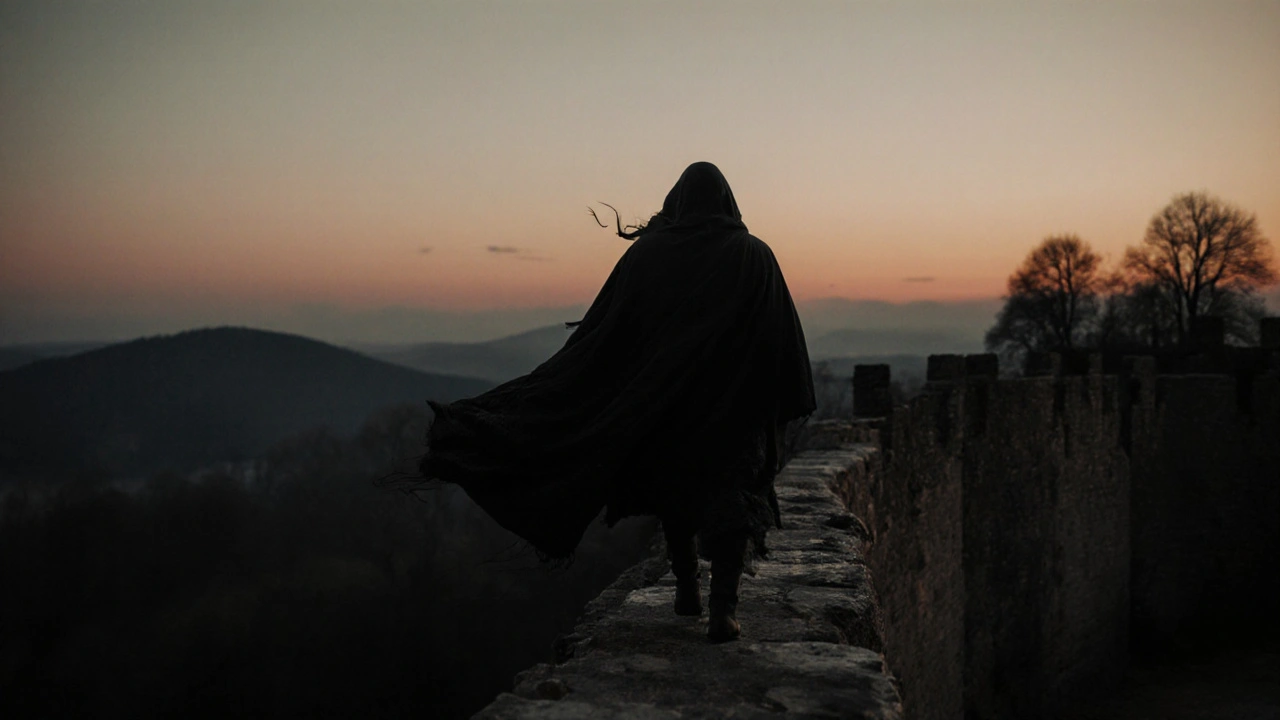
According to local lore, a Douglas lord-some say William, others say Sir Alexander-was betrayed by his own men. As punishment, he locked them in the castle’s dungeon and starved them. When they died, their screams were said to echo through the walls. Visitors today still report sudden chills in the inner courtyard, even on warm summer days. Some claim to see a shadowy figure in a black cloak pacing the upper ramparts at dusk.
Another story tells of a hidden chamber beneath the keep, where the Douglases stored gold stolen from English towns. No one’s found it. But in 1963, during a minor restoration, workers uncovered a sealed stone passage behind the fireplace in the great hall. It led nowhere. Just a dead end, blocked by rubble. No one’s opened it since.
These aren’t just ghost stories. They’re echoes of a violent past. The Borders were ruled by clans like the Elliots, the Scotts, and the Armstrongs-reivers who raided, burned, and stole livestock across the border. Hermitage was their fortress, their bank, their prison. The legends survive because the violence did.
How to Get There-And Why It’s Worth the Effort
Hermitage Castle doesn’t sit near a main road. It doesn’t have a visitor center, a café, or even a proper parking lot. That’s the point.
You’ll need a car. From Hawick, take the B7079 toward Newcastleton. After about 6 kilometers, turn left onto a narrow, unmarked track. The last 1.5 kilometers are rough-gravel, ruts, and steep inclines. A high-clearance vehicle helps, but a regular car can make it if you drive slow and steady. The final approach is a steep walk up a grassy slope. There’s no sign until you’re almost there.
Why go? Because this isn’t a castle you watch. It’s one you feel. The wind howls through the broken arches. The stones are cold, even in July. You can stand where guards once scanned the horizon for smoke signals. You can trace the grooves in the stone where swords were sharpened. You can touch the same walls that held men who lived, fought, and died without ever knowing peace.
There’s no gift shop. No audio guide. No crowds. Just you, the ruins, and the silence. That’s rare these days. Most Scottish castles are polished for tourists. Hermitage still smells like gunpowder and rain.
What You’ll See Inside
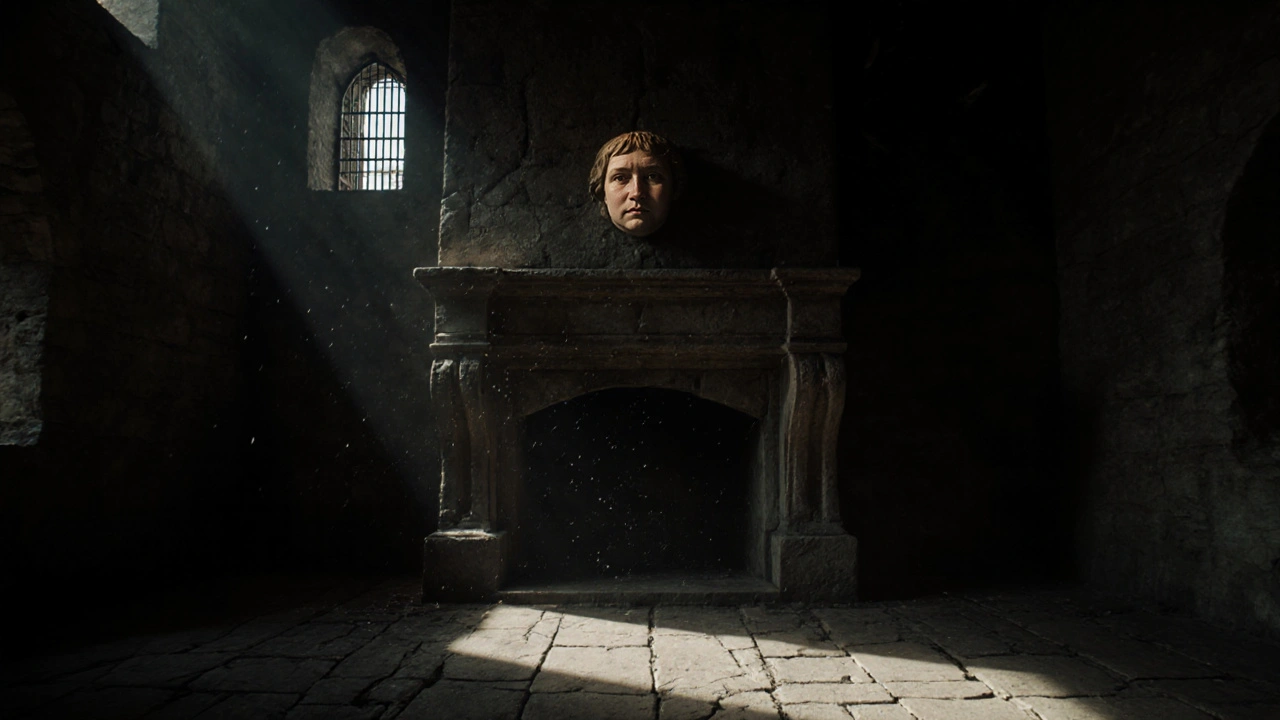
Walk through the ruined gatehouse, and you enter a courtyard surrounded by collapsed walls. The keep still stands, though its roof is gone. Climb the spiral staircase inside-it’s narrow, uneven, and steep. At the top, you’ll find the great hall, where lords once feasted on stolen beef and ale. The fireplace is massive, big enough to roast an ox. Above it, a carved stone face stares out. No one knows who it is. Some say it’s the Black Knight. Others think it’s a warning: Look, and remember.
The dungeon is just a dark hole in the ground. No bars. No chains. Just a deep pit with a single ladder. Prisoners were lowered down and left. If they screamed, no one heard. If they tried to climb out, they fell.
Look for the arrow slits on the eastern wall. They’re angled so archers could fire across the courtyard. One of them still has the original iron grating-rusty, bent, but intact. You can see where the wood of the drawbridge once rested. The stone grooves are worn smooth from centuries of rope pulling.
There’s no plaque explaining it all. No QR code. Just the stones. And the wind. And the weight of history.
When to Visit
Hermitage Castle is open year-round, but access depends on weather. The track can flood after heavy rain. In winter, snow makes the climb dangerous. The best months are April through October, when the ground is dry and the days are long.
Arrive early. The castle gets no sunlight after 3 p.m. in winter, and even in summer, the shadows grow long fast. Bring water. There’s no tap. Wear boots. The ground is uneven, and the stones are slippery when damp.
There’s no admission fee. No staff. Just a small information board near the gate with basic facts. You’re on your own. That’s how it’s always been.
Why This Castle Still Matters
Hermitage Castle isn’t pretty. It’s not Instagram-ready. But it’s real. It doesn’t pretend to be something it’s not. It doesn’t need restoration. It doesn’t need lighting. It doesn’t need actors in chainmail.
This is what the Scottish Borders looked like when kings couldn’t control their own land. When a castle wasn’t a symbol of power-it was the only thing standing between survival and slaughter.
Today, the border is quiet. The raiders are gone. But if you stand in the courtyard at dusk, you can still hear the echo of hooves on stone. The wind carries whispers of a time when loyalty was written in blood, and the only law was the strength of your sword.
Hermitage Castle doesn’t need you to love it. It just needs you to remember it.
Is Hermitage Castle open to the public?
Yes, Hermitage Castle is open year-round with no admission fee. It’s managed by Historic Environment Scotland, but there’s no staff on-site. Visitors come and go as they please. Access is via a rough track, and the final approach is a steep walk. Always check weather conditions before visiting, especially in winter or after heavy rain.
Can you get to Hermitage Castle by public transport?
No, there’s no direct public transport to Hermitage Castle. The nearest village is Newcastleton, about 4 miles away, with limited bus services. Most visitors drive. From Hawick or Jedburgh, you’ll need a car to reach the castle’s remote location. Walking from Newcastleton is possible but takes over an hour on uneven paths.
Are there guided tours at Hermitage Castle?
No, there are no guided tours at Hermitage Castle. It’s a self-guided site. Historic Environment Scotland provides a small information board at the entrance with basic history, but there are no audio guides, apps, or staff to answer questions. The experience is meant to be quiet and personal-just you and the stones.
Is Hermitage Castle suitable for children?
Hermitage Castle is not ideal for young children. The climb to the castle is steep and uneven. There are no railings on the upper levels, and the dungeon is a deep, dark hole. The narrow staircases and crumbling walls pose real risks. Older children who are steady on their feet and can follow safety rules will enjoy the adventure, but toddlers and babies should be left behind.
What’s the best time of year to visit Hermitage Castle?
The best time to visit is between April and October, when the ground is dry and daylight lasts longer. Spring brings wildflowers around the castle, and autumn offers crisp air and golden light. Summer can be busy with hikers, but the castle rarely gets crowded. Avoid visiting after heavy rain-the track becomes muddy and slippery, and the climb can be dangerous.
What to Bring and What to Skip
Bring: sturdy boots, a waterproof jacket, water, a flashlight (for the dungeon), and a sense of curiosity. Leave behind: expectations of comfort, assumptions of safety, and the idea that this is a theme park. Hermitage doesn’t cater to you. It doesn’t need to.
Don’t expect a smooth experience. Expect to feel something. That’s why people still come.
Comments (12)
-
Zelda Breach November 19, 2025
This castle was built by Anglo-Normans who were basically medieval mercenaries with delusions of grandeur. The Douglases didn't 'hold out'-they ran like cowards and left their enemies to find a bunch of cold stone and bad vibes. This isn't history, it's a tourist trap dressed up as authenticity. The 'Black Knight' is just a marketing gimmick invented by some bored historian with too much time and not enough coffee.

-
Alan Crierie November 20, 2025
I visited Hermitage last autumn, and it was one of the most moving experiences I've ever had at a historical site. No crowds, no noise-just the wind whispering through the arrow slits like it’s still keeping watch. The silence there isn’t empty; it’s full of stories. I sat on the edge of the keep for nearly an hour, just listening. It felt less like tourism and more like trespassing on sacred ground. Thank you for writing this with such care.

-
Nicholas Zeitler November 21, 2025
Hermitage isn’t just a ruin-it’s a monument to human resilience, grit, and the brutal calculus of survival in a lawless land! The fact that the walls are still standing after eight centuries? That’s not luck-that’s craftsmanship! The latrines draining into the moat? Genius! The lack of a gift shop? A blessing! This place doesn’t need merch-it needs reverence!

-
Teja kumar Baliga November 22, 2025
I’m from India, and I’ve seen forts built by Mughals and Rajputs-but Hermitage feels different. It’s not about showing off power. It’s about surviving it. The way the stones are worn from ropes and swords… that’s real. No filters. No crowds. Just truth. I wish more places were like this.

-
k arnold November 24, 2025
Wow. Another article pretending a pile of rocks is ‘authentic.’ You didn’t even mention the 2018 vandalism incident where someone spray-painted ‘F*CK HES’ on the keep. But sure, let’s romanticize neglect as ‘charm.’

-
Tiffany Ho November 25, 2025
i loved how you said it doesnt need to be pretty just to be remembered
that made me cry a little
ive been to lots of castles but this one felt like it was still alive in its own quiet way
thank you for writing this

-
michael Melanson November 26, 2025
I’ve hiked up to Hermitage twice. Once in the rain, once in the snow. Neither time did I see another soul. The silence is the heaviest thing I’ve ever felt. It’s not peaceful. It’s solemn. Like the stones are holding their breath waiting for the next raid.

-
lucia burton November 27, 2025
The architectural evolution of Hermitage Castle represents a paradigmatic shift in medieval border defense strategy, particularly in its integration of verticality as a psychological deterrent and its subterranean infrastructural design as a mechanism of control and containment. The absence of modern interpretive signage is not an omission-it is an epistemological statement, a deliberate reification of the postmodern condition wherein authenticity is not curated but endured. The wind in the arrow slits? That’s not ambiance. That’s ontological resonance.

-
Sam Rittenhouse November 28, 2025
When I stood in that courtyard, I didn’t just see stones-I saw the hands that built them. The sweat. The fear. The quiet determination of men who knew they might die alone, in the dark, with no one coming. This place doesn’t need a plaque. It needs silence. And maybe… a little more respect from people who think history is something you take a selfie with.

-
Peter Reynolds November 28, 2025
the part about the sealed passage behind the fireplace… i wonder if they ever tried carbon dating the rubble
or if they just left it because some things are better left buried

-
Fred Edwords November 30, 2025
Correction: The de Soulis family were not ‘Anglo-Norman’ in the strictest sense-they were Norman lords who held lands in northern England and were granted control over Hermitage as part of a feudal arrangement under Henry I. Also, the latrines drained into a ditch, not a moat; the moat was added later by the Douglases. Accuracy matters.

-
Sarah McWhirter November 30, 2025
Have you ever considered that the Black Knight isn’t a ghost at all? He’s a time traveler from a future where Scotland was never independent. The ‘secret tunnel’? A temporal rift. The sealed passage behind the fireplace? A failed attempt to shut it down. The 1963 workers didn’t find ‘rubble’-they found a machine. And now it’s waiting. For us. To come back.
