
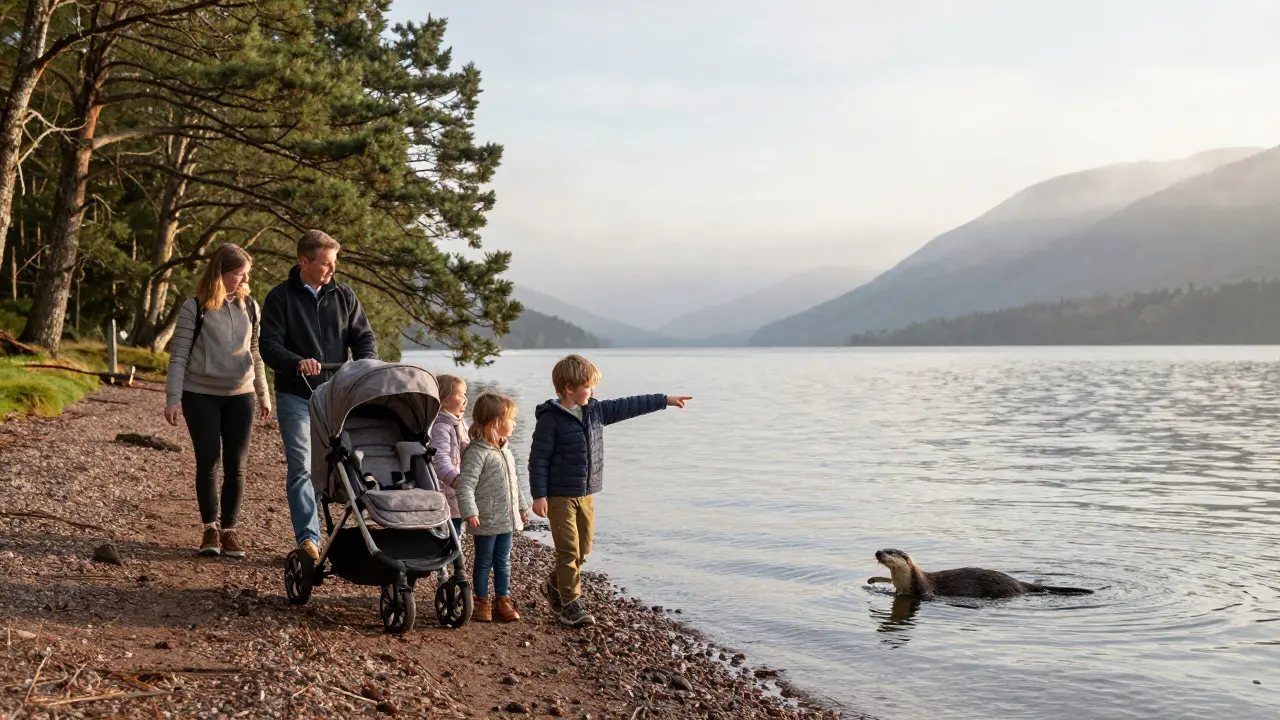
Scotland isn’t just about castles and kilts. If you’ve got kids, a stroller, or even just a craving for fresh air and quiet moments with nature, the country’s wildlife spots offer some of the easiest, most rewarding family outings you’ll ever find. You don’t need hiking boots or a map. Just a packed lunch, a camera, and a willingness to slow down. Many of these places are designed for families - no steep climbs, no confusing trails, just clear paths, informative signs, and animals doing their thing right in front of you.
Where to See Wildlife Without Walking Far
One of the best-kept secrets? You don’t have to go far into the Highlands to see otters, seals, or even red squirrels. The Loch Lomond & The Trossachs National Park is a protected area in central Scotland with easy-access wildlife trails, visitor centres, and boat tours designed for families is a perfect starting point. At Balmaha, just off the A82, there’s a flat, 1-mile loop around the shore that’s stroller-friendly. Keep your eyes low - otters often slip in and out of the water near the reeds. If you’re lucky, you’ll catch one fishing. No binoculars needed. Just stop, watch, and let the kids whisper.
Another quiet gem is the Crianlarich Visitor Centre in the heart of the Highlands. It’s not flashy, but it’s got free binoculars, wildlife spotting sheets for kids, and staff who know exactly where the pine martens have been seen this week. The walk from the centre to the nearby Loch Doine is less than a kilometer on packed gravel. Flat. Safe. And if you go at dawn, you might see a red deer herd grazing just beyond the trees.
Wildlife Centres Built for Families
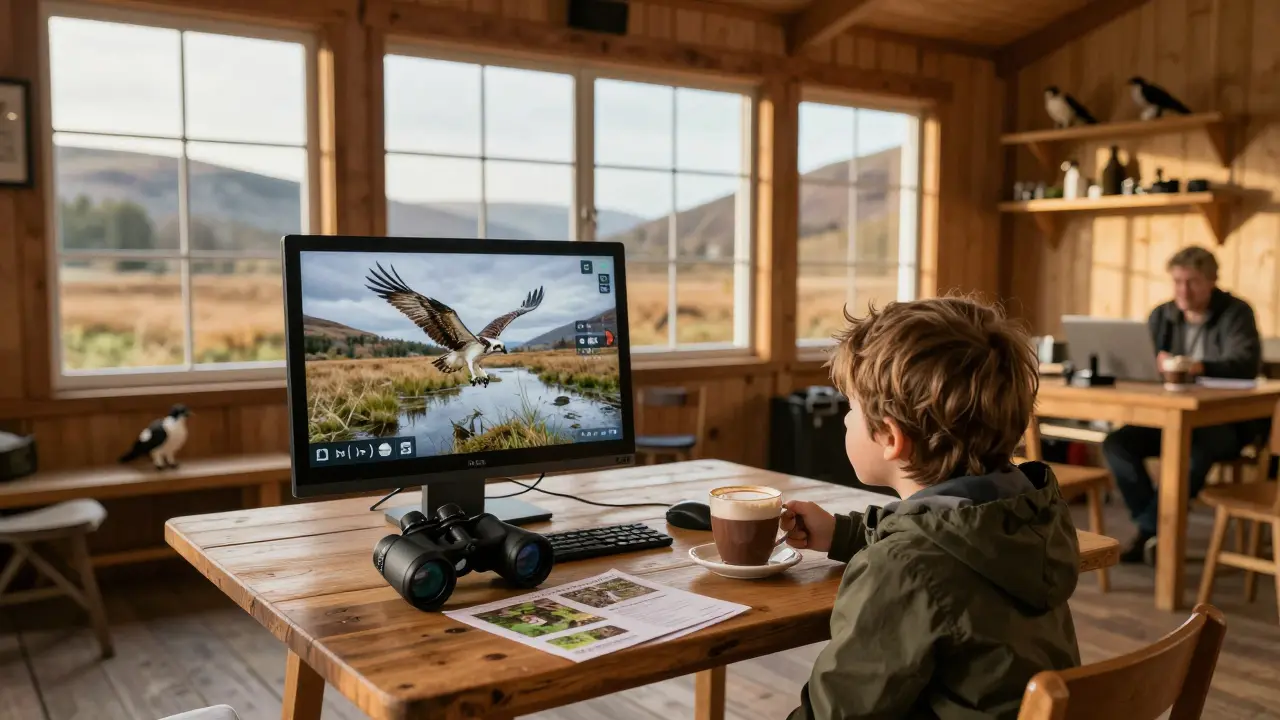
Some places are built just for this - to help kids learn without feeling like they’re in class. The RSPB Scotland’s Loch of the Lowes in Perthshire is one of those. It’s not a zoo. It’s a 200-acre wetland with boardwalks, hides, and a dedicated family trail that takes 45 minutes. The Loch of the Lowes Visitor Centre has a live webcam of ospreys nesting. Kids can sit with hot chocolate, watch the birds dive for fish, and then go outside to find the same spot. Real birds. Real time. No screens.
On the west coast, the Taynish National Nature Reserve near Oban runs a weekly Family Wildlife Day every Saturday from April to September. You don’t need to book. Just show up at 10 a.m. with your kids and a snack. A ranger gives you a wildlife bingo card - find a badger set, hear a kingfisher, spot a red squirrel. Most families finish in under an hour. And if you get all five? You get a wooden animal badge. Kids remember that.
Seals, Otters, and Birds - Right by the Road
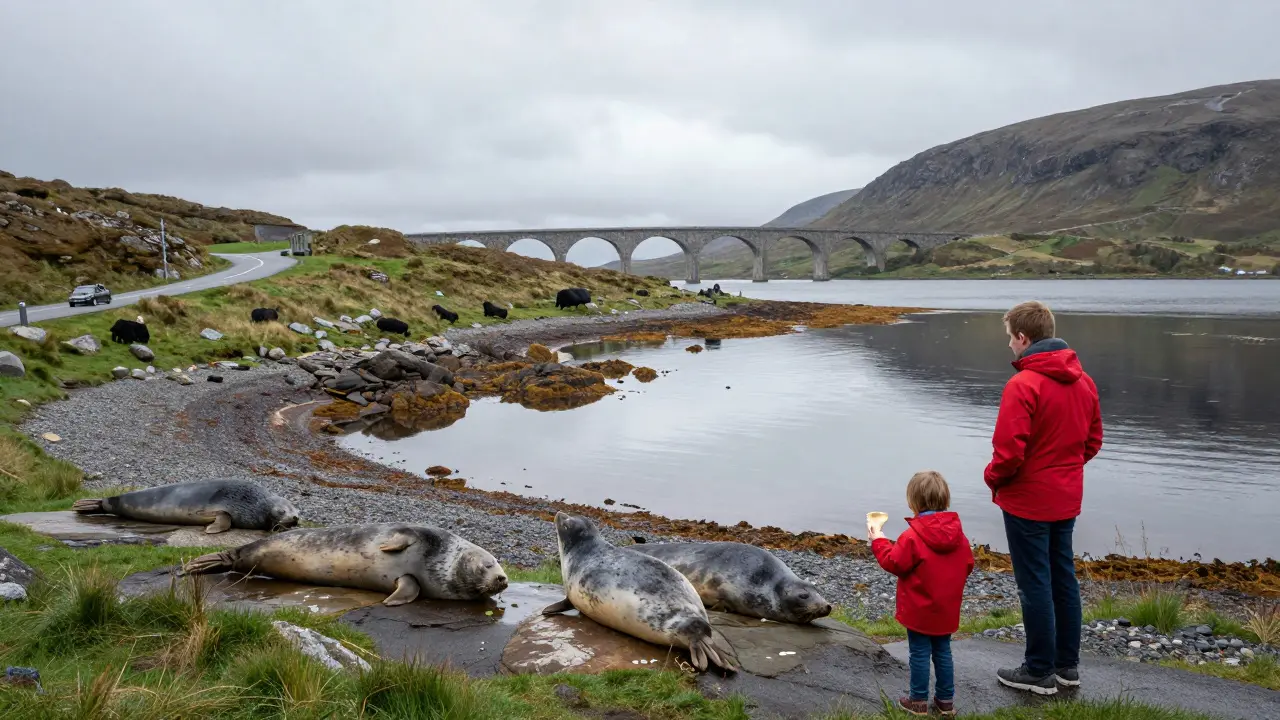
Some of the best wildlife doesn’t require a centre at all. Just pull over. Along the A830 between Fort William and Mallaig, there’s a stretch called Glenfinnan Viaduct. Park at the pull-off near the viaduct. Walk 50 meters to the water’s edge. Within 10 minutes, you’ll see seals - sometimes five or six - lounging on rocks. They don’t care about you. They’re just being seals. Bring a snack. Let the kids toss a piece of bread (not too close). Watch how they roll and dive. It’s free. It’s quiet. It’s unforgettable.
On the Isle of Mull, the Tobermory Harbour is another easy win. Park near the pier. Walk 200 meters along the seawall. You’ll see otters at low tide, diving for crabs. The harbourmaster often points them out - he’s been watching them for 20 years. No tour needed. Just patience. And maybe a pair of sunglasses. The sun glares off the water.
What to Bring - And What to Leave Behind
Don’t overpack. You don’t need a full hiking kit. Here’s what works:
- Waterproof jackets - even in March, Scottish rain shows up fast
- Snacks in sealed containers - no crumbs, no ants
- A small notebook or printed spotting sheet - kids love checking things off
- Binoculars (child-sized ones work great)
- Warm socks - damp grass is colder than you think
Leave behind:
- Expensive cameras - a phone with a zoom lens is fine
- Stuffed animals - they don’t belong in the wild
- Expectations - you might not see a bear. But you’ll see something real.
When to Go - And When to Avoid
Spring (April-June) is the sweet spot. Days are longer, the snow’s gone, and animals are raising young. You’ll see otters with pups, seal pups on beaches, and baby birds in nests. July and August are busy. Crowds at popular spots like Loch Lomond can make it feel like a theme park. September brings quieter trails and the first hints of autumn color.
Winter? It’s not impossible. The RSPB Scotland’s Tain Nature Reserve near Dornoch has a heated hide and winter-only birdwatching walks. You’ll see flocks of geese flying low, and if you’re very lucky, a golden eagle circling above. But keep walks short. Kids get cold fast.
Why This Matters
These aren’t just walks. They’re quiet lessons in respect. When a 6-year-old sees an otter slip into the water without fear, they learn nature isn’t something to fear - it’s something to watch. When they hear a kingfisher’s whistle and realize it’s louder than a car horn, they start listening differently. These moments don’t show up on Instagram. But they stick.
Scotland’s wildlife centres and short trails are built for exactly this: families who want to feel the wind, hear the water, and see something wild without driving three hours or climbing a mountain. You don’t need to be an expert. You just need to be there.
Are these wildlife walks safe for toddlers?
Yes. Most trails mentioned - like the one at Loch of the Lowes or the shore path at Balmaha - are flat, well-maintained, and free of steep drops. Strollers handle gravel and packed earth just fine. Always keep an eye on water edges, but these spots are designed with families in mind. RSPB and National Park centres often have baby-changing facilities and indoor play areas if kids need a break.
Do I need to pay to visit these wildlife centres?
Most are free to enter. RSPB Scotland’s Loch of the Lowes and Taynish Nature Reserve welcome visitors without charge. Some centres, like Crianlarich, ask for voluntary donations to support their wildlife work. Parking is usually free too, except at major tourist hubs like Loch Lomond, where it’s £3-£5. You’re not paying for entry - you’re helping keep the trails clean and the animals protected.
Can I see whales or dolphins on these short walks?
Not from land on these short trails. But if you’re near Oban or the Isle of Mull, you can join a 1-hour boat tour from the harbour for under £20 per person. These aren’t long cruises - just quick trips to where dolphins and minke whales feed. Kids under 5 usually go free. You’ll see them from the deck. No hiking required.
What if it rains?
Rain doesn’t stop wildlife. In fact, otters and seals are more active after rain. Most centres have heated indoor spaces with interactive displays - think touchscreens with animal sounds, fake burrows to crawl through, and stuffed toys to hold. Bring a change of clothes for the kids. And a towel. You’ll be surprised how much fun they have indoors after a wet walk.
Are there places with toilets and cafes?
Yes. All major centres - Loch of the Lowes, Taynish, Crianlarich, and RSPB Tain - have clean, accessible toilets and small cafes serving hot drinks and sandwiches. Some, like Balmaha, have picnic tables right by the water. You can eat your own food too. Just don’t leave wrappers. The animals notice.
If you’re looking for a break from screens, museums, or crowded theme parks, Scotland’s wildlife trails offer something deeper. Not excitement. Not thrills. Just quiet, real moments - the kind that stay with kids long after the photos are forgotten.
Comments (14)
-
Raji viji March 19, 2026
Let’s be real - Scotland’s wildlife spots are basically nature’s version of a free Netflix documentary with bonus otters. No subscription, no buffering, just raw, unfiltered animal drama. I’ve seen a seal do a full 360-roll just to ignore a toddler waving a sandwich. That’s cinema, folks. And it’s free. Also, the phrase 'the animals notice' is legally required to be printed on all Scottish picnic blankets. I’m serious. I’ve seen the fine print.

-
Rajashree Iyer March 20, 2026
There’s something sacred about watching a child’s face when they realize a kingfisher’s cry is louder than a car horn. It’s not just nature - it’s a whisper from the earth that says, 'You’re small, but you’re here, and that’s enough.' I cried. Not because I’m emotional - because I finally understood what silence sounds like when it’s alive.

-
Parth Haz March 21, 2026
This is an exceptionally well-structured guide to family-friendly wildlife experiences in Scotland. The emphasis on accessibility, low-impact observation, and educational engagement without forced learning is commendable. I appreciate the practical advice on attire and equipment, particularly the note about warm socks - a detail often overlooked in outdoor literature. Well-researched and thoughtfully presented.

-
Vishal Bharadwaj March 21, 2026
Wait - you said 'no binoculars needed' at Balmaha? Bro. That’s a lie. I went there last summer with my 7-year-old. We saw ZERO otters. Zero. The sign said 'common sightings' - turns out 'common' in Scotland means 'once every 3 weeks if you’re lucky and it’s not raining.' Also, the 'family trail' at Loch of the Lowes? It’s 45 minutes if you’re a robot. With kids? 2 hours. And the osprey cam? It was just a blurry tree. I’m calling fake news.

-
anoushka singh March 23, 2026
Okay but why is everyone so obsessed with otters? Like, I get it, they’re cute. But have you seen a badger? They’re basically furry little anarchists with attitude. And why are we pretending these places aren’t just Instagram backdrops now? I went to Taynish and there were 12 people filming their kids doing 'wildlife bingo.' It was more performative than a TikTok dance challenge. Also, who says 'snacks in sealed containers'? That’s not advice - that’s a cry for help.

-
Jitendra Singh March 25, 2026
I’ve taken my niece to all the places mentioned. She’s 4. She didn’t care about the otters. She cared about the gravel crunching under her boots. She spent 20 minutes just listening to it. I think we’ve been overthinking this. Nature isn’t about sightings. It’s about the sound of your kid’s socks squelching in wet grass. That’s the real magic.

-
Madhuri Pujari March 25, 2026
Oh, so now we’re romanticizing 'quiet moments' while ignoring that Scotland’s wildlife centers are funded by tourism dollars from people who think 'wildlife' means 'a deer that doesn’t run away'? Also, 'don’t bring expensive cameras'? I brought a GoPro and got yelled at by a ranger for 'disturbing the natural ambiance.' WHAT? I’m recording a natural ambiance! And why is everyone pretending this isn’t just a glorified petting zoo with better PR? The 'wooden animal badge'? That’s bribery. And you’re calling it 'education'?

-
Sandeepan Gupta March 26, 2026
Minor grammar note: 'It’s a 200-acre wetland with boardwalks, hides, and a dedicated family trail that takes 45 minutes.' Should be 'that takes ABOUT 45 minutes' - children vary in pace, and 'takes' implies a fixed duration. Also, 'the sun glares off the water' - correct, but consider 'the sun reflects' for precision. Otherwise, excellent guide. Clear, practical, and grounded. Well done.

-
Tarun nahata March 27, 2026
YOU DIDN’T EVEN MENTION THE PUFFINS. PUFFINS. They’re like tiny tuxedoed clowns with wings. And they’re in Mull. Just walk the coastal path near Calgary Bay. No trail, no center, no fee. Just you, a cliff, and a bird that looks like it’s been dipped in paint. I’ve seen kids laugh so hard they cried. That’s the real win. Scotland doesn’t need to be perfect - it just needs to be wild. And it is.

-
Aryan Jain March 28, 2026
They’re lying. All of it. The otters? CGI. The seals? Trained. The whole 'family wildlife day' thing? A government psyop to get parents to stop using screens. I’ve checked the satellite maps - those 'nature reserves' are all built over old military testing sites. The 'badger set' they want you to find? It’s a drone nest. The 'kingfisher whistle'? It’s a frequency broadcast. I’ve got receipts. They’re using children’s curiosity to map neural patterns. You think you’re watching nature? You’re being studied.

-
Nalini Venugopal March 28, 2026
Just wanted to say: 'don’t leave wrappers' - correct. But also, don’t leave used tissues. I saw a family drop a whole box of wet wipes near the Loch Lomond trail. A badger tried to eat one. It got stuck in its fur. Took two rangers 20 minutes to untangle it. Please. Think about the animals. They don’t have a recycling bin. We do.

-
Pramod Usdadiya March 28, 2026
I’m from India and I’ve never been to Scotland. But after reading this, I feel like I’ve walked those trails. The way you describe the quiet - the way a child learns to listen - that’s universal. In my village, we teach kids to sit still near the pond and wait for the kingfisher. It’s the same. Nature doesn’t care about borders. Just presence. Thank you for this. I’m planning a trip. With my niece. And no phone.

-
Aditya Singh Bisht March 29, 2026
Just got back from Taynish with my twins. We did the bingo. Got four out of five. Missed the red squirrel - they were napping. But we saw a marten climb a tree like it was doing parkour. My daughter screamed. Not scared. Excited. We didn’t take a single photo. Just sat on a log and ate cheese sandwiches while the wind blew through the pines. That’s the moment. Not the badge. Not the otter. Just us. Quiet. Alive. You don’t need a trail. You just need to show up. And stay still.

-
Agni Saucedo Medel March 30, 2026
❤️❤️❤️ This. This right here. My 5-year-old asked why the otter didn’t look scared. I said, 'Because it’s home.' She hugged me. We didn’t say another word for 10 minutes. That’s the whole thing. No maps. No apps. Just heart. Thank you.
