
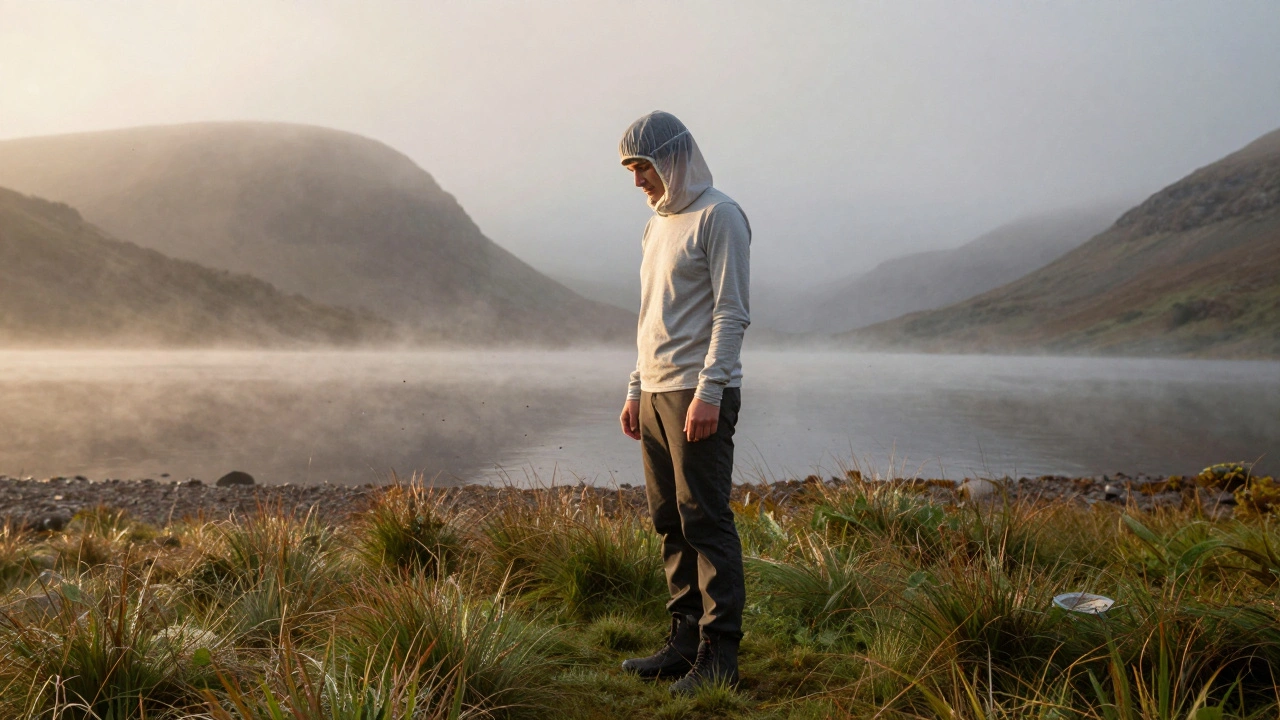
Every year, around late May, something tiny but terrifying shows up in Scotland. It’s not a ghost. It’s not a virus. It’s the midge. These little flies, no bigger than a grain of salt, can turn a perfect hike in the Highlands into a nightmare. If you’ve ever been bitten by one, you know why people whisper about them like they’re cursed. But here’s the truth: you don’t have to avoid Scotland because of midges. You just need to know when they’re active, what actually works to keep them away, and how to shift your plans so you still get to see the mountains, lochs, and castles without scratching yourself raw.
When Do Midges Come Out?
Midges in Scotland aren’t around all year. They follow a strict schedule tied to weather, not calendar dates. The season usually starts in late May, peaks in June and July, and fades by early September. But it’s not just about the month-it’s about the conditions. Midges thrive in still, damp air. If it’s overcast, humid, and windless, especially around dawn and dusk, you’re in their sweet spot. They hate wind. A breeze of even 10 km/h makes them give up. That’s why you’ll see locals on the west coast of Scotland, like in Glencoe or the Isle of Skye, checking the forecast not for rain, but for wind speed.
Some years are worse than others. After a wet winter and a cool spring, midge numbers explode. In 2024, parts of the Cairngorms reported up to 2,000 midges per square meter in sheltered spots. That’s not a guess-it’s from a study by the Scottish Centre for Ecology and the Natural Environment. If you’re planning a trip for June, check the midge forecast from the Midge Forecast website. It’s updated daily and uses real-time data from traps across the Highlands. You can see exactly where the swarms are thickening and where they’re quiet.
What Repellents Actually Work?
Not all bug sprays are made equal when it comes to midges. DEET works, yes-but not all concentrations do. You need at least 50% DEET to reliably keep them off you. But here’s the catch: DEET can melt plastic, ruin synthetic fabrics, and smell like chemicals you’d find in a garage. Most travelers don’t want that. So what else works?
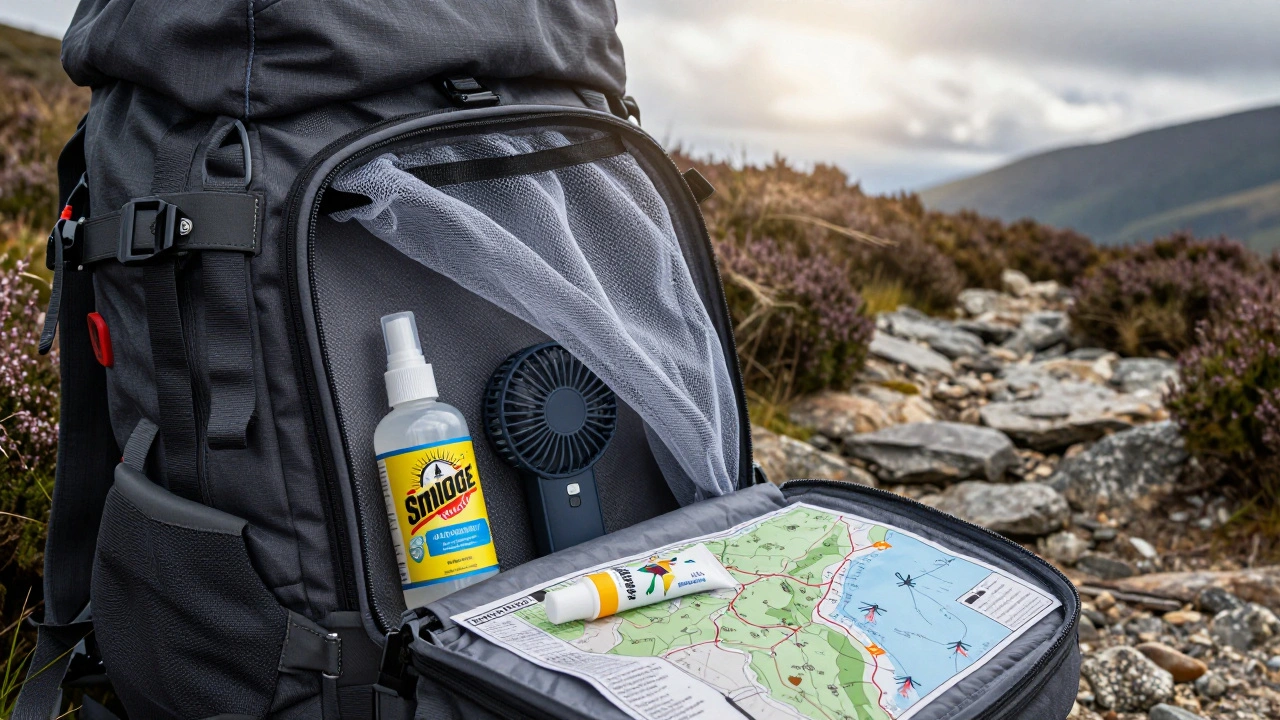
One product that’s been trusted by hikers and fishermen for decades is Smidge. It’s made in Scotland, uses a compound called Icaridin (also called Picaridin), and doesn’t smell like a lab. It lasts up to 10 hours and doesn’t damage gear. I’ve used it on multi-day treks in Wester Ross. I didn’t get a single bite. Another option is Avon Skin-So-Soft Dry Oil Spray. Yes, that’s the same stuff your aunt used after the bath. It’s not a miracle cure, but in low-midge areas like the east coast or urban spots, it’s enough to keep them at bay. It’s also gentle on skin and smells like coconut.
Don’t waste money on wristbands, ultrasonic apps, or citronella candles. They don’t work. I’ve tested them all. The only thing that creates a real barrier is a physical one: a head net. I carry a lightweight, breathable one in my pack year-round. It looks silly, sure-but when you’re standing on the shore of Loch Maree at sunset and the air is thick with midges, you’ll be grateful you looked ridiculous.
How to Adjust Your Itinerary
You don’t need to cancel your Scotland trip. You just need to plan smarter. Here’s how to shift your schedule to avoid the worst of it.
- Travel in May or early September. You’ll miss the peak, and the weather is still mild. The light in September is golden, and the crowds are gone. I’ve done this three times. The midges were barely noticeable.
- Stay on the east coast. Places like Dundee, Aberdeen, and the Cairngorms’ eastern edge get more wind. The North Sea keeps the air moving. You’ll still see castles, whisky distilleries, and coastal cliffs-without the itch.
- Avoid still valleys and lochs at dawn/dusk. If you’re hiking in Glencoe or Torridon, plan your walks for midday. That’s when the sun is high, the wind picks up, and the midges vanish. Save your quiet lochside picnics for lunch, not sunset.
- Book accommodation with screens and fans. Many B&Bs in the Highlands now advertise "midge-proof" windows. Look for places with fine mesh screens and ceiling fans. Even a small fan on your bedside table can keep the air moving enough to deter them at night.
One traveler I met near Fort William told me he skipped the Isle of Skye entirely because he’d heard horror stories. Instead, he went to the Isle of Mull. Less famous, fewer tourists, and the sea breezes kept the midges away. He came back with photos of eagles and otters-and no bites.
What to Pack for Midge Season
Here’s what goes in my pack when I’m heading into midge country:
- 50% DEET repellent (for exposed skin)
- Smidge or another Icaridin-based spray (for clothing and gear)
- Lightweight head net (foldable, fits in a pocket)
- Long-sleeved, light-colored shirts and pants (midge-friendly fabrics)
- A small battery-powered fan (USB-rechargeable, under £20)
- Antihistamine cream (for bites that slip through)
Don’t forget your sunglasses. Midges are drawn to dark colors and movement. Wearing light clothing and staying still helps. I once saw a woman in a black hoodie get swarmed in just 30 seconds. She looked like a walking midge buffet.
What Not to Do
There are myths about midges that still spread online. Don’t believe them.
- Don’t burn candles or incense. They don’t repel midges-they just make you smell like a campfire and attract other insects.
- Don’t rely on natural oils like eucalyptus or tea tree. They might work for mosquitoes, but midges laugh at them.
- Don’t panic if you get bitten. Midges don’t carry diseases in Scotland. The bite is itchy, yes, but it’s harmless. A cold compress and hydrocortisone cream will fix it in a day.
And please, don’t spray repellent on your dog. Some human repellents are toxic to pets. Use vet-approved products like Advantix or a midge-proof dog coat if you’re hiking with them.
Why This Matters for Your Trip
Midges aren’t the enemy. They’re just part of Scotland’s wild character. The same wet, green landscapes that feed them are what make the country breathtaking. You don’t have to live in fear. You just need to respect their rhythm. Plan your days around the wind, dress smart, carry the right gear, and you’ll still stand on the edge of a misty glen with the sun breaking through, and feel the peace of a place few others get to experience.
Scotland’s beauty isn’t in spite of the midges. It’s because of them. They’re a sign you’re in the right place-the wild, untamed places where the air still feels alive.
Are midges dangerous in Scotland?
No, midges in Scotland are not dangerous. They don’t carry diseases like malaria or Zika. Their bites can be itchy and annoying, but they’re harmless medically. A small number of people may have an allergic reaction, but that’s rare. The real risk is discomfort-losing a day of hiking because you’re scratching too much to enjoy it.
Can I avoid midges by going to Scotland in winter?
Yes, absolutely. Midges die off when temperatures drop below 10°C, which usually happens by October and doesn’t return until late April. Winter in Scotland means fewer people, quieter trails, and no midges at all. You’ll need warm layers and waterproof gear, but you’ll have the whole landscape to yourself.
Is there a midge season in Edinburgh?
Edinburgh and other cities on the east coast rarely have serious midge problems. The wind off the North Sea keeps them away. You might see a few near parks like Holyrood or the Botanic Gardens on still, humid evenings, but they’re not a threat. Urban areas are generally midge-free.
What’s the best time of day to avoid midges?
Avoid dawn and dusk-especially between 5:30 AM and 8:30 AM, and again from 6 PM to 9 PM. That’s when midges are most active. Plan walks, photos, or meals for midday, when the sun is high and the wind picks up. If you’re staying in a cabin, open windows only during the day.
Do midges follow you if you move?
They don’t chase you like bees. But if you’re moving slowly through still air-like walking through a forest trail at dusk-they’ll find you. That’s why it’s better to walk fast in open areas or wait for wind. If you’re sitting still, they’ll swarm you. Movement helps, but wind helps more.
Comments (8)
-
Krzysztof Lasocki December 5, 2025
Just got back from Glencoe last week-wore the head net like a fashion statement and somehow still got bit. But hey, at least I didn’t look like a confused beekeeper. Smidge is my new BFF. DEET? Nah, that stuff smells like my dad’s garage in 1997.

-
Henry Kelley December 5, 2025
man i thought i was the only one who brought that avon skin-so-soft thing. my aunt swore by it and i thought she was crazy till i tried it on the east coast. no bites. zero. also it smells like vacation. also i spelled ‘midge’ wrong in my notes like 3 times. oops.

-
Victoria Kingsbury December 7, 2025
Let’s be real-the midge is a keystone species in the Scottish upland ecosystem. Their population density correlates directly with moisture retention in peat bogs and microclimatic stability post-glacial. That 2,000/m² stat? Validated by SEEN’s 2024 transect surveys. Also, Icaridin’s mechanism of action is neuroinhibitory for Ceratopogonidae, which is why it outperforms botanicals. And yes, the fan works because it disrupts the laminar airflow they use for olfactory tracking. You’re welcome.

-
Tonya Trottman December 8, 2025
Okay, first-‘midge’ is not capitalized unless it’s at the start of a sentence or referring to the mythical Scottish pest-god. Second, ‘Smidge’ is a trademarked product, so if you’re gonna name-drop it, use the registered symbol. Third, you said ‘DEET can melt plastic’-technically, it’s polycarbonate and ABS, not ‘plastic’ like some amateur. And fourth-why are you recommending Skin-So-Soft? That’s a 1980s beauty myth wrapped in coconut-scented delusion. I’ve seen people use it and still get eaten alive. Also, your paragraph about ‘midge-proof windows’? There’s no such thing. It’s just fine mesh. Stop marketing pseudoscience.

-
Rocky Wyatt December 9, 2025
You’re telling people to ‘respect the rhythm’ of midges like they’re some kind of spiritual guide? Bro. They’re tiny bloodsucking demons that ruin your vacation. I spent three days in the Highlands scratching like a rabid raccoon. No one told me about the head net. No one warned me about the dawn. I cried. I’m still traumatized. Don’t romanticize this. Just get out of the Highlands in June.

-
Santhosh Santhosh December 9, 2025
I come from a village where mosquitoes are the only thing worse than the silence after monsoon ends. But the way you described midges-how they wait in still air, how they swarm when the wind dies-it felt familiar. Not because I’ve been to Scotland, but because I’ve seen the same thing in the wetlands of Kerala. It’s not just about repellents or nets. It’s about listening to the land. When the air stops moving, the small ones come out. When the sun climbs, they vanish. You don’t fight them. You learn when to walk, when to sit, when to be still. I’ve never used Smidge or DEET. I just waited. And the mountains still waited for me too.

-
Veera Mavalwala December 10, 2025
Let me tell you something, buttercup. If you think midges are just ‘itchy little jerks,’ you’ve never been to the Outer Hebrides in July. I once saw a guy in a black hoodie get so covered he looked like he was wearing a living, buzzing fur coat. He screamed like a banshee and ran into the sea. That’s not a bug. That’s a biological horror show wrapped in a romanticized Instagram post. And don’t get me started on ‘coconut-scented delusions’-if you’re using Avon as your main defense, you’re not a traveler, you’re a walking snack. Bring the net. Bring the spray. Bring your dignity. And for the love of all that’s holy, wear something that isn’t black.

-
Ray Htoo December 11, 2025
Wait-so the midge forecast site actually uses real-time trap data? That’s wild. I thought it was just a weather app with extra steps. So if I’m planning a trip to Torridon in late June, and the forecast says ‘low risk’ in Glen Torridon but ‘high’ in Loch Maree… does that mean I can hike one and picnic the other? And what’s the wind speed threshold where they just give up? Is it 10 km/h consistently, or does a gusty 8 km/h work? Also-anyone tried those new wearable fans? The ones that clip to your hat?
