
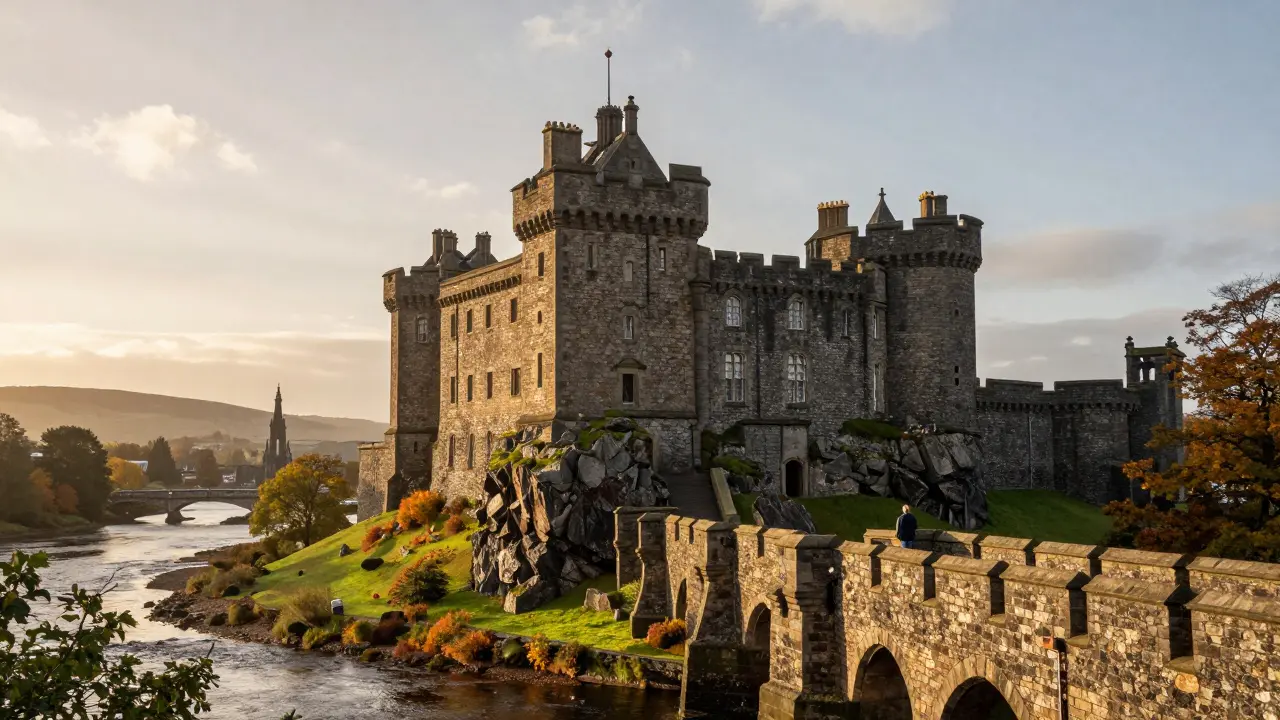
Stirling Castle isn’t just another old stone building. It’s where Scotland’s fate was decided - again and again. Perched on a volcanic rock, it dominates the landscape like a throne overlooking the ancient roads between the Highlands and Lowlands. If you’ve ever wondered why this castle matters more than others, it’s because kings were crowned here, queens were imprisoned here, and battles that changed the country were fought just below its walls.
History That Still Speaks
Stirling Castle’s story begins long before the Renaissance halls you see today. The site has been a stronghold since at least the 12th century. But the castle as it stands now? That’s mostly the work of James IV and James V in the early 1500s. They didn’t just repair it - they turned it into one of the most advanced royal palaces in Europe. Think marble fireplaces, painted ceilings, and glass windows when most homes still had holes in the roof.
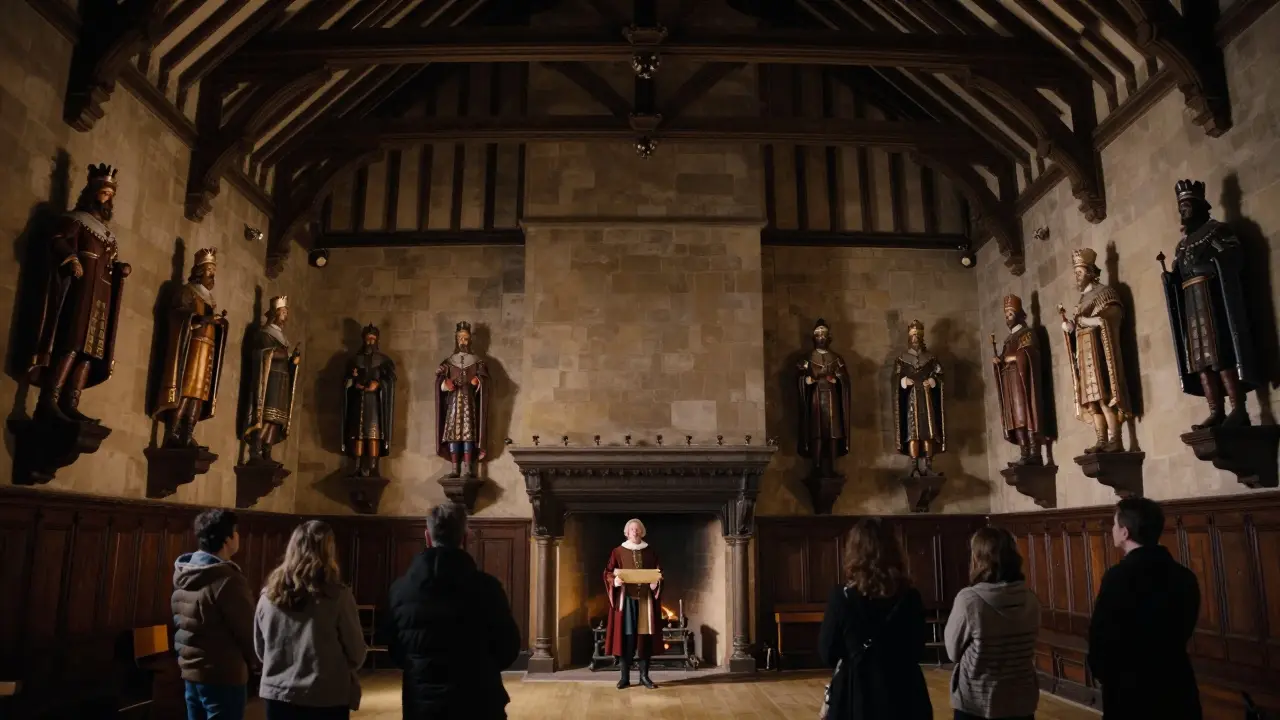
James IV brought Italian artists and craftsmen over to decorate the Royal Palace. The result? The Great Hall, with its hammerbeam roof and 12-foot-tall wooden statues of kings lining the walls. You can still walk under that roof today. The ceiling’s original paint? Gone. But the 19th-century restoration? It’s accurate. Every detail was based on fragments found during digs - not guesswork.
The Queen Who Lived Here
Mary, Queen of Scots, was crowned in the chapel royal here at just nine months old. She didn’t grow up in luxury - she was sent to France at five. But when she returned in 1561, she lived in the Royal Palace. Her chambers are still there, carefully restored with period furniture, tapestries, and even the original oak floorboards. You can see where she slept, where she ate, and where she likely paced while waiting for news from the outside world.
She didn’t stay long. Her reign unraveled fast. By 1567, she was forced to abdicate. But Stirling kept her son, James VI, under guard. He was raised here, away from the chaos of court politics. That boy would become King of England too. So if you’re standing in the Royal Palace, you’re standing where the future of two kingdoms was shaped.
Renaissance Halls: More Than Just Walls
The Royal Palace isn’t just a room. It’s a series of interconnected spaces designed to impress. The King’s Presence Chamber had gold-leafed ceilings and a fireplace carved with mythological scenes. The Queen’s Inner Chamber was warmer, with a private garden balcony overlooking the valley. The Chapel Royal? Smaller than you’d expect, but it’s where royal baptisms and weddings happened.
What makes these rooms special isn’t just their beauty - it’s their survival. Most royal palaces in Scotland were torn down or left to rot. Stirling’s were preserved because the crown kept using them. Even after the Union of the Crowns in 1603, kings still came here to hunt and hold court. The palace wasn’t a museum - it was a working home.
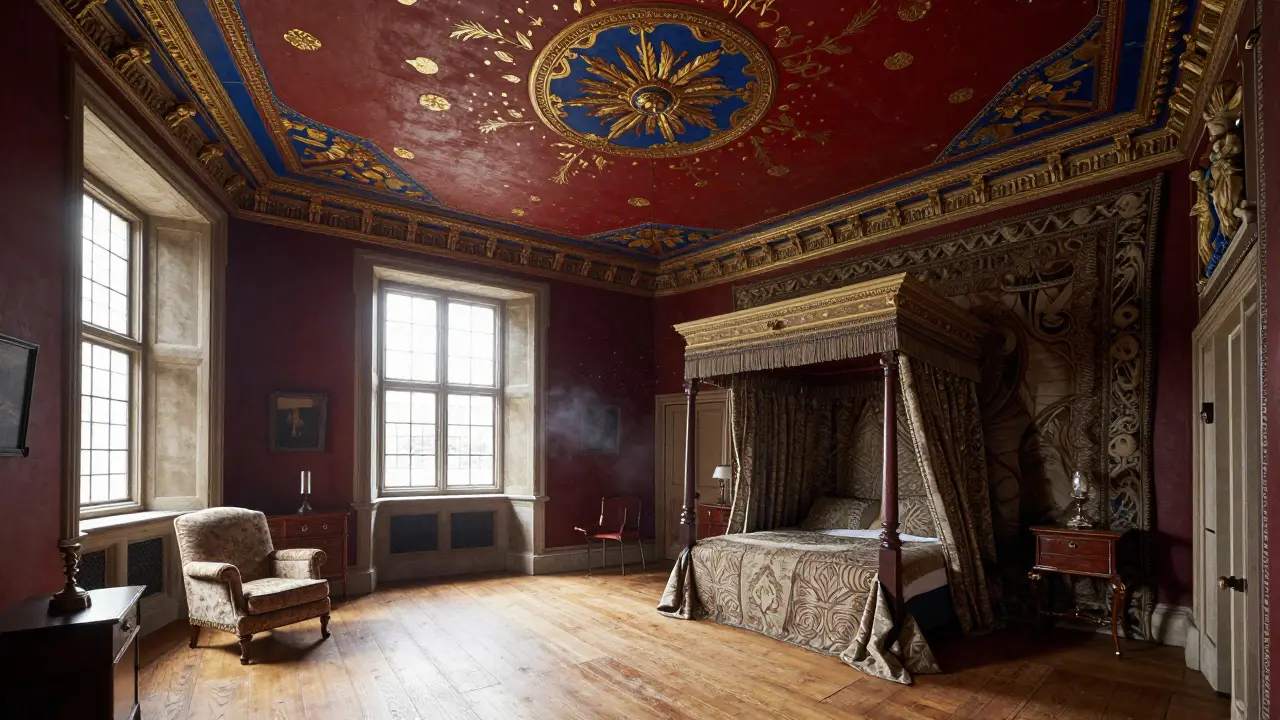
Today, you can see the original painted ceiling in the King’s Bedroom. It’s not the 16th-century version - it’s a painstaking recreation from 2003, based on chemical analysis of pigment traces. The colors? Deep reds, lapis blue, and gold. They were expensive. Only royalty could afford them.
The Battlefield Just Outside
Walk down the hill from the castle, and you’re on the same ground where armies clashed. The Battle of Stirling Bridge in 1297? William Wallace crushed the English here with clever tactics. The Battle of Bannockburn in 1314? It’s just a few miles away, but Stirling Castle was the prize both sides fought for.
There’s a small museum at the base of the hill called the National Wallace Monument Visitor Centre. But you don’t need to go there. Just stand on the castle’s west ramparts. Look down at the narrow road that crosses the River Forth. That’s where Wallace ambushed the English army. You can still see the old bridge foundations.
And then there’s the Battle of Stirling in 1746 - the last major battle on Scottish soil. Jacobite forces tried to take the castle before heading south. They failed. The castle held. That defeat ended the Jacobite uprising.
What You’ll See Today
Visiting Stirling Castle isn’t like touring a ruin. It’s like stepping into a living history exhibit. The Royal Palace, the Great Hall, the Chapel Royal, the King’s Old Building - all fully furnished and interpreted with audio guides, costumed interpreters, and touchscreen displays.
Don’t miss the Argyll’s Lodging. It’s not part of the royal complex, but it’s one of the best-preserved noble townhouses in Scotland. Built in the 1600s, it shows what life was like for a powerful family after the crown moved to London.
The views? Unmatched. From the castle’s eastern wall, you can see the Ochil Hills to the north, the River Forth winding below, and the distant outline of the Highlands. On a clear day, you’ll spot the Wallace Monument standing tall like a sentinel. It’s no accident that kings chose this spot. It’s the perfect place to watch your enemies - and your future.
When to Go and How to Plan
Stirling Castle is open every day except December 25 and 26. Summer hours run from 9:30 a.m. to 6 p.m. Winter closes at 4:30 p.m. The best time to visit? Early morning. The crowds don’t roll in until after 11 a.m. And if you want photos without people in them? Get here right at opening.
Tickets include access to all buildings, the gardens, and the audio guide. You can buy online to skip the line. There’s no discount for locals - but if you’re a Historic Environment Scotland member, you’re in. Membership costs £50 a year and covers every site they run, from Edinburgh Castle to Skara Brae.
Wear good shoes. The cobbles are uneven. The castle’s steep, and the paths are narrow. There’s no elevator. If you’re with kids, pick up the family trail leaflet. It turns the visit into a scavenger hunt.
Why This Castle Still Matters
Stirling Castle isn’t famous because it’s big. It’s famous because it was the pivot point. Kings were born here. Wars were won here. Empires were built from here. It wasn’t just a home - it was a symbol. A symbol that Scotland, no matter how small, could stand its ground.
Today, it’s not just a tourist spot. It’s a reminder. Of courage. Of ambition. Of what happens when a nation believes in its own story.
Is Stirling Castle worth visiting compared to Edinburgh Castle?
Yes - but for different reasons. Edinburgh Castle is larger and sits in the middle of a city. Stirling Castle is quieter, better preserved, and more focused on royal life. If you want to see where Mary Queen of Scots lived, Stirling wins. If you want the iconic skyline view with crowds, Edinburgh’s your pick. Visit both if you can - they tell different parts of the same story.
Can you see the battlefield from the castle?
You can see the general area - especially the River Forth crossing and the old bridge route. But the actual battlefield ground is down in the valley, near the National Wallace Monument. The castle’s ramparts give you the strategic view - where commanders stood. The ground below is where the fighting happened. Both are important.
How long does it take to tour Stirling Castle?
Plan for at least three hours. If you’re into history and want to read all the panels, watch the videos, and explore every room, five hours is better. The Royal Palace alone can take an hour if you’re slow. The gardens and Argyll’s Lodging add another hour. Most people rush it and miss half the story.
Are there guided tours available?
Yes. Free guided tours run every hour from 10 a.m. to 4 p.m. They last about 45 minutes and cover the Royal Palace and Great Hall. The guides are trained historians - not actors. They’ll answer questions, point out hidden details, and tell you stories you won’t find in books. Book ahead in summer - they fill up.
Is Stirling Castle child-friendly?
Very. The castle has a dedicated family trail with treasure hunts, costumes to try on, and interactive screens that let kids “fire” cannons or “paint” ceiling designs. There’s a play area near the gift shop, and the outdoor spaces are safe for running around. It’s one of the best historic sites in Scotland for families.
Comments (10)
-
Ray Htoo March 12, 2026
Stirling’s Royal Palace is one of those places where the past doesn’t feel like a exhibit-it feels alive. The way they reconstructed the ceiling using pigment analysis? That’s next-level dedication. Most places just slap on some paint and call it a day. Here, they treated history like a forensic case. I spent an hour just staring at the gold leaf in the King’s Bedroom, wondering what kind of man needed that much luxury just to sleep. And then you walk outside and realize the whole castle was built to stare down a battlefield. It’s not just architecture-it’s psychological warfare in stone.

-
Veera Mavalwala March 12, 2026
Oh honey, let me tell you-this isn’t just history, it’s a masterclass in how power gets dressed up as beauty. Those painted ceilings? They weren’t for fun. They were propaganda. Every mythological scene, every golden sunburst, every carved king staring down from the walls was a message: ‘You are not worthy, but you will obey.’ And Mary Queen of Scots? She didn’t just live there-she was trapped in a gilded cage while her kingdom burned. The oak floorboards? They’ve seen more tears than any museum plaque will ever admit. This castle didn’t just house royalty-it weaponized elegance. The fact that people now take selfies in front of it while eating ice cream? I’m not mad, I’m just disappointed.

-
Kieran Danagher March 12, 2026
They say the Great Hall’s hammerbeam roof is a marvel. Fair enough. But the real marvel is that it survived the English cannons, the Jacobites, and a British government that preferred to let it rot until tourism became profitable. They didn’t restore it to preserve history-they restored it to sell tickets. And yet, somehow, the truth still bleeds through. The paint isn’t original, but the intention is. The statues aren’t medieval, but the fear they inspired still echoes. It’s not a monument. It’s a confession.

-
Shivam Mogha March 14, 2026
Three hours minimum. Don’t rush.

-
sampa Karjee March 15, 2026
You think this is about Scotland? No. This is about control. The castle was built not to defend land but to dominate minds. The Italians? They weren’t artists-they were psychological operatives. The gold, the glass, the impossible ceilings-they were designed to make ordinary Scots feel small, broken, unworthy. And today? We’re still falling for it. We pay £30 to walk where kings once gaslit their subjects. We call it heritage. It’s brainwashing with better lighting.

-
OONAGH Ffrench March 15, 2026
The battlefield view from the ramparts is not about seeing the ground where men died. It is about seeing the path they took. The road. The river. The choke point. That is where strategy was born. Not in halls. Not in tapestries. In the space between rock and water. That is power. Not the power of kings. The power of geography. And we forget that. We look at the walls. We do not look at the earth beneath them.

-
Sheila Alston March 17, 2026
It’s sickening how romanticized this is. People post about ‘stepping into history’ like it’s a theme park. But let’s be real-the men who built this didn’t care about ‘craftsmanship.’ They enslaved laborers. They stole resources. They crushed dissent with stone and steel. And now we treat it like a museum of wonder? No. It’s a monument to colonial arrogance. The fact that they restored the Queen’s balcony but ignored the underground cells where dissenters starved? That’s the real story. The castle doesn’t tell you about the suffering. It hides it behind gold leaf.

-
Patrick Sieber March 19, 2026
Had a guide in 2019 who told us the original paint in the King’s Bedroom was stripped because it was ‘too vulgar’ for Victorian tastes. Imagine that. A 16th-century king’s bedroom deemed ‘too much’ by 19th-century Brits. So they repainted it with safer colors. Then in 2003, they went back and dug up the original pigments like archaeologists digging up a crime scene. That’s not restoration. That’s redemption. And honestly? It’s the most honest thing I’ve seen in a heritage site.

-
poonam upadhyay March 20, 2026
Let’s be honest-this whole narrative is a scam. The ‘Renaissance halls’? They were built with Scottish labor and Italian designs, but the real money came from looting the Highlands. The ‘Queen’s chambers’? She was basically a hostage. The ‘battlefield views’? The English didn’t lose because of Wallace-they lost because they were unprepared and the Scots had better mud. And now we’re supposed to be awed by ‘gold leaf’? Please. This isn’t heritage-it’s a PR campaign for British monarchy nostalgia. The fact that you can buy a ‘Mary Queen of Scots’ tea towel in the gift shop? That’s the final insult.

-
Natasha Madison March 21, 2026
Did you know the castle was used to store classified intelligence during the Cold War? The underground tunnels? They weren’t just for storage-they were encrypted communication lines. The ‘restored’ chapel? It has a hidden chamber behind the altar where MI6 intercepted Soviet signals. No one talks about this because the government doesn’t want you to know the castle was never ‘just’ a palace. It was a spy hub. That’s why they preserved it so meticulously. Not for history. For future use. And if you think that’s wild-wait till you hear about the underground tunnels that connect to the Wallace Monument. They’re still active.
