
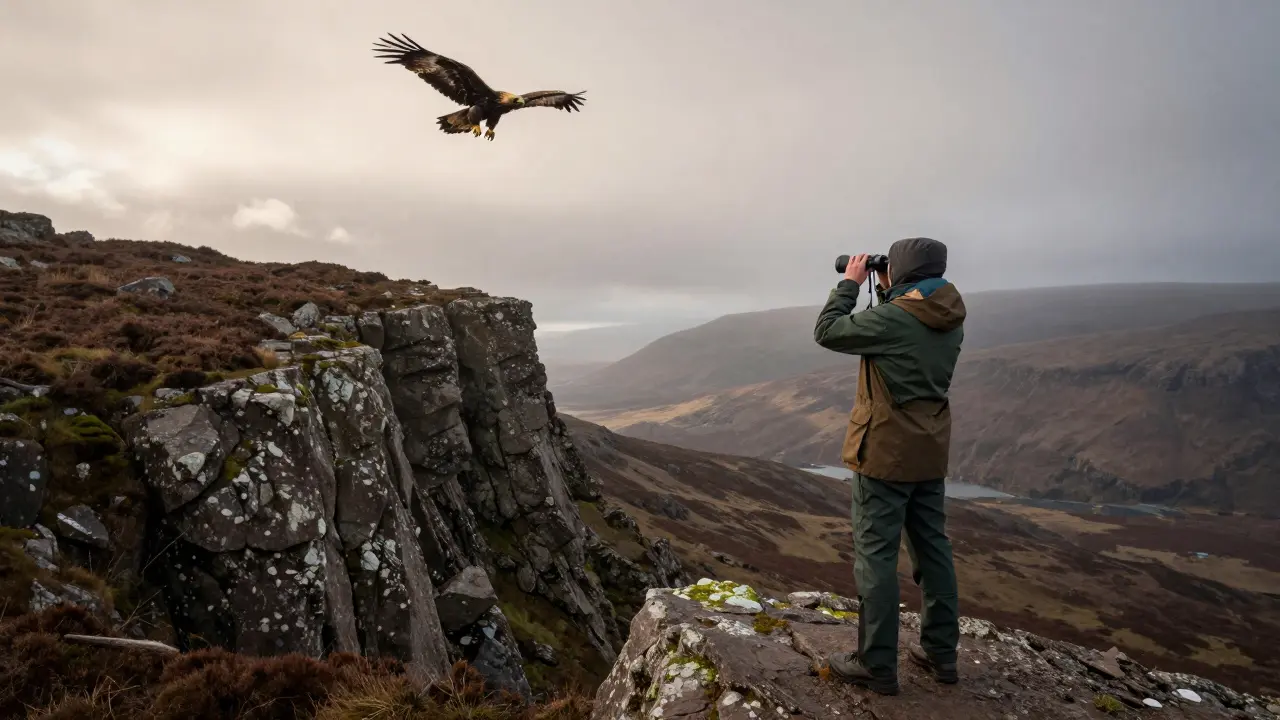
Spying a massive shadow sweep across the Highland cliffs changes everything. You freeze, binoculars raised, hoping that shadow belongs to Scotland’s national bird. Finding these birds isn’t guaranteed; they live wide and watch you closely. But if you know where to look and understand their habits, your odds shift dramatically. This isn’t just about ticking a box on a travel list. It’s about respecting a creature that has ruled the British Isles for millennia. Here is what you actually need to know about tracking these raptors without disturbing them.
Best Locations to Spot Golden Eagles
You won’t find Golden Eagles the largest member of the hawk family in Scotland and northern Europe everywhere. They require steep terrain and prey availability. The Highlands offer the best habitat, specifically remote corners where human activity stays low.
| Location | Probability | Best Access |
|---|---|---|
| Isle of Skye | High | Drive to Sligachan |
| Cairngorms National Park | Medium | Hiking trails |
| Ramsey Head, North Ronaldsay | Very High | Boat access |
| Mara Estate, Aberdeenshire | Medium-High | Guided walks |
The Isle of Skye a popular island off the northwest coast of Scotland known for its dramatic landscapes tops almost every list for a reason. The ridge near Quiraing offers open space where eagles thermals easily. If you head further north to the Orkney Islands, Ramsey Head stands out. Why? Because it’s a dedicated bird observatory location with minimal car traffic nearby. In the Cairngorms, you need to hike away from the main tourist paths. Try the area around Loch Muick. Stay quiet. Movement triggers their alert system, and they vanish behind cloud cover in seconds.
Understanding Golden Eagle Behavior
Knowing where they sleep is useless if you don't know when they hunt. These birds spend most of their day conserving energy. They rely on thermals-rising warm air currents-to gain height without flapping. Early mornings and late afternoons offer the best light for thermals. Watch for the silhouette circling steadily. That steady circle means they are looking down for rabbits or grouse below.
You might hear them, though silence is their usual preference. A golden eagle makes a piercing call, often mistaken for a whistle. Listen for a sharp, whistling scream, especially during nesting season. Males and females have distinct courtship dances involving vertical flights followed by dives. Seeing this ritual means you’ve caught a breeding pair in action. Usually, pairs bond for life. If you spot two birds interacting in the air near a craggy ledge, that’s likely a bonded couple.
They hunt differently than hawks. They swoop down with talons ready, grabbing prey much larger than themselves. A hare is dinner. Sometimes they steal food from other predators like foxes or badgers. This scavenging behavior is common in winter. When visiting, keep this in mind. Don’t bring loud toys or bright colors. You want to blend in. Green and brown clothing helps you become part of the landscape.
Seasonal Timing for Sightings
Time matters just as much as place. While people often think summer is best for hiking, mid-winter can be better for spotting eagles. During January and February, food is scarce. Birds come closer to roads and valleys to find carrion or small mammals exposed by snow. Visibility is also sharper in cold months. However, safety becomes an issue then. Snow can hide dangerous ravines on the edge of viewpoints.
If you prefer milder weather, aim for spring. March through May brings longer daylight hours. This is nesting season. Pairs defend their territory aggressively during this time. You’ll see them patrolling boundaries more often. Just remember: getting close to a nest violates strict laws. Look for activity far from the actual nest site. The eagles will return to feed the chicks but patrol the perimeter first.
Legal Protection and Regulations
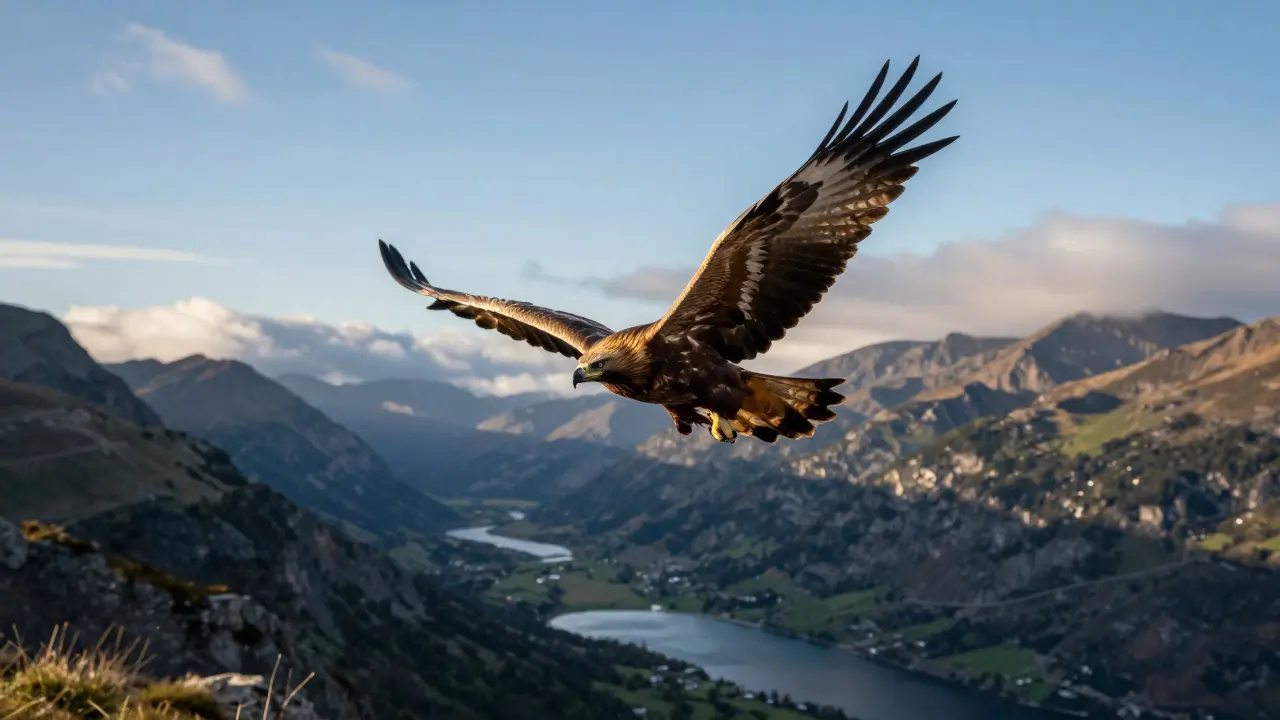
In the United Kingdom, killing or harming these birds carries heavy penalties. The Wildlife and Countryside Act 1981 UK legislation protecting wildlife species and their habitats makes them fully protected species. This covers the egg, the young, and the adult. Damaging the nest counts as a criminal offense. Even accidental damage while climbing can lead to prosecution.
NatureScot the public body responsible for promoting sustainable use and management of natural resources in Scotland oversees enforcement. They monitor illegal shooting and poisoning attempts. Historically, poisoning was a major threat. Sheep farmers sometimes poisoned livestock carcasses to kill pests, inadvertently killing eagles. Today, monitoring teams test dead birds for toxins. Penalties include imprisonment. If you suspect a crime, report it immediately. Your eyes matter here.
Conservation Efforts in Scotland
Recovering populations depend on active work. Landowners work with groups like RSPB Royal Society for the Protection of Birds, a charity focused on bird conservation. They manage land to boost prey numbers. More wild deer and rabbit populations mean less competition for the eagles. Some estates now offer paid guided tours. The money funds predator control (keeping wolf/dog threats away) and research.
Collaboration exists between government bodies and private trusts. Funding comes from EU heritage grants and local tourism revenue. Without income from visitors seeing the birds, some landowners would turn land to agriculture. This creates a direct economic incentive to keep the eagle population healthy. Responsible ecotourism funds the protection itself. By paying for a guided walk, you support the very laws that protect the bird.
Ethical Wildlife Watching
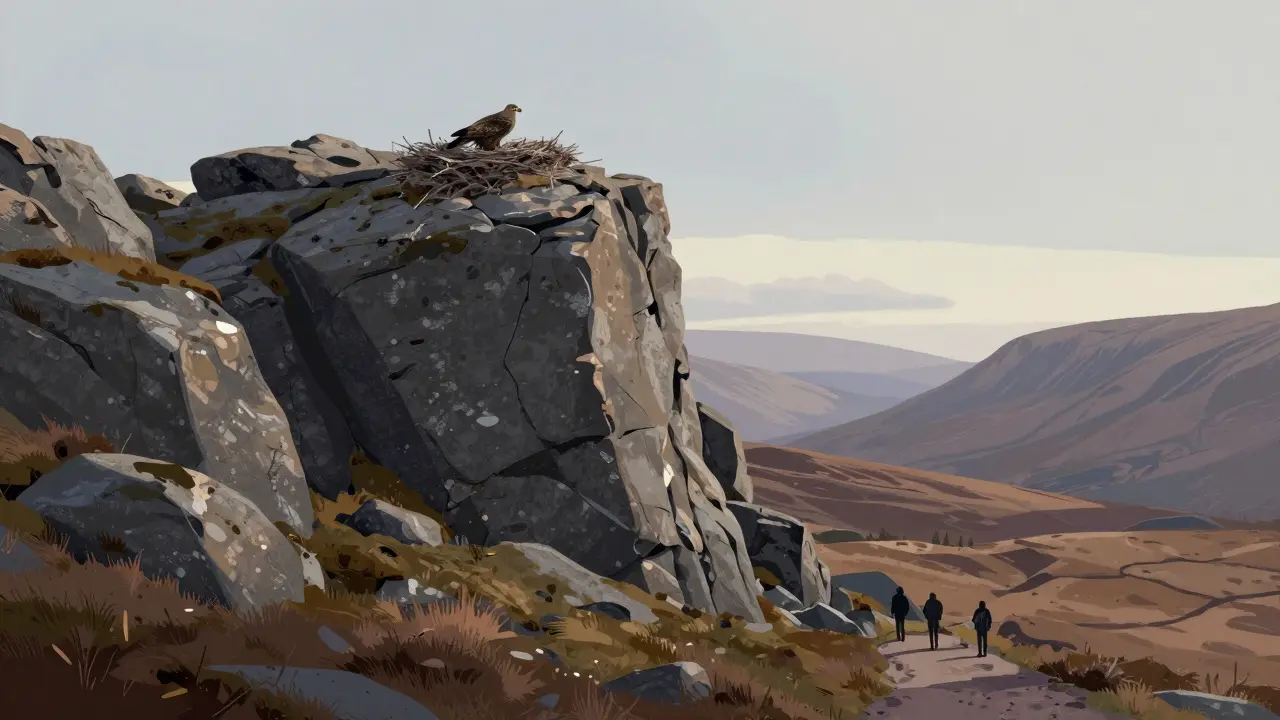
You can observe responsibly. First, distance. Keep at least 200 meters from any spotted eagle. They sense movement easily. Stand still. Second, equipment. Zoom lenses help. Hand-held binoculars allow observation without zooming physically closer. Third, noise. Drones are banned over protected sites in many Highlands zones. Using a drone disturbs the birds significantly. Their stress hormones spike, affecting feeding rates and survival of chicks.
Follow the "look left, pass on" rule. If you see another group, join them quietly rather than creating a new disturbance. Do not try to bait birds. Carrying raw meat to attract them ruins their natural hunting instincts. It also encourages dangerous interactions near cars or houses later. Respect is the best way to see them again next year.
Essential Gear for Tracking
A standard kit works best. Carry a sturdy pair of Binoculars optical instrument used for magnifying distant objects. An 8x42 specification is ideal for dim mountain light. Water resistance helps in damp Scottish weather. A spotting scope on a tripod offers higher magnification for stationary hides. Comfortable boots with ankle support prevent slips on wet rock.
Bring a notebook. Log times, locations, and weather conditions. Patterns emerge over visits. Maybe eagles arrive after a certain wind direction. Or perhaps they avoid the valley until noon. Personal logs build better knowledge than generic guidebooks. Share your observations on citizen science apps. Data helps researchers track range shifts due to climate change.
Are golden eagles easy to see in Scotland?
They are elusive. You need patience and the right location. Remote Highlands increase your chances significantly compared to lowland areas. Early morning patrols usually yield the best results.
What is the penalty for harming a golden eagle?
Violating the Wildlife and Countryside Act 1981 leads to severe fines or prison sentences. Prosecutions happen regularly for illegal killing or possession of parts.
Can I feed golden eagles while watching?
No. Baiting them is illegal and harmful. It disrupts natural hunting behaviors and can make them dependent on humans, leading to aggression or injury.
Where is the best place to take photos?
Open ridges like those on the Isle of Skye provide backgrounds without trees. Avoid crowded spots where birds get startled quickly.
Do golden eagles migrate within Scotland?
They are resident birds. They stay in their territory year-round but may move slightly down into lower valleys during harsh snow winters for food.
Next Steps for Birders
If you plan a trip, start booking transport weeks ahead. The Highlands get busy in summer. Contact local ranger services for daily updates. Conditions change fast. Fog can ruin a week of waiting. Join a conservation volunteer day to meet experts directly. Learning the landscape from insiders beats reading maps alone.
Remember, you are a guest in their domain. The goal is to leave no trace and disturb no behavior. If you follow these steps, the memory of that shadow crossing the sky will last long after the trip ends. The mountains will remain yours to explore, and the eagles will remain yours to admire.
Comments (12)
-
Steven Hanton April 2, 2026
The Highlands require significant preparation regarding terrain access and visibility conditions. Remote areas like the Quiraing offer necessary open space for thermal updrafts where these raptors hunt effectively. Visitors should prioritize early morning hours when light facilitates spotting without causing disturbance. Access roads in Aberdeenshire remain muddy during wet seasons, making guided walks essential for safety reasons.

-
Pamela Tanner April 4, 2026
Your assessment of the Cairngorms section is accurate regarding the necessity of hiking trails away from main paths. It is crucial to note that Loch Muick provides a specific buffer zone for nesting pairs during spring migration. Disturbance at this particular location can impact breeding success rates significantly. Proper adherence to the twenty-meter rule ensures compliance with local conservation guidelines.

-
ravi kumar April 5, 2026
Thank you for highlighting the specific risks associated with snow-covered ravines in winter months. Patience remains the most valuable tool for anyone attempting to view wildlife respectfully. Your guidance helps new visitors understand the importance of staying quiet and still.

-
Albert Navat April 7, 2026
An 8x42 binocular specification offers optimal exit pupil diameter for low-light mountain environments typically found in the Scottish Highlands. Spotting scopes utilizing phase-correction prisms reduce chromatic aberration when tracking flight patterns at extended distances. Tripod stability becomes critical when utilizing high magnification optical systems beyond thirty-two power zoom capabilities. Fog conditions degrade lens performance unless treated with hydrophobic coatings designed for damp atmospheres.

-
Tyler Durden April 7, 2026
Glad to see someone talking about actual lens specs! It really makes a difference if you want to get the shot without getting too close. Sometimes the glass quality matters more than the brand name honestly. Just remember to bring gloves for the cold mornings up there!!

-
King Medoo April 7, 2026
We must consider the ethical implications deeply before we proceed further 🦅. Many people overlook the suffering that occurs during tourism expansion 🚫. It is tragic how often we prioritize our photos over their survival 💔. The law states clearly that disturbance is unacceptable under any circumstances ⚖️. You cannot claim ignorance when the signs are posted visibly everywhere 👀. Every step you take near a nest is a violation of sacred nature laws 🌿. I have seen too many young eagles fail because of human curiosity alone 😢. This industry profits from the pain of wild creatures without remorse 💸. We need stricter enforcement agencies to monitor these tourist groups properly 👮♂️. Current fines are too low to deter those who seek thrill over safety ⛔. True conservation requires active participation rather than passive observation 🤝. Do not pretend you are just watching when your presence changes behavior 📉. The silence of the mountains is being stolen by our noisy equipment constantly 🔇. We owe these magnificent birds our respect and distance above all else 🏔️. Think about the consequences before you pack your bag for the trip again 🎒.

-
Rae Blackburn April 9, 2026
They are watching us closer than we ever think

-
LeVar Trotter April 10, 2026
Collaborative monitoring efforts between private estates and NatureScot demonstrate effective population management strategies. Economic incentives derived from ecotourism revenue stream directly into habitat preservation budgets. This symbiotic relationship ensures long-term viability for both landowners and raptor populations alike. Citizen science apps aggregate observational data to identify range shifts caused by climate change factors.

-
Pamela Watson April 11, 2026
I read somewhere that drones are banned but people still use them anyway 😐 You have to be careful not to tell people too much about hidden spots. They will find it and ruin the place for everyone else soon enough.

-
Aafreen Khan April 12, 2026
im going skye next month and i hope i see one 🙏. the weather there is crazy but the views are worth it 😍. dont trust anyone selling tours on random websites tho. always check reviews first please 🥺. its sad that people hurt animals for money 💰.

-
michael T April 14, 2026
Silence descends like velvet upon the heather when the shadow passes overhead. That visceral moment captures the ancient soul of the Highlands in a single breath. Shadows carve the stone while talons slice through air currents unperceived by most eyes. Such beauty demands reverence far beyond mere photographic documentation.

-
Steven Hanton April 15, 2026
While secrecy regarding specific nesting sites protects vulnerable species, sharing general viewing corridors promotes broader educational awareness. Responsible dissemination of information supports conservation funding through regulated visitation numbers. Public understanding fosters political support for continued legal protections enacted under the Wildlife Act.