
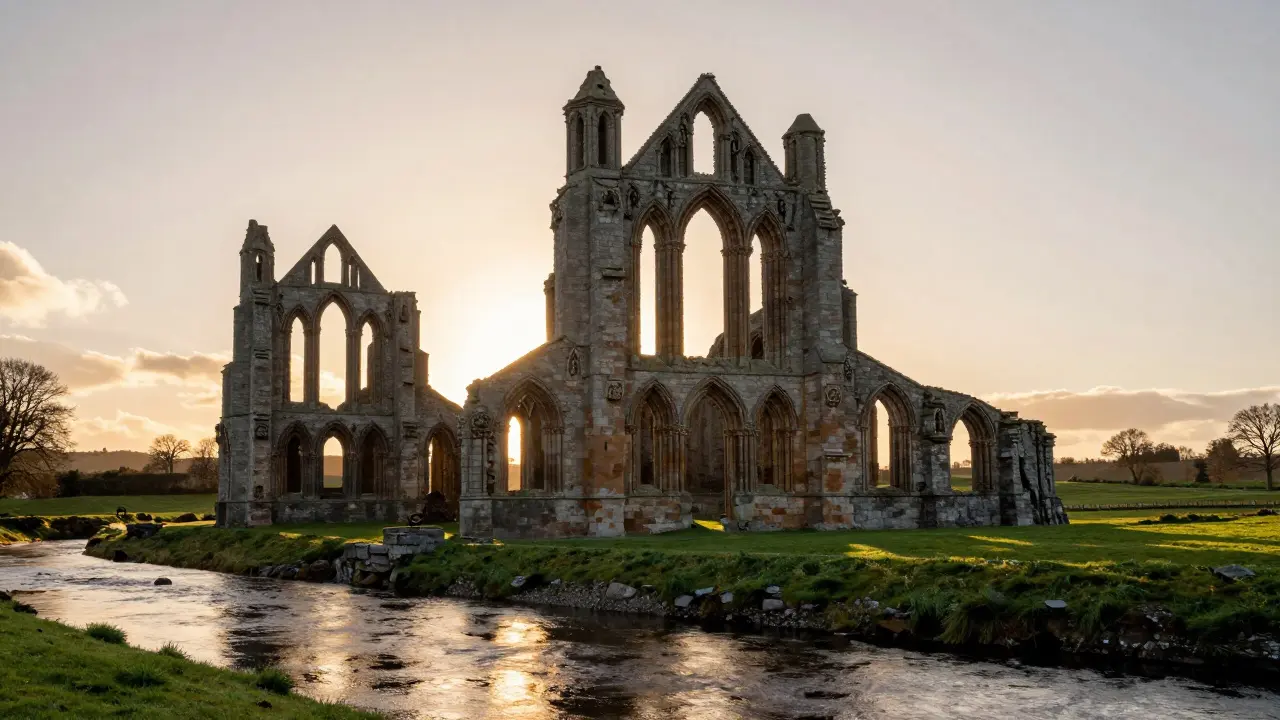
There is a specific kind of silence you find in the Scottish Borders. It isn’t empty; it’s heavy with history. If you drive south from Edinburgh, past the rolling green hills and into the Tweed Valley, you enter a landscape that feels older than the roads themselves. This is the home of the Borders Abbeys Trail, a scenic route connecting three of Scotland’s most significant medieval ruins: Melrose, Dryburgh, and Jedburgh.
You don’t need to be a historian to feel the pull of these places. You just need to want to understand why people have been drawn to this valley for nearly a thousand years. Whether you are looking for a peaceful day trip, a photography project, or a deep dive into Cistercian architecture, this trail delivers. Here is how to navigate it without missing the details that make it special.
The Route: More Than Just Ruins
The trail follows the River Tweed, which acts as the spine of the journey. Most travelers start in Melrose, move west to Dryburgh, and then head north to Jedburgh. This order makes sense geographically and historically. The A68 road connects them all, but the real magic happens when you step off the pavement and onto the grassy banks of the river.
This isn’t a hike through dense forest. It’s an open-air museum set against a backdrop of purple heather (in summer) or stark grey stone (in winter). The light here changes quickly. One minute you’re squinting at bright sun reflecting off the water, the next you’re wrapped in mist that clings to the abbey walls. Bring layers. Always bring layers.
Melrose Abbey: The Jewel of the Border
Melrose Abbey is the largest and most famous of the three abbeys. Founded in 1136 by King David I, it was the first Cistercian monastery in Scotland. When you walk up to it, the scale hits you immediately. Even in ruin, the Gothic arches soar high above the ground, framing the sky in dramatic ways.
What sets Melrose apart is its location. It sits right on the edge of the town, close to the river. You can walk along the Tweed and see the abbey from the water level, which gives you a completely different perspective on its height. Inside, look for the intricate carvings on the pillars. Some depict biblical scenes, while others show more secular life-hunters, animals, and even playful devils. These details suggest that the monks who built this place had a sense of humor and a connection to the world outside their walls.
Don’t rush through the nave. Take a moment to sit on one of the low stone benches. Listen to the wind moving through the broken roof. It’s a reminder that nature is slowly reclaiming this space, and there’s a strange beauty in that decay.
Dryburgh Abbey: The Romantic View
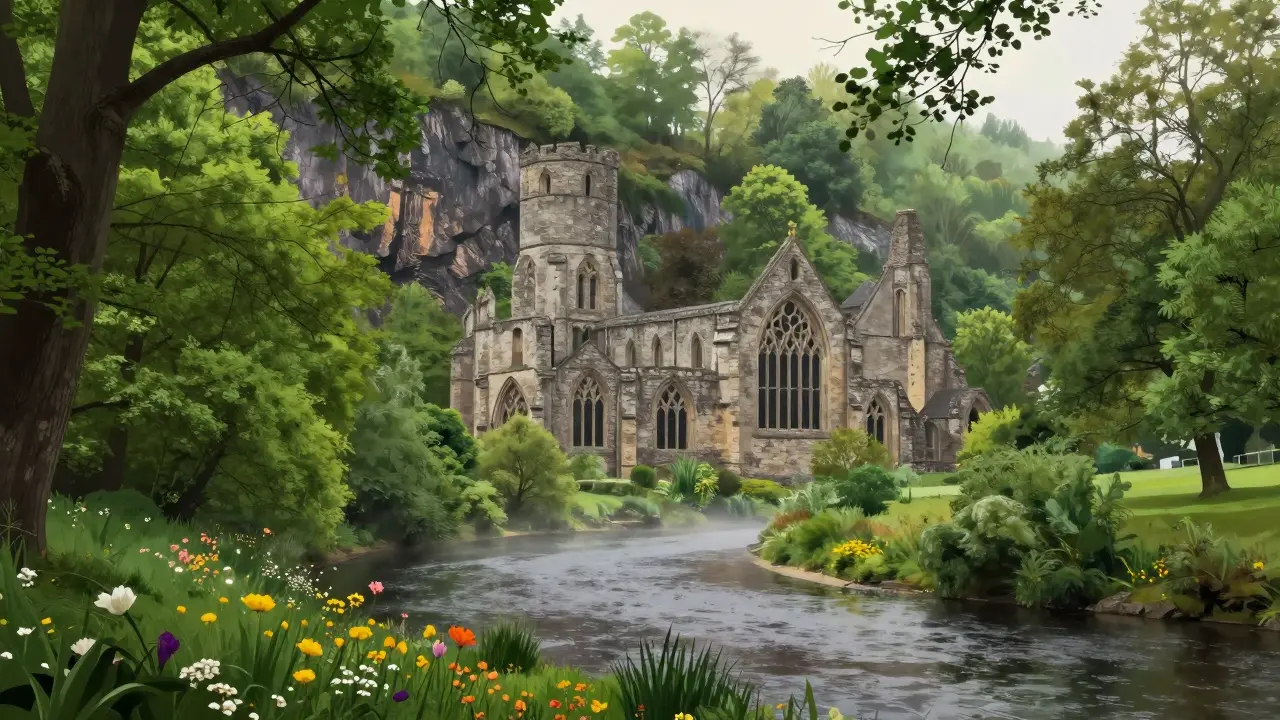
If Melrose is about grandeur, Dryburgh Abbey is about atmosphere. Located about four miles west of Melrose, it sits on a bend in the Tweed, surrounded by steep cliffs and lush woodland. It looks like something out of a fantasy novel. In fact, it inspired many poets, including Sir Walter Scott, who wrote extensively about the Borders.
Founded in 1150, Dryburgh was smaller than Melrose but no less important. Its layout is more compact, which makes it easier to explore. The choir and transepts are remarkably well-preserved. You can still see the outlines of the original windows and the detailed stonework that once held stained glass.
The best part of Dryburgh is the view. Walk around to the back of the abbey, towards the river. There’s a small path that leads down to the water’s edge. From here, you can look up at the ruins framed by trees. It’s one of the most photographed spots in the Borders for good reason. The contrast between the grey stone and the green foliage is striking. If you’re visiting in spring, the wildflowers add splashes of color that soften the harshness of the stone.
Jedburgh Abbey: The Northern Gateway
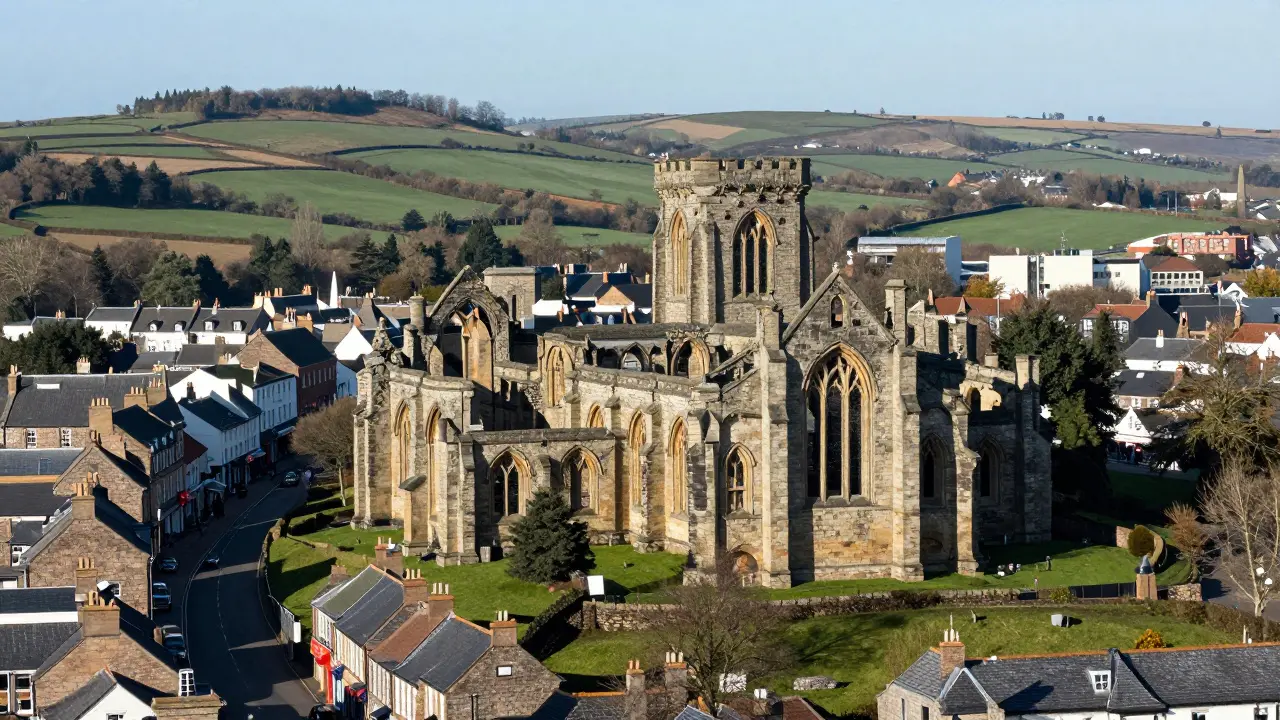
Jedburgh Abbey is the northernmost of the three abbeys, located near the town of Jedburgh. Founded in 1138, it was also a Cistercian house, but its story is slightly different. Unlike Melrose and Dryburgh, which were largely abandoned after the Reformation, Jedburgh continued to serve as a parish church for centuries. This means parts of the building are more intact, though they’ve been altered over time.
Jedburgh is often overlooked by tourists who stop at Melrose and Dryburgh. That’s a mistake. The abbey sits on a hill, offering panoramic views of the surrounding countryside. The town itself is charming, with narrow streets and historic buildings. It feels quieter, more local. You’ll see fewer tour buses and more residents going about their day.
Inside the abbey, notice the mix of architectural styles. Because it was used for so long, you can see elements from different periods-from the original Romanesque arches to later Gothic additions. It’s a living timeline of Scottish religious history. The nearby Jedburgh Castle adds another layer of interest, reminding you that this area was always a borderland, contested and strategic.
Practical Tips for Your Visit
Planning your trip doesn’t have to be complicated, but a few details will make a big difference.
- Timing: Visit early in the morning or late in the afternoon. Midday brings crowds and harsh sunlight. Early light casts long shadows that highlight the texture of the stone.
- Clothing: Wear sturdy shoes. The grounds are uneven, with grass, mud, and loose stones. A waterproof jacket is essential, regardless of the season.
- Food: Each town has cafes and pubs. Melrose is known for its fudge (yes, really), while Jedburgh offers hearty Scottish meals. Don’t rely on picnic supplies alone; support local businesses.
- Parking: All three sites have parking areas, but they fill up quickly on weekends. Arrive before 10 AM if possible.
- Guides: Audio guides are available at each site. They’re worth the extra cost if you want context beyond what’s on the plaques.
Why This Trail Matters
The Borders Abbeys Trail isn’t just about seeing old buildings. It’s about understanding the cultural and religious landscape of medieval Scotland. These abbeys were centers of learning, trade, and spirituality. They shaped the region’s identity and continue to influence it today.
Walking this trail, you’re tracing the footsteps of kings, monks, and ordinary people who lived in this valley. You’re seeing how faith and architecture intersected to create spaces of beauty and reflection. And you’re experiencing the natural beauty of the Scottish Borders, which enhances every step of the journey.
| Abbey | Founded | Key Feature | Best For |
|---|---|---|---|
| Melrose | 1136 | Largest ruins, Gothic arches | First-time visitors, photography |
| Dryburgh | 1150 | River views, romantic setting | Nature lovers, quiet reflection |
| Jedburgh | 1138 | Hilltop location, mixed architecture | History buffs, avoiding crowds |
How long does it take to visit all three abbeys?
You can comfortably visit all three abbeys in one day. Allow about 45-60 minutes at each site, plus travel time between them. The drive from Melrose to Dryburgh is about 10 minutes, and from Dryburgh to Jedburgh is about 20 minutes. If you want to explore the towns and enjoy meals, plan for a full day.
Are the abbeys free to enter?
No, there is an entry fee for each abbey. However, you can buy a combined ticket for all three, which saves money. Check the official Historic Environment Scotland website for current prices and any discounts for families or students.
Is the trail suitable for children?
Yes, but supervise young children closely. The ruins have uneven ground and some steep drops. Bring snacks and water, and consider bringing a map or guidebook to keep them engaged. The open spaces allow for running around safely away from the fragile structures.
What is the best time of year to visit?
Spring (April-May) and autumn (September-October) offer mild weather and beautiful colors. Summer is busy but has long daylight hours. Winter is quiet and atmospheric, but days are short and paths can be icy. Avoid peak holiday weeks if you prefer solitude.
Can I visit the abbeys without a car?
It’s challenging but possible. Bus services connect Edinburgh to Melrose and Jedburgh, but frequencies are limited. Once in the area, taxis are available but expensive. Cycling is a great option if you’re fit; the routes are mostly flat along the river.
Comments (15)
-
Tom Mikota May 27, 2026
Oh, look at you, trying to be poetic about rocks and dirt.
The silence isn't heavy with history, it's heavy because you forgot your earplugs for the wind noise.

-
Mark Tipton May 27, 2026
While the aesthetic appeal of these Cistercian ruins is undeniable to the layperson, one must consider the geopolitical ramifications of their construction during the reign of David I. The establishment of Melrose in 1136 was not merely an act of piety but a strategic consolidation of power along the volatile Anglo-Scottish border. Furthermore, the preservation efforts by Historic Environment Scotland are often criticized by independent archaeologists as being insufficiently rigorous regarding the structural integrity of the remaining Gothic arches. One might wonder if the 'romantic' view of Dryburgh is actually a curated narrative designed to boost tourism revenue rather than preserve historical accuracy. It is imperative that visitors approach these sites with a critical eye, recognizing that the 'magic' described is largely a product of modern marketing strategies aimed at capturing the imagination of the casual traveler. The river Tweed itself has undergone significant environmental changes due to agricultural runoff, which may subtly alter the visual experience over time. Therefore, while the guide provides a useful overview, it lacks the depth required for a truly scholarly understanding of the region's complex socio-political landscape.

-
Adithya M May 28, 2026
You guys need to stop complaining about the weather and just go! The fudge in Melrose is literally life-changing, don't let the haters stop you from eating sugar!

-
Jessica McGirt May 28, 2026
I completely agree with the emphasis on bringing layers; the Scottish climate is notoriously unpredictable. Additionally, I would recommend checking the tide tables if you plan to walk along the lower banks of the Tweed, as high water can restrict access to certain viewing points near Dryburgh. It is also worth noting that the audio guides provide excellent context regarding the daily lives of the monks, which adds a profound human element to the architectural grandeur. Supporting local businesses is crucial, so please do patronize the cafes in Jedburgh rather than relying solely on packed lunches. This ensures that the economic benefits of tourism reach the communities that maintain these historic sites.

-
Donald Sullivan May 30, 2026
Stop wasting time reading this blog post and just drive there! If you can't handle a little rain, stay home and watch Netflix like everyone else who's too scared to get wet!

-
Tina van Schelt May 31, 2026
The way the mist clings to the abbey walls is absolutely ethereal, like a ghost story waiting to happen. I visited last autumn and the purple heather was exploding everywhere, making the grey stone look even more dramatic. It feels like stepping into a painting where the colors are slightly muted but the emotions are turned up to eleven. You really have to breathe it all in because it’s fleeting magic.

-
Ronak Khandelwal June 2, 2026
This trail is a spiritual journey in itself! 🙏✨ Walking among the ruins connects us to the ancestors who sought peace in these valleys. Don’t forget to take moments for mindfulness under the ancient arches. The energy there is palpable and healing. 🌿📸

-
Jeff Napier June 2, 2026
ruins are just broken buildings people pretend to care about
the real history is hidden underground where they dont want you to look
trust the stones not the tour guides

-
Sibusiso Ernest Masilela June 2, 2026
I suppose the masses will flock to these pedestrian attractions without a second thought. How quaint. To think that one could appreciate the sublime beauty of Gothic architecture without understanding the intricate theological debates that shaped its form is laughable. Most visitors are merely collecting Instagram photos, oblivious to the profound cultural decay represented by these crumbling facades. If you cannot discern the subtle differences between Romanesque and Gothic stonework, perhaps you should stick to theme parks. The pretension of calling it a 'trail' is almost amusing, as if walking down a road requires special designation. True appreciation requires education, not just a waterproof jacket and a sense of adventure.

-
Daniel Kennedy June 3, 2026
Listen up, folks! If you're going to visit, do it right or don't bother! Park early, wear boots that actually grip, and don't be that guy standing in front of the camera blocking everyone else's view! Support the locals by buying their expensive coffee instead of drinking gas station swill! Get out there and respect the history or go home!

-
Taylor Hayes June 4, 2026
I totally get why some people might find the weather daunting, but there’s something really comforting about the quietness of those places. It’s easy to feel overwhelmed by the scale of it all, so taking your time is key. Maybe grab a hot drink in Jedburgh afterwards to warm up? It’s nice to have a cozy spot to decompress after seeing all those big old stones. Everyone travels differently, so just do what feels right for you.

-
Mike Zhong June 6, 2026
The concept of 'silence' in a tourist trap is an oxymoron. You pay money to stand in line to look at rocks that other people paid money to build five hundred years ago. It’s a cycle of consumption disguised as spirituality. Wake up.

-
Jamie Roman June 7, 2026
I remember driving through that area a few years back and getting caught in one of those sudden mists mentioned in the guide, which was honestly kind of terrifying but also incredibly beautiful, especially when the sun came out again and hit the water just right, creating this shimmering effect that made the whole valley look like it was glowing from within, and I spent hours just wandering around Melrose Abbey looking at those carvings of devils and hunters, wondering what the monks were thinking when they chiseled them, and whether they felt any guilt about hiding such playful imagery in a place dedicated to prayer, which leads me to believe that maybe we shouldn't take ourselves so seriously either, because even in the most solemn of settings, humanity finds a way to inject humor and personality into the stone, and that’s something worth appreciating beyond just the architectural significance or the historical dates.

-
Salomi Cummingham June 8, 2026
Oh my goodness, the description of Dryburgh Abbey gave me chills! I went there last spring and the wildflowers were absolutely bursting with color against the grey stone, it was like a dream come true, and I sat by the river for ages just listening to the water flow, feeling completely disconnected from the chaos of modern life, and I wish more people would understand that this isn't just a sightseeing trip, it's a pilgrimage to your own soul, really, because standing in those ruins makes you realize how small you are in the grand scheme of things, and yet how connected you are to everyone who stood there before you, seeking peace in the same way, and it’s a powerful, emotional experience that words can barely capture, so please, please go and let it change you.

-
Johnathan Rhyne June 9, 2026
Actually, it's "Cistercian" not "Sistercian," though I doubt anyone here noticed. Also, the claim that Jedburgh is 'overlooked' is debatable given its prominence in local heritage tours. But hey, if you want to call it a mistake not to visit, fine. Just don't expect me to validate your travel itinerary. The grammar in the original post was surprisingly decent, which is a rare treat. Keep up the good work, but maybe fact-check the 'quiet' aspect of Jedburgh next time.
