
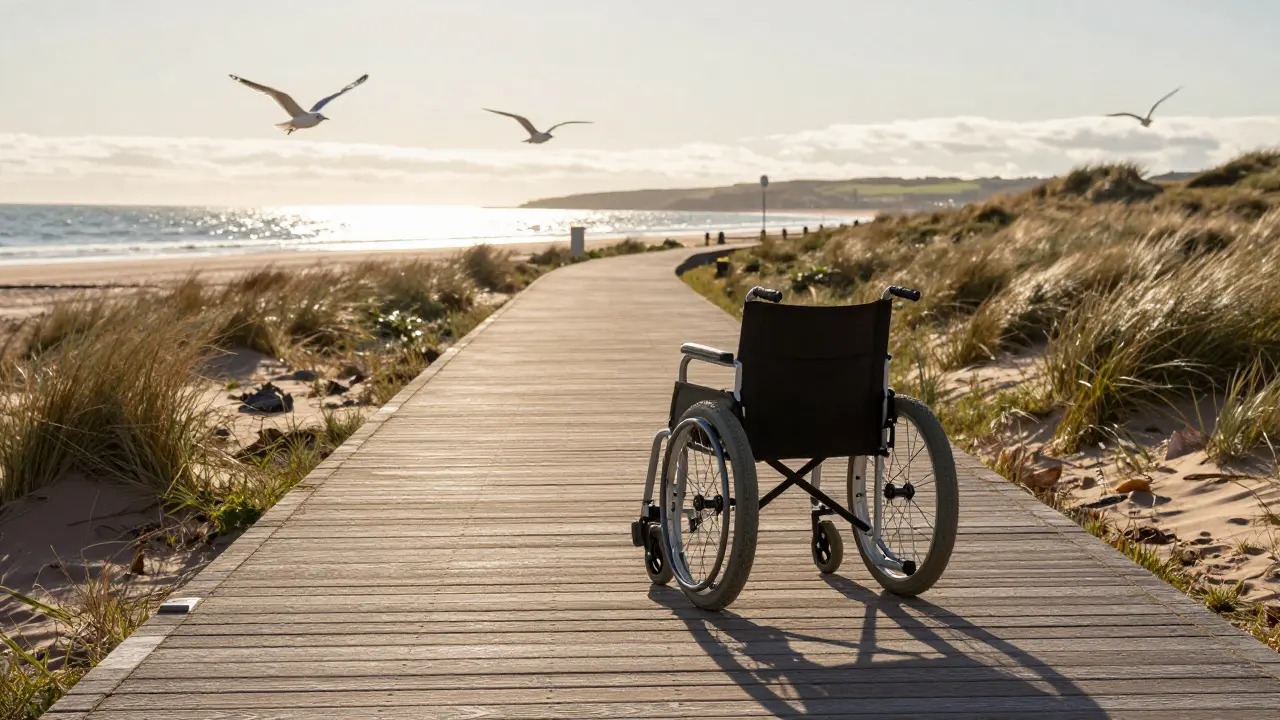
Scotland’s coastline is wild, beautiful, and full of hidden gems-but for years, many of its best beaches felt out of reach for people with mobility challenges. That’s changing. Today, more than 30 beaches across Scotland have proper access: smooth boardwalks, free beach wheelchairs, ramps, and trained staff ready to help. You don’t need to choose between safety and sea air anymore. Whether you use a wheelchair, walker, or just need stable ground to enjoy the tide, Scotland’s accessible beaches are open for you.
What Makes a Beach Truly Accessible?
It’s not just about a parking spot labeled "accessible." Real accessibility means you can roll, walk, or be carried from your car to the water’s edge without climbing sand dunes or stepping over rocks. The best spots now have:
- Smooth, non-slip boardwalks made from recycled plastic or treated wood
- Free, sturdy beach wheelchairs with wide tires for sand
- Accessible toilets and changing rooms with hoists
- Clear signage and maps showing routes and distances
- Staff or volunteers trained to assist with equipment
Some places still fall short-like beaches with steep, loose sand or no shelter from wind. But the ones listed here? They’ve been tested by local accessibility groups, including the Scottish Disability Sport team and the Marine Conservation Society. These aren’t just checkboxes. They’re real improvements.
Top Accessible Beaches in Scotland
Here are five beaches where accessibility isn’t an afterthought-it’s built in.
1. Balmedie Beach, Aberdeenshire
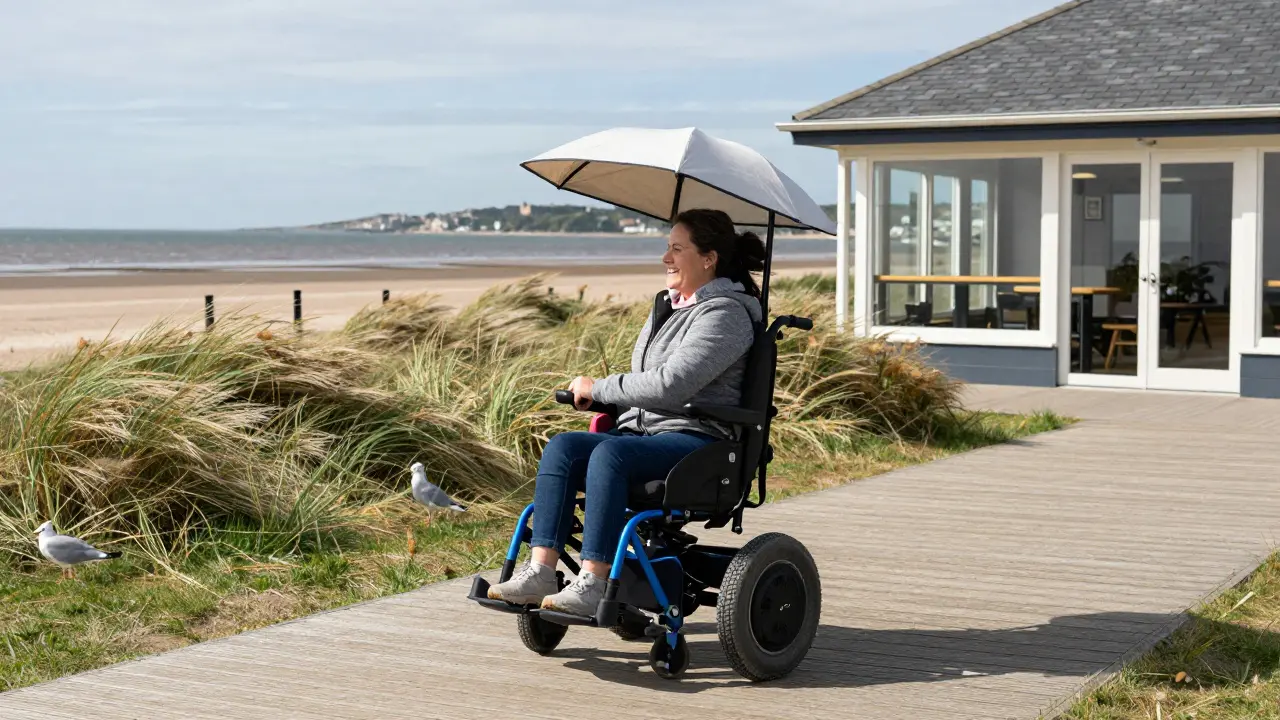
Just off the A90, Balmedie has a 1.2-kilometer boardwalk that runs from the main car park straight to the shoreline. The path is wide, gently sloped, and made from recycled plastic composite. Beach wheelchairs are available for free at the nearby visitor center, no deposit needed. They’re heavy-duty, with balloon tires that won’t sink, and come with a sunshade and cup holder. Staff help you load them into your car if you’re driving in. The beach itself is flat and wide, perfect for watching waves without struggling to move.
2. Gullane Beach, East Lothian
Known for its golden sands and views of the Firth of Forth, Gullane has a paved access ramp from the car park to the beach, followed by a wooden boardwalk. The beach wheelchairs here are electric-assist models-ideal for longer distances or windy days. You can book one in advance by calling the local council. Changing rooms have adjustable hoists and space for carers. There’s also a café with wide doors and low counters, so you can grab coffee without having to ask someone to reach your cup.
3. Portobello Beach, Edinburgh
Portobello is one of the most popular urban beaches in Scotland. The promenade is fully paved, with ramps every 200 meters leading down to the sand. Beach wheelchairs are stored in a locked cabinet near the bandstand; you get a key from the lifeguard station. The sand here is compacted by tides, so even standard wheelchairs can manage short trips. There’s a dedicated accessible changing room with a ceiling hoist and a heated floor-rare in the UK. On weekends, volunteers from the Edinburgh Accessible Beach Group help push wheelchairs and set up shade canopies.
4. Largs Beach, North Ayrshire
Largs has a unique feature: a floating boardwalk that extends 80 meters into the water. It’s anchored to the seabed and moves slightly with the tide, so you can roll right up to the waterline without getting wet. The boardwalk is wide enough for two wheelchairs side by side. Beach wheelchairs are available from the Largs Leisure Centre, open 9am-5pm daily. The staff here are trained in manual handling and can help you transfer from your chair to the beach model. There’s also a sensory trail nearby with textured paths and sound markers for people with visual impairments.
5. Tiree Beach (Hilton), Inner Hebrides
Don’t skip the islands. Tiree’s Hilton Beach is a surprise gem. The boardwalk here is made from reclaimed timber and runs from the car park past dunes to the shore. It’s not long-just 300 meters-but it’s the only one on the island. Beach wheelchairs are kept at the community center, and you can borrow them for free with a photo ID. The sand is fine and firm, thanks to the tidal patterns. The wind can be strong, so bring a windbreak. Locals will often stop to help if you need it-this is a tight-knit community.
How to Borrow a Beach Wheelchair
Beach wheelchairs aren’t like regular wheelchairs. They’re built for sand, not pavement. Most are electric or have oversized tires, and they’re free to borrow-but you need to know how to get them.
- Call ahead: Many locations require you to book in advance, especially in summer. Don’t assume they’re always available.
- Bring ID: Most places ask for a photo ID or proof of address. Some leave a deposit, but many don’t.
- Check hours: Beach wheelchairs are often stored in visitor centers or leisure centers, which may close early or on Sundays.
- Ask about assistance: Some staff will help you transfer from your chair to the beach model. Others won’t. It’s worth asking.
- Return it clean: These chairs get sandy. Rinse them off if you can, or just let staff know you used it.
There’s no national booking system yet, but Accessible Beaches Scotland (a nonprofit run by local volunteers) maintains an updated list on their website. You can also call the Scottish Government’s Accessible Tourism Helpline at 0800 121 6789-they’ll connect you to the nearest beach with equipment.
What to Bring
Even at the best-accessed beaches, preparation matters.
- Windproof jacket: Coastal winds in Scotland are no joke. Even on sunny days, the breeze can chill you fast.
- Waterproof blanket: For sitting on the sand or transferring from your chair.
- Extra batteries: If you’re using an electric beach wheelchair, bring a spare.
- Sunscreen and hat: UV levels can be high even on cloudy days, especially near water.
- Small towel or wipe: To clean sand off your wheels or hands.
- Snacks and water: Many beaches don’t have shops nearby.
Some people bring their own beach wheelchairs. That’s fine-but check if the beach allows it. Some boardwalks are narrow, and not all models fit.
Seasonal Tips
Scotland’s weather changes fast. Here’s what to expect by season:
- Spring (March-May): Fewer crowds, but boardwalks can be wet or icy. Check for maintenance notices.
- Summer (June-August): Best weather, but beach wheelchairs are in high demand. Book at least 48 hours ahead.
- Autumn (September-November): Fewer visitors, but winds pick up. Avoid high tide if you’re near water’s edge.
- Winter (December-February): Most beach wheelchair services are closed. Some boardwalks remain open, but check local council websites first.
Always check the tide times before heading out. High tide can flood boardwalks at low-lying beaches like Largs and Portobello. Apps like Scottish Tides or Windy give accurate local forecasts.
Why This Matters
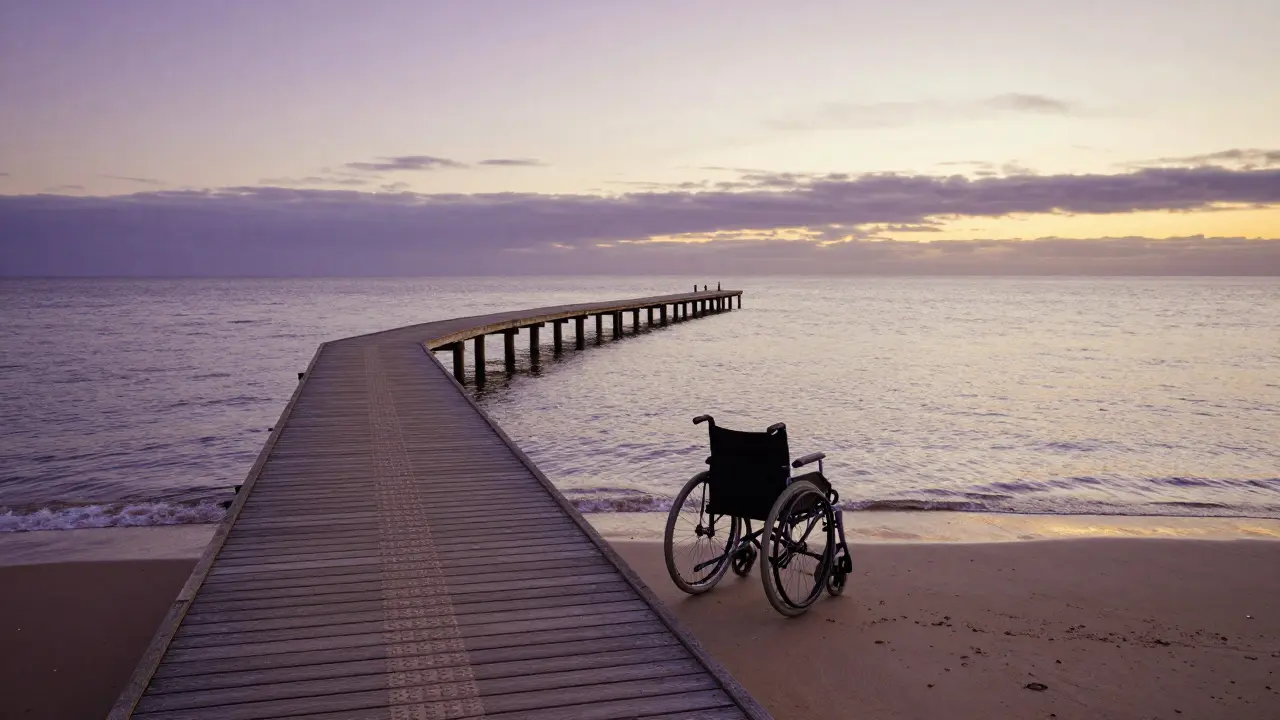
Beaches aren’t just for swimming. They’re places to feel the wind, hear the gulls, watch the sun set, and just be outside. For too long, people with disabilities were told, "It’s too hard," or "It’s not safe." But Scotland’s accessible beaches prove that with planning, investment, and community effort, nature doesn’t have to be out of reach.
These aren’t just facilities. They’re statements. They say: everyone belongs here. Whether you’re in a wheelchair, using crutches, recovering from surgery, or pushing a stroller, the sea is yours to enjoy.
Frequently Asked Questions
Are beach wheelchairs really free in Scotland?
Yes, at all the major accessible beaches listed here, beach wheelchairs are free to borrow. No deposit is required at most locations, though some may ask for a photo ID or proof of address. These are funded by local councils and charities like the Scottish Association for Marine Science and the Royal National Lifeboat Institution (RNLI).
Can I bring my own wheelchair to the beach?
You can, but standard wheelchairs won’t work on sand. Most accessible beaches have boardwalks that are wide enough for mobility scooters and manual wheelchairs, but the sand itself is too soft. If you want to get close to the water, you’ll still need a beach wheelchair. Some people bring both-a regular chair for the boardwalk and a beach chair for the sand. Many beaches let you store your own chair while you use theirs.
Are there accessible toilets at these beaches?
Yes, all five beaches mentioned have accessible toilets with hoists, wide doors, and emergency alarms. Some, like Portobello and Gullane, also have changing places with ceiling hoists and adult-sized changing benches. These are marked with the National Key Scheme (RADAR) lock symbol. If you need one, ask at the visitor center or lifeguard station.
Is it safe to go alone to these beaches?
Most are safe for solo visitors, especially during daylight hours. Boardwalks are well-lit, and staff are often nearby. But Scotland’s weather can change quickly. Always check the forecast, let someone know where you’re going, and avoid going out during high winds or storms. Some beaches, like Tiree, are remote-bring extra supplies. If you’re unsure, call ahead. Staff are happy to advise.
Do any beaches offer guided access or support services?
Yes. Portobello and Gullane have volunteer programs where trained guides help visitors with mobility needs explore the shore. They can push wheelchairs, point out wildlife, or just keep you company. These services are free and available on weekends and holidays. You can book through the local council’s tourism office. There’s also a national program called "Sea Access Scotland" that offers guided coastal walks for people with disabilities-check their website for upcoming dates.
Next Steps
If you’re planning a trip, start by picking one beach from the list above. Call ahead to confirm wheelchair availability and opening hours. Download the Scottish Tides app. Pack your windproof jacket. And when you get there-take your time. Sit on the boardwalk. Listen to the waves. Let the salt air fill your lungs. This is what Scotland’s coast was meant for: not just to see, but to feel.
Comments (10)
-
Amanda Harkins January 5, 2026
It’s funny how something as simple as a boardwalk can feel revolutionary. I’ve spent years watching the ocean from afar, thinking it wasn’t for me. Turns out, it was never about the sea-it was about the path to get there. Scotland got it right.

-
Jeanie Watson January 6, 2026
Okay but why is this even a thing? Like, isn’t this just basic human decency?

-
Tom Mikota January 8, 2026
Whoa-hold up. You said "free beach wheelchairs"-no deposit? No ID? That’s not how anything works in the U.S. Are we sure this isn’t a government deep-state beach propaganda campaign? Also, "recycled plastic composite"? That’s not even a real term. Should be "recycled HDPE". And you missed a comma after "tide" in paragraph three. Fix it.

-
Mark Tipton January 9, 2026
Let’s be real here. This isn’t accessibility-it’s performative inclusion. The real issue is systemic underfunding of public infrastructure, and now we’re celebrating a few boardwalks like they’re miracles. Meanwhile, 78% of rural Scottish towns still don’t have curb cuts. This is a PR stunt disguised as progress. And don’t get me started on the "sensory trail" at Largs-that’s just sensory overload with extra steps. The RNLI funds these? They’re a lifeboat service, not a disability advocacy org. Someone’s got a grant to burn, and they picked the most photogenic solution. I’m not saying don’t do it-I’m saying do more. Do better. This is a Band-Aid on a hemorrhage.

-
Adithya M January 10, 2026
Beautifully written. I’ve been to Balmedie last summer. The boardwalk is smooth, but the wind? Brutal. Bring a scarf. Also, the beach wheelchairs are heavier than they look-ask for help lifting them. Staff are lovely. One lady even gave me her extra sunhat. Small things matter.

-
Jessica McGirt January 12, 2026
This is exactly the kind of thoughtful, community-driven change we need more of. No grand gestures. Just practical, well-executed solutions that say: you belong here. Thank you for documenting this so clearly. I’m sharing this with every accessibility group I know.

-
Jamie Roman January 14, 2026
I’ve been using a mobility scooter for ten years, and I’ve never once felt like I could just… go to the beach without planning like I was launching a space mission. This list? It’s the first time I’ve seen something that doesn’t make me feel like I’m asking for a favor. I’m planning a trip to Gullane next month. The electric-assist chairs sound like a game-changer. I wonder if they’d let me bring my own cushion? The ones they have are a little stiff. Also, does anyone know if the café has gluten-free options? Asking for a friend.

-
Salomi Cummingham January 15, 2026
I cried when I read about the floating boardwalk at Largs. I’ve been in a wheelchair since I was 16. I’ve never felt the ocean lick my toes. Not until I saw that photo of someone rolling right up to the waterline like it was nothing. That’s not accessibility. That’s magic. And Scotland? You’ve done something sacred here. I’m coming. I’m bringing my whole family. And I’m not leaving until I’ve felt the salt on my skin. Thank you.

-
Johnathan Rhyne January 16, 2026
Okay, but the real question is: who’s paying for all this? Are we sure these aren’t just fancy sandboxes for influencers with mobility aids? I mean, look at that photo of the sunshade on the beach wheelchair-those are designer shades. That’s not accessibility, that’s a TikTok trend. And why is everyone so nice about it? Where’s the outrage? Where’s the demand for universal access? This feels like a feel-good distraction while the rest of the infrastructure crumbles. Also, "reclaimed timber"? That’s just old pallets. I’m not mad, I’m just… confused.

-
Jawaharlal Thota January 16, 2026
Excellent resource. I work with disability advocacy groups in Kerala, India, and we’re trying to replicate this model. The key takeaway isn’t the equipment-it’s the mindset. The staff training, the community involvement, the willingness to listen. In our country, most beaches still have stairs and no changing rooms. We’re starting with one beach near Kochi. We’ll need help with sourcing the wheelchairs-anyone know where to buy durable sand-ready models outside the UK? Also, the Scottish Tides app-does it work offline? That’s critical for remote areas.
