
The Edinburgh Art Festival isn’t just another summer event-it’s the largest annual visual arts festival in Scotland, turning the entire city into an open-air gallery. Every August, over 100 venues across Edinburgh open their doors to free and ticketed exhibitions, from historic townhouses to abandoned churches, from tiny pop-up spaces to major museums. You don’t need a ticket to experience it. Just walk down the Royal Mile, turn a corner, and you might stumble upon a giant sculpture made of recycled plastic hanging from a tenement window, or a sound installation echoing through a 17th-century courtyard.
Where to Find the Best Galleries
The heart of the festival beats in the city’s core galleries, but the real magic happens outside the usual suspects. The Scottish National Gallery of Modern Art on Belford Road consistently draws crowds with its bold contemporary shows. In 2025, their exhibit ‘Echoes of the Urban Landscape’ featured 47 new commissions from artists across Europe, all responding to Edinburgh’s changing streetscape. Meanwhile, the Fruitmarket Gallery in the West End, known for its minimalist architecture, hosted a solo show by Scottish artist Rachel Maclean that sold out within days-her digital collages of Scottish folklore twisted into dystopian pop videos left visitors speechless.
Don’t skip smaller spaces. The Talbot Rice Gallery at the University of Edinburgh, tucked away near the Old College, is a quiet gem. In 2024, they showed a series of hand-painted maps by a local cartographer that traced the forgotten paths of Edinburgh’s 18th-century women artists. You can still see some of those pieces on loan through September.
Public Installations You Can’t Miss
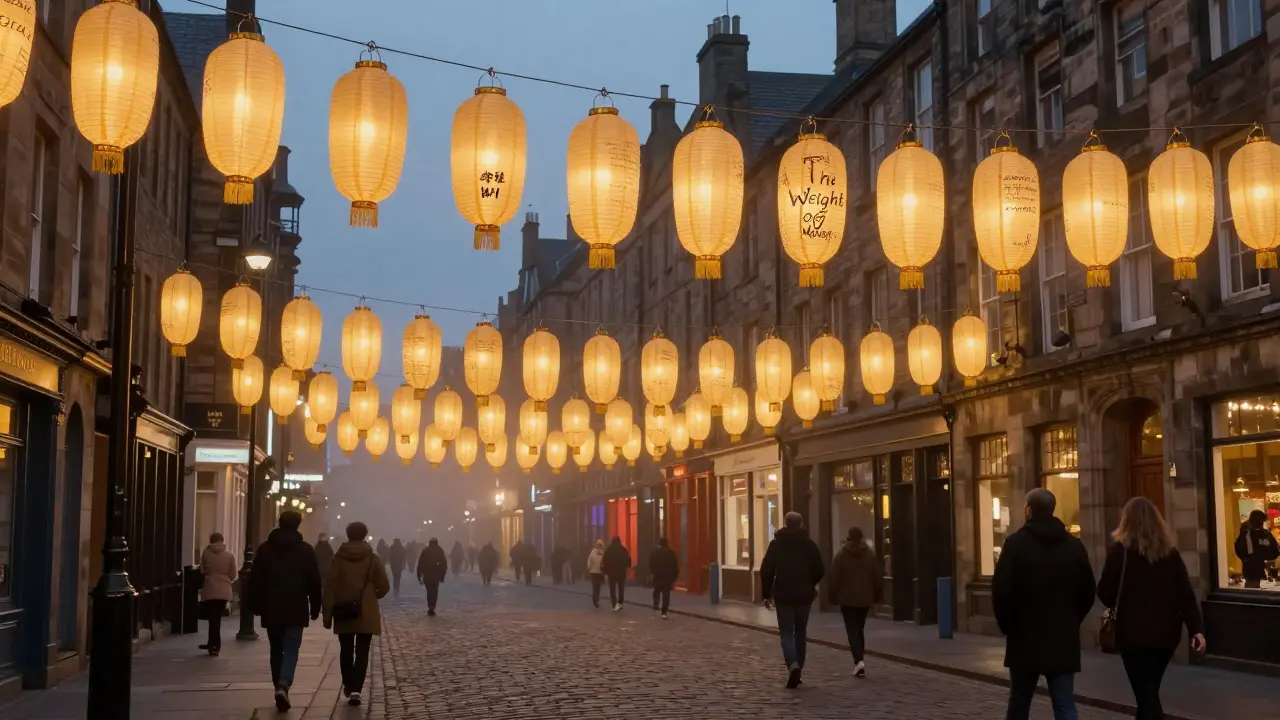
The festival’s outdoor works are what make it unforgettable. In 2025, the city’s most talked-about piece was ‘The Weight of Memory’ by Korean artist Jisoo Park. It filled the entire Grassmarket with 1,200 hanging lanterns, each containing a handwritten note from a local resident about a lost loved one. Visitors were invited to add their own. By the end of the festival, the lanterns weighed over 400 kilograms. At night, the whole square glowed like a constellation of personal stories.
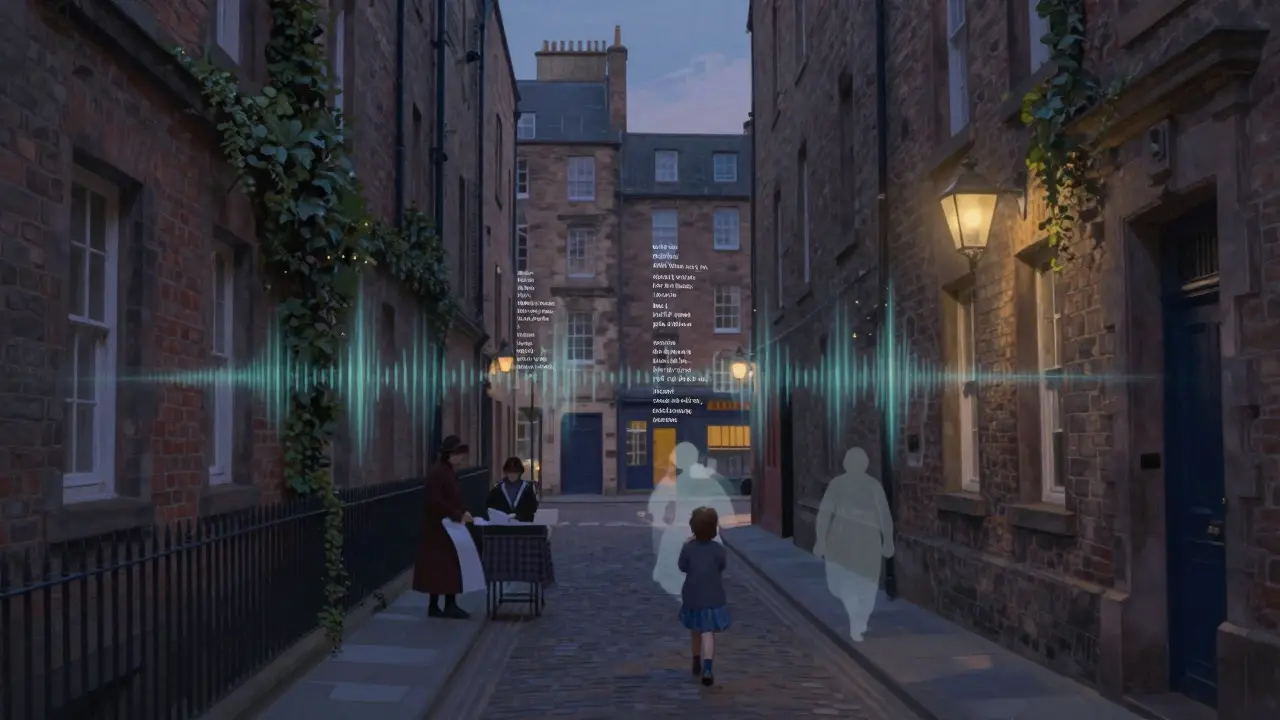
Another standout was the ‘Sound of the Old Town’ project, where 32 hidden speakers were placed in alleyways and stairwells between Lawnmarket and Victoria Street. Walk through them at dusk, and you’d hear snippets of old Edinburgh voices-street vendors from 1952, a child reciting a poem from 1978, a choir singing in Gaelic. No signs. No explanation. Just sound drifting out of a brick wall.
Summer Shows That Define the Season
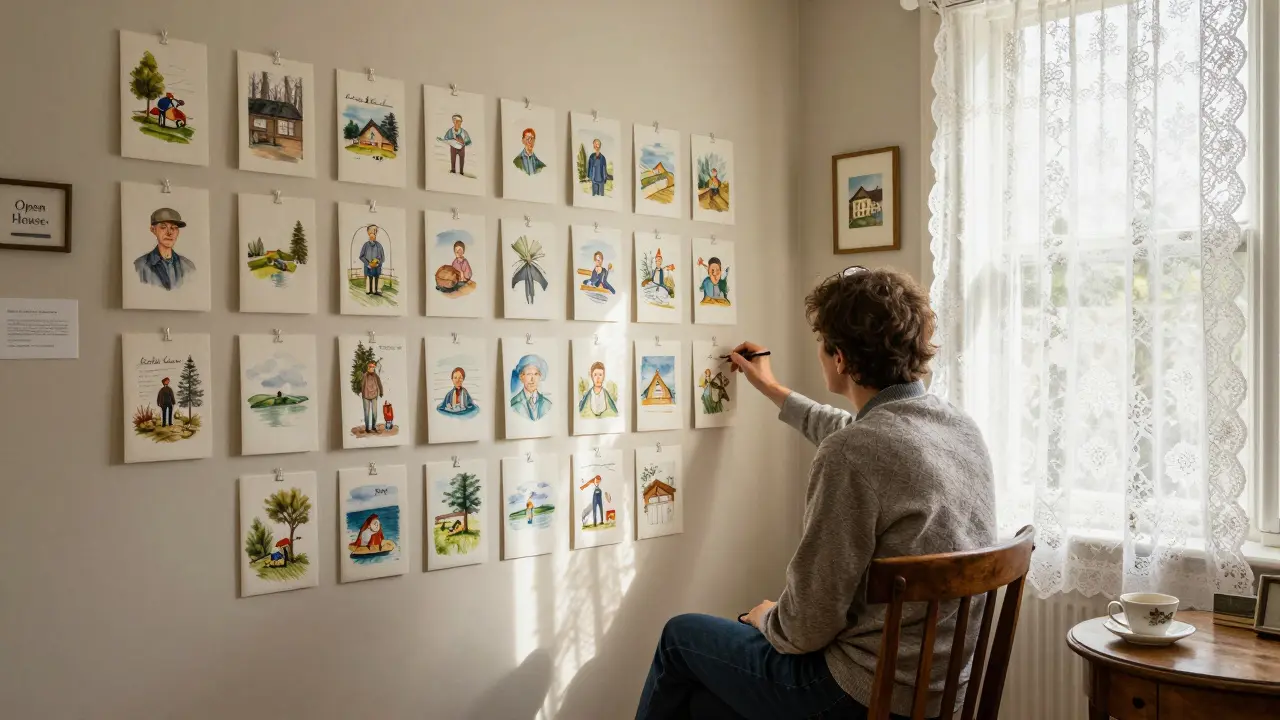
What sets the Edinburgh Art Festival apart is how it weaves itself into the city’s rhythm. Unlike other festivals that feel like events you attend, this one feels like something you live inside. The ‘Open House’ initiative lets you visit private homes transformed into galleries. In 2025, a retired librarian in Leith opened her three-bedroom house to display 87 miniature watercolors painted by her late husband over 40 years. Visitors lined up for hours. No ticket needed. Just a quiet moment with the art.
Another tradition is the ‘Art in the Archive’ program. The National Records of Scotland opened its climate-controlled vaults to artists who created works using century-old documents. One artist, Ailsa McLean, used faded 1912 police reports about street performers to create a series of embroidered tapestries. The original documents were displayed alongside the art. You could read the original complaint about a man juggling potatoes in Princes Street-and see how it became a colorful, glowing textile.
What to Expect in 2026
The 2026 program is already shaping up with new directions. The festival’s director confirmed that 40% of this year’s commissioned works will be by artists under 30. There’s a strong focus on climate-responsive art. One upcoming project, ‘Tides of the Forth’, will use tide data from the Firth of Forth to generate a large-scale digital mural that changes shape in real time, reacting to the ocean’s movement. It’ll be installed on the side of the Scottish Poetry Library.
Another highlight: the return of the ‘Art in the Dark’ nighttime walking tour. Last year, it drew over 12,000 people. This year, it’ll include a new stop at the Royal Botanic Garden, where a team of light artists will project moving images of native plants onto the glasshouses-showing how they’ve changed over the last 200 years.
How to Plan Your Visit
You don’t need to book everything in advance. Most outdoor installations are free and open 24/7. The gallery shows usually run from 10 a.m. to 5 p.m., with extended hours on Fridays. The best way to explore is to pick a neighborhood and wander. Start in the Old Town, then move toward Leith or the Meadows. The festival’s free map-available at tourist info centers and libraries-marks every location with a symbol: a paintbrush for galleries, a lightbulb for installations, a heart for public talks.
Bring comfortable shoes. You’ll walk 8-12 miles a day if you’re serious. Bring a light jacket. Even in August, the wind off the Firth can turn a sunny afternoon chilly. And if you see a crowd gathered around a door with no sign, go in. Sometimes, the best art is the one you weren’t looking for.
Why This Festival Matters
More than 300,000 people attend the Edinburgh Art Festival each year. That’s more than the combined attendance of the Fringe and the International Festival. It’s not just about art-it’s about access. Unlike commercial galleries that often feel exclusive, this festival strips away barriers. There are no velvet ropes. No price tags. No pressure. You can spend five minutes or five hours. You can cry, laugh, or just stand there. The art doesn’t demand anything except your presence.
And that’s why it sticks with you. Not because it’s flashy. But because it’s human.
Is the Edinburgh Art Festival free to attend?
Yes, most of the festival is free. Outdoor installations, public talks, and many gallery shows don’t require tickets. Some special exhibitions in major museums like the Scottish National Gallery of Modern Art may charge £5-£12, but even those often offer free entry on certain days or for under-25s. The festival’s official website lists every event with clear pricing labels.
When does the Edinburgh Art Festival take place in 2026?
The 2026 Edinburgh Art Festival runs from August 1 to August 30. Most major exhibitions open on August 1, with new works rolling out through the first week. The busiest days are the first weekend and the final weekend, when crowds peak. If you want to avoid lines, aim for mid-week in the second or third week of August.
Are there guided tours available?
Yes. Free guided walks are offered daily by volunteer art historians and local artists. These tours focus on different themes-like ‘Women in Scottish Art’ or ‘Art and Climate Change’-and last about 90 minutes. You can sign up at the festival’s information hub on the Royal Mile or book online. There are also paid private tours for groups, but the free ones are just as insightful.
Can I bring children to the festival?
Absolutely. The festival has a dedicated program called ‘Art for Young Eyes’ with interactive installations designed for kids. One 2025 favorite was a room filled with giant, touch-sensitive flowers that changed color when you sang to them. There are also family-friendly workshops every Saturday morning, free of charge. Most venues are stroller-friendly, and many have changing facilities.
What happens if it rains?
Rain doesn’t stop the festival. Many outdoor installations are weatherproofed, and some even change with the conditions-like a sound piece that plays louder when it’s wet. Indoor galleries remain fully open. If you’re caught outside, grab a free raincoat from one of the festival’s info points. They’re made from recycled plastic and have the festival logo printed in biodegradable ink.
Comments (12)
-
Deepak Sungra February 20, 2026I walked past that lantern installation in Grassmarket and just stood there for 20 minutes. Didn’t cry, but my throat got tight. That’s the kind of art that doesn’t ask for attention-it just takes it. Also, the wind was cold, and I forgot my jacket. Worth it.

-
Mike Marciniak February 21, 2026They say it's free but someone’s always filming you. I counted three drones hovering over the Sound of the Old Town installation. One had a logo on its belly. Not from the festival. I’m not paranoid. I’m informed.

-
Mbuyiselwa Cindi February 21, 2026If you’re planning to go, DO NOT skip the Open House in Leith. The watercolors are quiet but they hold the whole weight of a life lived. Bring tissues. And if you see the curator, tell her her husband’s work is a gift to the city.

-
Krzysztof Lasocki February 23, 2026The fact that they give out recycled plastic raincoats with biodegradable ink? That’s not just art. That’s a whole damn philosophy. I’d walk 12 miles in a hurricane for that kind of commitment.

-
Henry Kelley February 24, 2026I went last year and thought I’d be bored. Ended up spending 3 hours in a tiny attic gallery where some guy painted tiny birds on old lottery tickets. No sign. No description. Just birds. I still think about them.

-
Victoria Kingsbury February 26, 2026The climate-responsive mural for 2026? That’s not just generative art-that’s ecological storytelling. The Firth of Forth’s tidal data as a brushstroke? That’s post-anthropocene aesthetics in practice. You’re not just viewing art. You’re witnessing a feedback loop between human memory and nonhuman systems.

-
Tonya Trottman February 27, 2026They say 'no velvet ropes' but they still charge £12 for the Modern Art exhibit. That’s not access. That’s gatekeeping with a smile. And ‘Art in the Archive’? They let artists use police reports about juggling potatoes? That’s not deep. That’s absurd. And they call it art? Please.

-
Rocky Wyatt March 1, 2026I went to the Sound of the Old Town thing and heard a child reciting a poem. It was my daughter. She died in 2019. I didn’t know she’d been recorded. I stood there for an hour. No one said a word. No one touched me. Just the voice. That’s the real magic.

-
Santhosh Santhosh March 2, 2026The thing about the Edinburgh Art Festival is that it doesn’t try to impress you. It just exists. Like a quiet neighbor who always leaves fresh bread on your porch. You don’t ask why. You just accept it. I spent a whole afternoon in Talbot Rice just staring at those hand-painted maps. The way the ink faded near the edges-like someone had touched them too many times. I think the cartographer was trying to say something about memory. Or maybe she just liked the color blue. Either way, I felt less alone after.

-
Veera Mavalwala March 3, 2026Let me tell you something-this festival isn’t just art. It’s a rebellion wrapped in a wool blanket and a cup of tea. The way they turn abandoned churches into sanctuaries for digital collages? The way they let a retired librarian’s dead husband’s watercolors breathe in a living room? That’s not curation. That’s resurrection. And Jisoo Park’s lanterns? Those weren’t just notes. They were ghosts with handwriting. I cried so hard I had to sit on the curb. And I didn’t care who saw. Because for once, the city didn’t make me feel like a spectator. It made me feel like a participant.

-
Ray Htoo March 3, 2026The fact that 40% of 2026’s works are by artists under 30? That’s the future showing up in Doc Martens and paint-splattered hoodies. And that tidal mural? It’s not just reacting to the ocean-it’s asking the ocean for permission. That’s radical humility. I’m already booking my flight. This isn’t a festival. It’s a love letter to the planet.

-
VIRENDER KAUL March 4, 2026The assertion that the festival is 'free' is misleading. While the majority of outdoor installations are indeed accessible without charge, the institutional venues-particularly the Scottish National Gallery of Modern Art-operate under a tiered pricing model that excludes socioeconomic strata lacking discretionary income. Furthermore, the claim that 'no velvet ropes' equates to accessibility ignores the epistemic barriers erected by curatorial jargon, spatial hierarchy, and unspoken cultural capital. The festival, while aesthetically commendable, remains a bourgeois ritual disguised as democratization.
