
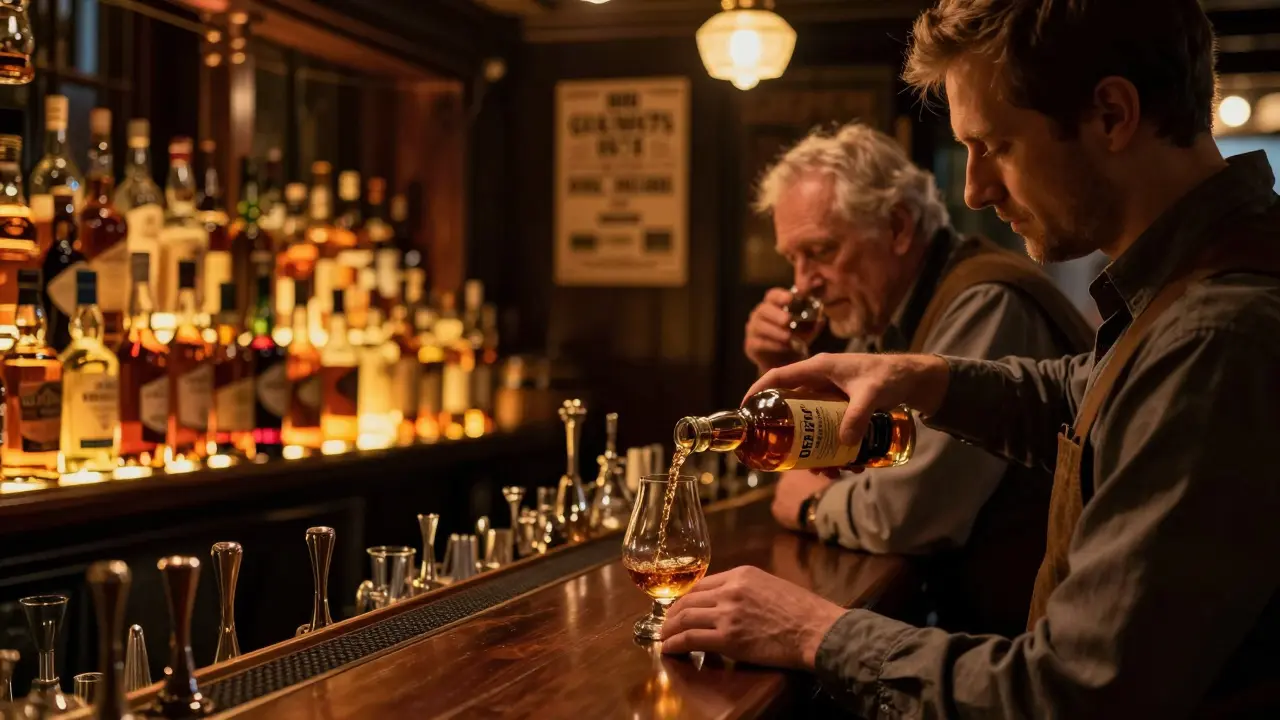
There’s something about walking into a whisky bar in Scotland that feels different than anywhere else. It’s not just about the drink. It’s the smell of oak, the quiet clink of glass, the way the light hits a dram of 18-year-old Speyside like it’s been poured from a candle flame. In Edinburgh and Glasgow, whisky isn’t served - it’s shared. And if you know where to look, you’ll find places where the barman remembers your name, the bottle on the shelf has been open since 2012, and the pour is never rushed.
Edinburgh’s Hidden Whisky Hubs
Edinburgh’s whisky scene isn’t just about the big names on the Royal Mile. Head down to The Pot Still on Castlehill, and you’ll find over 800 bottles behind the bar. This isn’t a tourist trap with pre-packaged flights. This is where locals come to taste a 1978 Glenlivet that costs more than your rent, or a $40 pour of a small-batch Islay that’s only available here. The staff don’t push expensive bottles - they ask what you like. Peaty? Sweet? Spicy? Then they pull something you’ve never heard of but will remember for years.
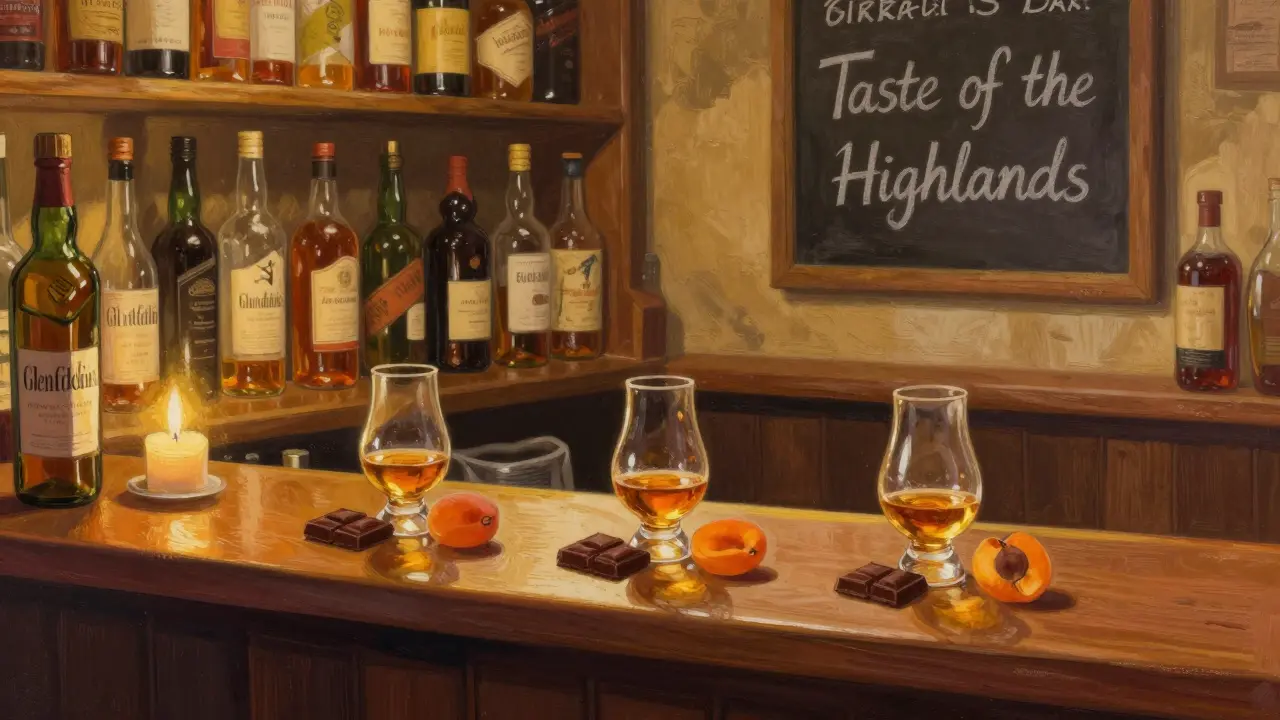
Just a few blocks away, The Kilted Bar on Nicholson Street has no sign. You’ll find it by the line of people waiting to get in. Inside, the walls are lined with whisky bottles from every distillery in Scotland - even the ones that closed in the 1980s. Their signature move? The "Taste of the Highlands" flight: three 15ml pours of single malts from Glenfiddich, Balblair, and Glengoyne, each paired with a tiny square of dark chocolate and a single dried apricot. It’s not fancy. But it teaches you more about flavor than any tasting room at a distillery.
For something quieter, try Whisky A Go Go on Broughton Street. It’s small, dim, and smells like leather and smoke. The owner, a former whisky broker from Campbeltown, keeps a notebook behind the bar with handwritten notes on every bottle. "This one," he’ll say, pointing to a bottle from a closed distillery, "tastes like a cold morning in Argyll. You’ll know it when you taste it." He doesn’t charge extra for the story. Just pour you a dram and wait.
Glasgow’s Grittier, Warmer Whisky Culture
Glasgow doesn’t do polished. Its whisky bars are loud, warm, and full of people who’ve been coming for decades. The Pot Still has a sister bar here - same name, different vibe. On Jamaica Street, it’s packed with students, artists, and ex-miners who still talk about the old distilleries like they’re old friends. The whisky list is shorter - around 400 bottles - but every one has a reason to be there. The house pour? A 12-year-old Glen Garioch, served neat. It’s not the most expensive, but it’s the one that gets ordered most. Why? Because it’s smooth enough for a first-timer, but complex enough to make a seasoned drinker pause.
Down in the Merchant City, The Bottling Room is where the real collectors hang out. No menu. No prices on the wall. You sit at the counter and say, "What’s good?" Then the barman opens a drawer and pulls out a bottle you’ve never seen - maybe a 1994 Glen Keith, or a 2001 Benrinnes. He’ll pour you a 25ml sample. If you like it, he’ll tell you the price. If you don’t, he’ll open another. One regular here has been coming every Thursday for 17 years. He’s never bought a bottle. But he’s tasted every single one they’ve ever had on the shelf.
And then there’s The Rum & Whisky House on Renfield Street. It’s not just whisky. But the whisky section? It’s wild. They have bottles from distilleries that don’t exist anymore - like Port Ellen, which shut down in 1983. A single pour of that can cost £120. But they also have a "Cask Strength Tuesday" where they open a barrel and serve 50ml pours for £10. No reservation. Just show up at 7 p.m. and get in line. People come from all over Scotland for it. I’ve seen a 70-year-old woman in a tartan coat stand in the rain for 45 minutes just to get a taste of a 2004 Laphroaig.
What Makes a Great Whisky Bar?
A good whisky bar doesn’t need marble counters or velvet curtains. It needs three things: knowledge, choice, and patience.
- Knowledge: The staff should be able to tell you why a 1998 Glenmorangie tastes like honey and sea salt, not just that it’s "aged in sherry casks." They should know the difference between a bourbon barrel and a virgin oak cask. And they should care enough to ask you what you’re in the mood for.
- Choice: You want more than just Glenfiddich and Macallan. Look for bars with bottles from small distilleries like Tullibardine, Daftmill, or Inchgower. If they have a bottle from a distillery that closed 20 years ago, that’s a good sign.
- Patience: Whisky isn’t a shot. It’s a moment. A great bar won’t rush you. They’ll let you swirl it, smell it, sip it slowly. If someone tries to sell you a flight before you’ve even sat down, walk out.
The best bars don’t push you toward the most expensive bottle. They find the one that fits you. That’s the difference between a tourist experience and a real Scottish whisky moment.
How to Order Like a Local
If you’re new to whisky, don’t panic. Here’s how to order without sounding like you’re reading from a guidebook.
- Start with a 25ml pour. Most bars will charge £5-£12 for a small taste. That’s enough to know if you like it.
- Say, "What’s something you’d drink on a quiet night?" That’s the question that gets you the best pour.
- If you like peat, ask for "something from Islay." If you like fruit, ask for "a Speyside." If you’re not sure, say, "I like bourbon - what’s something similar?"
- Don’t ask for ice unless you’re in summer. Ice dulls the flavor. A drop of water is better - it opens up the notes.
- Don’t be afraid to say "I don’t know." Most bar staff will love you for it. They’d rather teach you than sell you.
One time, I walked into The Bottling Room in Glasgow and said, "I’ve never had whisky before." The barman smiled, opened a bottle of Glenlivet 12, poured a finger, and said, "This is what whisky tastes like when it’s still young enough to be friendly." I drank it in one sip. I’ve been back every month since.
What to Expect on a Whisky Night Out
Don’t expect cocktails. Don’t expect loud music. Don’t expect to be rushed. A whisky bar in Scotland is a place to sit, listen, and taste. You might hear someone talk about the year the distillery had a bad harvest. Or how a cask was accidentally left in the sun for three months and turned out better than expected. You’ll hear stories about people who’ve traveled across the world just to taste a single bottle.
And when you leave? You won’t remember the price. You’ll remember the feeling. The warmth. The quiet. The way the whisky sat in your chest like a slow-burning ember.

Whisky Bars You Shouldn’t Miss
Here’s a quick list of the places that matter - not because they’re the most famous, but because they’ve earned their place.
| Bar Name | Location | Specialty | Price Range (per 25ml) |
|---|---|---|---|
| The Pot Still | Edinburgh (Castlehill) | 800+ bottles, rare casks | £5-£80 |
| The Kilted Bar | Edinburgh (Nicholson Street) | Flights with food pairings | £12-£20 |
| Whisky A Go Go | Edinburgh (Broughton Street) | Handwritten notes, personal stories | £6-£50 |
| The Pot Still | Glasgow (Jamaica Street) | House pour: Glen Garioch 12 | £7-£45 |
| The Bottling Room | Glasgow (Merchant City) | Unlisted rare bottles, no menu | £10-£120 |
| The Rum & Whisky House | Glasgow (Renfield Street) | Cask Strength Tuesday, Port Ellen | £10-£150 |
These aren’t the only places. But they’re the ones where the whisky matters more than the label.
Final Tip: Don’t Just Taste - Listen
Whisky isn’t just something you drink. It’s something you hear. The crackle of the glass. The quiet laugh of the barman. The story about the cask that survived a flood. The way someone says, "This one’s from my grandad’s village."
Go to these bars not to check off a list. Go to listen. To learn. To taste something that wasn’t made for tourists - but for people who still believe in slow things.
What’s the best time to visit whisky bars in Edinburgh and Glasgow?
Weeknights are better than weekends. Bars are quieter, staff have more time to talk, and you’re more likely to get a rare pour. Thursday and Friday evenings are good, but avoid Saturday nights - it gets crowded, and the experience turns into a party. If you want to try Cask Strength Tuesday at The Rum & Whisky House, arrive by 6:30 p.m. - the line starts forming by 6.
Can I just walk in, or do I need a reservation?
Most places don’t take reservations. Walk in. The Bottling Room and Whisky A Go Go are tiny - you might wait 10 minutes. The Pot Still in Edinburgh has a small back room you can book for groups, but only if you ask in advance. Don’t expect to reserve a table for four on a Friday night - these bars aren’t restaurants.
Are whisky flights worth it?
Yes - but only if they’re done right. A good flight has three whiskies that tell a story: one light, one smoky, one rich. Avoid places that just give you three popular brands. Look for bars that explain why they chose each one. The Kilted Bar’s Highland flight is one of the best in the country.
Is it okay to ask for water with my whisky?
Absolutely. Most bars will bring you a small glass of still water on the side. Some even have a special water dispenser for whisky - filtered, room temperature. A splash of water opens up the flavors. Ice? Only if it’s hot. Water is better.
How much should I budget for a night out?
You can have a great night for £30-£50. That’s three or four 25ml pours, maybe a snack. If you want to try something rare - like a 25-year-old Aberlour - that’ll be £40-£80 per pour. Don’t feel pressured to spend more. The best experiences are the ones where you taste something new, not the most expensive thing on the shelf.
Do these bars serve food?
Some do, but it’s simple: smoked salmon on rye, cheddar cheese, dark chocolate, or salted nuts. The food isn’t the point. It’s there to balance the whisky, not distract from it. Skip the burgers and pizzas - they ruin the experience.
If you’re coming to Scotland for whisky, don’t just visit the distilleries. Go to the bars where the bottles live after they leave the cask. That’s where the soul of Scotch whisky still breathes.