
Ayrshire isn’t just another corner of Scotland. It’s where poetry came alive, where the sea meets sand in long, quiet stretches, and where ferries leave daily for the wild beauty of the Isle of Arran. If you’ve ever wondered what makes this stretch of southwest Scotland so special, it’s not just one thing-it’s the mix of history, nature, and quiet charm you won’t find anywhere else.
Robert Burns’ Ayrshire: Where Poetry Was Born
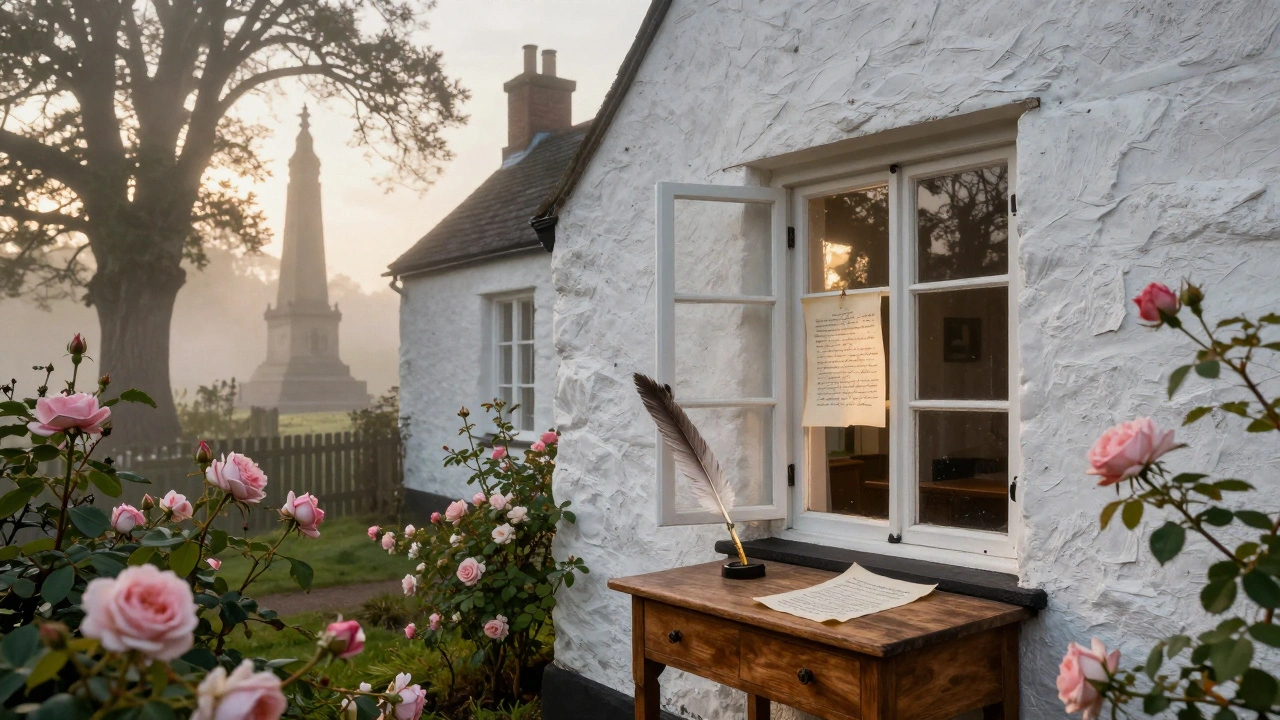
You can’t talk about Ayrshire without starting with Robert Burns. The national poet of Scotland was born in 1759 in a small, whitewashed cottage in Alloway, just outside Ayr. Today, that cottage is part of the Robert Burns Birthplace Museum, a well-maintained site that doesn’t feel like a museum-it feels like stepping into his world. You’ll see his handwritten drafts, his simple furniture, even the quill he used to write To a Mouse. The museum doesn’t just display artifacts; it tells the story of a man who wrote about farmers, love, and injustice in the language of ordinary people.
Walk the Burns Monument Gardens behind the museum. The path winds past rose bushes and statues, ending at the towering monument built in his honor. Locals still gather here on January 25th for Burns Night, singing his songs and eating haggis with more passion than most restaurants serve it. If you’re here on any other day, you’ll still feel the weight of his legacy in the quiet corners of Ayr’s old town.
The Beaches: From Troon’s Golf Links to Arran’s Shoreline
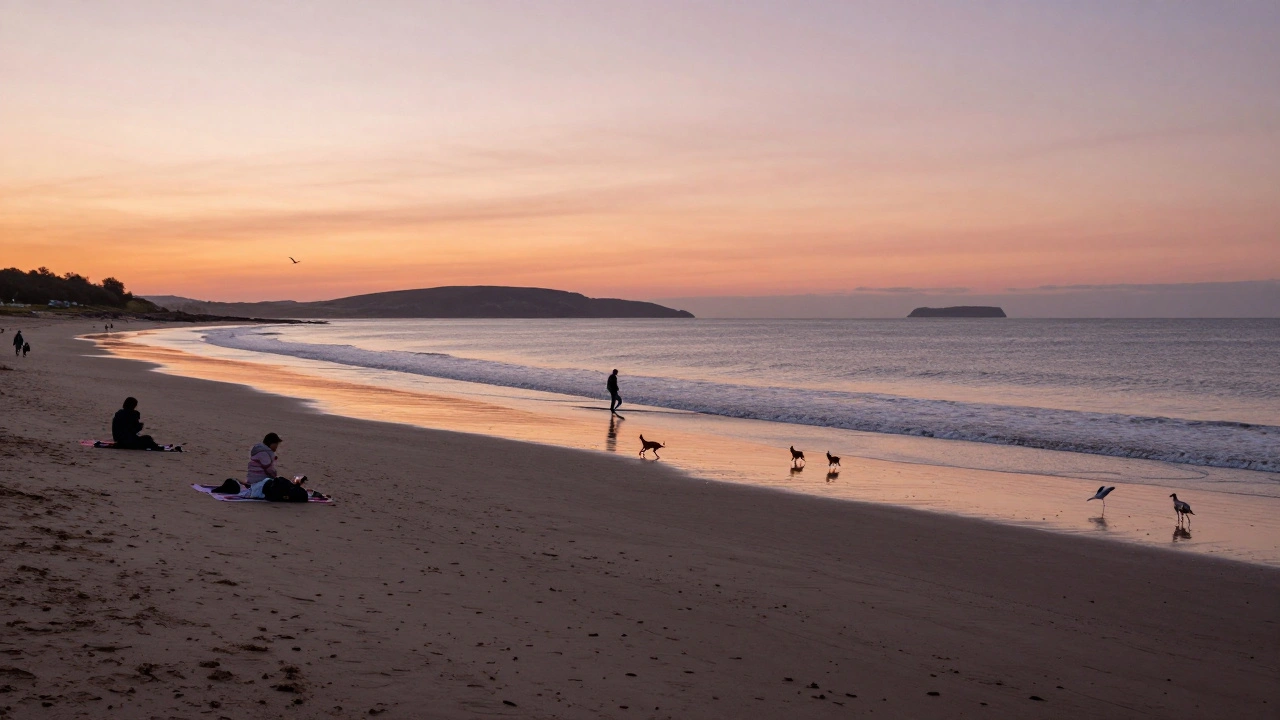
Ayrshire’s coastline is long, varied, and rarely crowded. Troon, known for its world-class golf courses, also has a wide, sandy beach that stretches for miles. On a clear day, you can see the Isle of Arran on the horizon. Families spread out on towels, dogs chase seagulls, and surfers paddle out when the swell picks up-especially in spring and autumn.
Just north, the beach at Prestwick is quieter. The dunes here are protected, and the tide leaves behind pools teeming with crabs and anemones. Kids spend hours exploring them. The promenade is lined with old-fashioned ice cream stalls and cafés that serve fresh seafood chowder. No fancy decor, no overpriced menus-just good food eaten with your feet in the sand.
Don’t skip Turnberry. The beach here is wilder, with rocky outcrops and crashing waves. It’s where the famous Turnberry Lighthouse stands, and where, on winter evenings, the northern lights sometimes flicker above the water. Locals say you can hear the sea singing here. It’s not poetic nonsense-it’s the wind through the rocks, and it’s real.
Ferries to Arran: Your Gateway to Scotland’s Miniature Alps
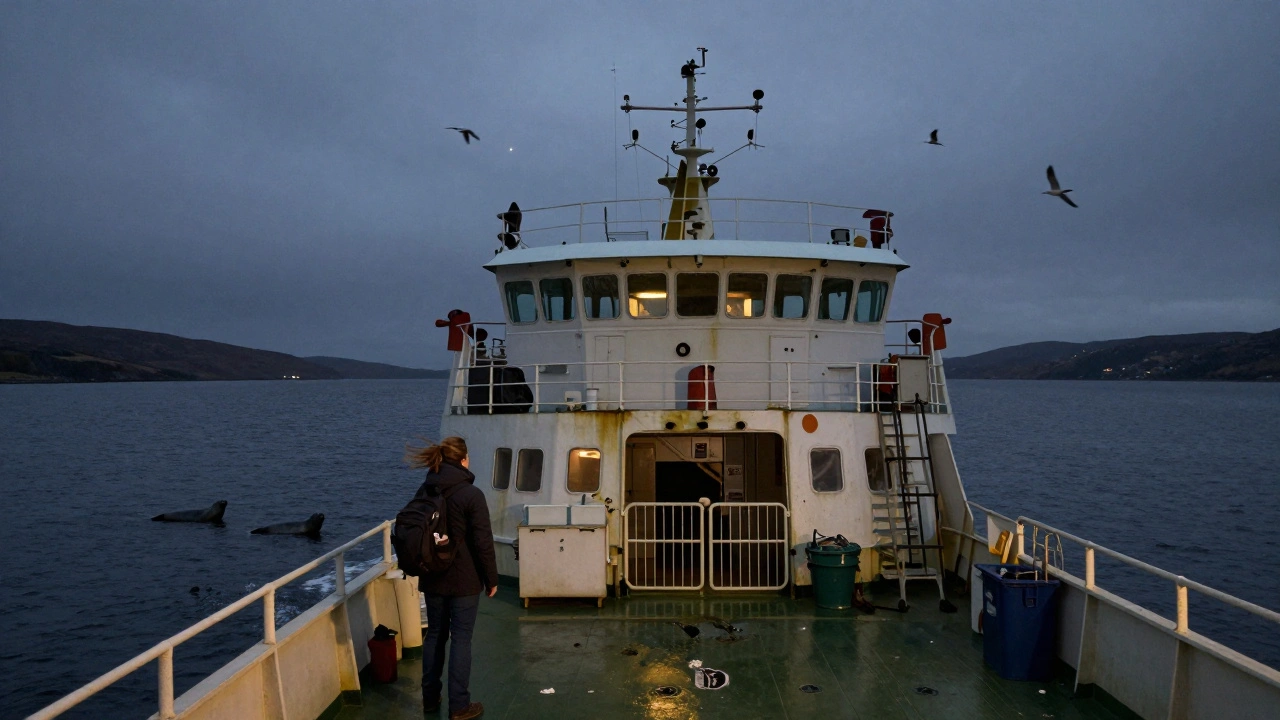
The ferry from Ardrossan to Brodick on the Isle of Arran leaves every few hours, year-round. The crossing takes 55 minutes. It’s not a luxury cruise-it’s a working ferry. You’ll see truck drivers, hikers with backpacks, and families with dogs. The deck is open, and if you stand at the bow, you’ll see seals bobbing in the water and seabirds wheeling overhead.
Arran is what Ayrshire wishes it could be: rugged, untouched, and full of secrets. The island has its own mountains-Brodick Castle, Goat Fell, and the North Coast’s dramatic cliffs. Hikers come for the trails, photographers for the waterfalls, and cyclists for the quiet roads. You’ll find no traffic lights on Arran. Just single-track lanes, sheep, and the occasional red deer.
Back in Ayrshire, the ferry terminal in Ardrossan is simple. Buy your ticket at the counter, walk onto the deck, and watch the mainland fade. The ferry doesn’t just take you to another island-it takes you out of time. No Wi-Fi, no billboards, no rush. Just sea air and the slow rhythm of the waves.
Hidden Gems: Beyond the Postcards
Most visitors stick to Ayr, Alloway, and the ferry. But Ayrshire has quieter corners that hold just as much magic. Head to Culzean Castle, perched on a cliff above the Firth of Clyde. It’s not just a grand house-it’s a storybook estate with secret tunnels, a walled garden, and a cliffside swimming pool that’s been unused since the 1970s. The castle is run by the National Trust for Scotland, and the staff know every inch of it. Ask about the ghost in the east wing. They’ll smile but won’t tell you if it’s true.
Then there’s the Kilmarnock area. The town’s old railway station is now a cultural hub with indie bookshops and live folk music. The Kilmarnock Brewery makes some of the best craft ales in Scotland, brewed with local barley and heather honey. Try the Burns Bitter-it’s named after the poet, and it’s got a smoky finish that lingers like one of his lines.
And don’t miss the village of Largs. It’s small, but it hosts the annual Viking Festival every August. Reenactors in leather and wool march through the streets, and kids dress up as Norse warriors. It’s not a tourist trap-it’s a community tradition that’s been going on for 40 years. No one charges you to watch. You just show up, and someone hands you a cup of hot mulled wine.
When to Go and How to Get Around
Ayrshire is pleasant year-round, but the best time to visit is late spring to early autumn (May to September). The beaches are warmest then, the ferries run more frequently, and the gardens are in full bloom. Winter has its own quiet beauty-especially if you want to avoid crowds and enjoy the mist rolling off the sea.
You don’t need a car, but it helps. Trains run from Glasgow to Ayr in under an hour, and buses connect the towns. But if you want to reach Culzean, Largs, or the quieter beaches, renting a car for a day is worth it. Parking is easy and mostly free outside peak season.
Public transport is reliable but slow. Buses can be 20 minutes late. Locals don’t mind. They say it’s part of the rhythm. If you’re used to punctuality, adjust your expectations. You’ll get there. And when you do, you’ll realize the delay was part of the experience.
What to Eat and Drink
Ayrshire food is simple, honest, and deeply local. Start with a plate of fresh haddock from the Ayr fish market-fried in batter, served with chips and mushy peas. You’ll find it in every pub. The best version is at The Fisherman’s Rest in Saltcoats. They’ve been doing it since 1952.
For something warmer, try a Cullen skink-a creamy soup made with smoked haddock, potatoes, and onions. It’s comfort in a bowl. The original recipe came from nearby Findhorn, but Ayrshire’s version is richer, with a touch of cream.
Drink local. Ayrshire has more than 20 craft breweries. Try the Arran Ale from the island’s own distillery, or the Burns’ Brew from the Ayrshire Craft Beer Co. Both use barley grown just outside the town. And if you’re feeling adventurous, try a dram of single malt from the Arran Distillery. It’s light, floral, and perfect after a day on the beach.
Final Thoughts: Why Ayrshire Stays With You
Ayrshire doesn’t shout. It doesn’t need to. There are no skyscrapers, no theme parks, no big-name festivals. What it has is depth. The quiet pride of a place that knows its history, respects its land, and welcomes you without asking for anything in return.
When you leave, you won’t remember the postcards. You’ll remember the smell of salt and peat after rain. The sound of a lone fiddle playing in a pub corner. The way the ferry whistle echoes across the water as the island disappears behind you.
This is Scotland without the crowds. Without the noise. Just poetry, sea, and the slow turning of the tide.
Can you visit Robert Burns’ birthplace without a tour guide?
Yes. The Robert Burns Birthplace Museum in Alloway is self-guided. Audio guides are available in multiple languages, and detailed plaques explain each exhibit. You can spend anywhere from 30 minutes to three hours depending on your interest. No booking is needed for general admission.
How often do ferries run from Ardrossan to Arran?
Ferries run every 1-2 hours from 6:30 AM to 8:30 PM daily. In winter, the schedule is reduced to every 3-4 hours. The crossing takes 55 minutes. Tickets can be bought online or at the terminal, but booking ahead is recommended during summer weekends.
Are Ayrshire’s beaches safe for swimming?
Most beaches in Ayrshire, like Troon and Prestwick, are safe for swimming in summer when lifeguards are on duty. Check local flags: green means safe, red means dangerous. The water is cold year-round-even in August, it rarely rises above 16°C. Wetsuits are recommended for extended swimming.
Is Ayrshire a good base for exploring other parts of Scotland?
Absolutely. Ayr is just 50 minutes from Glasgow by train, and the A77 road leads directly to the Isle of Arran and the Kintyre Peninsula. From there, you can reach the Highlands in under two hours. It’s a quieter, more relaxed alternative to staying in Edinburgh or Inverness.
What’s the best way to experience Burns Night in Ayrshire?
The biggest Burns Night celebration is in Alloway, where the Burns Monument hosts a full evening of poetry readings, bagpipes, and traditional supper. Tickets sell out months in advance. For a more local feel, visit any pub in Ayr or Kilmarnock on January 25th-they’ll have live music, haggis, and whisky toasts without the crowds.
Comments (15)
-
Frank Piccolo December 4, 2025
This whole post reads like a tourism board brochure written by someone who’s never actually been to Scotland. Ayrshire? Please. It’s just a bunch of overpriced museums and beaches where the only thing more common than seagulls is the smell of wet wool. And don’t get me started on ‘Burns Night’-it’s just drunk farmers pretending to be poets. Real culture doesn’t need a gift shop.
Also, ‘the sea singing’? That’s not poetic-it’s just wind hitting rocks. Stop anthropomorphizing geology.
And why is everyone acting like Arran is some untouched paradise? It’s a tiny island with sheep and one pub that sells overpriced whisky. If you want real wilderness, go to the Cairngorms. This is Scotland-lite.
Also, ‘no traffic lights on Arran’? Congrats, you found a place with fewer than 5000 people. That’s not charm, that’s underdevelopment.
And the ferry? Yeah, it’s slow. Because it’s not a cruise ship. It’s a working vessel. Like the rest of this post, it’s dressed up as romance when it’s just logistics.
People need to stop romanticizing rural poverty. Ayrshire isn’t magical-it’s just forgotten.
Also, ‘haggis with more passion than most restaurants serve it’? That’s not a compliment. That’s a warning.
And why is every single food recommendation tied to Burns? You’re not a poet. You’re just hungry.
Don’t mistake nostalgia for substance.
And yes, I’ve been there. Twice. And I still don’t get the hype.

-
selma souza December 5, 2025
The phrase ‘the sea singing’ is grammatically incorrect. The sea cannot sing. It can crash, roar, or whisper-but not sing. That’s not poetic license; it’s lazy writing. Also, ‘weight of his legacy in the quiet corners’? ‘Weight’ is not a metaphor that applies to abstract concepts in this context. You’re conflating emotional resonance with physical mass. This entire piece is riddled with faulty syntax and misplaced modifiers. Someone should fact-check the ‘16°C’ claim-water temperatures in Ayrshire rarely exceed 14°C even in August. And ‘mushy peas’? Not ‘mushy peas’-it’s ‘mushy peas’ with a capital P? No. It’s not a proper noun. This reads like a high school student’s attempt at travel writing.
Also, ‘the ferry doesn’t just take you to another island-it takes you out of time’? That’s not a sentence. That’s a cliché wrapped in a platitude and dressed up as profundity. Please stop.

-
Addison Smart December 6, 2025
I’ve spent six months traveling across Scotland over the past decade, and Ayrshire is one of the few places that actually feels alive without trying too hard. You’re right to point out the quietness-it’s not empty, it’s intentional. The way locals treat visitors isn’t performative hospitality; it’s just how they are. I remember sitting on a bench in Alloway at dawn, listening to a man in a flat cap recite Burns in Gaelic while feeding pigeons. No one else was there. No one else needed to be.
Arran isn’t a ‘miniature Alps’-it’s a place where the land remembers. I hiked Goat Fell in November. The wind was brutal. The path was muddy. But when I reached the top and saw the Firth of Clyde stretching out like a silver ribbon, I didn’t feel like a tourist. I felt like I’d been invited into something older than language.
The ferry? It’s not romanticized-it’s real. I’ve seen a fisherman hand a kid a warm pasty on the deck because he noticed the child was shivering. No one took a photo. No one posted it. That’s the point.
And yes, the beaches are cold. But that’s why you come back. You don’t go to Ayrshire for comfort. You go because you need to remember what stillness sounds like. You go because the world’s too loud, and this place doesn’t yell back.
It’s not about the poetry. It’s about the pause between the lines.
I’ve been to Edinburgh. I’ve been to Inverness. I’ve been to the Highlands. But Ayrshire? It stayed with me longer than any of them. Not because it was beautiful. But because it didn’t try to be.

-
allison berroteran December 7, 2025
I read this with my tea in hand, sitting by the window, thinking about how rare it is to find writing that doesn’t try to sell you something. Ayrshire doesn’t need to be marketed-it just is. I’ve been there three times now, each visit different, each time quieter than the last.
The first time, I went for Burns. The second, for the beach. The third, I didn’t go anywhere. I just sat in the Ardrossan terminal and watched the ferry come in. A woman with a dog and a backpack got off. She didn’t say anything. Just walked past me, nodded slightly, and kept going. I didn’t know her. I didn’t need to.
I think what makes Ayrshire special isn’t the museums or the food or even the ferry-it’s the way time moves differently there. Not slower. Not faster. Just… differently. Like the world forgot to reset its clock.
I’ve tried to explain it to friends. They always say, ‘But it’s just Scotland.’ And I don’t know how to answer that. Because it’s not ‘just’ anything. It’s a place where the past doesn’t feel buried. It feels like it’s still breathing.
I don’t know if I’ll go back. But I know I’ll carry it with me. Not as a memory. As a quiet kind of home.
Thank you for writing this. Not because it was perfect. But because it was true.

-
Lissa Veldhuis December 9, 2025
Oh my god this is so basic I could cry. Burns? Beaches? Ferries? What is this, a 1995 Lonely Planet guide? Everyone’s acting like Ayrshire is some secret garden when it’s basically a slightly less depressing version of Jersey Shore with more sheep. And ‘the sea singing’? That’s not poetic, that’s a middle school poetry slam. And ‘haggis with more passion than most restaurants serve it’? Honey, if you’re serving haggis with passion, you’re probably serving it with a side of regret and a bottle of whisky you stole from your grandad’s cabinet.
And Arran? Please. I went there once. The pub had one beer and the Wi-Fi was worse than my ex’s texts. The ‘dram’ they sold? Tasted like wet socks and regret. And the ‘ghost in the east wing’? I bet it’s just the caretaker’s cat.
And why is everyone pretending this is deep? It’s not deep. It’s just quiet. And quiet doesn’t mean profound. It just means no one’s around to yell at you.
I miss the 90s when people didn’t need to turn a train station into a ‘cultural hub’ just to feel important. Kilmarnock Brewery? I bet their ‘Burns Bitter’ is just regular ale with a label that says ‘Poet Approved.’
This whole thing feels like someone took a vacation, took 12 photos, and then wrote a love letter to their own ego. Wake up. It’s Scotland. Not a Netflix series.

-
James Boggs December 10, 2025
Thank you for this thoughtful and well-written piece. Ayrshire is a place that rewards patience, and your writing reflects that. The details about the ferry, the beaches, and the local breweries are accurate and heartfelt. I’ve visited several times and found the same quiet dignity you describe. The lack of pretense is what makes it special. Well done.

-
Gabby Love December 11, 2025
Minor correction: the chowder is called Cullen skink, but it’s traditionally from Moray, not Findhorn. Findhorn is a village, not a region. The recipe is associated with the northeast coast, but Ayrshire’s version does use more cream. Good catch on the local barley for the beer though. The Arran Distillery malt is excellent-try the 12-year. Also, the Viking Festival is in Largs, but it’s technically a reenactment of the Battle of Largs, not a general Viking celebration. Small details, but they matter.

-
Jen Kay December 13, 2025
Wow. Just… wow. You’ve managed to turn a simple travel guide into a 2,000-word sermon on the virtue of quietness. I’m impressed. Truly. You’ve made ‘no Wi-Fi’ sound like a spiritual awakening. ‘The ferry takes you out of time’? That’s not a travel tip-that’s a TED Talk you didn’t sign up for.
And yet… I still want to go.
Because even though this reads like a corporate brochure written by a poet who’s had too much whisky, it somehow… works.
It’s like watching someone try to sell you a used car while reciting Shakespeare. You know it’s manipulative. But you still lean in.
So thank you. For the lies. And the truth.
And yes, I’m booking a ferry ticket.

-
David Smith December 15, 2025
This is the most overrated piece of travel drivel I’ve read since ‘The 7 Secrets of Bali’s Hidden Waterfalls.’ Ayrshire? Please. It’s just Scotland with fewer castles and more seagulls. And Burns? He’s a drunk who wrote poems about sheep and his ex-girlfriend. The museum is just a glorified attic with a gift shop. The beaches? Cold, windy, and full of tourists pretending to be artists. And Arran? It’s like a theme park for people who think ‘rustic’ means ‘no running water.’
Also, ‘the sea singing’? That’s not poetic. That’s a high school freshman’s first poem. And ‘haggis with more passion’? That’s just bad cooking with a backstory.
And why is everyone acting like this is some sacred pilgrimage? It’s not. It’s just a place that’s too boring to be popular. That’s why you’re reading this. Because you’re bored too.
Go to Paris. Go to Tokyo. Go somewhere that actually does something.
This isn’t magic. It’s just quiet. And quiet isn’t profound. It’s just empty.

-
Michael Jones December 16, 2025
You don’t need to go to Ayrshire to find beauty. You just need to stop looking for it in the places they tell you to look. The real magic isn’t in the museum or the ferry or the beach. It’s in the silence between the waves. It’s in the way the light hits the wet sand just before sunset. It’s in the old man who doesn’t say a word but nods when you sit down next to him. It’s in the fact that no one rushes you. No one asks for your name. No one sells you anything.
That’s not tourism. That’s presence.
And if you can’t feel that, then you’re not lost. You’re just distracted.
Go. Sit. Breathe. Don’t take a photo. Just be there.
That’s all you need.

-
Michael Thomas December 16, 2025
Scotland? More like Scrooge-land. All this ‘quiet charm’ is just poverty with a view. Burns? He wrote about farmers. So what? We have farmers here. They don’t get museums. They get food stamps. And Arran? A backwater with no internet. Great. I’ll pass. This whole thing is a guilt trip for rich Americans who think ‘authentic’ means ‘poor and slow.’

-
Barbara & Greg December 17, 2025
There is a profound moral failure in romanticizing economic stagnation as ‘charm.’ Ayrshire’s ‘quiet beauty’ is not an aesthetic-it is the residue of decades of deindustrialization, declining public services, and the quiet resignation of communities left behind. The ferry operates at reduced hours because the local council cannot afford to maintain a viable service. The ‘haggis with passion’ is served because there are no other jobs. The ‘ghost in the east wing’ is not folklore-it is the echo of a once-thriving estate now maintained by volunteers because the government withdrew funding. To describe this as ‘depth’ is to ignore the systemic abandonment that made it so. The poet wrote about injustice. The tourists write about sunsets. There is a chasm between the two. And we, as readers, must choose which narrative we perpetuate.

-
Abert Canada December 18, 2025
Been there. Done that. The ferry’s real. The beer’s good. The beach at Turnberry? Yeah, the rocks do sound like they’re humming when the tide’s out. I don’t know why. But it’s true.
Also, the guy at the fish market in Saltcoats? He remembers your name if you go twice. That’s not marketing. That’s just how it is.
And yeah, the Wi-Fi’s trash. But that’s the point. You’re not supposed to be online. You’re supposed to be there.
Don’t overthink it. Just go. And don’t bring your expectations. Bring your boots.

-
Xavier Lévesque December 19, 2025
So you wrote a love letter to a place that doesn’t care if you read it.
Good job.
Now go sit on a bench in Alloway and say nothing for an hour.
That’s the only review that matters.

-
Addison Smart December 20, 2025
Barbara & Greg-your moral critique isn’t wrong. But it’s incomplete. Ayrshire’s quiet isn’t just neglect. It’s resilience. The museum isn’t funded by tourism-it’s run by volunteers who grew up there. The ferry runs because someone’s granddad still believes in it. The haggis is served because it’s what they’ve always eaten. This isn’t romanticizing poverty. It’s honoring persistence.
And maybe the poet didn’t write about tourism. But he wrote about dignity. And that’s what’s still alive here.
It’s not a postcard. It’s a promise.
And we’re still keeping it.