
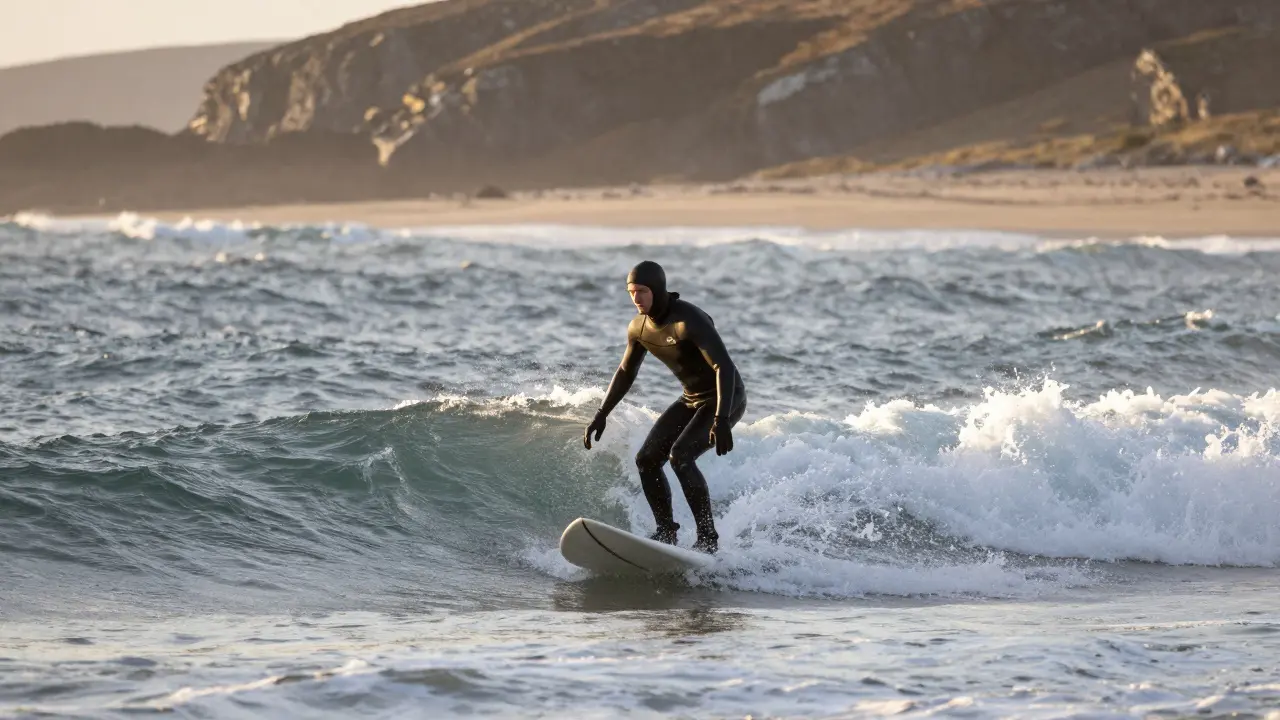
Scotland might not be the first place you think of for surfing, but if you’ve ever stood on a cold beach with a wetsuit on, waiting for the next set, you know it’s one of the most rewarding places to ride waves. The North Atlantic doesn’t care about your expectations-it delivers consistent swells, empty lineups, and a raw, wild beauty you won’t find in crowded tropical spots. You don’t need perfect weather. You just need the right gear, the right timing, and the right beach.
Why Scotland Surfs Better Than You Think
Most people assume surfing needs warm water and sunny skies. That’s not true here. Scotland gets swells from storms rolling in off the North Atlantic, often hitting the west and north coasts with 3-6 foot waves, sometimes even bigger. The best waves come between October and March, when the ocean is most active. Water temperatures hover between 6°C and 11°C all year. That’s cold. But with a good 5/4mm wetsuit, hood, boots, and gloves, you’ll stay warm enough to ride for hours.
Surfing in Scotland isn’t about tropical vibes. It’s about solitude. You might have the whole beach to yourself, even on a Saturday. No long lines. No crowded parking lots. Just you, the wind, and the rhythm of the sea.
Best Surf Beaches in Scotland
Not every beach in Scotland surfs well. Tide, swell direction, and bottom shape matter. Here are the top five spots that consistently deliver.
- Pease Bay (East Lothian) - Just south of Dunbar, this is the most reliable beach for beginners and intermediates. The sandbar breaks cleanly on mid to high tides, with gentle walls perfect for learning. It’s sheltered from northerly winds and has easy access from the A1. In winter, the waves can hit 6 feet, but it’s still one of the safest spots in the country.
- Whitburn (West Lothian) - A hidden gem with a long, forgiving right-hander that works best on a southwest swell. The beach is less crowded than Pease Bay, and the water is slightly warmer thanks to its position in the Firth of Forth. It’s ideal for longboarders and anyone looking to catch longer rides.
- Port Appin (Argyll) - On the west coast, this spot gets the full force of Atlantic swells. It’s a powerful left-hand reef break that’s best for experienced surfers. The water is colder here, and the access is steep, but when the swell lines up, it’s one of the most beautiful waves in the UK. The nearby village has a pub where you can warm up after.
- Clachtoll (Northwest Highlands) - Remote, rugged, and wild. This is where Scotland’s biggest waves show up. The beach faces directly west, catching swells from deep Atlantic lows. It’s not for beginners-rocky entry, strong currents, and no lifeguards. But if you’ve got the skills and the right forecast, this is your playground. The surrounding cliffs and mountains make it feel like surfing on another planet.
- Strathcarron (Ross-shire) - A lesser-known spot that turns on when other beaches are flat. It’s a sand-bottom beach break that works on both northwest and southwest swells. The water is freezing, but the waves are clean and consistent. Locals here know the tide times better than anyone. Ask around at the village shop-they’ll point you to the best takeoff zone.
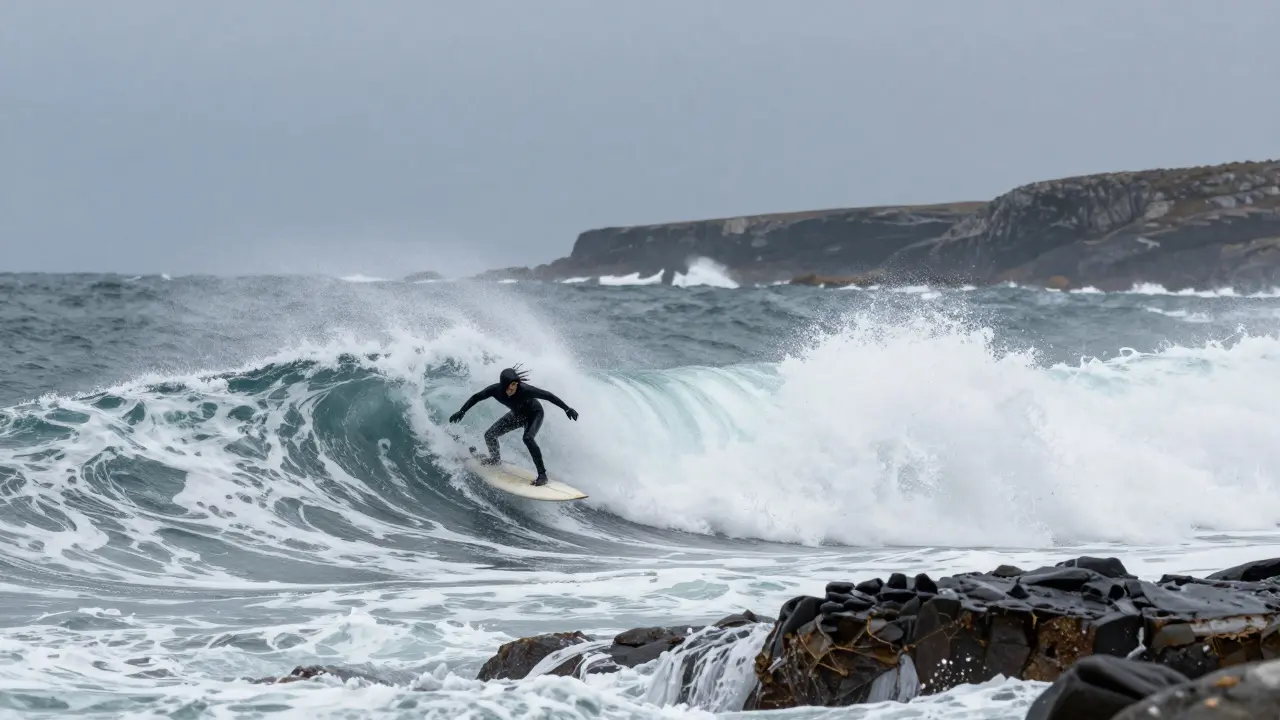
Seasonal Conditions: When to Go
Surfing in Scotland isn’t a summer activity. If you’re waiting for sunshine, you’ll be waiting forever. The real season runs from late September to April. Here’s what to expect month by month.
- September-October - The ocean starts to wake up. Swells begin to pick up, and water temperatures are still around 11°C. Fewer people on the beach. Great time to get your winter gear ready.
- November-January - Peak season. Storms from the Atlantic bring consistent swells, often 4-8 feet. Water temps drop to 6-8°C. You’ll need a thick hood and gloves. Wind direction matters-northwesterlies are best for west coast spots, easterlies for the east.
- February-March - Still solid waves. Snowmelt and rain can make river mouths choppy, but offshore winds clean things up. Some days are glassy, with air temps hovering just above freezing. The light is golden, and the silence on the beach is unreal.
- April - The swell starts to fade, but the water begins to warm. It’s a great time to catch late-season storms before the summer lull.
Summer months (May-August) are quiet. Waves are small, rarely over 2 feet. The water warms to 12-14°C, but the lack of swell makes it more of a paddle-out-and-sunbathe kind of scene. Not worth it unless you’re just practicing.
What You Need to Bring
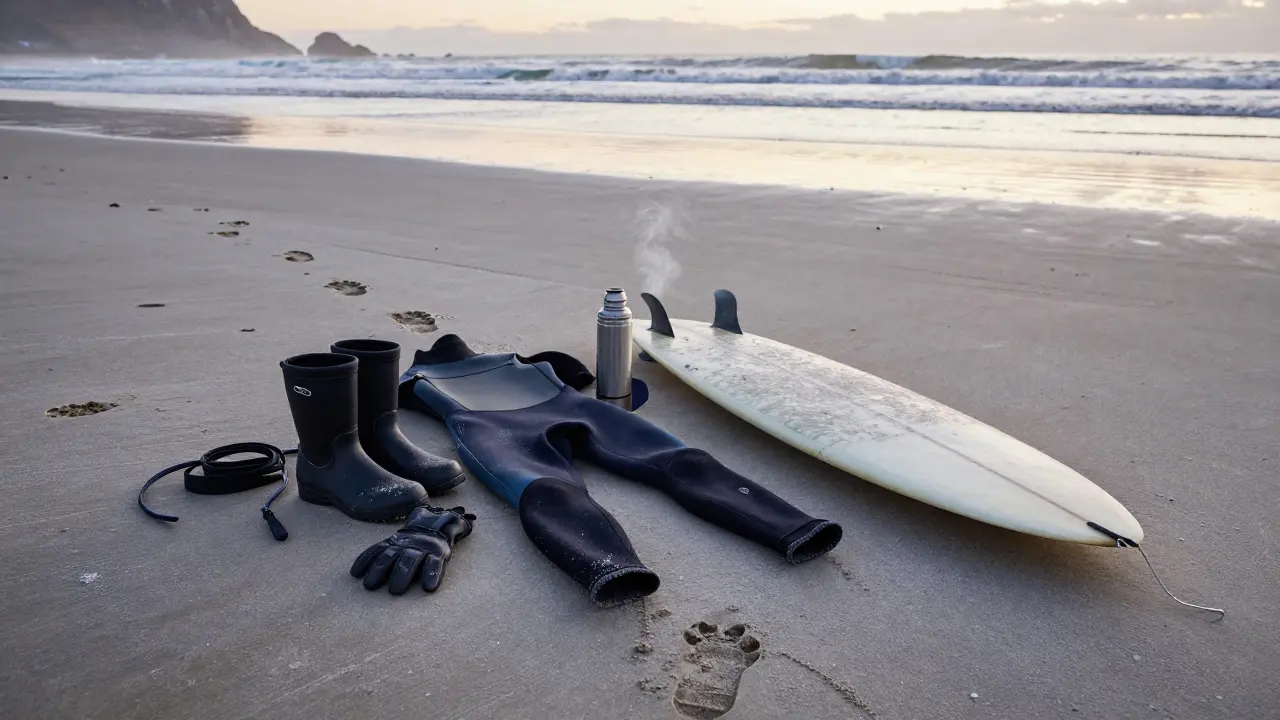
You can’t surf Scotland with a thin summer wetsuit. Here’s what actually works:
- Wetsuit - 5/4mm or 6/5mm full suit. Hooded suits are non-negotiable.
- Boots - 5mm thick, with good grip. Rocky entries and cold sand will ruin bare feet fast.
- Gloves - 3-5mm neoprene. Your hands will go numb without them.
- Leash - A strong, 7-foot coiled leash. The currents here are strong, and losing a board in a 10-foot wave is not an option.
- Thermal layers - Wear a polypropylene base layer under your wetsuit. It makes a huge difference.
- Hot drink and towel - Seriously. A thermos of tea and a quick-dry towel are as essential as your board.
Don’t forget a waterproof bag for your car keys and phone. Saltwater and electronics don’t mix.
Local Tips and Safety
Scotland’s coastline is beautiful, but it’s also dangerous. Here’s what you need to know:
- Check the forecast - Use Surfline or Magicseaweed with local wind data. Offshore winds (blowing from land to sea) make the waves cleaner. Onshore winds make everything messy.
- Tides matter - Some spots only work at high tide (like Pease Bay). Others, like Clachtoll, are better at low tide. Always check tide charts.
- Watch for rip currents - They’re common on west coast beaches. If you’re pulled out, don’t fight it. Swim parallel to shore until you’re free, then head in.
- Never surf alone - Even if you’re experienced. If something goes wrong, you’ll need help fast.
- Respect local surfers - Most surfers here are locals who’ve been riding these waves for years. Don’t drop in. Don’t hog the best takeoff zone. A nod and a smile go a long way.
What Makes Scotland Surfing Unique
Surfing here isn’t about trophies or Instagram posts. It’s about the quiet moments-the way the light hits the water at 7 a.m. on a frosty morning, the smell of salt and wet wool, the silence between sets. You won’t find palm trees or beach bars. But you’ll find something better: authenticity.
Scotland’s coastline has been shaped by ice, wind, and time. The waves here don’t care if you’re a pro or a beginner. They just roll in, and if you’re ready, they’ll carry you.
Can you surf in Scotland in winter?
Yes, winter is actually the best time to surf in Scotland. Between November and February, Atlantic storms generate consistent swells, often 4-8 feet high. Water temperatures drop to 6-8°C, so a thick 5/4mm or 6/5mm wetsuit, hood, gloves, and boots are essential. The beaches are empty, and the conditions are often clean with offshore winds. Many local surfers consider this the real surfing season.
Is surfing in Scotland dangerous?
It can be, if you’re unprepared. The cold, strong currents, and rocky entries make it risky. Always check tide and swell forecasts before heading out. Never surf alone. Be aware of rip currents, especially on west coast beaches like Clachtoll and Port Appin. Wear a leash, carry a dry bag for your phone and keys, and respect the ocean-it doesn’t forgive mistakes.
Do I need a wetsuit hood in Scotland?
Absolutely. Water temperatures rarely rise above 11°C, even in summer. A hood is critical to prevent heat loss from your head, which is the fastest way your body loses warmth. Many surfers here wear a 5mm hooded suit year-round. Skipping it means you’ll be shivering before you even catch your first wave.
Are there surf schools in Scotland?
Yes, especially around Pease Bay and Whitburn. Several local instructors offer lessons for beginners, including gear rental. Most schools operate from October to April, when the surf is best. They teach cold-water safety, how to read local conditions, and how to handle the strong currents. Even experienced surfers take a lesson here-conditions change fast, and locals know the secrets.
Can you surf in Scotland in summer?
Technically, yes-but it’s not worth it. Summer waves are usually under 2 feet, with weak swells and inconsistent wind. Water warms to 12-14°C, which is more comfortable, but the lack of power makes it hard to ride anything meaningful. Most surfers use summer to repair gear, train on land, or travel elsewhere. If you’re looking for real surfing, come back between October and March.
Comments (11)
-
Janiss McCamish February 22, 2026
Surfing in Scotland sounds insane-and I love it. No crowds, just raw nature. I’ve surfed in Hawaii and Indonesia, but this? This feels real.

-
Richard H February 22, 2026
Why would anyone surf in freezing water when you’ve got California? This is just masochism with a view.

-
Kendall Storey February 23, 2026
Bro, you’re talking about peak surf conditions here. 5/4mm suit? Hood? Gloves? You’re not just surfing-you’re prepping for a polar expedition. And honestly? That’s the vibe. No tourists. No Instagram filters. Just you, the ocean, and a whole lot of grit.
Clachtoll is the holy grail. I’ve been there twice. First time, I wiped out into a rock garden and nearly lost my board. Second time? I caught a 7-footer that felt like riding a glacier. Worth every frostbitten toe.
Also-thermal base layer? Non-negotiable. I tried skipping it once. Ended up shivering in my car for 45 minutes while trying to start the engine. Never again.

-
Steven Hanton February 24, 2026
The depth of insight in this post is remarkable. It’s clear that the author has spent considerable time observing and engaging with the Scottish surf community. The emphasis on solitude, environmental awareness, and respect for local customs reflects a profound understanding of the culture surrounding this activity.
Moreover, the seasonal breakdown provides a scientifically grounded framework for planning, and the gear recommendations are both practical and evidence-based. I appreciate how the post avoids romanticizing the experience while still conveying its intrinsic value.
For those unfamiliar with cold-water surfing, this serves as an excellent primer-not just on technique, but on ethos.

-
Pamela Tanner February 26, 2026
Correction: The Firth of Forth doesn’t make Whitburn’s water warmer-it’s still cold. The perception of warmth is likely due to reduced exposure to direct Atlantic swells, not actual temperature increase. Also, ‘forgiving right-hander’ is inaccurate-it’s a peel, not a long ride. Don’t mislead beginners.

-
Kristina Kalolo February 26, 2026
Interesting. I didn’t realize Scotland had such consistent swells. I always assumed it was too cold and windy to surf properly.

-
ravi kumar February 27, 2026
My cousin lives in Inverness. He says Port Appin is the only spot worth riding. Said he once saw a 10-footer there in January. No one else was out. Just him and a seal watching.

-
Megan Blakeman February 27, 2026
I love how you said it’s not about trophies… it’s about the quiet moments…
That’s everything.
That’s why I keep coming back to the ocean, no matter where I am.
Even if it’s freezing.
Even if no one else is there.
Even if my fingers turn blue.
It’s the silence between the waves… that’s the part that heals you.
Thank you for writing this.

-
Akhil Bellam February 28, 2026
Oh wow, so you’re telling me that Scotland-yes, the land of haggis, bagpipes, and rainy Tuesdays-is somehow the ‘real’ surfing paradise? Please. You’re romanticizing a damp, wind-blasted rock with bad coffee and no sunscreen.
Real surfers go to Bali. Or Pipeline. Or Teahupoo. Not some soggy Scottish cliff with a ‘pub 200 yards away’ as a consolation prize.
This isn’t surfing-it’s endurance training with a side of existential loneliness.

-
Amber Swartz February 28, 2026
Okay but like… did anyone else cry when they read about the golden light at 7 a.m.??
I’m not even a surfer and I’m sobbing into my oat milk latte.
That line about ‘the smell of salt and wet wool’??
That’s my soul.
Someone call the New York Times. This needs to be a documentary.
Also-why is no one talking about the emotional trauma of losing your board in a 10-footer??
That’s a whole therapy session right there.

-
Robert Byrne March 1, 2026
You say ‘never surf alone’-but you also say ‘you might have the whole beach to yourself.’ That’s not a contradiction, it’s a warning. If you’re alone, you’re not just alone-you’re vulnerable. And if you get caught in a rip at Clachtoll? You’re not coming back. So yes, bring a buddy. Or at least tell someone where you’re going. Basic safety. Not ‘adventure.’
Also-‘hot drink and towel’? That’s not a tip. That’s a survival requirement. You’re not ‘bringing’ them. You’re *carrying* them like oxygen. Don’t be cute about it.
