
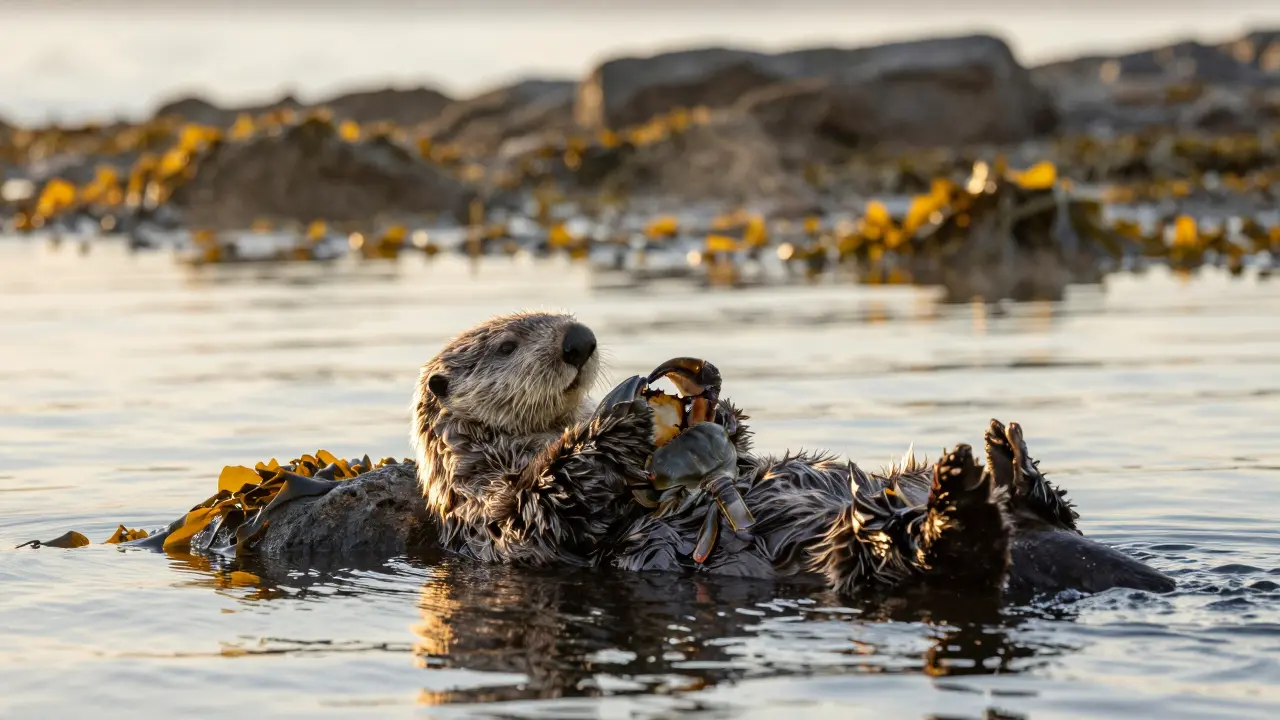
Sea otters aren’t supposed to be in Scotland. At least, that’s what most people think. You’ll hear it from locals in the Highlands: "They’re a Canadian thing," or "Those are river otters, not sea otters." But if you’ve ever stood on a rocky shore near the Firth of Tay or the west coast of Skye at dawn, you’ve probably seen one. Sleek, dark, floating on its back, crunching a crab between its paws. That’s not a river otter. That’s a sea otter-and they’re here, and they’re growing in number.
Sea Otters Are Back in Scottish Waters
Sea otters (Enhydra lutris) were once native to Scotland’s coasts, hunted to extinction by the 18th century for their thick, water-repellent fur. For over 200 years, they were gone. Then, in the late 1970s, a few started showing up. No one knew where they came from. Some thought they’d swum from Norway, where a small population had been reintroduced. Others believed they were escapees from a failed zoo project in the 1950s. The truth? They likely drifted over from the Faroe Islands or Iceland, riding ocean currents. Either way, they stuck around.
Today, the Scottish sea otter population is estimated at 1,200-1,500 individuals, mostly concentrated along the west coast-from the Isle of Mull to the Outer Hebrides. But they’re spreading. In the last five years, sightings have increased along the Firth of Forth, the Moray Firth, and even near Dundee. The Scottish Wildlife Trust tracks these movements. Their data shows a 40% rise in confirmed sightings between 2020 and 2025. They’re not just passing through. They’re settling.
How to Tell a Sea Otter from a River Otter
If you think you’ve seen one, don’t jump to conclusions. River otters are common in Scotland. They’re smaller, darker, and spend most of their time on land. Sea otters? They live almost entirely in the water. Here’s how to tell them apart:
- Size: Sea otters are larger-up to 1.5 meters long and 30-45 kg. River otters are about half that size.
- Behavior: Sea otters float on their backs, often using rocks to crack open shellfish. River otters swim belly-down and rarely float.
- Face shape: Sea otters have rounded, almost dog-like faces. River otters have longer, narrower snouts.
- Fur: Sea otters have the densest fur of any mammal-up to one million hairs per square inch. It looks fluffy, almost like a wet mop. River otters look sleek and smooth.
One telltale sign: if you see an otter using a rock as a tool, it’s almost certainly a sea otter. River otters don’t do that. This behavior is rare in mammals and makes sea otters one of the few non-primate species known to use tools.
Best Places to See Sea Otters in Scotland
You don’t need a boat or a guide to spot them. Many sightings happen from shore. Here are the top five reliable spots right now:
- Isle of Mull - Especially around Tobermory Bay and the Sound of Mull. Boat tours from Fionnphort regularly report otters. Best time: early morning or just before sunset.
- Loch Sunart - A deep sea loch near Fort William. Otters frequent the kelp beds here. Look for them near the mouth of the loch, where the tide pulls in crabs and clams.
- Isle of Skye - The Trotternish Peninsula and the Cuillin Hills coastline. The rougher waters here attract more prey, which means more otters.
- Firth of Tay - Around Newport-on-Tay and Broughty Ferry. Sightings have jumped 70% since 2022. Look for them near the estuary’s rocky outcrops at low tide.
- North Uist and Benbecula - Remote, quiet, and rich in shellfish. This is where the population is growing fastest. Locals here call them "the water cats."
Don’t expect to see them every day. They’re shy, and weather matters. Calm, clear mornings after a low tide are your best bet. Windy days? They’ll stay hidden in kelp beds.
Tips for Spotting Sea Otters Without Disturbing Them
Seeing a sea otter is special. Ruining it by getting too close isn’t worth it. Here’s how to watch them right:
- Stay at least 50 meters away. That’s about the length of a tennis court. Use binoculars or a zoom lens. If you’re on a boat, cut the engine and drift.
- Don’t approach from the water. Otters are easily startled by sudden movement. Approach from land, and move slowly.
- Never feed them. It’s illegal under the Wildlife and Countryside Act 1981. Feeding changes their behavior, makes them dependent, and can kill them. A single human snack-like a piece of bread or a fish stick-can disrupt their entire diet.
- Keep dogs on a leash. Even calm dogs can chase otters. Otters don’t know dogs aren’t predators. They’ll flee, burn energy, and sometimes drown trying to escape.
- Be quiet. Loud noises-phones, music, shouting-send them diving. If you hear a high-pitched chirp or a soft growl, you’re too close.
One thing I’ve learned living in Dundee: the best sightings happen when you’re not looking for them. You’re walking the beach after a storm, picking up driftwood, and then-there’s a ripple. A dark shape. A head pops up. You freeze. It looks right at you. Then it rolls onto its back, opens its mouth, and starts eating. That’s the moment. Don’t ruin it with your phone.
Why Sea Otters Matter to Scotland’s Coast
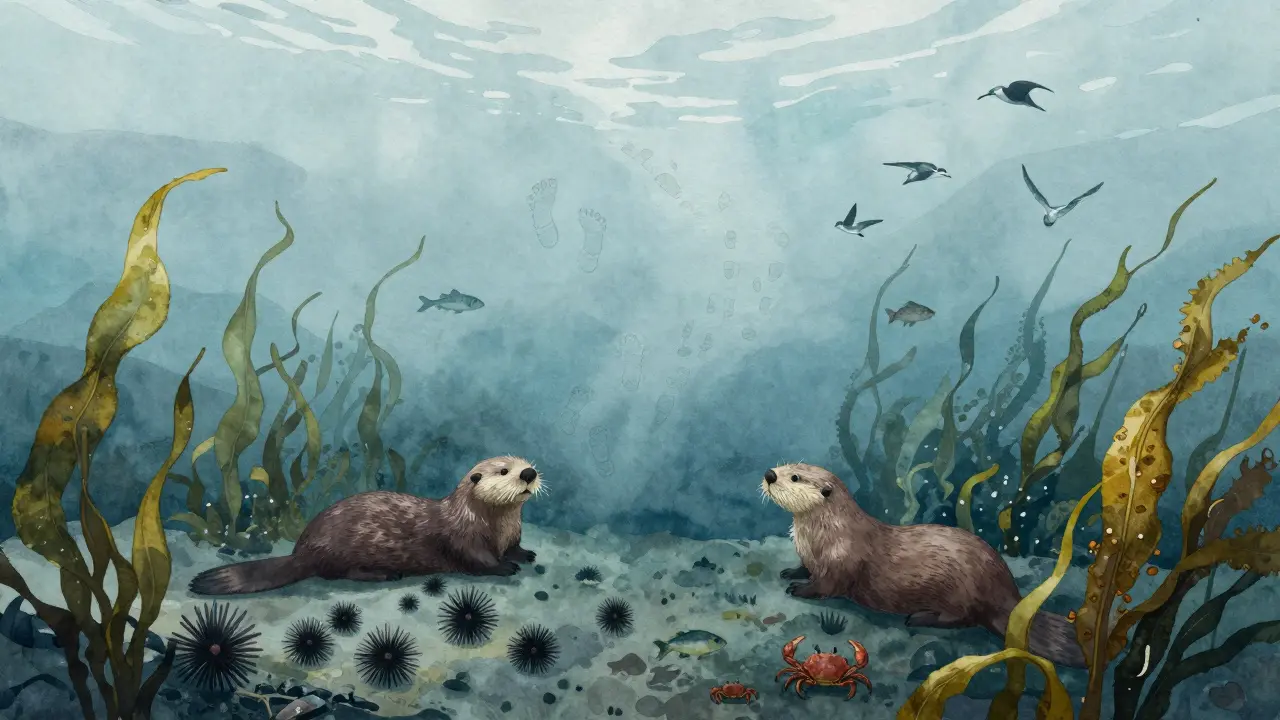
Sea otters aren’t just cute. They’re ecosystem engineers. They eat sea urchins-and sea urchins eat kelp. Without otters, urchin populations explode, turning rich kelp forests into barren underwater deserts. Kelp forests absorb carbon, shelter fish, and protect coastlines from erosion. In areas where otters have returned, kelp has rebounded by up to 60% in five years.
Scientists from the University of St Andrews have tracked this. In Loch Sunart, where otter numbers have stabilized, kelp coverage has doubled. Fish populations-like cod and flatfish-have returned. Even seabirds like guillemots are nesting closer to shore because the water’s healthier.
Scotland’s marine environment is under pressure from warming waters and overfishing. Sea otters are a rare win. They’re not invasive. They’re native. And they’re helping fix damage we caused centuries ago.
What to Do If You See a Sick or Injured Otter
Most otters you see will be healthy. But sometimes, you’ll spot one that’s floating listlessly, covered in oil, or lying on a beach with open wounds. Don’t touch it. Don’t try to help. Just do this:
- Take a photo from a distance.
- Write down the exact location-GPS coordinates if you can.
- Call the Scottish SPCA at 03000 999 999. They have a 24/7 wildlife rescue line.
- Stay nearby, but out of sight, until help arrives.
Oil spills are the biggest threat. A single liter of diesel can kill an otter by destroying its fur’s insulating properties. If you see oil on the water, report it immediately to the Scottish Environment Protection Agency (SEPA). Every minute counts.
Seasonal Patterns and Best Times to Visit
Sea otters are active year-round, but their behavior changes with the seasons:
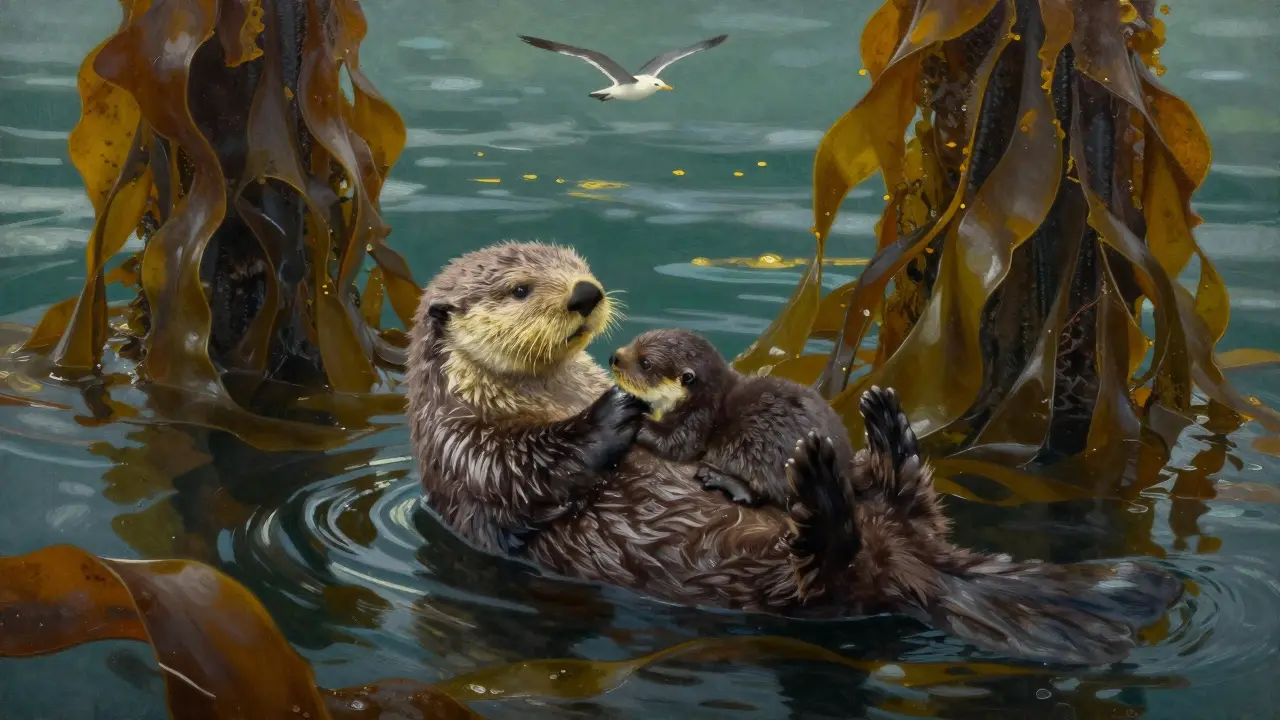
- Spring (March-May): Mothers with pups are most visible. Pups are born in May and stay close to their moms for months. Look for them clinging to their mother’s belly while she floats.
- Summer (June-August): Peak activity. Long daylight hours mean more feeding. Best time: 6-8 a.m. and 7-9 p.m.
- Autumn (September-November): Otters bulk up for winter. They eat more-sometimes up to 25% of their body weight daily. You’ll see them working harder at rocks.
- Winter (December-February): Hardest time. Cold, storms, and fewer prey. But sightings can be more frequent near sheltered bays. Winter is also when you’re least likely to be crowded by tourists.
December is quiet. The wind bites. The sea is gray. But if you’re out at dawn, wrapped in a thick coat, you might see one-alone, floating, eating. That’s when you’ll understand why they’re here. Not because they were brought. Not because they were saved. But because they chose to come back.
Responsible Wildlife Watching in Scotland
Watching sea otters isn’t just about seeing something rare. It’s about respecting a species that’s rebuilding its place in a landscape we once destroyed. Every time you keep your distance, stay quiet, or report a problem, you’re helping them survive.
There are no guided otter tours in Scotland. That’s intentional. The government and conservation groups want to keep it wild. No crowds. No noise. No plastic. Just you, the coast, and the otters.
If you’re planning a trip, bring binoculars, a field guide, and a notebook. Write down the date, time, location, and what you saw. Submit your sightings to the Scottish Wildlife Trust’s Otter Watch. You don’t need to be a scientist. Your observation could help track their spread.
Sea otters aren’t just visitors. They’re part of Scotland now. And if you’re lucky enough to see one, remember: you’re not just watching wildlife. You’re witnessing a quiet comeback.
Are sea otters dangerous to humans?
No, sea otters are not dangerous to humans. They’re shy, avoid people, and have no interest in attacking. They’re not aggressive, even when protecting their young. The only risk comes from getting too close-disturbing them can cause stress or force them to flee, which wastes energy they need to survive. Always observe from a distance.
Can I see sea otters in Scotland without a boat?
Yes, absolutely. Most sightings happen from shore. Popular spots like Newport-on-Tay, Tobermory, and the Trotternish Peninsula on Skye offer excellent land-based viewing. Use binoculars or a zoom lens. Low tide is best-you’ll see them near rocks and kelp beds. No boat needed.
What’s the difference between sea otters and river otters in Scotland?
River otters are smaller, swim belly-down, and live near rivers and lakes. Sea otters are larger, float on their backs, use rocks to crack shellfish, and stay mostly in saltwater. River otters are common across Scotland; sea otters are rare and only found along the coast. If you see one using a rock as a tool, it’s definitely a sea otter.
Are sea otters protected in Scotland?
Yes. Sea otters are protected under the Wildlife and Countryside Act 1981 and the EU Habitats Directive (still enforced in Scotland post-Brexit). It’s illegal to kill, injure, disturb, or feed them. Violations can result in fines up to £5,000 and up to six months in prison. Always keep your distance and never interfere.
When is the best time of year to see sea otters in Scotland?
Summer (June-August) offers the most consistent sightings due to longer days and higher activity. But winter (December-February) is the quietest and often the most rewarding-fewer people, more otters near sheltered bays. Spring is ideal for seeing mothers with pups. Dawn and dusk are the best times of day, regardless of season.
Comments (11)
-
Adrienne Temple December 26, 2025
Just saw my first sea otter near Tobermory last week-floating on its back, crunching a mussel like it was popcorn 😊 I cried. Like, actual tears. Who knew Scotland could feel this wild?

-
Sandy Dog December 28, 2025
Okay but imagine if they ALL just showed up one day like, "Hey, we’re back, and we brought our rock tools and our 1-million-hairs-per-square-inch fur and we’re not leaving this time." Like, the drama! The *narrative*! 🎭 The fact that they chose to come back after 200 years of being erased? That’s not just biology-that’s a movie. A Disney+ limited series. With a soundtrack by Sigur Rós. And a crying narrator. I’m already crying again.

-
Nick Rios December 28, 2025
I love how this post doesn’t treat them like a novelty. They’re not a tourist attraction. They’re just… home. And that’s what makes it powerful. We didn’t save them. They saved themselves. And now they’re fixing what we broke. Quietly. Without asking for anything.

-
Amanda Harkins December 30, 2025
It’s weird how something so small-just a few pounds of fur and instinct-can undo centuries of human damage. Like, we blew up ecosystems with industrial greed, but one otter with a rock can rebuild a forest under the sea. Makes you wonder what else we’ve underestimated. Or worse-what we’re still ignoring.

-
Jeanie Watson December 30, 2025
Yeah okay cool otters. But can we talk about how many people are gonna start showing up now? I mean, someone’s gonna post a TikTok with a filter that says "Otter Watch 2025" and suddenly it’s like Jurassic Park but with kelp.

-
Tom Mikota December 30, 2025
Wait-"one million hairs per square inch"? That’s mathematically impossible. That’s like 150,000 hairs per square centimeter. Even the densest fur on Earth doesn’t hit that. Someone’s been reading clickbait. Also-"non-primate species known to use tools"? What about octopuses? They use coconut shells. You’re oversimplifying.

-
Mark Tipton January 1, 2026
Let’s be honest: this isn’t a natural return. It’s a covert bio-engineering experiment. The Faroe Islands? No. Iceland? No. The real source? A secret NATO marine biology project from the 1970s. They were testing keystone species restoration in cold-water ecosystems. The otters were never meant to stay. But they evolved. Adapted. And now they’re… thriving. Which means someone lost control. And if they’re thriving, what’s next? Are the seals next? The whales? Are we being watched? By otters?

-
Adithya M January 3, 2026
Actually, the fur density number is correct. Sea otters have up to 1 million hairs per square inch-that’s 155 million per square centimeter. It’s the highest of any mammal. And yes, they’re the only non-primate mammals that use tools consistently. You’re wrong, Tom. And you’re being rude about it.

-
Jessica McGirt January 4, 2026
Thank you for writing this with such care. The part about not disturbing them-even the quiet moments-is everything. I’ve seen people with drones hovering over otters. It breaks my heart. You didn’t just inform. You reminded us how to be better guests on this planet.

-
Salomi Cummingham January 5, 2026
I’ve lived on the west coast of Scotland for 40 years. I’ve seen river otters darting through reeds since I was a child. But the first time I saw a sea otter-floating on its back, sunlight glinting off its fur like it was wearing a crown-I thought I was dreaming. My husband said, "That’s not possible." I said, "Then why is it here?" And now? Now I bring my grandchildren. I tell them: "This is what happens when you stop trying to own the wild. It comes back. Not because we begged it. Because it chose to."
I cry every time.

-
Johnathan Rhyne January 5, 2026
Okay but the title says "Sea Otters in Scotland" like it’s a surprise. Newsflash: they’ve been here since the 70s. And you’re acting like this is some magical rewilding fairytale. Meanwhile, the real story is that the government quietly stopped enforcing anti-poaching laws in the Outer Hebrides because tourism revenue went up. This isn’t nature healing. It’s capitalism with a cute mascot.
