
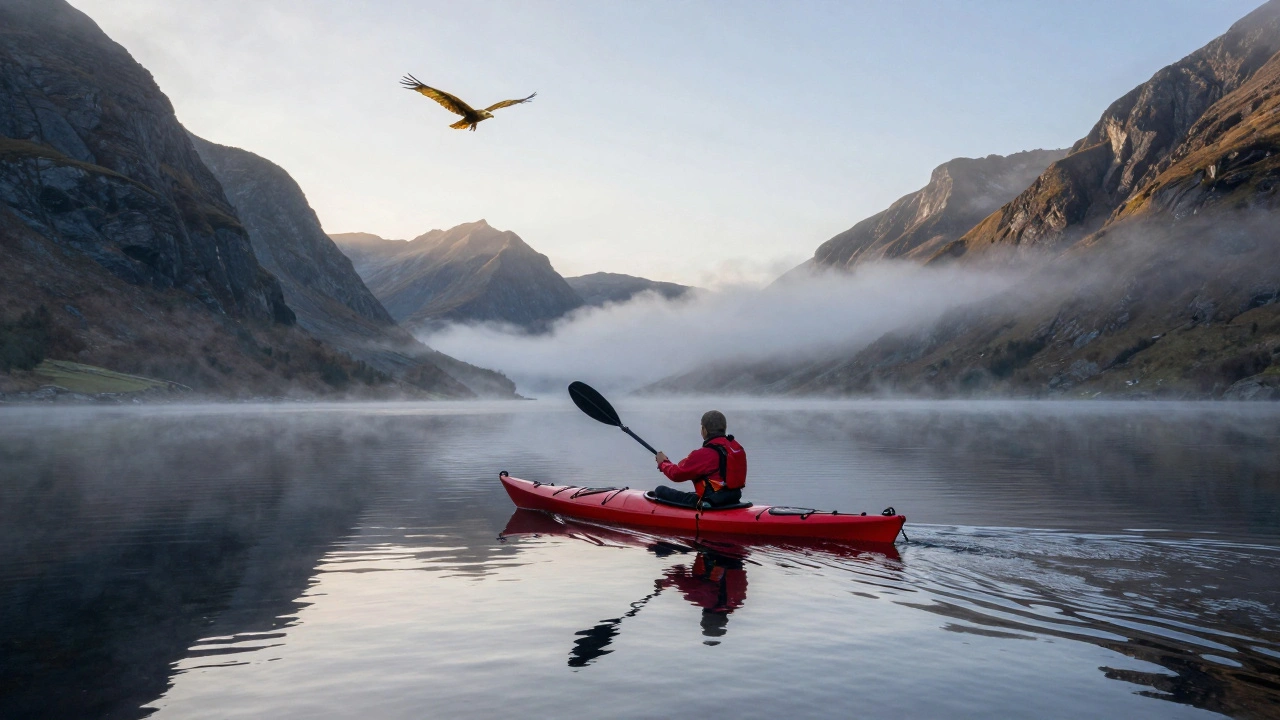
Most people come to the Isle of Skye for the hikes. The Old Man of Storr, the Quiraing, the Fairy Pools - they’re iconic, sure. But if you’ve only ever walked these trails, you’ve only seen half the story. Skye isn’t just about climbing rocks. It’s about gliding through glassy sea lochs, casting a line into waters that hold salmon and sea trout, and sitting quietly as a seal pops up beside your kayak. The real magic happens when you leave the footpaths and get on the water or into the wild.
Kayaking the Sea Lochs
Kayaking on Skye isn’t just a sport - it’s a way to see places no one reaches on foot. The sea lochs like Loch Brittle, Loch Scavaig, and Loch Harport are calm enough for beginners but wild enough to feel like an expedition. You paddle past cliffs that drop straight into deep blue water, past hidden caves where seals haul out in the sun, and through channels where the tide rushes like a river.
You don’t need to be an expert. Local outfitters in Portree and Dunvegan rent sit-on-top kayaks with waterproof storage, life jackets, and maps. A two-hour guided tour costs around £45 and includes safety training. If you’re confident, you can rent a kayak for the day - £35 for a single, £55 for a tandem. The best time? Early morning, when the wind hasn’t picked up and the light turns the water silver.
One summer morning, I paddled from the base of the Cuillin toward Loch Coruisk. No one else was out. Just me, the echo of a golden eagle overhead, and the occasional splash of a fish jumping. When I rounded the corner and saw the loch surrounded by black peaks, I understood why locals call it the most beautiful place in Scotland. You can’t hike to that view. You have to get there by water.
Fishing in Skye’s Rivers and Seas
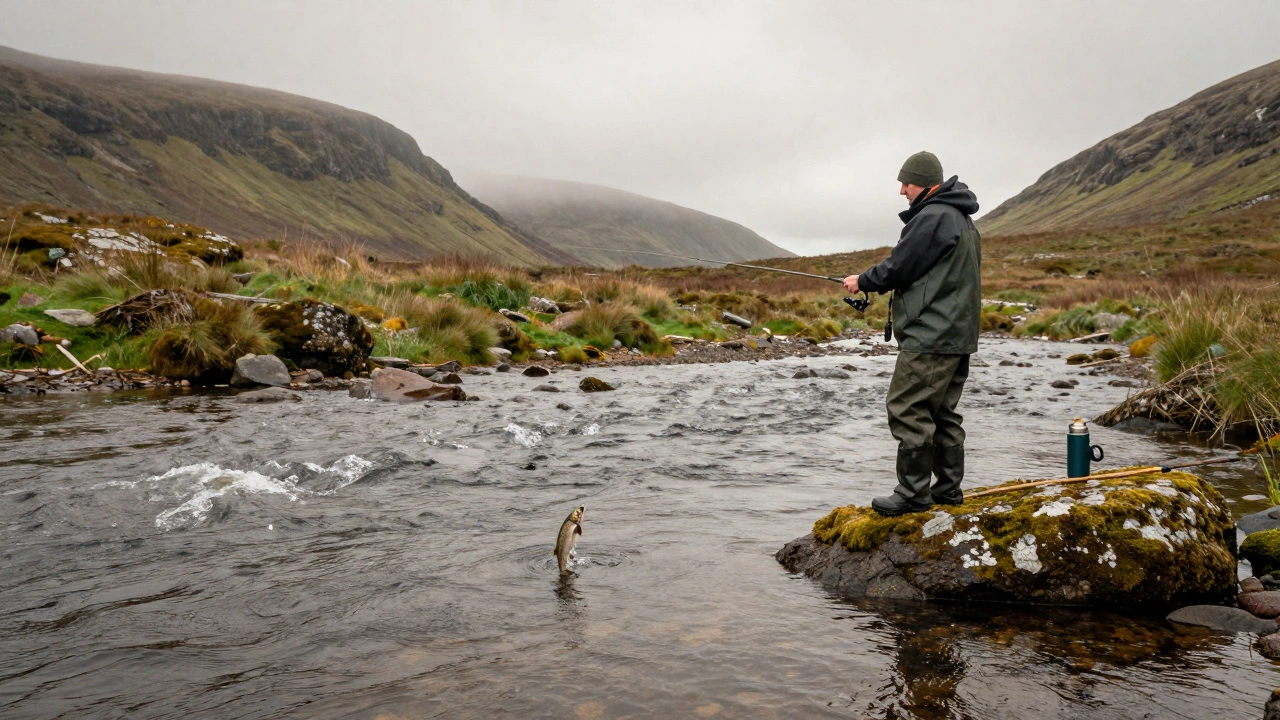
Skye’s rivers are legendary for salmon and sea trout. The River Snizort, the River Sligachan, and the River Freshwater West all run clear and cold, fed by mountain springs. You don’t need a fancy rod - just a simple spinning setup with a silver spoon or a wet fly. Most stretches are open from March to October, with peak season in June and July.
Fishing licenses are required. You can buy a daily permit for £15 from the Skye Angling Association or local shops in Portree. No need to book far ahead unless you want a specific beat. Many local guides offer half-day trips for £120 - they’ll take you to the best pools, show you how to read the water, and even clean your catch.
One guy I met on the banks of the Sligachan had caught three sea trout by 9 a.m. He didn’t say much. Just handed me a coffee and pointed to a ripple near the undercut bank. "That’s where they lie," he said. I cast once. Then again. On the third try, the line jerked hard. It wasn’t big - maybe 2 pounds - but it fought like a demon. That’s the thrill. It’s not about how many you catch. It’s about being still, listening, and waiting for the water to tell you something.
For sea fishing, head to the west coast near Neist Point. From the shore, you can cast for mackerel, pollock, and cod. A simple handline with a piece of squid works better than expensive gear. Just watch the tide - high tide is best. And never fish alone on rocky outcrops. The waves here don’t care if you’re experienced.
Wildlife Watching Without the Crowds
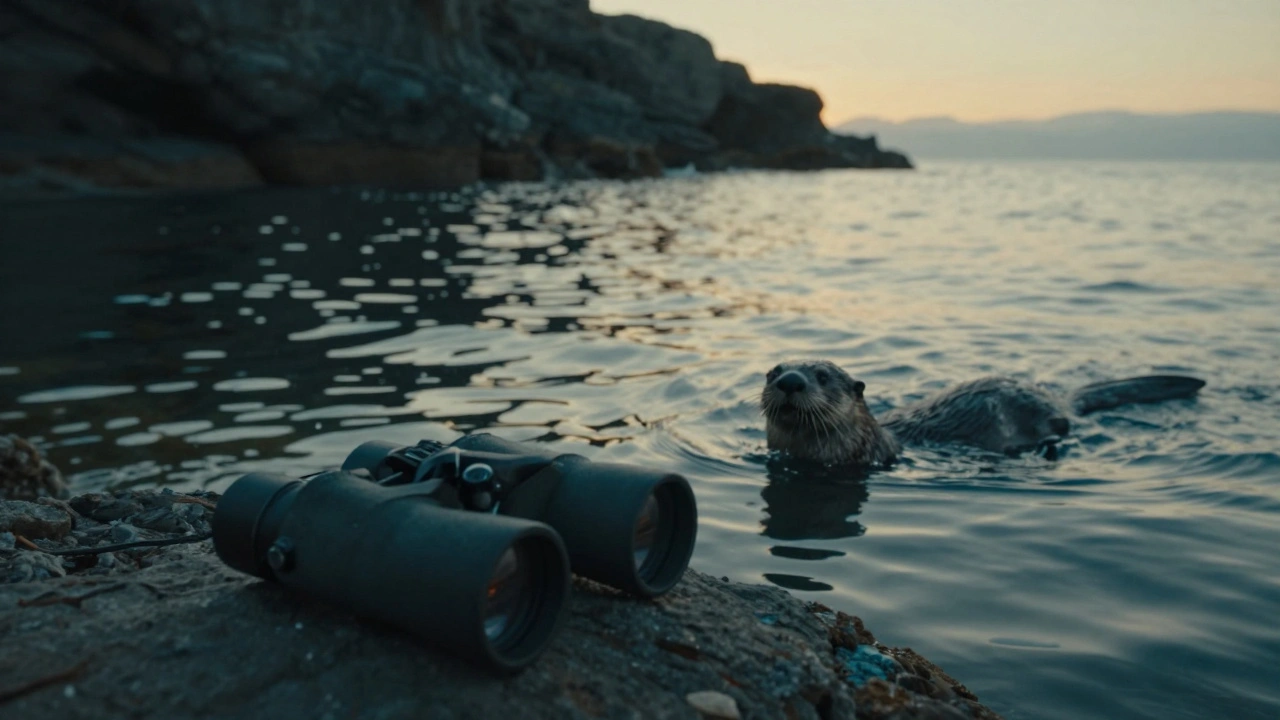
Everyone knows about the dolphins off the west coast. But did you know Skye has the highest density of otters in mainland Britain? Or that golden eagles nest in the Cuillin Ridge and can be seen circling at dawn?
Wildlife watching here isn’t about guided tours with loud speakers. It’s about patience and quiet. Pack a pair of binoculars, a thermos of tea, and head to the shores near Elgol or the tidal pools near Rubha Hunish. Otters are most active at dawn and dusk. Look for smooth ripples on the water - not from fish, but from their heads breaking the surface. They’re shy, but if you sit still for 20 minutes, they’ll often come close to investigate.
Seabird colonies are everywhere. On the cliffs of the Trotternish Peninsula, you’ll find puffins in May and June, guillemots, razorbills, and kittiwakes nesting in the rocks. The best spot? The viewpoint at Kilt Rock. Bring a telephoto lens if you’ve got one. You’ll see the birds diving for fish, their wings beating hard against the wind.
And then there are the whales. Minke whales pass through the Minch between May and September. You don’t need a boat - sometimes you can see them from the shore. Look for a dark, low fin breaking the surface, followed by a puff of mist. If you’re lucky, you’ll see one breach. I saw one last August from the car park at Staffin. No one else was around. Just me, the wind, and a 20-foot whale rising like a shadow from the deep.
What You Need to Know Before You Go
Weather changes fast on Skye. Even in summer, you’ll need waterproof layers, thermal base layers, and sturdy boots. A dry bag is non-negotiable if you’re kayaking or fishing. The wind off the sea can drop the temperature 10 degrees in minutes.
Book ahead for guided tours - especially kayak and wildlife trips. They fill up fast in July and August. But if you’re flexible, mid-May or early September gives you the best balance of good weather and fewer people.
Respect the land. Skye is wild, but it’s also fragile. Don’t disturb nesting birds. Don’t leave gear on beaches. Take everything you bring with you. And never feed wildlife - not even out of kindness. A seal that learns to beg from tourists ends up injured or killed.
There are no big resorts here. Most visitors stay in B&Bs, self-catering cottages, or campsites. The Skye Camping and Caravanning Club site near Dunvegan is clean, quiet, and just a 10-minute walk to the sea. It’s the best base for early morning kayak trips.
Why This Matters
Most travel guides treat Skye like a photo op. Climb the Storr. Snap the Fairy Pools. Check it off. But the island’s soul lives in the quiet moments - the silence between waves, the flicker of a fish taking your fly, the eyes of an otter watching you from the shore.
These aren’t just activities. They’re ways to connect with a place that doesn’t want to be seen - it wants to be felt. You don’t need to be an athlete or an expert. You just need to slow down. Put down your phone. Get on the water. Sit still. Let the sea, the wind, and the wild teach you what the trails never could.
Can you kayak on Skye without experience?
Yes. Most guided kayak tours on Skye are designed for beginners. You’ll get a safety briefing, life jacket, and basic paddling instruction. Sit-on-top kayaks are stable and easy to use. Many people with no prior experience have their first kayak trip on Skye and love it. Just avoid solo trips in rough conditions.
Do you need a fishing license to fish in Skye?
Yes. All freshwater fishing on Skye requires a permit from the Skye Angling Association. Daily permits cost £15 and are available online or at local shops in Portree. Sea fishing from the shore doesn’t require a license, but you must follow local regulations on size and catch limits.
When is the best time to see otters on Skye?
Dawn and dusk are the best times to spot otters. They’re most active during low light, especially in spring and summer. Head to the shores near Elgol, the mouth of Loch Brittle, or the tidal pools near Staffin. Bring binoculars and sit quietly - they’ll often appear within 15 to 30 minutes if you’re patient.
Can you see whales from the shore on Skye?
Yes. Minke whales pass through the Minch between May and September. You can often see them from high points like Neist Point, Kilt Rock, or the car park at Staffin. Look for a small dark fin followed by a puff of mist. They don’t come close to shore, but they’re visible with binoculars or a zoom lens.
Is it safe to fish alone on Skye’s coast?
No. The west coast of Skye has strong tides, sudden waves, and slippery rocks. Never fish alone on cliffs or rocky outcrops. Always let someone know where you’re going. Wear a life jacket even on shore. Conditions change fast - what looks calm can turn dangerous in minutes.
Comments (9)
-
Gabby Love December 4, 2025
I went to Skye last fall and did a two-hour kayak tour from Portree. Honestly, I was nervous as hell-never paddled before. But the guide was patient, the water was calm, and by the end, I felt like I’d discovered a secret world. The cliffs just... disappear into the sea. No hiking trail does that.
Also, the seal that popped up beside us? Looked me right in the eye. Didn’t move. Just stared. I think it was judging my technique.

-
Jen Kay December 4, 2025
How charming. A whole essay on how to be a quiet, sensitive soul in nature while the rest of us are out here trying to survive capitalism. But sure, let’s pretend fishing with a £15 permit and a $35 kayak is some kind of spiritual enlightenment. Meanwhile, my cousin caught a 40-pound salmon in Alaska with a stick and a piece of string. He didn’t need a guide. Or a dry bag. Or a thermos of tea.
Just saying.

-
Michael Thomas December 6, 2025
USA has better fishing. Better kayaking. Better everything. Skye’s just a pretty postcard with bad weather. You want real wilderness? Go to Alaska. Stop romanticizing soggy rocks.

-
Abert Canada December 7, 2025
Man, I grew up in Nova Scotia, so I get it. The quiet stuff-that’s the real deal. I once sat on a rock near Cape Breton for an hour just watching an otter groom itself. Didn’t move. Didn’t breathe. Just watched.
Same energy as Skye. No one else around. Just the tide and the wind. You don’t need to prove you’re brave. You just need to be still. And yeah, the locals? They’ll give you coffee without saying a word. That’s the Canadian way too.
Also, if you’re fishing the Sligachan, try the red fly at dawn. Works every time.

-
Xavier Lévesque December 9, 2025
So you’re telling me the real magic of Skye is... not hiking? Wow. Groundbreaking. I guess the 500,000 people who come here every year just missed the memo. Guess I’ll trade my hiking boots for a kayak and a thermos of Earl Grey.
Meanwhile, I’m out here trying to get my kids to stop yelling at each other in the car. Maybe I’ll just take them to Walmart and call it a ‘wildlife experience.’

-
Sandi Johnson December 9, 2025
That bit about the seal staring at you? Yeah. That happened to me too. Not on Skye-on the west coast of Newfoundland. Same silence. Same judgment.
Also, the guy who gave you coffee on the river? He’s probably a retired fisherman who’s seen 30 years of tourists with fancy rods and zero patience. He didn’t say much because he knew you’d figure it out.
And yeah, the otters? They’re shy. But they remember you. If you come back, they’ll show up. Just don’t bring snacks. They’ll think you’re a snack vendor.

-
Eva Monhaut December 10, 2025
There’s something sacred about the way Skye doesn’t beg to be admired. It doesn’t need your hashtags or your drone footage. It just waits-patient, weathered, quiet-until you’re ready to listen.
I came here after my divorce. I didn’t know how to be alone. So I rented a kayak, drove to Elgol at sunrise, and sat there until my hands went numb. No one spoke. No one needed to.
Three days later, I saw an otter. Just its head. Just for a second. And for the first time in a year, I didn’t feel like I was drowning.
Thank you for writing this. Not because it’s poetic. But because it’s true.

-
mark nine December 11, 2025
Just go. No gear needed. No guide. Just a kayak and a sense of wonder. The water doesn’t care if you’re good. It just wants you there.
Also seals are weird. They look at you like you owe them money.

-
Tony Smith December 13, 2025
While I appreciate the sentiment behind this piece, I must respectfully point out that the romanticization of remote natural experiences often overlooks the logistical, environmental, and socioeconomic realities of accessibility. The notion that one must 'slow down' and 'put down their phone' to experience authenticity implies a privileged detachment from the demands of modern life, particularly for those who do not have the luxury of time, disposable income, or geographic proximity to such locations.
That said, the ecological stewardship principles outlined here-particularly the admonition against feeding wildlife and the emphasis on Leave No Trace-are commendable and universally applicable. One might even argue that the truest form of reverence lies not in solitary contemplation, but in collective responsibility.
Still, the image of the golden eagle overhead remains... poetically resonant.
