
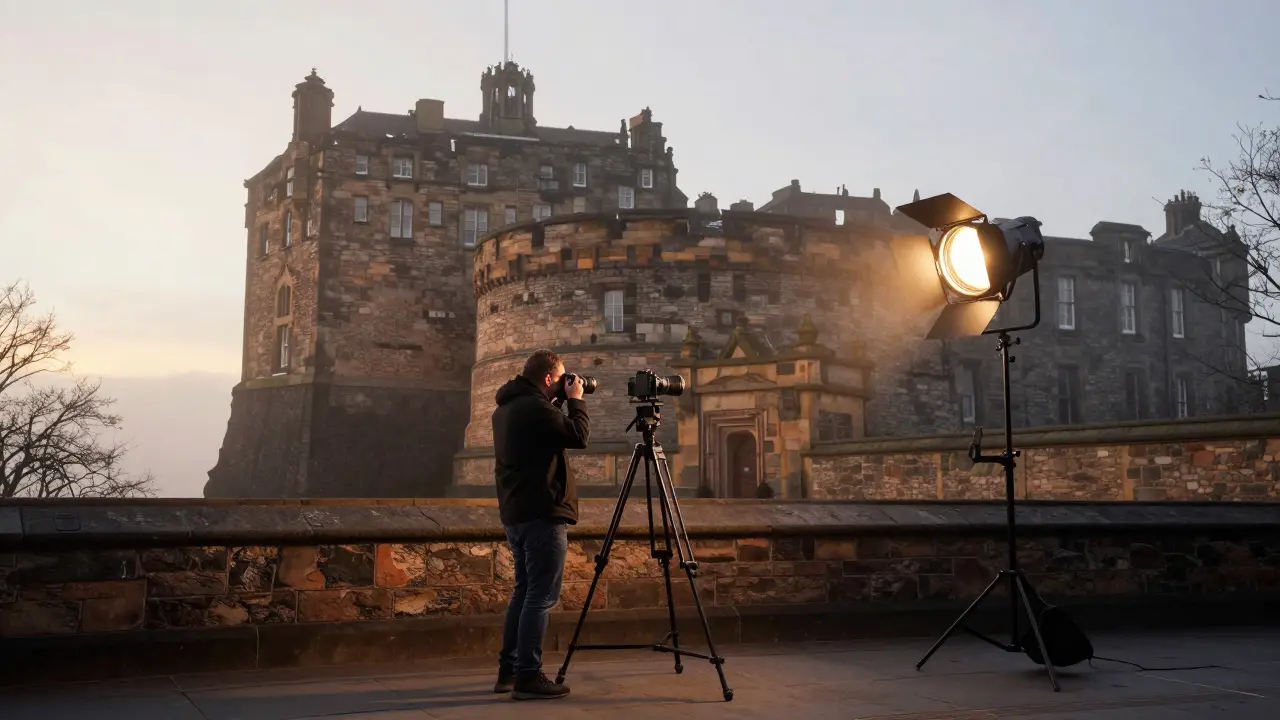
Want to shoot a commercial photo or video at a Scottish castle? You can’t just show up with your gear and start filming. Many of Scotland’s most famous castles - like Edinburgh Castle, Stirling Castle, and Dunnottar - require a formal photography permit for any commercial use. This includes ads, social media campaigns, stock imagery, documentaries, or even paid influencer content. If you skip this step, you could be asked to leave, fined, or even have your equipment seized.
What Counts as Commercial Photography?
It’s not just about selling photos. Commercial use covers any time money changes hands or something promotes a brand, product, or service. That means:
- Using images in an ad for a hotel, tour company, or travel brand
- Posting professional photos on a website or Instagram account where you earn through affiliate links or sponsorships
- Filming a short documentary for a client or publisher
- Selling prints or stock photos of the castle
- Shooting for a magazine, book, or TV show
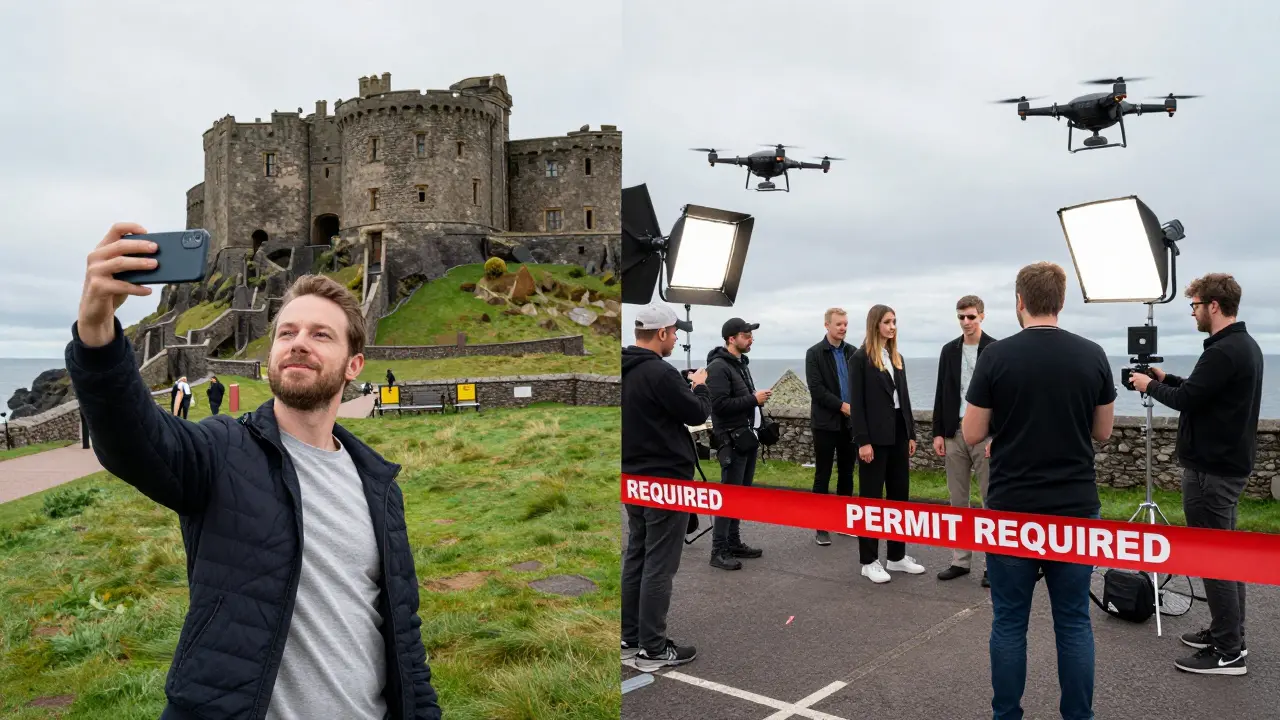
Even if you’re not directly paid, if your work helps promote a business - like a wedding photographer shooting a couple in front of Eilean Donan Castle for their portfolio - you still need a permit. Casual游客 taking selfies? No permit needed. But once the camera’s on a tripod and you’re adjusting lighting for a client? That’s commercial.
Who Controls the Permits?
There’s no single national permit system. Each castle is managed differently. Most are run by one of three bodies:
- Historic Environment Scotland (HES) - Manages over 360 sites, including Edinburgh Castle, Stirling Castle, Urquhart Castle, and Doune Castle.
- Private owners - Some castles, like Dunnottar Castle or Blair Castle, are privately owned and have their own rules.
- Local councils or trusts - Smaller sites like Tantallon Castle or Craigmillar Castle may be managed by local authorities.
That means you need to find out who runs the specific castle you want to shoot at. Don’t assume all castles work the same. HES handles permits differently than a family-run estate.
How to Apply for a Permit (HES Sites)
If you’re shooting at a Historic Environment Scotland site, here’s how it works:
- Go to the Historic Environment Scotland website and click on "Filming and Photography" under "For Professionals".
- Fill out the Commercial Photography Application Form. You’ll need details like:
- Exact date and time of shoot
- Location within the site (e.g., "the Great Hall," "the battlements")
- Number of people, equipment (tripods, drones, lights)
- Purpose of the shoot (ad, documentary, etc.)
- Proof of public liability insurance (£5 million minimum)
- Submit at least 14 days before your shoot date. Last-minute requests rarely get approved.
- Pay the fee. Fees vary based on scale: a simple photo shoot might cost £150, while a full video crew with drones can run over £1,200.
- Wait for approval. HES responds within 5-10 working days.
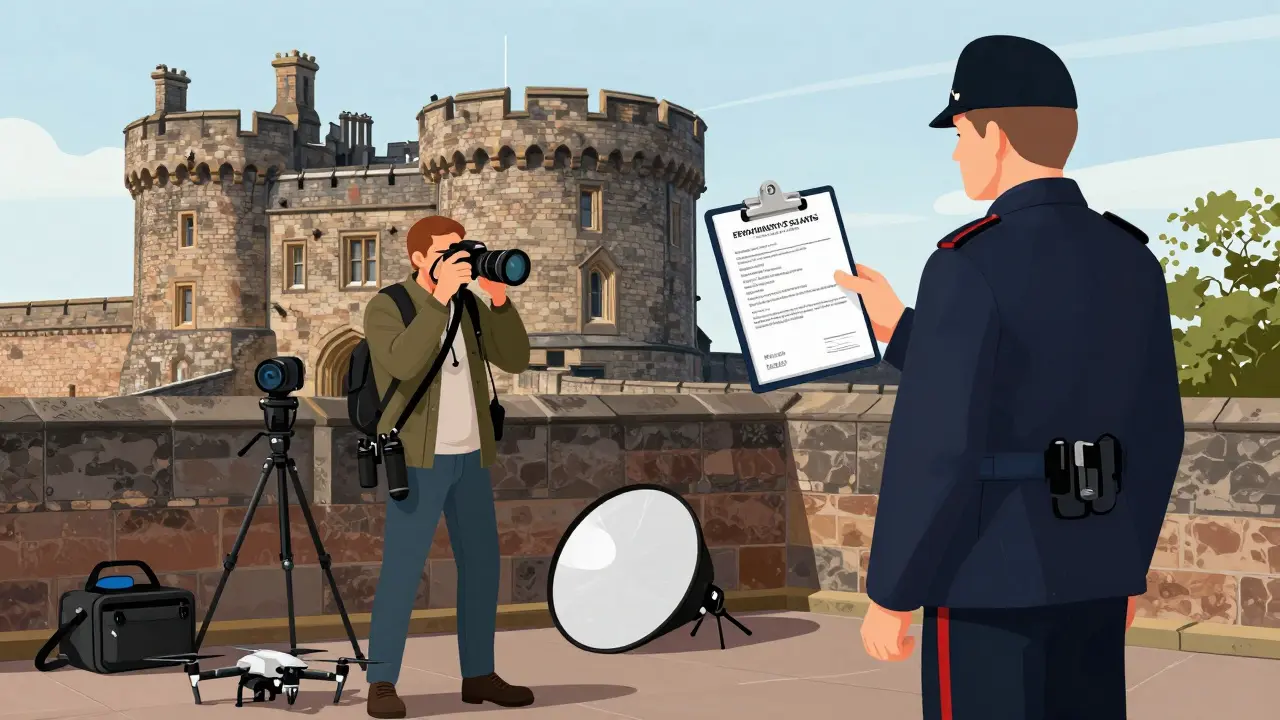
Drone use? That’s a whole other layer. You need both an HES permit and a Civil Aviation Authority (CAA) drone license. HES rarely grants drone permits during peak hours or near visitor areas.
Private Castle Permits
Castles like Dunnottar, Blair, or Balmoral are privately owned. You can’t apply online. You must contact the owner directly.
For example:
- Dunnottar Castle: Contact the Dunnottar Castle Trust via email at [email protected]. They require a written proposal and a site visit before approval.
- Blair Castle: The Atholl Estates office handles requests. Call +44 (0)1796 472200 or email [email protected]. They ask for a detailed shot list and may require a deposit.
- Urquhart Castle: Wait - that’s HES. Don’t confuse it. Always double-check ownership.
Private castles often have stricter rules. No tripods. No flash. No shooting during guided tours. Some only allow one shoot per month. Others charge hourly rates instead of flat fees.
What Happens If You Shoot Without a Permit?
Security guards at major sites are trained to spot commercial gear. They’ll ask you to stop. If you refuse or ignore them, you’ll be asked to leave. In extreme cases:
- Your memory card may be deleted
- Your equipment may be held until you pay a fine
- You could be banned from the site for a year
Some photographers have been fined £500+ for unpermitted shoots. Insurance claims won’t cover you if you didn’t get the permit. It’s not worth the risk.
Pro Tips for Getting Approved
- Apply early - HES gets flooded in spring and summer. Apply 6-8 weeks ahead if possible.
- Be specific - Don’t say "I want to shoot the castle." Say "I need to photograph the east wall at 7:30 AM on June 12 with two people and two tripods. Purpose: travel magazine feature."
- Have insurance - HES won’t approve without £5 million public liability coverage. Companies like Insure4Film or PhotoGuard offer short-term policies.
- Ask about quiet hours - Many sites allow early morning or late afternoon shoots when fewer visitors are around. That’s your best shot for clean frames.
- Don’t bring drones unless approved - Even if you have a CAA license, HES and private owners rarely allow them. They’re loud, disruptive, and pose safety risks.
Where to Find Contact Info
Here’s a quick reference for major castles:
| Castle | Managed By | Contact Method | Typical Fee Range |
|---|---|---|---|
| Edinburgh Castle | Historic Environment Scotland | [email protected] | £150-£1,200 |
| Stirling Castle | Historic Environment Scotland | [email protected] | £150-£1,000 |
| Dunnottar Castle | Dunnottar Castle Trust | [email protected] | £300-£800 |
| Blair Castle | Atholl Estates | [email protected] | £200-£600 |
| Urquhart Castle | Historic Environment Scotland | [email protected] | £150-£900 |
| Tantallon Castle | East Lothian Council | [email protected] | £100-£400 |
For smaller castles, search for the site’s official website. Look for "Visit," "About," or "Contact" pages. If there’s no clear contact, call the local tourist office. They’ll know who to connect you with.
What to Bring on Shoot Day
Once approved, don’t forget:
- Your permit (printed or digital)
- Photo ID matching the applicant name
- Proof of insurance
- A copy of your approved shot list
- Respect the rules - no touching walls, no climbing, no littering
Staff are there to protect the site, not to hassle you. Be polite, follow instructions, and you’ll get the shots you need without drama.
Still Unsure? Try This
If you’re confused about who owns a castle or what rules apply:
- Check the Historic Environment Scotland site list - it shows which castles they manage.
- Search the castle name + "ownership" on Google. Often, local history blogs or news articles mention the owner.
- Call Historic Environment Scotland’s general line at 0131 668 8600. They can point you in the right direction.
There’s no shortcut. But once you’ve done it once, you’ll know exactly what to expect next time.
Do I need a permit if I’m shooting for a non-profit?
Yes. Non-profit status doesn’t exempt you. If the images are used to promote a cause, organization, or event - even if no money is made - it’s still considered commercial use under HES and private estate rules. The permit system is based on usage, not profit.
Can I use a GoPro or phone for commercial shots without a permit?
Technically, yes - if you’re just holding it and not using professional lighting, tripods, or staging. But if you’re clearly setting up for a campaign - even with a phone - and posting the results on a paid platform, you’re at risk. Most sites don’t police phones unless you’re disruptive. But if you’re caught staging a professional shoot, you’ll still be asked to stop.
How long does a permit last?
Most permits are valid for one specific date and time. Some allow a 24-hour window, but you can’t extend it. If you need to shoot again, you must reapply. There’s no annual pass for commercial photography at Scottish castles.
Can I bring a model or actor with me?
Yes, but you must list them on your application. HES and private owners limit the number of people on-site during shoots - usually no more than 5-7 people total, including crew. More than that requires special approval and often a higher fee.
What if I’m a student doing a project?
Student projects are usually exempt if they’re non-commercial and for academic purposes. But you still need to contact the site. HES has a separate form for educational use. You’ll need a letter from your school or university. Don’t assume you’re automatically allowed - always ask first.
Planning your next shoot? Start with the castle’s official website. Don’t guess. Don’t risk it. A permit takes a few days to get - but it saves you from losing a job, a fee, or your access to Scotland’s most iconic landmarks forever.
Comments (13)
-
Salomi Cummingham February 17, 2026
Just want to say how much I appreciate this detailed breakdown. As someone who films documentaries in Scotland, I’ve been burned before by assuming ‘it’s just a castle’ - turns out, each one has its own bureaucracy. I once showed up with a 5-person crew at Dunnottar, thinking we’d be fine since we weren’t ‘tourists.’ Got escorted off by a very polite but firm security guard who said, ‘Ma’am, you’re not here to admire the view - you’re here to sell something.’ I cried in the parking lot. But now? I apply 10 weeks ahead. It’s worth it. Don’t be like me. Plan.

-
Colby Havard February 19, 2026
It is, indeed, a matter of legal and ethical responsibility, not merely one of bureaucratic inconvenience. The preservation of heritage sites requires that commercial interests be subjected to rigorous oversight; otherwise, the sanctity of these historical landmarks becomes commodified, reduced to mere backdrops for corporate branding. One must ask: at what cost do we allow aesthetic exploitation under the guise of ‘content creation’? The answer, I submit, is none.

-
Tyler Springall February 21, 2026
Oh please. You’re telling me I need a £1,200 permit to photograph a ruin that’s been standing since the 14th century? I’m a fine art photographer. My work is ‘cultural commentary.’ Not ‘advertising.’ You’re telling me I can’t capture the soul of Scotland because some bureaucrat in Edinburgh wants a cut? I’ll shoot it anyway. And I’ll post it with the caption: ‘Permit? What permit?’

-
Amanda Harkins February 22, 2026
Same. I used to think permits were overkill. Then I got banned from Stirling after a drone shoot. Not because I flew it over the ramparts - because I didn’t tell them I was using a gimbal. Turns out, ‘gimbal’ is a red flag word. Now I just shoot with my iPhone on a tripod and call it ‘personal travel journal.’ Works every time.

-
Johnathan Rhyne February 23, 2026
Wait - you can’t use a drone even if you have a CAA license? That’s like saying you can’t use a hammer in a museum because it’s ‘too loud.’ Who decided this? Some guy who’s never held a camera? I’ve seen more red tape in Scottish castle permitting than in a DMV in Alabama. This isn’t preservation - it’s performance art for bureaucrats.

-
Kenny Stockman February 24, 2026
Man, I feel you. I used to be the guy who just ‘figured it out.’ Then I got my GoPro confiscated at Urquhart. They said ‘commercial intent.’ I was filming my nephew’s birthday. He was 5. We were eating chips. But because I had a tripod? ‘Commercial.’ I cried. Now I just ask. Always ask. Even if you think you’re safe. You’re not.

-
Amy P February 26, 2026
OH MY GOSH. I JUST GOT DENIED FOR A DRONE SHOOT AT DUNNOTTAR BECAUSE I DIDN’T SUBMIT A ‘SHOT LIST’ WITH COORDINATES. I THOUGHT I WAS JUST DOING A LITTLE AERIAL VIDEO FOR MY TRAVEL BLOG. TURNED OUT THEY WANT A FULL 3D MAP OF WHERE I’LL FLY. I DIDN’T EVEN KNOW THEY HAD A MAP OF THE CASTLE’S AIRSPACE. I’M STILL IN SHOCK. I’M GOING TO SEND THEM A HAND-DRAWN MAP NEXT TIME. WITH HEARTS. 🖤

-
Paritosh Bhagat February 27, 2026
Actually, I’ve been doing this for 12 years. I’ve shot at 47 Scottish castles. And let me tell you - the real issue isn’t the permit. It’s the lack of transparency. HES doesn’t reply to emails. Private owners ghost you. And don’t even get me started on Tantallon. I sent 17 emails. Got 3 replies. One said ‘send a cheque.’ I did. It was returned. With a note: ‘We don’t do this anymore.’ So now? I wait until 5am. No one’s there. No cameras. No tripods. Just me, the fog, and the ghosts. That’s the real permit.

-
Nick Rios February 28, 2026
Just wanted to add - if you’re doing student work, definitely reach out. I’m a grad student at Edinburgh Uni, and we got approved for a thesis project with zero fee. They just asked for a copy of our final paper and a public lecture. It’s not about money. It’s about respect. Be clear. Be humble. And they’ll help you.

-
Nicholas Zeitler March 1, 2026
You’re not alone. I’ve helped over 200 photographers navigate this mess. Here’s the truth: HES doesn’t care if you’re famous. They care if you’re prepared. Insurance? Check. Shot list? Check. Timing? Check. Don’t argue. Don’t plead. Just submit cleanly. And if they say no? Ask for the appeal process. It exists. And yes - it’s slow. But it works. I’ve seen it. I’ve lived it. You can too.

-
Antonio Hunter March 2, 2026
I’ve been a heritage preservation officer for 18 years. I’ve seen people cry, rage, and even threaten to sue over permits. But I’ve also seen the damage - the chipped stones, the scuffed walls, the littered grounds, the drone crashes into ancient arches. The permit system isn’t about control. It’s about stewardship. You want to capture beauty? Honor it. Don’t just take it. The castle doesn’t owe you a shot. You owe it your responsibility.

-
Jamie Roman March 4, 2026
One thing no one mentions: the quiet hours. If you want clean shots without 300 tourists in the frame, you have to go early. Like, 6:30 AM early. I’ve shot Edinburgh Castle at sunrise with no one else around. Just me, the mist, and the echo of bagpipes from the distance. It was magical. And yes - I had my permit. But the real secret? Show up 45 minutes before your approved time. Let the staff see you’re serious. They’ll often let you stay 15 minutes extra. Just ask. Polite, not pushy. It works.

-
Sandy Dog March 5, 2026
Okay, I just got my permit approved for Blair Castle. After 6 weeks of emails. After 3 revisions. After crying in the shower because I thought I’d lose my client. BUT - I got it. And they gave me a handwritten note: ‘Your vision is beautiful. Thank you for respecting our home.’ I framed it. I’m not kidding. I have it on my wall. This isn’t bureaucracy. It’s a relationship. And I’ll never shoot anywhere else again.
