
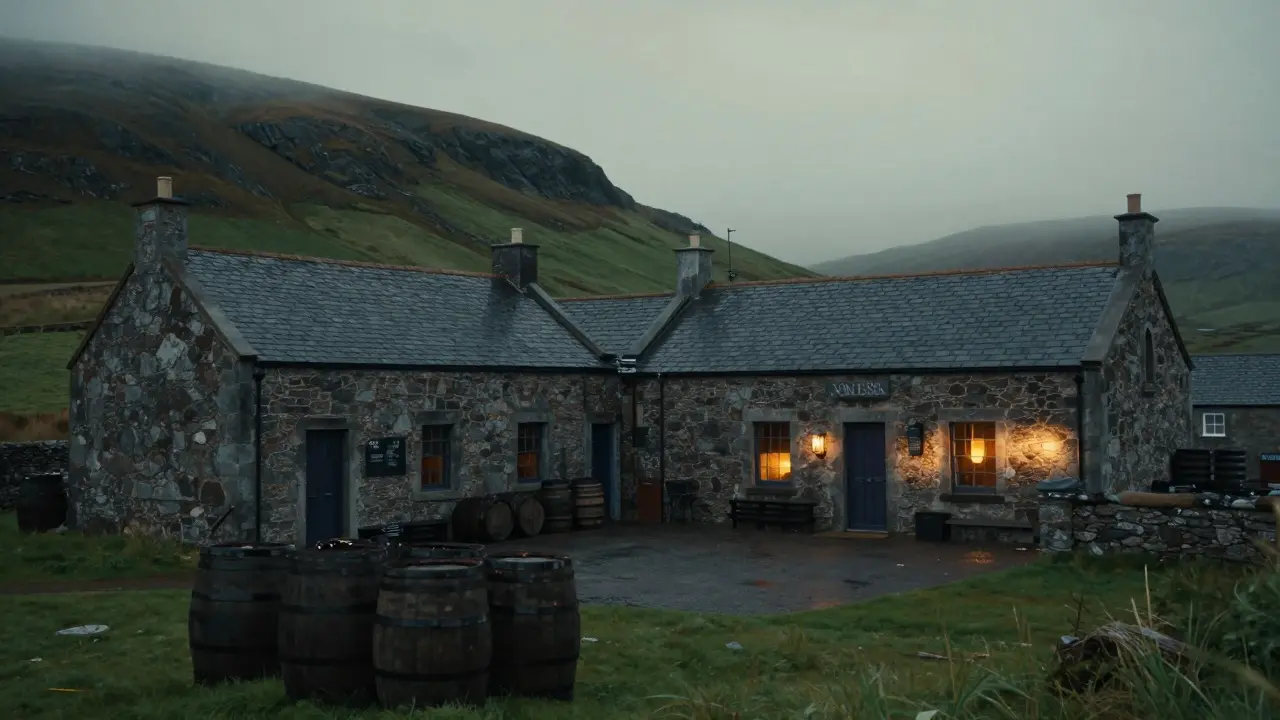
Quick Tips for Your Island Trip
- Transport: Book your CalMac ferry months in advance, especially if you're bringing a car.
- Timing: May to September offers the best weather and the most wildlife activity.
- Gear: Bring waterproofs and sturdy boots; the "machair" (fertile coastal plain) can turn into a bog in minutes.
- Whisky: Many distilleries require pre-booking for tours. Don't just show up and hope for a tasting.
The Peat and the Power: Islay's Whisky Trail
You can't talk about Islay without talking about the smoke. Islay is an island in the Inner Hebrides of Scotland, world-renowned for its high concentration of single malt distilleries. The island is basically the global capital of peated whisky, where barley is dried over peat fires, giving the spirit that signature medicinal, smoky punch.
If you are starting your journey, Laphroaig is a great place to begin. It's one of the most distinct flavors on the island-think seaweed, brine, and a heavy dose of medicinal smoke. Just a short walk away is Lagavulin, which offers a richer, more elegant version of the peat. These two are like siblings with very different personalities.
For something different, head over to Bruichladdich. They specialize in unpeated malts, proving that Islay can be fruity and floral as well as smoky. If you're feeling adventurous, try a warehouse tasting where you sample casks that haven't been bottled yet. It's a raw look at how the sea air influences the aging process over decades.
| Distillery Style | Key Flavor Profile | Vibe |
|---|---|---|
| Heavily Peated (Lagavulin/Laphroaig) | Smoke, Iodine, Sea Salt | Intense and Traditional |
| Balanced Peat (Ardbeg) | Lemon, Pepper, Ash | Bold and Experimental |
| Unpeated (Bruichladdich) | Fresh Fruit, Vanilla, Honey | Modern and Refined |
Searching for Solitude on Jura
If Islay is the social hub, Jura is the quiet sanctuary. It's the second-largest island in the Hebrides but has a tiny human population compared to the deer. In fact, there are roughly 6,000 red deer for every 200 people. That's a ratio that makes you realize who is actually in charge here.
The main draw here is Jura House and the surrounding wilderness. Hiking the Paps-the iconic conical mountains that dominate the skyline-is a rite of passage. The climb is steep, and the wind can be brutal, but the view from the summit looks across the Atlantic to the coast of Ireland on a clear day.
You can't leave without visiting the Jura Distillery. Unlike the heavy smoke of Islay, Jura's whisky is generally softer and more approachable. It reflects the island's personality: understated, calm, and slightly mysterious. The distillery is the heart of the island, serving as a meeting point for locals and travelers alike.
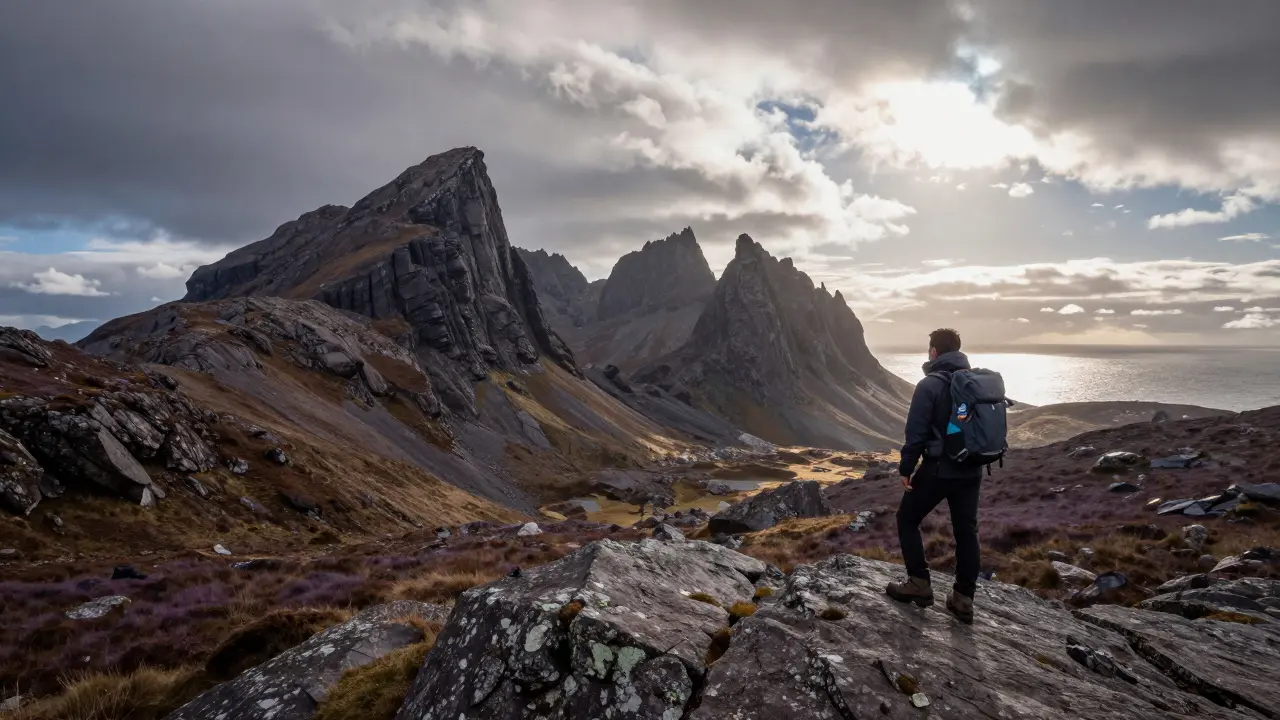
White Sands and Turquoise Waters
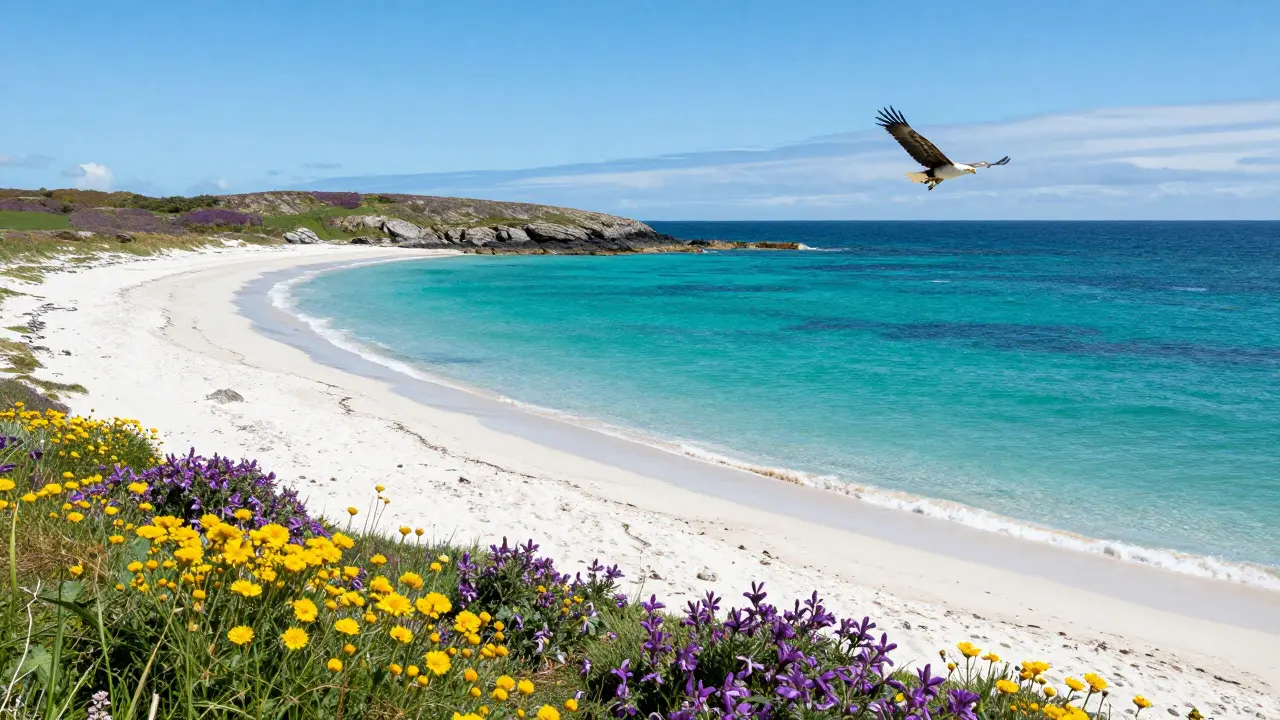
One of the biggest surprises for visitors is the coastline. Forget the gray, rainy image of Scotland; the beaches here are blindingly white. Machair is the fertile, low-lying calcareous grassland found on the coasts of Islay and other Hebridean islands. This unique soil creates a backdrop of wildflowers that contrast sharply with the blue ocean.
Head to the Bowmore coastline for a quick dip, or venture further to the southern shores for total seclusion. If you're lucky, you'll find a stretch of sand where the only footprints are your own. The water is freezing, yes, but for those brave enough to try wild swimming, the invigorating shock is the best way to wake up your senses before a tasting session.
Wildlife Encounters: From Eagles to Otters
Nature doesn't just exist here; it thrives. The islands are a stronghold for the White-tailed Eagle, one of the largest birds of prey in Europe. Seeing one soar over the moorland is a breathtaking experience. Keep your binoculars ready when crossing the ferry from Islay to Jura, as the cliffs are prime nesting spots.
Down by the shoreline, keep an eye out for European Otters. They are shy, but if you sit quietly by a rocky inlet at dawn or dusk, you'll often see them sliding into the water to hunt. The marine life is equally impressive; the waters around the Inner Hebrides are often visited by minke whales and pods of dolphins that play in the wake of the ferries.
Planning Your Logistics
Getting to Islay and Jura requires a bit of strategy. Most people take the ferry from Kennacraig, which is a long drive from Glasgow or Edinburgh. If you prefer to avoid the road, there are flights from Glasgow to Islay, though they are weather-dependent. Once on the island, renting a car is non-negotiable. The roads are narrow, single-track lanes with "passing places." The golden rule here: if you see a local behind you, pull over and let them pass. They have places to be, and they know the shortcuts.
For accommodation, avoid the last-minute scramble. B&Bs and small hotels fill up months in advance, especially during the "whisky season." If you're more of an outdoors person, there are a few designated campsites, but remember that "wild camping" is common-just follow the leave-no-trace principles to keep the islands pristine.
Do I need to book distilleries in advance?
Yes, absolutely. Most major distilleries like Laphroaig and Lagavulin have moved to a pre-booking system for tours and tastings. While you can often buy a bottle from the gift shop without a reservation, the full experience requires a ticket.
Is Jura safe for solo hikers?
Generally, yes, but the terrain is rugged. If you're climbing the Paps, let someone know your route. There is very little mobile signal across much of the island, so a physical map and compass are essential safety tools.
What is the best time of year to visit?
Late spring (May and June) is fantastic because the wildflowers are in bloom and the days are long. Autumn (September and October) is also great for wildlife and a moodier, atmospheric landscape that fits the whisky vibe.
How do I get from Islay to Jura?
There is a small passenger ferry (and occasional car ferry) that runs between Islay and Jura. It's a short trip, but always check the weather and tide schedules as departures can be shifted.
Can I visit these islands without a car?
It's possible but difficult. There are limited taxi services and no comprehensive public bus network. You can bike between some distilleries, but for the beaches and the Paps of Jura, you'll be very limited.
Next Steps for Your Adventure
If you've mastered the basics of the Hebrides, your next move should be exploring the Isle of Mull or the Outer Hebrides. If you're still on Islay and have extra time, venture to the far east of the island to see the ruins of old castles and the hidden coves that the tour buses never visit. For those who found Jura too quiet, a trip to Skye offers a similar dramatic landscape but with more infrastructure and tourist hubs. No matter where you go next, keep that spirit of curiosity and a sturdy pair of boots by your side.
Comments (12)
-
mani kandan April 27, 2026
The olfactory description of campfire smoke and salt air is absolutely exquisite. It paints such a vivid, kaleidoscopic picture of the Hebridean atmosphere. I can almost feel the brine on my skin just reading this

-
Bharat Patel April 28, 2026
It makes one wonder if the solitude of Jura is where we truly find ourselves by losing the noise of the modern world. There is a profound poetry in the ratio of deer to humans, a reminder that we are merely guests in a much older, wilder kingdom

-
Bhagyashri Zokarkar April 29, 2026
omg i just imagine being there and feeling the wind in my hair and the total sadness of being away from home but then seeing those beachez and just crying bc its so beautifull and i dont think i could handle the cold water but maybe i would try just to feel something different for once in my life bc everything is just so overwhelming lately and i just want to escape to a place where nobody knows me and i can just be a tiny speck of dust on a white beach

-
NIKHIL TRIPATHI April 29, 2026
Spot on advice about the passing places on those single-track roads. Nothing gets a local more annoyed than a tourist blocking the flow of traffic

-
Vishal Gaur April 30, 2026
i think the part about the whisky is okay but it feels a bit rushed like why not talk more about the actual tasting notes instead of just saying it smells like iodine which is kinda gross if you think about it too much anyway the guide is mostly fine i guess but i probably wouldnt trust my life to a physical map on a mountain if i was hounest

-
Nikhil Gavhane May 1, 2026
The idea of wild swimming in that freezing water sounds like a wonderful way to reset the mind. It takes a lot of courage but the reward of feeling truly awake is worth the shock

-
Rakesh Dorwal May 3, 2026
Nice guide but it is funny how these "hidden" spots only get popular when the western powers decide to map them out. Probably some secret government base on Jura anyway given how few people live there compared to the animals

-
pk Pk May 3, 2026
Get your gear sorted early people. If you're going to hike the Paps, don't be the person who turns up in sneakers and expects a walk in the park. Invest in proper boots and a waterproof jacket if you want to actually enjoy the view without catching hypothermia

-
Rajat Patil May 4, 2026
I believe that the peaceful nature of these islands is very good for the soul. It is a pleasure to read about such a calm place

-
Shivani Vaidya May 5, 2026
the contrast between the smoky whiskies and the floral notes of bruichladdich is truly fascinating as it shows the diversity of the land

-
Rubina Jadhav May 7, 2026
Please remember to respect the wildlife and not feed the deer

-
deepak srinivasa May 7, 2026
The mention of the machair is interesting. I wonder if the soil composition varies significantly between Islay and the Outer Hebrides or if it's a consistent geological feature across the archipelago. It seems like the flora would be completely different depending on the salinity of the coastal spray
