
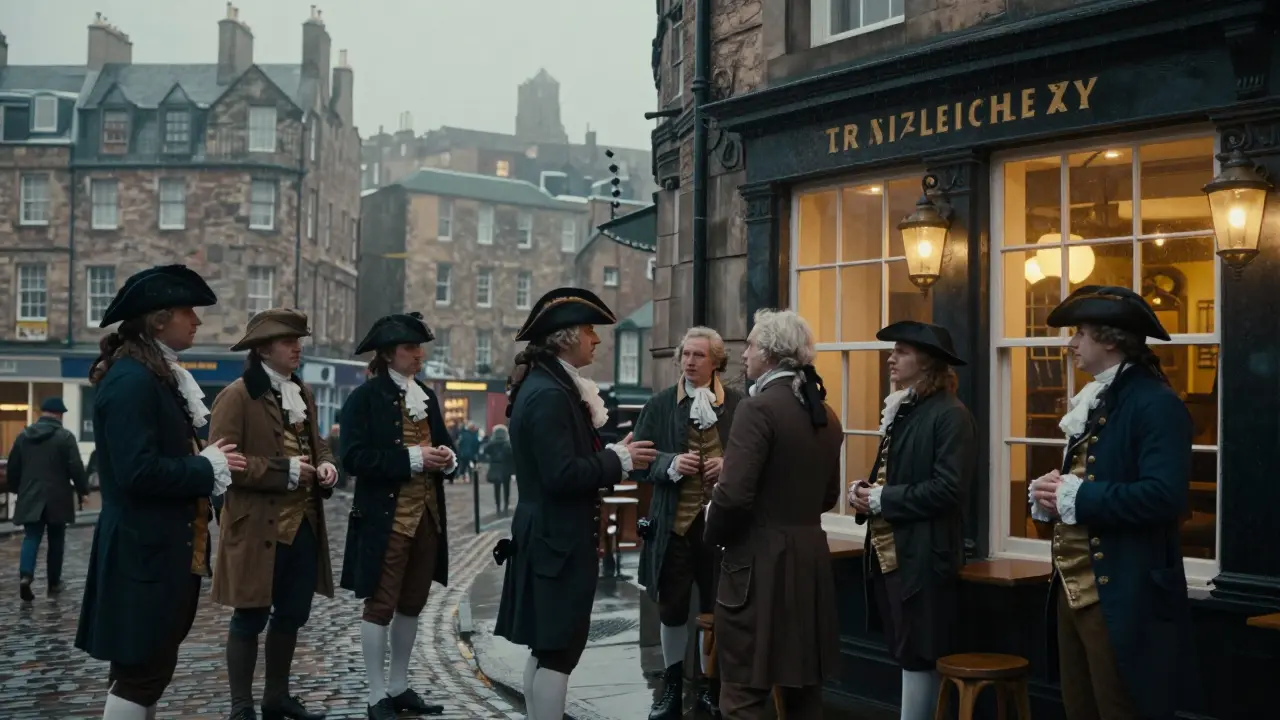
The Core Ideas That Flipped the Script
The secret sauce of this era was a move away from "because the church said so" toward "because I observed it." This is called empiricism. Instead of starting with a grand theory and trying to fit the world into it, the Scots started with the data. They looked at how people actually traded, how the heart actually pumped blood, and how laws actually functioned in a community.
Think about the impact of David Hume. He didn't just write philosophy; he questioned the very nature of cause and effect. He argued that just because the sun rose every day in the past doesn't logically guarantee it will rise tomorrow-it's just a habit of the mind. This kind of skepticism forced scientists and philosophers to be much more rigorous about their evidence. It stripped away the fluff and demanded concrete proof, which is the bedrock of how we do science today.
Money, Markets, and the Birth of Modern Economics
You can't talk about this era without mentioning the man who basically invented the way we think about money. Adam Smith wasn't just writing a dry textbook when he published "The Wealth of Nations" in 1776. He was observing the industrial shifts happening right around him in Scotland. He noticed that when individuals pursue their own interests, they often end up helping society more than if they were forced to act for the "public good" by a king.
His idea of the "invisible hand" is still the most debated concept in economics. He argued that competition drives quality up and prices down. If you go to a local market in Edinburgh today, you're seeing the living legacy of Smith's theories. He moved the focus from hoarding gold (mercantilism) to creating value through labor and trade. This shift allowed the Industrial Revolution to actually take off, as it gave people a theoretical framework for growth and investment.
| Thinker | Core Contribution | Modern Application |
|---|---|---|
| David Hume | Skepticism & Empiricism | The Scientific Method |
| Adam Smith | Classical Economics | Free Market Capitalism |
| James Hutton | Uniformitarianism | Modern Geology |
| Joseph Black | Latent Heat / CO2 | Thermodynamics |
Medicine and the Science of the Body
While the philosophers were arguing in cafes, the doctors in Edinburgh were turning the city into the medical capital of the world. They stopped relying on ancient Greek texts and started doing actual dissections. The University of Edinburgh became the place to be if you wanted to understand how the human body functioned in real-time.
One of the most fascinating figures was Joseph Black. He discovered "fixed air," which we now know as carbon dioxide. By studying how heat worked-specifically the concept of latent heat-he helped pave the way for the steam engine's efficiency. It's a perfect example of how 18th-century science wasn't just academic; it was practical. These discoveries led directly to the machines that powered the 19th century.
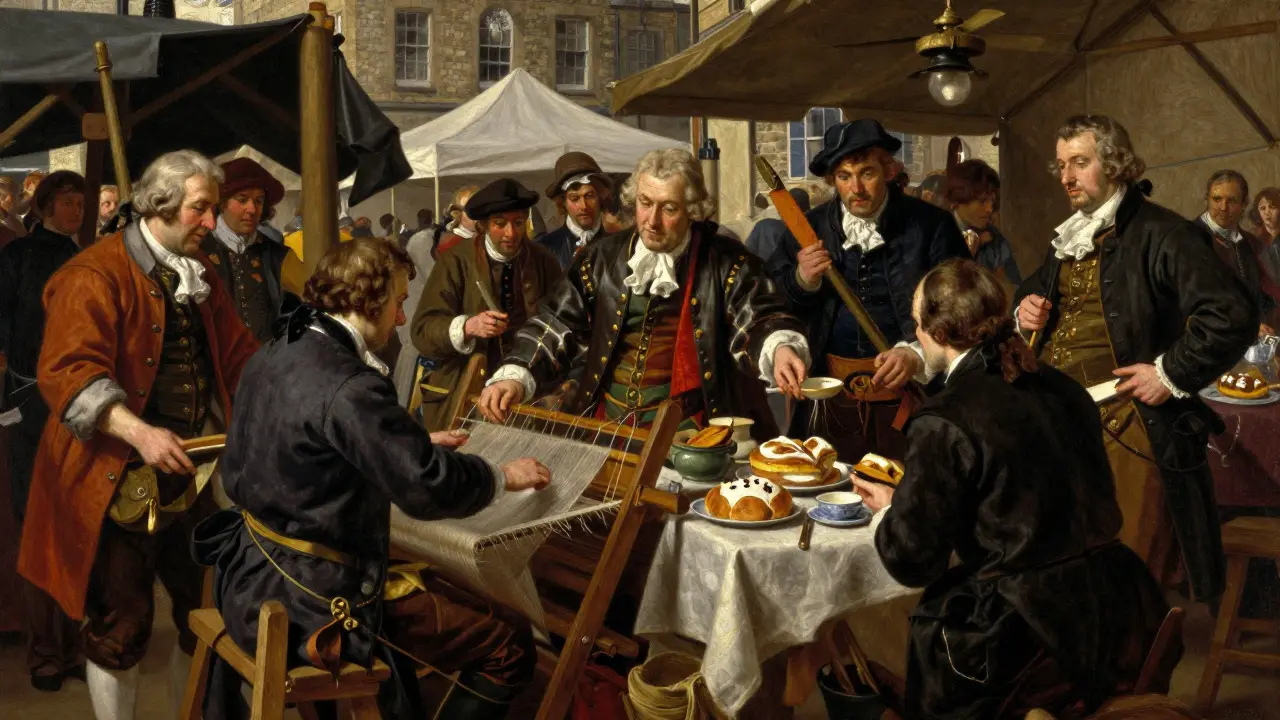
The Earth Under Our Feet: Rewriting Time
For a long time, people believed the Earth was only a few thousand years old. Then came James Hutton. While walking through the hills of Scotland, he noticed that rocks weren't just static slabs; they were shaped by erosion and volcanic activity over massive stretches of time. He realized the Earth was far older than anyone had dared to suggest.
This theory, known as uniformitarianism, suggests that the same slow processes we see today-like a river carving a canyon-have been happening for millions of years. This blew the doors open for Charles Darwin later on. Without Hutton's realization that the Earth had a deep, ancient history, the theory of evolution would have had no timeline to exist in. Scotland literally gave the world the gift of deep time.
Why It All Happened in Scotland
You might wonder why this explosion of genius happened in Scotland and not, say, France or Germany at the time. A huge part of it was the education system. Scotland had a surprisingly high literacy rate for the 1700s. Small parish schools meant that even kids from modest backgrounds could read and write. When you combine that with the Scottish Enlightenment's culture of "societies"-where people met in clubs to debate everything from poetry to chemistry-you get a perfect storm of innovation.
There was also a unique social flexibility. In Edinburgh, you'd have a nobleman, a merchant, and a professor sitting in the same room, arguing over a point of logic. This cross-pollination of ideas meant that a discovery in chemistry could quickly influence a theory in economics. They weren't keeping their knowledge in silos; they were building a giant, interconnected web of understanding.

The Legacy: From the 1700s to the 21st Century
The ripple effects of this era are everywhere. Every time you use a piece of software based on logic, every time you read a GDP report, and every time you look at a geological map, you're interacting with the ghost of the Scottish Enlightenment. It shifted the human identity from being a passive subject of fate or crown to being an active observer and architect of their own life.
It also left a physical mark on the landscape. The "New Town" of Edinburgh, with its orderly grid system, is a literal architectural manifestation of the era's love for reason and planning. It was a rejection of the chaotic, cramped "Old Town," reflecting the belief that human environments should be designed logically to improve the quality of life.
What is the most important takeaway from the Scottish Enlightenment?
The most significant takeaway is the shift toward empiricism-the idea that knowledge should be based on observation and experience rather than tradition or intuition. This paved the way for the modern scientific method and a more rational approach to governing society and the economy.
How did Adam Smith change economics?
Adam Smith moved the world away from mercantilism (the idea that wealth is measured by gold reserves) and toward classical economics. He introduced the concept of the "invisible hand," arguing that free markets and individual competition lead to greater overall economic prosperity.
Did the Scottish Enlightenment influence other countries?
Absolutely. Its emphasis on individual liberty and rational governance deeply influenced the American Founding Fathers. Thomas Jefferson and James Madison were well-versed in the works of the Scottish thinkers, which helped shape the U.S. Constitution and the Declaration of Independence.
What was James Hutton's contribution to science?
James Hutton is known as the father of modern geology. He discovered that the Earth's crust is reshaped by slow, continuous processes over millions of years, effectively proving that the planet is much older than previously believed.
Why was Edinburgh the center of this movement?
Edinburgh offered a unique combination of a world-class university, a culture of intellectual societies, and a dense urban environment where thinkers from different social classes could mingle and debate ideas freely.
Getting a Better Grip on the Era
If you're trying to understand this period, don't start with the most academic texts. Instead, look at the results. Visit the geological sites in the Highlands to see what Hutton saw, or walk through the streets of Edinburgh's New Town to see the Enlightenment's order in stone. For those interested in the philosophy, start with David Hume's shorter essays; they're far more accessible and will show you exactly how he questioned the foundations of human belief.
If you find yourself stuck on the complex economic theories of Adam Smith, try thinking of them through the lens of a modern startup. The idea that a small, innovative company can disrupt a giant, stagnant industry is a very "Smithian" concept. Once you see these 18th-century ideas in your current daily life, the history becomes much more than just dates in a book-it becomes a map of how we got here.
Comments (11)
-
Kenny Stockman April 6, 2026
Really cool breakdown of how those guys basically paved the way for everything we do now. It's wild how a few cities in Scotland just decided to stop guessing and start observing.

-
Colby Havard April 6, 2026
One must consider the ethical implications of such an abrupt shift toward empiricism... for it suggests a certain abandonment of the spiritual fortitude that once anchored human morality!!! The pursuit of evidence, while logically sound, often ignores the intrinsic value of the soul...

-
Zach Beggs April 8, 2026
I totally agree with the point about the education system. Having those parish schools must have made a huge difference in getting more people involved in the conversation.

-
Zelda Breach April 10, 2026
Imagine thinking this is some revolutionary 'blueprint' when it's just basic common sense that any educated person should have known. Also, the phrasing in the section on Adam Smith is borderline amateurish. Truly pathetic that we still treat these 18th-century leftovers as gospel in the US.

-
Fredda Freyer April 11, 2026
If you dive deeper into Hume, you'll find that his skepticism wasn't just about the sun rising, but about the very structure of identity. He argued that the 'self' is just a bundle of perceptions. It's a fascinating bridge to modern cognitive science. Many people forget that the Scottish Enlightenment also dealt heavily with 'common sense philosophy', which tried to balance the cold logic of empiricism with the practical realities of human social interaction. It's this tension between the abstract and the applicable that makes the era so enduringly relevant. I'd suggest looking into Thomas Reid if you want to see the counter-argument to Hume's more radical skepticism.

-
Tyler Springall April 12, 2026
I've actually spent some time in Edinburgh and the 'New Town' is cute if you enjoy sterile grids. But let's be real, the intellectual 'powerhouse' narrative is so overdone it's practically a caricature. It's almost exhausting how people cling to this romanticized version of history to feel sophisticated.

-
Gareth Hobbs April 14, 2026
Scottish?? Give me a break!!! The British Empire took those ideas and actually made them work... while the Scots just chatted in cafes!!! It's all a massive cover-up to hide how the crown really manipulated these 'thinkers' for colonial gain... total rubbish...!!!

-
Aryan Gupta April 14, 2026
The author uses the phrase "flipped the script" which is a glaringly anachronistic idiom that ruins the professional tone of the piece. Furthermore, the idea that these thinkers were "independent" is laughable. Look into the Masonic lodges of the time; the real power was being brokered in secret rooms, not public cafes. They wanted us to believe it was about "reason" so we wouldn't notice the actual consolidation of power happening behind the scenes.

-
Kelley Nelson April 15, 2026
It is quite quaint that one would believe a simple table could encapsulate the magnitude of such an era. The reductionism employed here is, quite frankly, tedious. One would hope for a more nuanced analysis of the socio-political climate rather than a summarized list for the masses.

-
Paritosh Bhagat April 17, 2026
I can't help but notice a few grammatical inconsistencies in the table's formatting, which is a bit distressing. However, I truly believe we should all strive to embody the spirit of cooperation that these philosophers envisioned. We must lead with kindness and a desire for truth, even when we disagree with the historical interpretation presented here.

-
Antonio Hunter April 18, 2026
I think it's important to remember that the accessibility of education mentioned in the post wasn't just a happy accident but a deliberate effort to uplift the community, and while the results were brilliant, we should acknowledge that this inclusivity was still limited by the standards of the 18th century, though it certainly laid the groundwork for the more expansive educational rights we advocate for in the modern era across various cultures and demographics.
