
When people think of Glasgow, they often picture bustling streets, Victorian architecture, or live music venues. But the city’s true soul lives in its green spaces. From sprawling city-center parks to hidden woodland trails, Glasgow offers more than 1,200 hectares of publicly accessible green land. You don’t need to leave the city to find quiet corners, wildflower meadows, or lakes where locals kayak on weekends. Whether you’re a resident looking for a lunchtime escape or a visitor planning your first trip, Glasgow’s outdoor areas deliver real breathing room.
Glasgow Green: The City’s Original Park
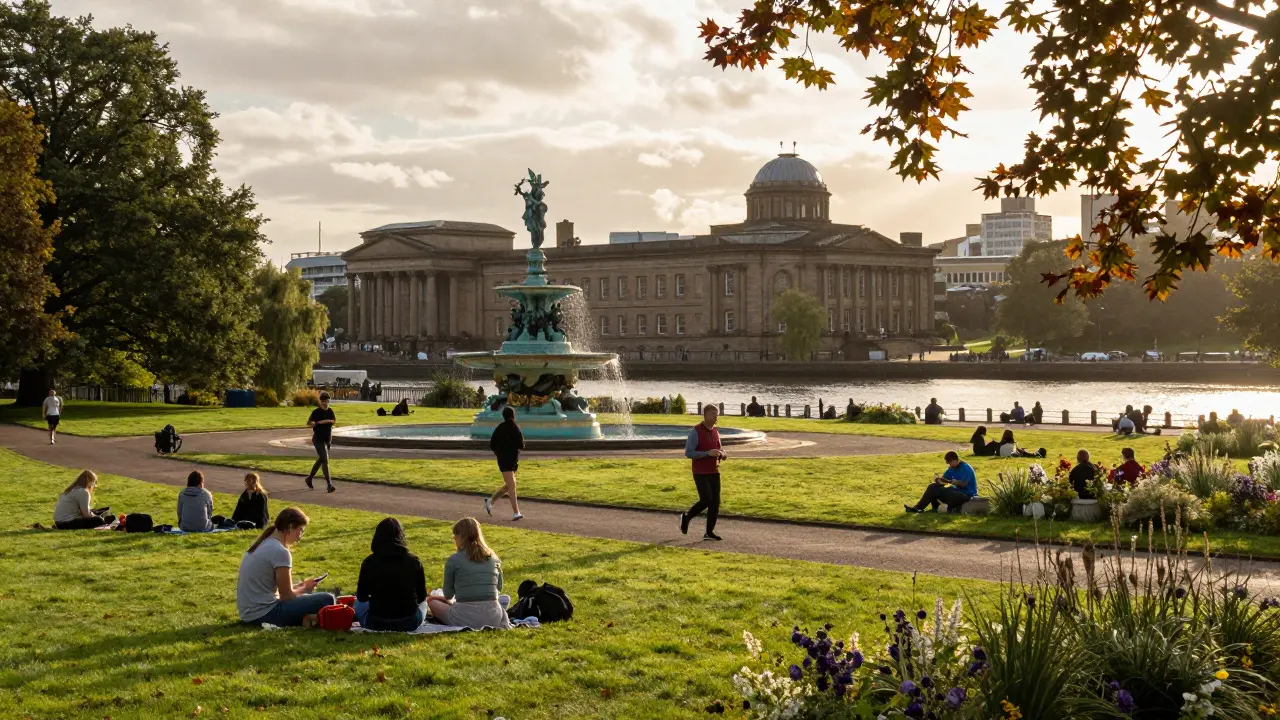
Opened in 1450, Glasgow Green isn’t just the oldest park in the city-it’s where Glasgow’s public life began. This 136-acre green space sits right by the River Clyde and has hosted everything from medieval markets to political rallies. Today, it’s a mix of history and everyday life. Locals jog along its winding paths, families picnic near the Doulton Fountain (one of the largest terracotta fountains in Europe), and students gather under the trees near the People’s Palace museum.
The park’s layout feels more like a natural landscape than a manicured garden. You’ll find open fields perfect for frisbee, a skate park, a BMX track, and even a small zoo. The Clyde Walkway runs right through it, making it a natural starting point for longer walks or bike rides toward the west end. On summer weekends, you might catch an open-air concert or a food market near the historic Tenement House.
Kelvingrove Park: Art, Architecture, and Open Air
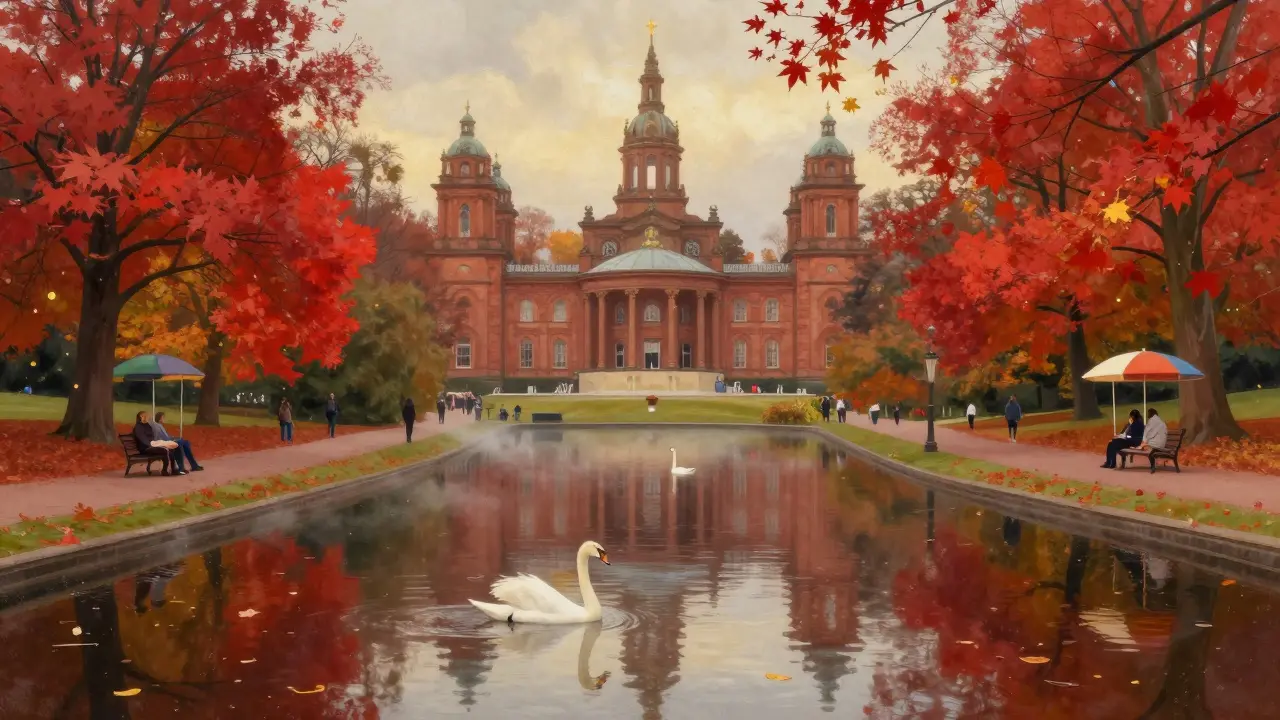
Just west of the city center, Kelvingrove Park connects directly to the Kelvingrove Art Gallery and Museum. It’s one of the most visited green spaces in Scotland, drawing over two million people a year. The park’s design is classic Victorian-symmetrical pathways, ornamental flower beds, and a large ornamental lake with swans.
What makes it stand out is how seamlessly it blends culture with nature. You can stroll past statues of Scottish heroes, then sit on a bench and watch rowers on the Kelvin River. The park has dedicated play areas for kids, a putting green, and a popular café that serves coffee with views of the water. In autumn, the maple trees turn fiery red, making it one of the best spots in the city for photography.
Don’t miss the bandstand, where free concerts happen on summer Sundays. It’s the kind of place where you can spend hours without realizing it.
Pollok Country Park: Nature Without the Crowds
If you want to feel like you’ve left the city without actually leaving it, head to Pollok Country Park. Spanning over 300 hectares, it’s the largest green space in Glasgow. The park is home to ancient woodlands, open grasslands, and the famous Pollok House-a stately 18th-century mansion filled with Spanish art and period furniture.
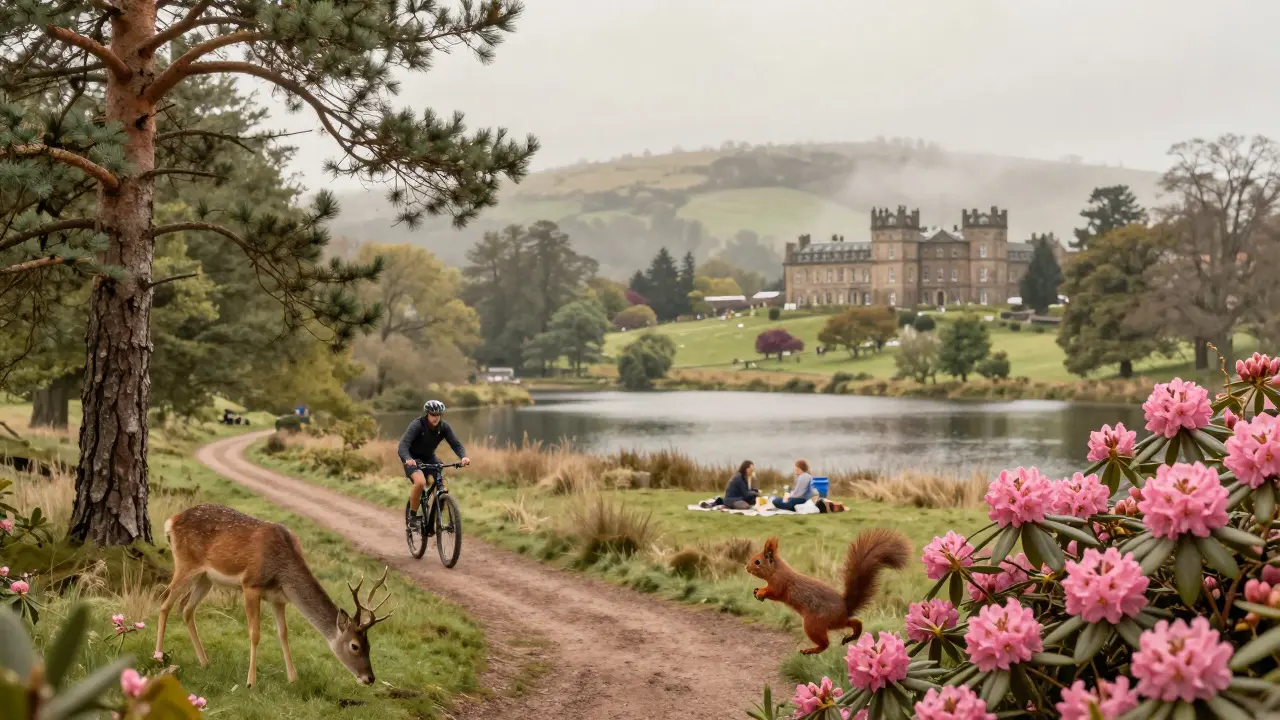
The trails here are varied. You can take a gentle 20-minute loop around the loch, or hike the full 10-kilometer route that winds through pine forests and past deer enclosures. The park has over 100 species of birds, and in spring, the rhododendrons bloom in shocking pinks and purples. There’s also a dedicated mountain biking trail with jumps and berms, popular with teens and young adults.
Free entry, free parking, and no entry fees mean it’s the most accessible escape for families. Many locals come here on Sunday afternoons with picnic baskets and dogs. It’s not just a park-it’s a whole ecosystem.
The Botanic Gardens: A Living Library
More than just a garden, the Royal Botanic Garden is a scientific institution and a sanctuary. Founded in 1670, it’s one of the oldest botanical gardens in the UK. The main site on Inverleith Row has two iconic glasshouses: the Curvilinear Range and the Tropical Palm House. Inside, you’ll find orchids from Southeast Asia, carnivorous plants from the Amazon, and giant water lilies that can hold a small child.
Outside, the garden is divided into themed sections: a Japanese garden with koi ponds, a rock garden with alpine plants, and a sensory garden designed for visually impaired visitors. There’s even a small orchard with historic Scottish fruit varieties. The gardens are free to enter, and guided tours run on weekends. In winter, the light displays during the Christmas season turn the glasshouses into glowing wonderlands.
It’s quiet, educational, and deeply calming. You’ll see students sketching plants, couples reading under trees, and retirees watching the birds. This isn’t a place to rush through. It’s a place to pause.
Queen’s Park: Urban Wildness
Queen’s Park is where nature reclaims the city. Once a private estate, it became public land in 1887 and now covers 100 acres. Unlike the more formal gardens, Queen’s Park feels wild. Brambles grow along paths, foxes roam at dusk, and wildflowers bloom in untended corners.
The park’s hill offers panoramic views of the city skyline, especially at sunset. There’s a small café with outdoor seating, a children’s play area shaped like a dragon, and a community orchard where locals grow apples and plums. The park also hosts seasonal events like nature walks and birdwatching workshops.
What makes Queen’s Park special is its lack of polish. It doesn’t try to impress. It just is. That’s why locals love it. It’s the closest thing Glasgow has to a wild forest within city limits.
Outdoor Activities You Can Do in Glasgow’s Green Spaces
Glasgow’s parks aren’t just for sitting. They’re designed for doing.
- Walking and hiking: The Clyde Walkway and Kelvin Walkway connect multiple parks. You can walk from Glasgow Green to Pollok in under three hours.
- Cycling: The city has over 120 kilometers of cycle paths. The National Cycle Network Route 7 runs through Kelvingrove and Pollok.
- Running: The Glasgow Run Club meets every Tuesday at 6:30 PM in Kelvingrove Park. No experience needed.
- Boating: Rowboats and pedal boats are available to rent at Kelvingrove Lake from April to October.
- Wildlife watching: Pollok and Queen’s Park are hotspots for red squirrels, herons, and even otters near the Clyde.
- Outdoor yoga and fitness: Free yoga sessions happen every Saturday morning in Glasgow Green during warmer months.
Most of these activities are free. You don’t need special gear-just comfortable shoes and a sense of curiosity.
When to Visit and What to Bring
Glasgow’s weather is unpredictable, but that doesn’t mean you should wait for perfect conditions. The parks are used year-round.
- Spring (March-May): Best for flowers. Rhododendrons in Pollok, cherry blossoms in Kelvingrove.
- Summer (June-August): Longest days. Bring a picnic blanket, sunscreen, and a light jacket for cool evenings.
- Autumn (September-November): Stunning color changes. Pack a camera. The maple trees in Kelvingrove are legendary.
- Winter (December-February): Quiet and peaceful. The Botanic Gardens’ glasshouses are warm and magical. Wear waterproof boots-paths get muddy.
Always carry a reusable water bottle. Many parks have drinking fountains. Bring a small bag for litter-Glasgow’s green spaces stay clean because locals take pride in them.
Why Glasgow’s Green Spaces Matter
Studies show that people who spend time in urban green spaces report lower stress levels and better mental health. In Glasgow, where 60% of residents live within 500 meters of a park, access to nature isn’t a luxury-it’s part of daily life.
These spaces also help the city fight climate change. Trees in Pollok Country Park absorb over 1,200 tons of CO2 each year. Rain gardens in Kelvingrove reduce flooding. Community gardens in Queen’s Park grow food for local food banks.
Glasgow’s parks aren’t just pretty. They’re vital infrastructure. And they’re free for everyone.
Are Glasgow’s parks safe at night?
Most parks close at dusk, but some, like Glasgow Green and Kelvingrove, have well-lit paths and security patrols. It’s best to stick to main routes and avoid isolated areas after dark. The city’s green spaces are generally safe, but use common sense-don’t walk alone in poorly lit corners late at night.
Can I bring my dog to all Glasgow parks?
Yes, dogs are welcome in all major parks, but they must be kept on a leash in the Botanic Gardens and near children’s play areas. In Pollok Country Park, there are designated off-leash zones. Always clean up after your pet-signs are posted everywhere, and fines apply.
Is there free parking near Glasgow’s parks?
Yes. Pollok Country Park, Glasgow Green, and Queen’s Park all have free public parking. Kelvingrove has paid parking during peak hours, but free spots are available on side streets. The Botanic Gardens has limited parking-public transport or cycling is recommended.
Which park is best for families with young kids?
Kelvingrove Park and Queen’s Park are top choices. Both have modern play equipment, shaded areas, and nearby cafés with kid-friendly menus. Kelvingrove’s lake has paddle boats, and Queen’s Park has a dragon-themed play area. The Botanic Gardens also has a dedicated children’s discovery trail.
Do I need to pay to enter any of these parks?
No. All major parks-Glasgow Green, Kelvingrove, Pollok, Queen’s Park-are free to enter. The Botanic Gardens is also free, though donations are welcome. Pollok House charges a small fee for the mansion tour, but the park around it remains open at no cost.
Next Steps: How to Plan Your Visit
If you’re visiting Glasgow and want to make the most of its green spaces:
- Start with Glasgow Green if you’re arriving downtown-it’s easy to reach by bus or on foot.
- Walk or cycle to Kelvingrove Park (about 20 minutes). Grab coffee and explore the museum afterward.
- Take the subway to Pollok Country Park for a full afternoon of nature. Bring snacks and a map.
- End your trip at the Botanic Gardens on a Sunday morning when the glasshouses are least crowded.
You don’t need to rush. One park a day is enough. Let the quiet of the trees, the sound of water, and the sight of wild birds remind you why cities need green hearts.
Comments (14)
-
Tarun nahata December 23, 2025
Glasgow’s green spaces are pure magic 🌿 I’ve never seen a city where nature and urban life hug each other so tightly. Glasgow Green feels like stepping into a living history book, and Pollok? Bro, that’s not a park-it’s a whole damn ecosystem with deer, bikes, and hidden mansions. I came for a walk and left with a new soul.
Bring your sneakers, your snacks, and your sense of wonder. You won’t regret it.

-
Aryan Jain December 23, 2025
They say these parks are free… but who’s really paying? The trees absorb CO2, the birds clean the air, the grass holds the rain-but who’s watching the cameras? I’ve seen vans parked near Kelvingrove at night. No license plates. No signs. Just… watching.
They call it public space. I call it controlled environment. The ‘free yoga’? It’s a vibe check. The ‘community orchard’? A front for data collection. They want us calm. So they give us flowers. And then they take our freedom.
Wake up. Nature isn’t a gift. It’s a trap.

-
Nalini Venugopal December 24, 2025
Just a quick note-there’s a typo in the section about Queen’s Park. It says ‘brambles grow along paths’-but ‘brambles’ is plural and correct, so no issue there! Wait, actually, you wrote ‘foxes roam at dusk’-that’s perfect grammar. I’m impressed. This whole post is so well-structured. Kudos.
Also, the part about the dragon play area? Adorable. My niece would scream with joy. Can’t wait to visit.

-
Pramod Usdadiya December 25, 2025
Man i never knew glasgow had so much green. I thought it was all smoke and factories like in the movies. Pollok country park sounds like a dream. I’m from india and we have parks but nothing like this. The way the trees just… live there. Not forced. Not cleaned up too much.
Also, free parking? In a city? That’s wild. We pay for parking even in village parks here. Respect.
ps: sorry for typos, im on phone and my thumbs are clumsy 😅

-
Aditya Singh Bisht December 27, 2025
You guys need to go to the Botanic Gardens in winter. I went last December and the glasshouses were glowing like alien cathedrals. Giant water lilies? Check. Tropical humidity? Check. Hot cocoa sold inside? Double check.
It’s not just a garden-it’s a portal. Step in and leave your winter blues at the door. I came in with a bad breakup and walked out with a new playlist and a renewed faith in small wonders.
Bring someone you love. Or just bring yourself. Either way, you’ll leave better than you came.

-
Agni Saucedo Medel December 28, 2025
Queen’s Park is my happy place 🌲🦋 I go there every Sunday with my dog and just sit on the hill. The view at sunset? Unreal. And the fact that it’s wild? That’s the point. Not every space needs to be perfect. Sometimes, messy is more real.
Also, the dragon playground? My nephew cried when he saw it. In a good way. 😭❤️
PS: free entry. Free parking. Free peace. Glasgow, you’re doing something right.

-
ANAND BHUSHAN December 29, 2025
Pollok is the one. No crowds. No noise. Just trees and deer. I went last week with my dad. We didn’t say much. Didn’t need to. Just walked. That’s all.
Best thing I did all month.

-
Indi s December 29, 2025
I’ve lived in Glasgow for 12 years and I still find new corners. Last month I found this little trail behind the Botanic Gardens that leads to a hidden bench with a view of the cathedral. No one’s there. Just birds and quiet.
It’s these tiny places that keep me sane. Thanks for reminding people they exist.

-
Nathaniel Petrovick December 31, 2025
My buddy from Edinburgh laughed when I told him I spent a whole Saturday in Glasgow Green. Said, ‘That’s just a field.’
I told him he’s never sat under the Doulton Fountain with a sandwich and watched a guy play the bagpipes to a group of toddlers. That’s not a field. That’s culture with grass.
Also, the Kelvingrove bandstand? Free music on Sundays? That’s the kind of thing that makes you believe in cities again.

-
Honey Jonson January 2, 2026
Just wanna say thank you for writing this. I’m new to Glasgow and I was scared I’d be stuck in concrete forever. But then I found Queen’s Park and now I bring my coffee there every morning. The foxes don’t care if I’m messy or tired. They just walk by like they own the place.
Also the dragon playground? Iconic. My kid won’t stop talking about it. We’re going back next weekend. Bring snacks. Bring blankets. Bring your heart.

-
Meghan O'Connor January 3, 2026
‘Free parking’? Really? Pollok has ‘free parking’? That’s statistically impossible in a city this size. And ‘no entry fees’? The Botanic Gardens has a £5 donation request on their website. You’re misrepresenting basic facts.
Also, ‘wildflower meadows’? Most of those are mowed weekly by council workers. ‘Wild’ is a stretch. This reads like a tourism brochure written by someone who’s never actually sat on a bench.
And why is there no mention of the rat problem in Glasgow Green? Or the broken swings? Or the fact that the Kelvingrove lake is artificially stocked? This is sanitized nonsense.

-
Morgan ODonnell January 4, 2026
Meghan, you’re right about the rats. I’ve seen them. But you’re also missing the point. The swings are broken? So we fix them. The lake is stocked? So we help monitor the fish. The park isn’t perfect-but it’s ours.
I’ve seen teenagers clean up after picnics. I’ve seen grandmas teach kids how to identify birds. That’s the real story. Not the flaws. The care.
Let’s not ruin something beautiful by only seeing what’s broken.

-
Amy P January 4, 2026
Okay I just got back from the Botanic Gardens and I’m crying. Not because I’m sad. Because I’m overwhelmed. The Tropical Palm House? It felt like being inside a living dream. Vines everywhere. Water dripping. Orchids glowing like jewels. I stood there for 45 minutes just breathing.
And then I saw this little girl-maybe 5 years old-pointing at a pitcher plant and whispering, ‘It’s eating bugs!’
That’s the magic. Not the photos. Not the hashtags. That moment. That’s why we need these places.
Thank you for writing this. I’m sending it to everyone I know.

-
Ashley Kuehnel January 6, 2026
Just a heads-up for anyone planning a visit-bring a reusable bottle and a small towel. The paths get muddy after rain, especially in Queen’s Park and Pollok. I learned the hard way-soggy socks ruin a good day.
Also, the Sunday yoga in Glasgow Green? Do it. The instructor is this chill 70-year-old grandma who does handstands while humming folk songs. I swear to god, it’s the most peaceful thing I’ve ever done.
And yes, the coffee at Kelvingrove café? Worth every penny. They use local beans. And the scones? Heavenly.
