
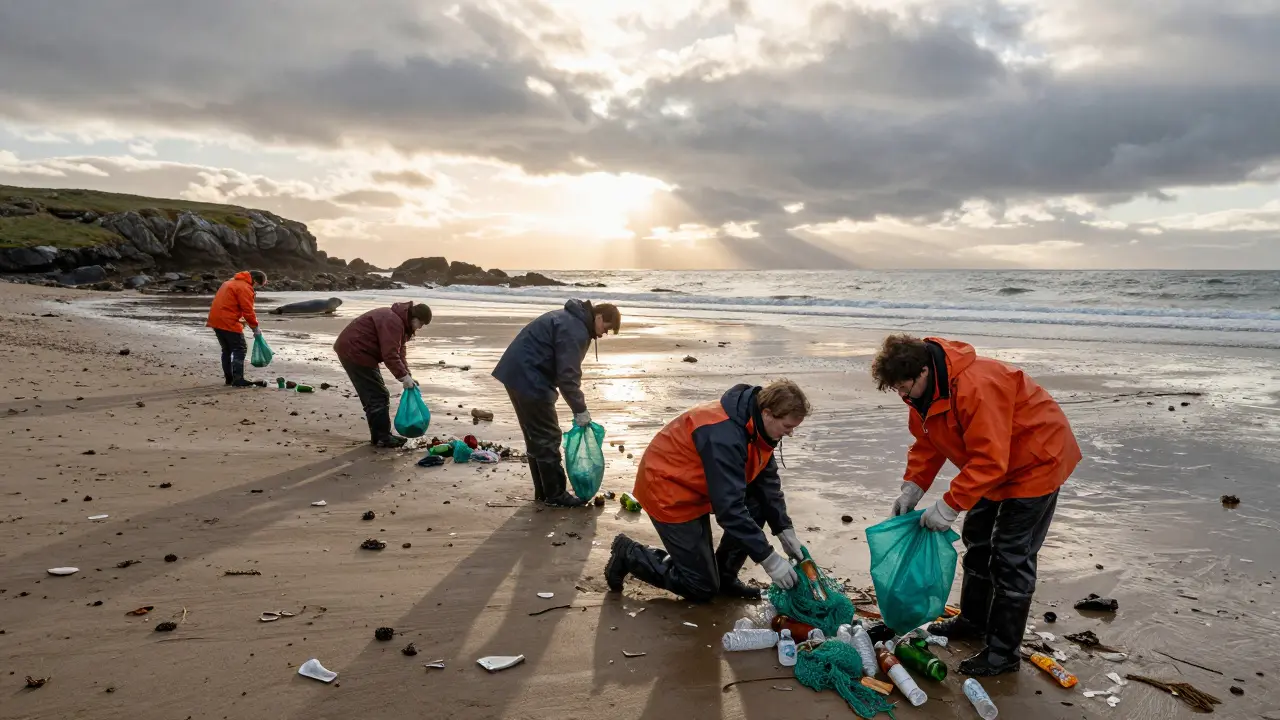
Every January, the tide rolls in on the shores of Angus and Fife carrying more than just seaweed and shells. It brings plastic bottles, fishing nets, and fragments of packaging-enough to fill a pickup truck in a single morning. You don’t need to be a scientist or a conservationist to make a difference. All you need is a pair of gloves, a bag, and a willingness to show up.
Why Beach Cleans Matter in Scotland
Scotland’s coastline stretches over 10,000 kilometers. That’s more than the entire coast of Australia. And every year, an estimated 129,000 pieces of marine litter wash up on its shores. Most of it isn’t from local residents. It’s from distant shipping lanes, river runoff from cities like Glasgow and Edinburgh, and even discarded gear from distant fisheries.
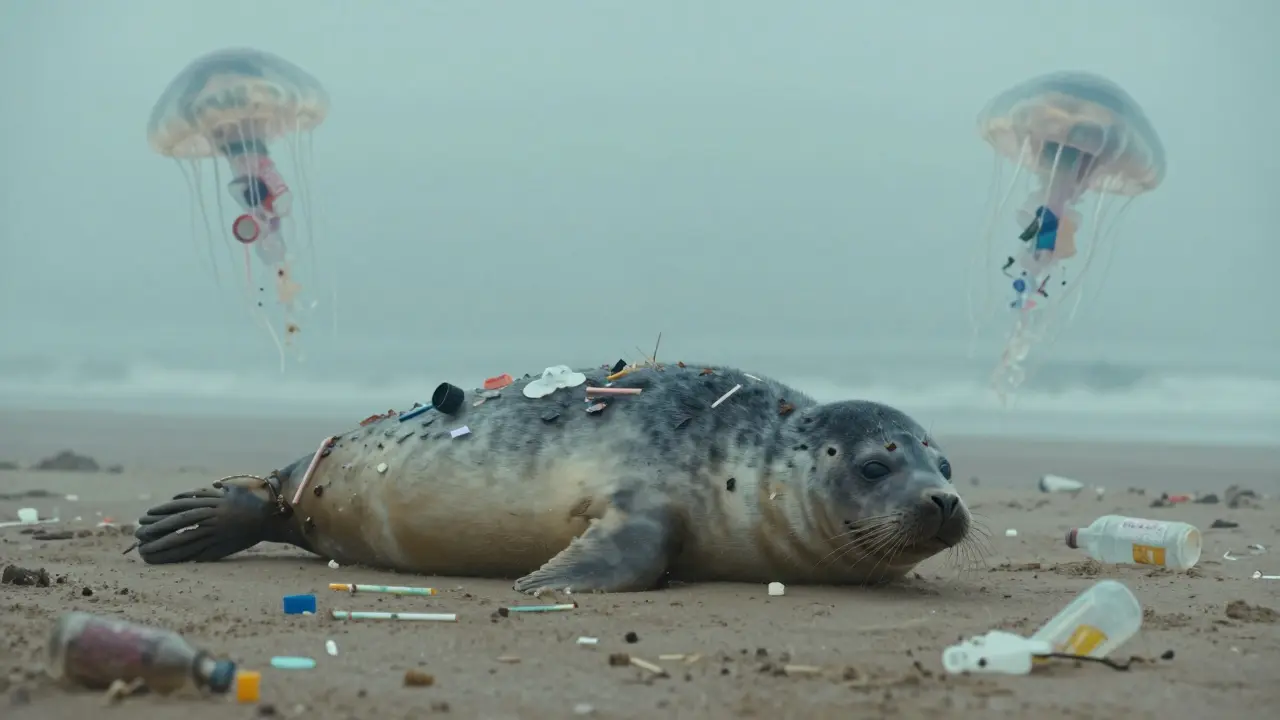
But here’s the thing: the animals that live in these waters don’t know the difference between a plastic straw and a jellyfish. Grey seals mistake plastic bags for food. Fulmars swallow fragments of lighters and bottle caps, starving with full stomachs. Turtles, though rare in Scottish waters, aren’t the only ones at risk. Even common shore crabs get tangled in discarded fishing line.
Beach cleans aren’t just about picking up trash. They’re data collection. Every item you pick up is logged. That data goes to the Marine Conservation Society and helps track pollution trends. In 2024, volunteers in Scotland recorded over 38,000 plastic items during beach cleans. The top three? Cigarette butts, plastic food wrappers, and polystyrene pieces.
What You’ll Actually Do on a Volunteer Day
Most beach clean events start at 10 a.m. You’ll meet at a local car park or community center-sometimes near Arbroath, sometimes near the Isle of May. Organizers hand out gloves, bags, and clipboards. Some groups give you a small waterproof map showing zones to cover.
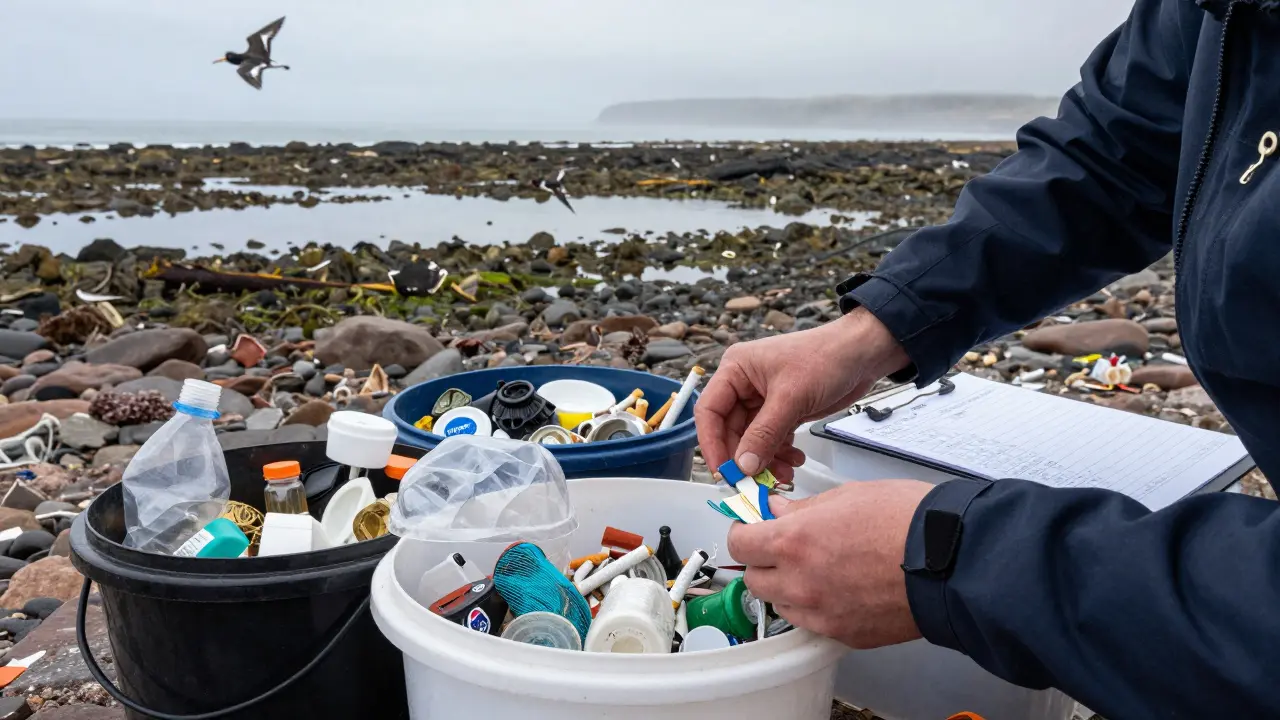
You walk the shoreline, picking up anything that doesn’t belong. But here’s where it gets interesting: you don’t just throw everything in the bag. You sort it. Plastic bottles go in one pile. Fishing gear in another. Glass and metal go in a third. Each type is counted and recorded. Some groups use an app called Marine Litter Watch to log items right from your phone.
Surveys are a little different. Instead of cleaning, you’re looking for signs of wildlife. You might walk a stretch of rocky shore and count how many dog whelks or limpets are clinging to the rocks. You might check tide pools for juvenile fish or look for seal pupping sites. In spring, volunteers in the Moray Firth help track the return of basking sharks by noting their location and size.
It sounds simple. But after a few hours, you start noticing patterns. The same stretch of beach near Carnoustie always has more cigarette butts. The dunes near Montrose always have more plastic netting. You start to understand how pollution moves-and where it comes from.
Who Runs These Projects?
You won’t find big corporate sponsors running these events. They’re led by local groups with passion, not budgets. The Scottish Wildlife Trust organizes regular beach cleans across the east coast. The Marine Conservation Society Scotland runs the biggest network, with over 200 events each year. Smaller groups like Coastal Communities Network and SEAPAW (Scottish Environmental Protection and Wildlife) focus on specific areas like the Firth of Tay or the North Sea coast near Peterhead.
Some projects are tied to universities. The University of St Andrews runs a marine biology survey program that trains volunteers to identify species and record water quality. You don’t need a degree. Just show up, listen, and ask questions. Many volunteers become regulars-and end up helping train new ones.
These groups don’t pay you. They don’t give you a T-shirt every time (though some do). What they give you is connection-to the sea, to the land, and to people who care as much as you do.
What You’ll See-And What You Might Not Expect
On a typical clean, you’ll find the usual suspects: bottles, wrappers, masks. But you’ll also find the strange. A single shoe from 1998. A rusted tin of tuna with a label in Spanish. A child’s toy boat, half-buried in sand. Once, near Crail, a volunteer found a 1970s-era diving helmet-still intact.
And then there’s the wildlife. You might see a grey seal pup curled up on a beach you’re about to clean. You’ll learn to back away slowly. You might spot a flock of oystercatchers flying low over the tide line, calling out as if warning you to hurry. You’ll learn to watch for signs: tracks in the sand, tufts of fur caught on rocks, the faint smell of fish oil that means a seal has been resting nearby.
One winter, a group near Stonehaven found a dead puffin with a plastic ring around its neck. They didn’t just bury it. They took photos, reported it to the Scottish SPCA, and added it to their survey log. That one bird led to a local campaign to ban single-use plastic rings on drink cans.
How to Get Started
You don’t need experience. You don’t need special gear. Just check the schedule.
- Visit Marine Conservation Society Scotland’s website and search for events in your area. Most are listed by month.
- Join local Facebook groups like “Wildlife Volunteers Scotland” or “Coastal Cleanups Dundee.”
- Look for events at nature reserves-RSPB Scotland often partners with beach clean groups.
- Some events are family-friendly. Others are for adults only. Check the description.
Wear waterproof boots, long sleeves, and layers. Bring water and a snack. If you have your own gloves, bring them. Most groups provide them, but having your own means you can keep them clean and reuse them.
Don’t worry if you’re late. Most events start with a quick briefing and then split into teams. You’ll catch up fast.
What You’ll Gain
It’s not about feeling good. It’s about knowing you’re part of a chain. Every piece of plastic you remove is one less thing that could kill a seal. Every survey you complete helps scientists predict where pollution will hit next.
People who volunteer regularly say the same thing: they sleep better. They notice the sea more. They start asking questions at the grocery store: “Is this packaging really necessary?” They talk to their kids about why they’re out there on a Saturday morning.
And sometimes, they start their own cleanups. Last year, a retired teacher from Arbroath started a weekly beach clean near her home. Now, 12 people show up every Saturday. No one gets paid. But the beach is cleaner. And the seals? They’re coming back.
Seasonal Differences
Winter cleans are brutal. Wind howls off the North Sea. The tide comes in fast. But that’s when the most litter washes up. Winter is also pupping season for seals. Volunteers learn to watch for signs of pups-tiny mounds of fur in the dunes-and avoid disturbing them.
Spring and summer bring more tourists-and more trash. Beaches near St Andrews and North Berwick get packed. Volunteers here focus on high-traffic areas and educate visitors. You might hand out reusable bags or explain why cigarette butts are toxic to shellfish.
Autumn is survey season. That’s when you count barnacles, check for invasive species like the Pacific oyster, and monitor water temperature changes. Scientists use this data to track how climate change is affecting marine life.
What You Won’t See
You won’t see dramatic rescue scenes. No dolphins swimming free from nets. No TV crews filming. It’s quiet work. Slow work. But it’s work that adds up.
One volunteer told me, “I used to think I needed to save the world. Now I know I just need to save this stretch of beach. And if enough people do that, the world gets a little better.”
That’s the truth. You don’t need to be heroic. You just need to show up.
Do I need any experience to join a beach clean or wildlife survey in Scotland?
No experience is needed. Most events are designed for beginners. Organizers provide training on the spot-how to identify litter, how to log data, how to stay safe near the tide. Many volunteers are first-timers. You’ll learn by doing, and people are always happy to help.
What should I wear for a beach clean in Scotland?
Wear waterproof boots or wellies, long pants, and layers. Scotland’s weather changes fast-even in summer. A windproof jacket and gloves are essential. Bring a hat and sunscreen. Avoid cotton-it stays wet and cold. Most groups provide gloves, but bringing your own is better for hygiene and reuse.
Are beach cleans safe? What about dangerous items like needles or chemicals?
Safety is taken seriously. Volunteers are trained to avoid sharp or hazardous items. If you find something like a needle, broken glass, or chemical containers, don’t touch it. Mark the spot and tell the event organizer. They’ll contact local authorities to collect it safely. Most cleanups avoid high-risk zones, and organizers carry first aid kits.
Can I bring my kids or pets?
Many events welcome children under supervision. Some are specifically family-friendly. Pets are trickier. Dogs are often allowed, but must be kept on a leash. Some beaches are protected wildlife areas where dogs aren’t permitted, especially during seal pupping season. Always check the event details before bringing a pet.
How often should I volunteer to make a real difference?
Even one clean makes a difference. But if you volunteer monthly, you start to see trends. You’ll notice which beaches get worse, which areas improve, and which types of litter are most common. Regular volunteers often become community leaders, helping organize events and share data with scientists. Consistency matters more than frequency.
Is there a cost to join these volunteering events?
No. All official beach cleans and wildlife surveys in Scotland are free. Some groups may ask for a small donation to cover supplies, but it’s never required. If someone asks you to pay to volunteer, it’s not an official event. Stick to groups listed on the Marine Conservation Society Scotland or Scottish Wildlife Trust websites.
Next Steps: Where to Go From Here
After your first clean, you might feel a shift. The sea doesn’t feel like a backdrop anymore. It feels like a neighbor.
Consider signing up for a monthly clean. Join a local WhatsApp group. Start taking photos of the same stretch of beach every time you go-you’ll be surprised how much changes over a year.
Or take it further. Learn to identify common marine species. Download the iNaturalist app and start logging what you see. You might end up contributing to a national database on biodiversity.
Wildlife volunteering in Scotland isn’t about saving the planet in one day. It’s about showing up, again and again, for the small, quiet work that keeps the coast alive.
Comments (8)
-
Aimee Quenneville January 4, 2026
So… you’re telling me I can get paid in vibes and slightly chapped hands to walk on a beach and yell at plastic? Sign me up. I’ll bring snacks and my dog (on a leash, I swear). Also, who else found a shoe from 1998? That’s a whole movie right there. 🥲

-
Cynthia Lamont January 5, 2026
STOP. You people are glorifying trash-picking like it’s some spiritual awakening. It’s NOT. You’re just cleaning up the mess corporations made. And you’re logging it? Like that changes anything? The data doesn’t stop the plastic. The corporations do. You’re a glorified janitor with a clipboard. And don’t get me started on ‘Marine Litter Watch’-it’s an app. Not a solution. 😒

-
Kirk Doherty January 5, 2026
I did a clean last winter near Crail. Found a diving helmet. Didn’t say anything. Just put it in the ‘weird stuff’ pile. The sea gives and takes. We just show up.
Also, the seals were watching. Didn’t move. Just stared. Felt like they knew we were trying.

-
Dmitriy Fedoseff January 6, 2026
Let’s be honest-this isn’t about Scotland. It’s about the global economy dumping its conscience into the ocean and calling it ‘out of sight, out of mind.’ You volunteers? You’re the quiet resistance. You don’t need a TED Talk. You don’t need a hashtag. You just show up, in the wind, with gloves on, and you refuse to look away. That’s more powerful than any policy. The sea doesn’t care about your nationality. It only cares if you care. And you do.
Thank you.

-
Meghan O'Connor January 7, 2026
Marine Conservation Society Scotland? That’s just a front for the EU’s coastal bureaucracy. We’ve had proper Irish coastal cleanups since the 80s. No apps. No clipboards. Just people with buckets and common sense. And you’re telling me a 1970s diving helmet is ‘interesting’? In Ireland, we’d have turned it into a garden planter. You people overthink everything.

-
Morgan ODonnell January 8, 2026
I went to my first clean last month near Malin Head. Didn’t know what I was doing. Guy next to me handed me a bag and said, ‘Just pick up what doesn’t belong.’ I did. Found a baby’s rattle. Plastic. Blue. Still had a bell inside.
I didn’t say anything. Just put it in the ‘hurt’ pile. I’m going back next week. I think I need to.

-
Liam Hesmondhalgh January 9, 2026
Scotland’s coastline is 10,000km? That’s cute. Ireland’s is longer and we don’t need a whole damn app to tell us the beach is full of trash. Also, why are you all so proud of cleaning up after tourists? We do it every weekend. No fanfare. No Facebook posts. Just done. You’re making it a movement. It’s just garbage. Get over it.

-
Patrick Tiernan January 11, 2026
Been doing this for 3 years. Found a wedding ring once. No idea whose. Left it in the ‘sad’ pile. The seals don’t care about your hashtags. The ocean doesn’t care about your Instagram bio. You show up. You pick up. You go home. That’s it. No need to turn it into a novel. Just do it. And if you’re not back next month? Don’t come back. The beach won’t miss you.
