
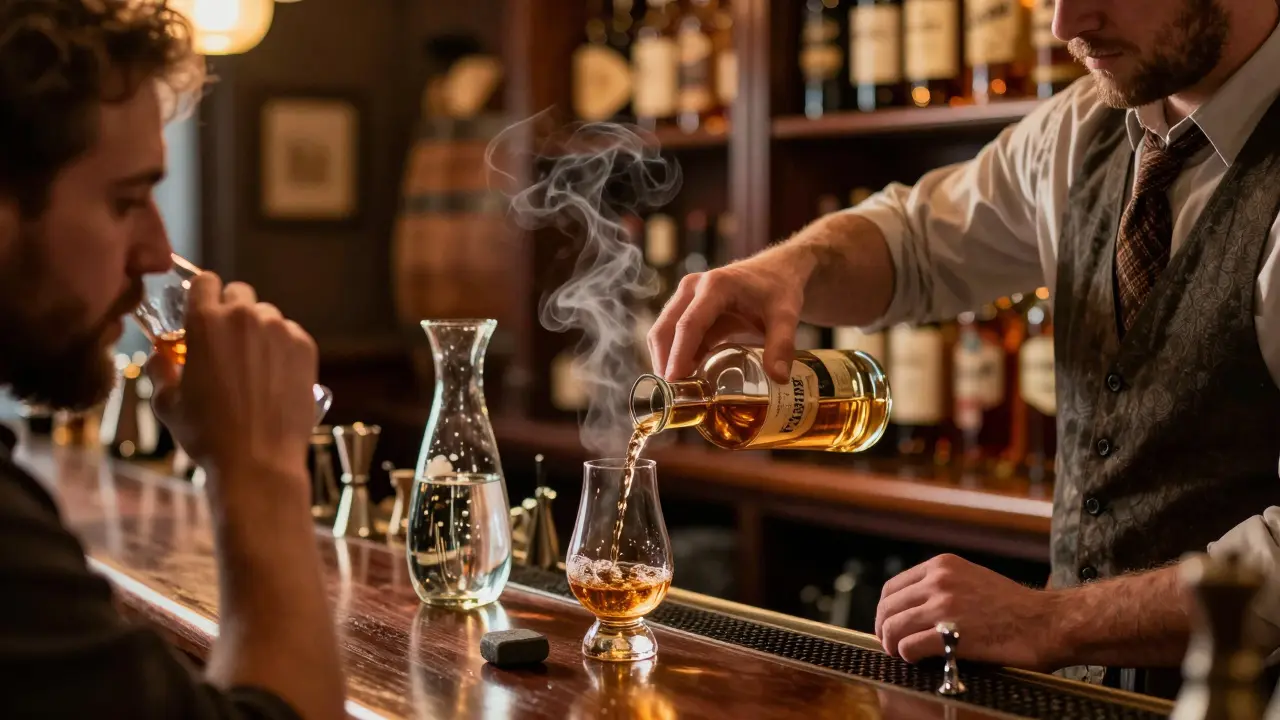
When You Order Whisky in Scotland, It’s Not Just a Drink - It’s a Ritual
Walk into a pub in Speyside or a cozy corner bar in Edinburgh, and you’ll notice something different. People don’t just ask for a whisky. They choose it. They smell it. They add water - sometimes, never ice. And no one tells them how to do it. That’s because in Scotland, whisky etiquette isn’t written down. It’s lived.
Most tourists think ordering whisky means picking a brand and saying, "Two fingers, neat." But if you want to blend in - and actually taste the spirit - you need to understand the unspoken rules. This isn’t about being fancy. It’s about respecting centuries of craft.
How to Order Whisky Like a Local
First, forget the menu. Most places in Scotland don’t have one. Instead, they’ll say: "What are you after?" That’s your cue. Be specific. Don’t say "a Scotch." Say: "I’d like a single malt from Islay," or "Something smoky from the Highlands."
Bar staff in Scotland know their stock. They’ve tasted every bottle on the shelf. If you’re unsure, ask: "What’s popular right now?" or "What’s a good one to start with?"
When they bring the glass, don’t reach for it immediately. Wait. Look at the color. Swirl it gently. Smell it. That’s not pretentious - that’s how you’re supposed to begin.
And if you’re in a distillery or a whisky bar with more than 50 bottles? Don’t panic. You don’t need to try them all. One good dram, taken slowly, is worth more than five rushed ones.
Water: The Secret Weapon
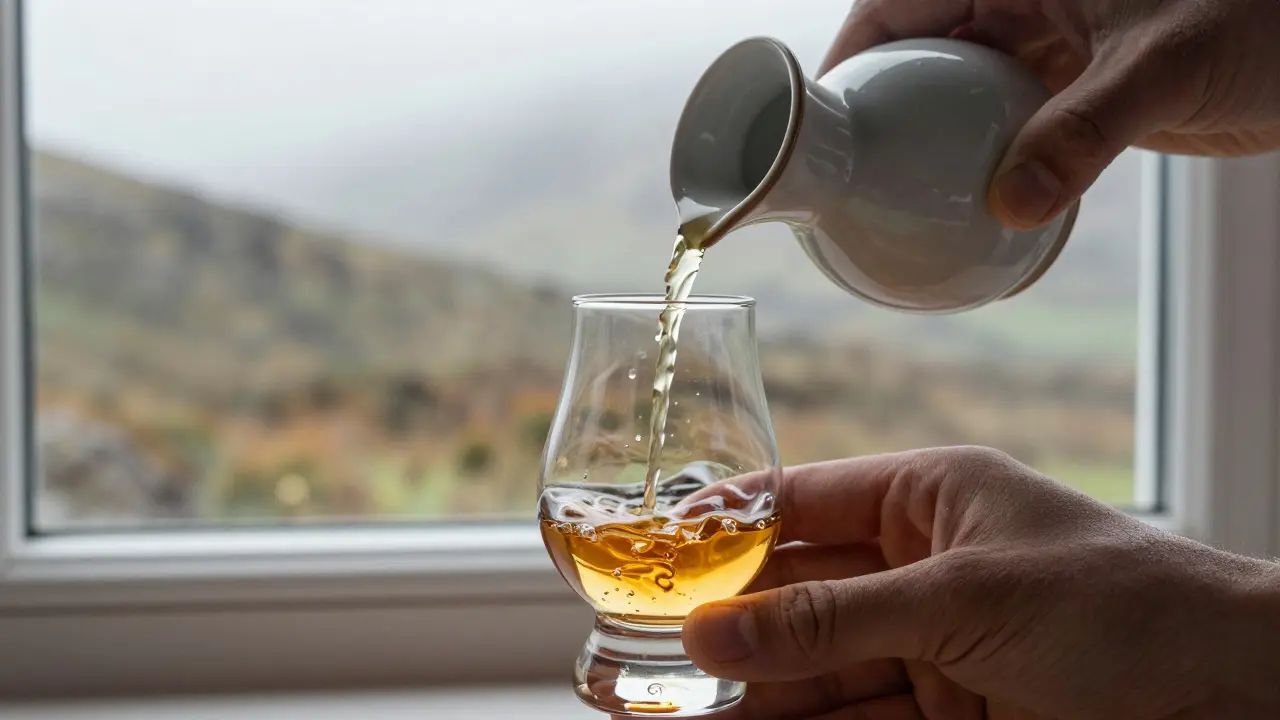
Here’s the truth: most single malts are bottled at 40%-46% ABV. That’s fine. But if you want to unlock the real flavors, add a splash of water. Not a lot. Just a teaspoon. Enough to break the surface tension.
Why? Alcohol numbs your nose. Water opens up the aromas - citrus, smoke, honey, peat, even seaweed. It’s science. The whisky’s volatile compounds rise more easily when diluted slightly. You’ll taste notes you never noticed before.
Locals often keep a small bottle of spring water beside their glass. Not tap. Not bottled mineral. Scottish spring water, preferably from the same region as the whisky. If you’re in Campbeltown, use water from Kintyre. In Glenlivet, use water from the River Livet. It’s not superstition. It’s about harmony.
Don’t be afraid to ask for a carafe of water on the side. Most places will bring it without being asked. If they don’t, say: "Could I get a jug of still water?" No one will judge you.
Ice? Don’t Do It - Unless You’re a Tourist
Ice is the one rule everyone breaks. And everyone knows it.
Put ice in a single malt, and you’re not just cooling it - you’re killing it. Ice lowers the temperature too much. It shuts down the aromas. It dulls the finish. It makes the whisky taste thin and flat.
Some people say, "I like it cold." Fair enough. But if you’re in Scotland, you’re here to taste whisky, not chill it. If you’re drinking a blended whisky in a pub after a long day, fine. But if you’re paying £12 for a 12-year-old Glenfiddich? Don’t put ice in it.
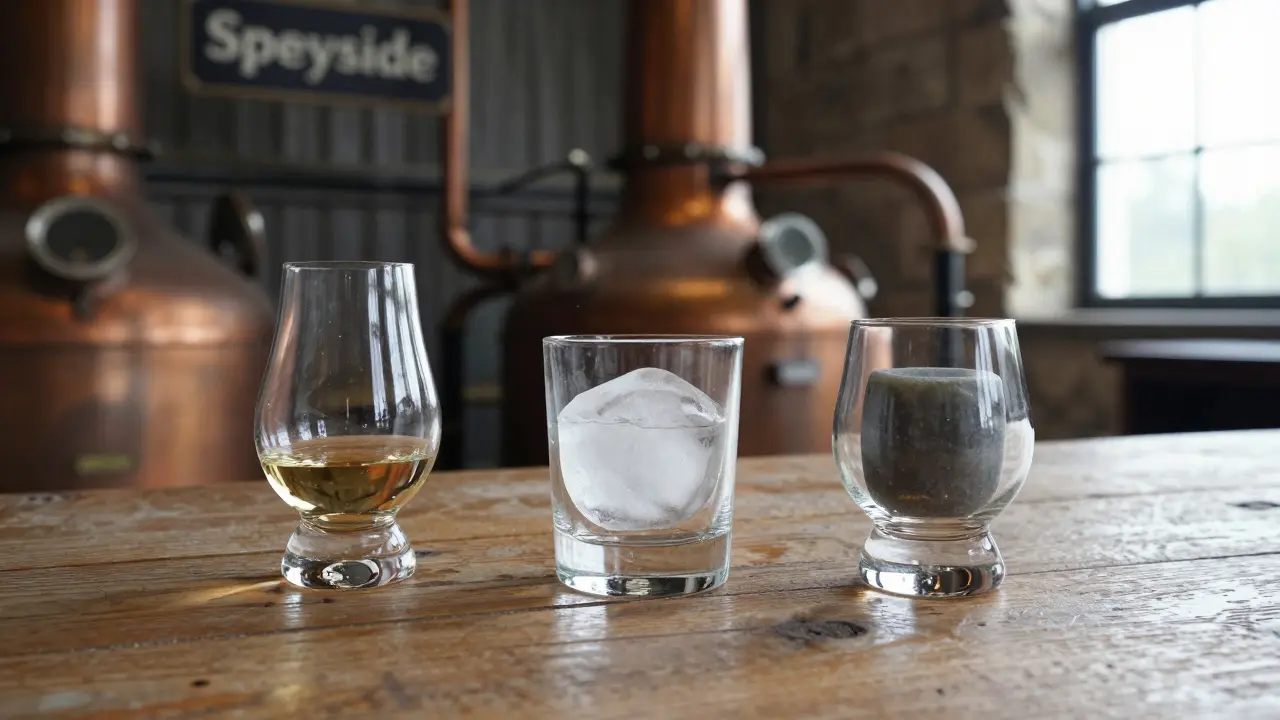
There’s one exception: the "whisky stone." These are chilled, non-porous stones made of soapstone or stainless steel. They cool your drink without diluting it. You can buy them in any whisky shop in Edinburgh. They’re not common, but if you see someone using one? You’re looking at someone who knows their stuff.
And if someone hands you a glass with ice? Don’t correct them. Just smile. You’re not here to lecture. You’re here to learn.
The Glass Matters More Than You Think
Whisky isn’t served in a tumbler unless you’re at a football match. In a proper whisky bar, you’ll get a Glencairn glass. It’s short, wide at the bottom, narrow at the top. Why? The shape traps the aromas. It’s designed by distillers, not designers.
If you’re handed a tumbler, don’t complain. But if you’re at a tasting or a distillery tour? You’ll always get the Glencairn. That’s the standard. The same glass used by master blenders at Glenlivet, Macallan, and Laphroaig.
Hold it by the stem. Don’t cup it. Your hand warms the glass. That changes the whisky. Let it sit. Let it breathe. Swirl. Smell. Sip.
When to Drink It - And When to Wait
There’s no rush. Never take a big gulp. Sip. Let it roll over your tongue. Hold it for a few seconds before swallowing. Notice the warmth. The texture. The aftertaste.
Some whiskies have a long finish - 30 seconds, even a minute. Others fade fast. That’s normal. Don’t feel like you need to finish the glass quickly. It’s not a competition.
And don’t feel pressured to drink it all. If you don’t like it? Leave it. No one will blink. In fact, if you say, "This isn’t for me," you’ll earn respect. People who know whisky don’t pretend.
What to Do If You’re Unsure
You’re not expected to know everything. Even locals ask for advice. Here’s what works:
- Ask: "What’s a good first single malt?"
- Try a flight - three small pours, usually 25ml each. Most places offer them.
- Ask about the region: Islay = smoky. Speyside = fruity. Highlands = balanced.
- Don’t order the most expensive bottle. Order the one the bartender recommends.
- If you’re in a pub and see locals nodding at a bottle - that’s your clue.
Don’t Be Afraid to Ask Questions
Whisky culture in Scotland is welcoming. People love talking about it. Ask: "What’s the story behind this one?" or "Why does this taste like bonfire?"
Most distillers and bar staff will smile and launch into a story - about peat, casks, or the river that runs through their village. That’s the real gift of Scottish whisky. It’s not just a drink. It’s a place. A season. A memory.
Final Rule: There Are No Rules - Just Respect
Here’s the truth: nobody in Scotland will yell at you for ordering whisky with ice. Or for drinking it neat. Or for adding too much water.
But if you show curiosity. If you pause before drinking. If you ask why something tastes the way it does - you’ll be treated like family.
Whisky etiquette isn’t about getting it "right." It’s about being present. About tasting the land. About honoring the people who made it.
Should I add water to my whisky in Scotland?
Yes - and it’s the best way to experience single malt whisky. A teaspoon of water opens up the flavors and reduces the burn. Most locals do it, especially with whiskies over 46% ABV. Use still spring water if you can. Avoid sparkling water - it muddles the aroma.
Is it rude to drink whisky with ice in Scotland?
Not rude - but unusual. Ice dulls the flavor and aroma of single malt whisky. If you’re drinking a blended whisky in a pub, it’s fine. But if you’re at a distillery or a whisky bar, you’ll be quietly judged. Most places won’t offer ice unless you ask. If you do, they’ll bring it - but they’ll also bring you a second glass without ice to compare.
What glass should whisky be served in?
In Scotland, whisky is served in a Glencairn glass for tastings and serious drinking. It’s designed to concentrate the aromas. You’ll find it at distilleries, whisky festivals, and upscale bars. In casual pubs, you might get a tumbler - that’s fine. But if you’re paying for a premium dram, expect the Glencairn. It’s the standard.
Can I order whisky by brand name?
You can, but it’s better to describe what you want. Instead of "I’ll have Glenfiddich," say: "I’d like something fruity from Speyside," or "Something with a hint of smoke." Bar staff in Scotland know hundreds of bottles. They’ll find the right one for you - often better than what you asked for.
Is it okay to mix whisky with soda or cola?
In Scotland, mixing single malt whisky with soda or cola is seen as a waste. It’s not illegal - but it’s frowned upon by purists. If you want a whisky and cola, order a blended whisky like Johnnie Walker or Teacher’s. That’s what it’s made for. Save the single malts for neat or with water.
Comments (9)
-
Jess Ciro March 24, 2026Water? Pfft. I once saw a guy in Oban add tap water to a 25-year-old Laphroaig. Next thing you know, he’s on YouTube claiming the distillery’s using "government-controlled spring water" to suppress the peat. The conspiracy is real.

-
saravana kumar March 26, 2026This entire post is overthought. In India, we drink whisky with soda, ice, and sometimes lime. If you want to taste "terroir," go to a vineyard. Whisky is not a meditation practice.

-
Tamil selvan March 27, 2026I appreciate the depth of this guide. The cultural respect shown here is profoundly moving. One must remember that whisky, like tea in Japan or coffee in Ethiopia, is not merely a beverage-it is an expression of heritage, patience, and the quiet dignity of craftsmanship. May we all approach it with reverence.

-
Mark Brantner March 27, 2026So wait… you’re telling me I can’t put ice in my Macallan? But my dog likes it cold! Also, I spilled half of it on my pants. My bad. Still, the smell? Worth it. 🤷♂️

-
Kate Tran March 28, 2026I asked for water at a pub in Inverness and they brought me a whole jug. Didn’t even blink. Then the guy next to me poured his into mine and said "try it now." I cried. Not because of the whisky. Because I finally understood.

-
amber hopman March 28, 2026I love how this post doesn’t shame people for drinking how they like. It’s not about rules. It’s about curiosity. I tried a flight last week and the one I hated? Turns out it was from a cask that used to hold sherry. Now I get why some people say "it tastes like Christmas in a bottle."

-
Jim Sonntag March 30, 2026Ice is fine. Water is fine. Glencairn? Sure. But if you’re in a pub with a football match on and someone orders a whisky with Coke, they’re not disrespecting Scotland. They’re just enjoying a drink. Chill. Literally.

-
Deepak Sungra March 31, 2026I’ve been to 17 distilleries. 16 of them had the same guy behind the bar. He said "don’t use ice" then he poured himself a glass with ice. Then he told me I was "too serious." I cried again. But this time… I got it. The ritual is the person. Not the glass.

-
Samar Omar April 1, 2026The notion that one should use regional spring water is not merely aesthetic-it is ontological. The mineral composition of the River Livet, for instance, contains trace isotopes of glacial meltwater that interact with phenolic compounds in peated malt in a manner that cannot be replicated by any bottled alternative. To use non-local water is to commit a metaphysical dissonance. I once had a dram in Talisker that was served with water from the loch behind the distillery. The aroma… it was as if the Atlantic itself had whispered through my nostrils. I have not been the same since.
