
Pollok Country Park isn’t just another green space in Glasgow-it’s a living piece of Scotland’s countryside tucked right inside the city. Just a 15-minute drive from the city center, this 160-acre park feels like stepping into a different world. You’ll find ancient trees, quiet rivers, and a surprise that stops most visitors in their tracks: a herd of Highland cows with long, shaggy coats wandering freely near the old mansion. And if you wander far enough past the grassy slopes, you’ll stumble upon a hidden gem-the walled garden, restored to its 19th-century glory, bursting with roses, herbs, and fruit trees that locals still tend by hand.
Highland Cows That Feel Like They Belong Here
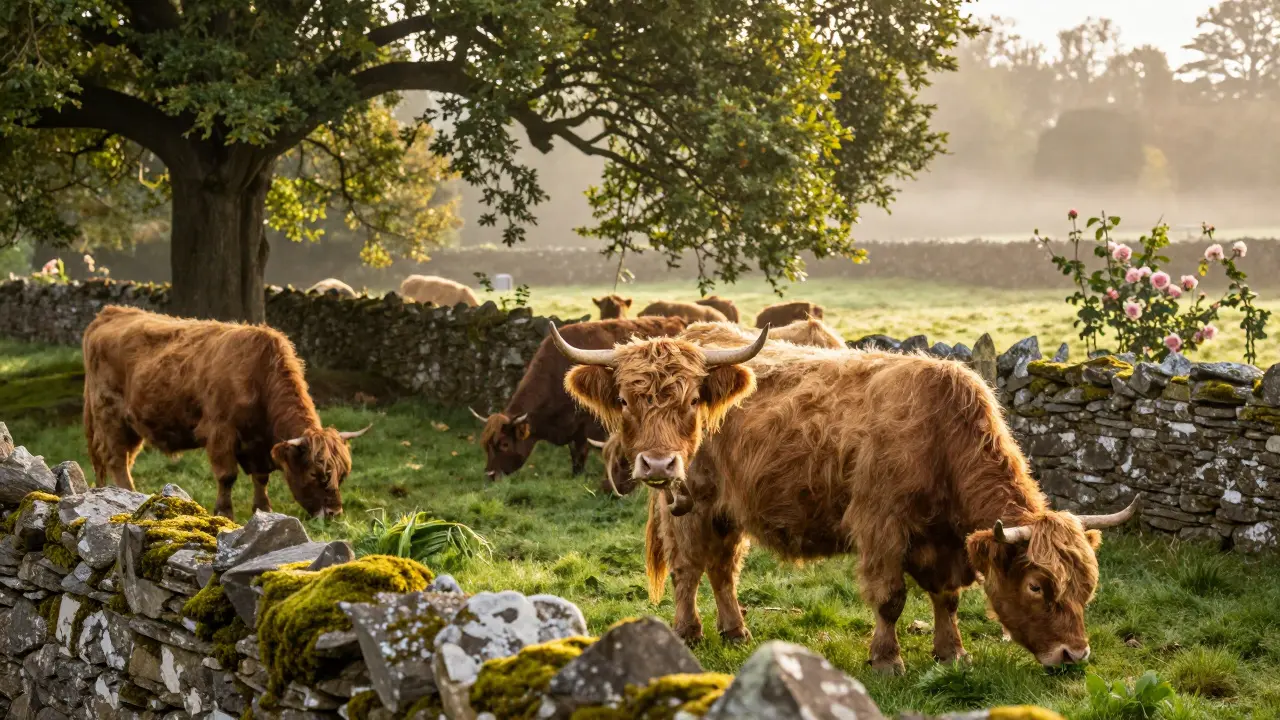
When you first see them, you might think the Highland cows at Pollok are part of a themed exhibit. They’re not. These animals are real, free-roaming, and have lived in the park for over 20 years. They’re not there for show-they’re part of the land’s management. Their thick coats help them survive Scottish winters, and their grazing keeps the grass from growing too wild, which helps protect the park’s delicate ecosystems.
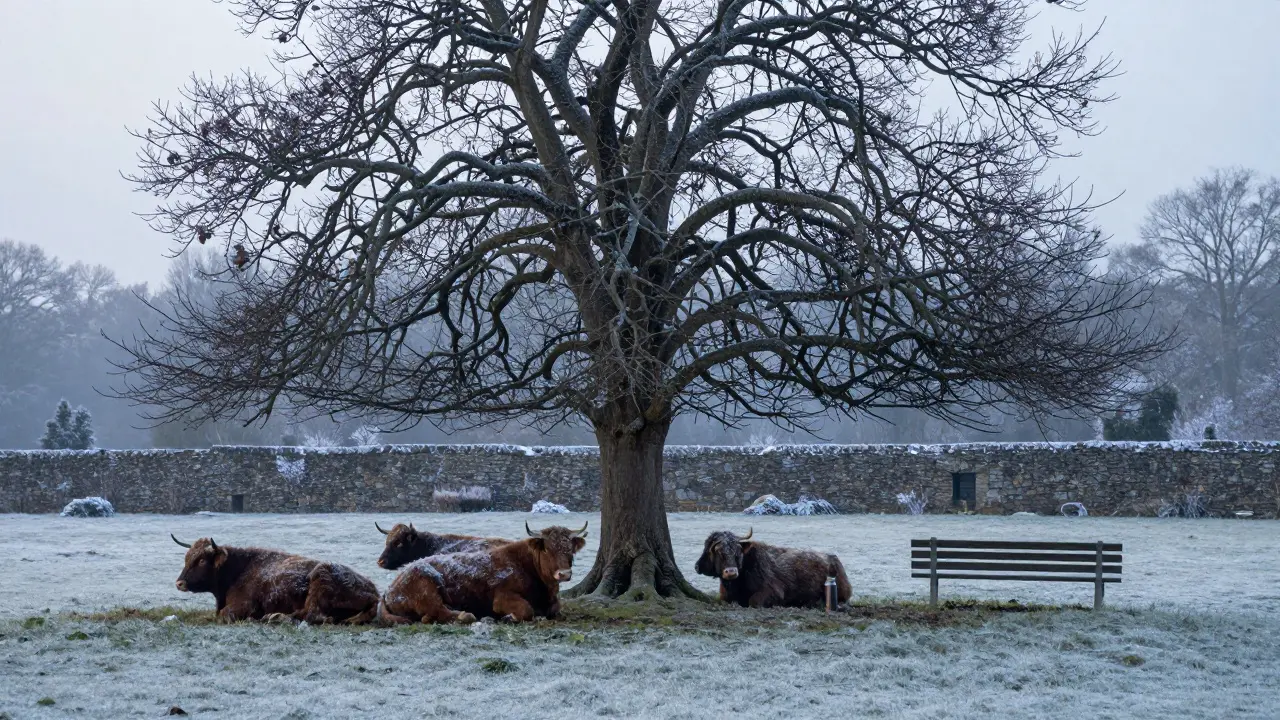
Unlike farm animals you’d see in a petting zoo, these cows don’t come running for treats. They move slowly, deliberately, often pausing to chew in the middle of a path. Locals say you’ll see them curled up under the beech trees in winter or standing knee-deep in misty morning dew. In summer, they graze near the old stone walls of the walled garden, looking like something out of a painting.
There’s no fence keeping them in. No signs saying "Do Not Feed." Just a quiet understanding: observe, don’t interfere. The park’s rangers monitor their health, and the herd is small-usually no more than 12 at a time. If you visit in late spring, you might spot a calf with floppy ears and a fuzzy coat, still learning to navigate the world.
The Walled Garden: A Secret from the 1800s
Behind the trees and beyond the cow pasture, you’ll find the walled garden. It’s not the kind of garden you see in glossy magazines. This one smells like damp earth and crushed mint. The walls-built from local stone-are over 10 feet high, built in the 1820s to trap heat and protect fruit trees from the wind. They worked so well that, for nearly 150 years, Pollok House fed its residents with peaches, plums, and strawberries grown right here.
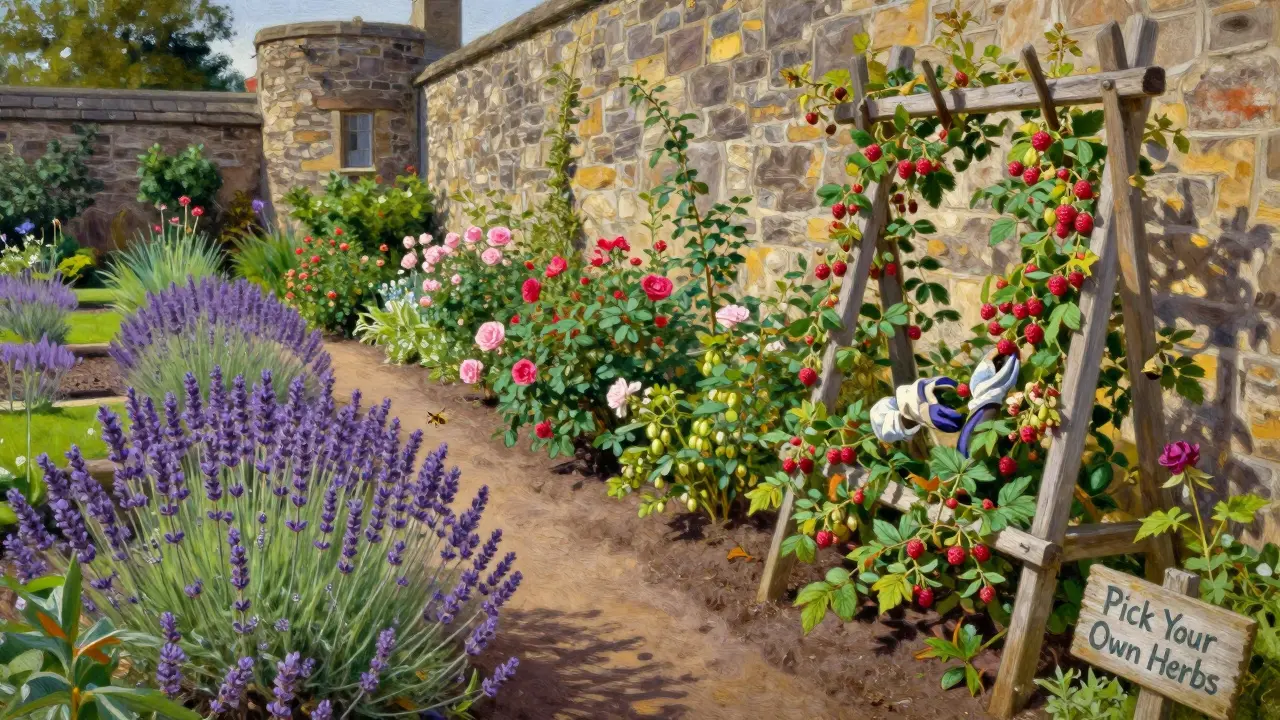
After decades of neglect, volunteers began restoring it in the 1990s. Now, it’s a working garden again. You’ll see rows of gooseberries, climbing beans on wooden trellises, and rows of lavender that bees hum around. The glasshouses, once broken and cold, now grow tomatoes and peppers for community events. There’s even a small orchard with apple trees that still produce fruit each autumn.
The garden doesn’t have fancy signs or gift shops. Just a bench under an old pear tree, a wooden sign that says "Pick Your Own Herbs," and a few locals tending beds with gloves and trowels. If you’re lucky, you might meet one of the volunteers-some have been coming here for 30 years. They’ll tell you which herbs are best for tea, where the raspberries ripen first, and how the walls keep the frost out even in January.
Why This Place Feels Different
Most parks in cities are manicured, controlled, predictable. Pollok isn’t. It’s wild in the best way. You won’t find playgrounds with rubber flooring or picnic tables bolted to the ground. Instead, there are mossy stone benches, hidden footpaths that lead nowhere in particular, and a loch where you can sit and watch ducks glide past the ruins of an old mill.
The house itself-Pollok House-isn’t just a museum. It’s still a home. The family who once lived here, the Stuarts, left their furniture, their books, even their tea sets. The rooms aren’t roped off. You can touch the wood paneling, open the drawers, and see the scratches on the floor from a child’s toy train over 100 years ago.
There’s no entry fee. No timed tickets. You can walk in at sunrise and leave at dusk. The park is open year-round, and each season changes it completely. In spring, the rhododendrons explode in pink and purple. In autumn, the leaves turn gold and fall so thick you sink into them when you walk. In winter, the snow settles on the cows’ backs like frosting.
What to Bring and What to Expect
If you’re planning a visit, here’s what actually works:
- Wear sturdy shoes-the paths aren’t paved, and the ground gets muddy after rain.
- Bring a thermos. There’s no café inside the walled garden, but there’s a small kiosk near the main entrance with hot drinks and Scottish oatcakes.
- Don’t expect Wi-Fi. There’s barely any signal. That’s part of the point.
- Bring a camera, but don’t rely on it. The best moments-the cow blinking slowly at you, the light hitting the garden wall at 4 p.m.-happen when you’re not looking.
- Check the weather. The wind sweeps across the moorland faster than you think. A light jacket is better than none.
There are no guided tours. No audio guides. You’re on your own. And that’s what makes it special. You’ll find families picnicking under oaks, artists sketching the garden, teenagers skipping stones on the loch, and older couples walking hand-in-hand along the same path they’ve walked for 50 years.
When to Visit
There’s no "best" time, but some seasons stand out.
- May to July: The garden is in full bloom. Roses climb the walls. The cows are in their thickest coats. The light lasts until 9 p.m.
- September: The fruit harvest is happening. You might catch volunteers picking apples or making jam.
- November to February: Quietest time. Snow on the walls. The cows look like woolly boulders. You’ll have the whole place to yourself.
- March: The first signs of life. Snowdrops push through the soil. The garden smells like wet stone and hope.
Weekends are busier, but never crowded. Weekdays, especially in the morning, feel like the park is yours alone.
Why It Still Matters
Pollok Country Park doesn’t have a flashy website or a viral TikTok trend. It doesn’t need one. It’s survived because it’s real. The cows aren’t here because they’re cute-they’re here because they belong. The garden isn’t restored for tourists-it’s tended because someone remembers what it meant to grow food by hand.
In a world that’s always rushing, Pollok asks you to slow down. To notice the way the light hits the wall at dusk. To sit still until a cow lifts its head and looks right at you. To pick a sprig of thyme and smell it before you let it go.
It’s not a destination. It’s a pause.
Can I feed the Highland cows at Pollok Country Park?
No, feeding the Highland cows is not allowed. They have a carefully balanced diet managed by park staff, and human food can make them sick. They’re used to eating grass, heather, and hay-nothing else. The best way to enjoy them is to watch quietly from a distance.
Is there parking at Pollok Country Park?
Yes, there are two main car parks: one near the main entrance off Pollokshaws Road and another near the walled garden. Both are free. The garden car park fills up quickly on weekends, so arriving before 10 a.m. is best. There’s also a bus route (number 26) that stops right outside the park entrance.
Are dogs allowed in Pollok Country Park?
Yes, dogs are welcome, but they must be kept on a lead near the Highland cows and in the walled garden. There are plenty of trails for walks, and water bowls are available near the visitor center. Many locals bring their dogs here every day-it’s one of the most popular dog-friendly spots in Glasgow.
Can I visit Pollok House without paying?
Yes, entry to Pollok House is free. The house is run by National Museums Scotland, and while donations are welcome, there’s no ticket required. You can wander through the rooms, see the original furniture, and explore the art collection without paying a penny.
Is the walled garden open all year?
The walled garden is open every day, year-round, but the glasshouses and planting areas are most active from April to October. In winter, the walls are still there, the paths are clear, and you can still walk through-it’s just quieter. The volunteers still tend to the soil, and the fruit trees remain, waiting for spring.
What to Do Next
If you’ve never been to Pollok, start with a Saturday morning walk. Bring coffee, wear boots, and let yourself get lost on the paths. Don’t look for the cows-wait until they find you. Sit in the garden and listen. You’ll hear birds, wind, and maybe someone humming a tune as they prune a rosebush.
And if you’ve been before? Come back in a different season. See how the light changes. Notice how the same bench feels different in November than it does in July. This place doesn’t change much-but you do, just by being in it.
Comments (11)
-
Elmer Burgos February 12, 2026I went there last fall and just sat by the walled garden for an hour
Didn't move. Didn't check my phone. Just listened to the wind and watched a cow chew
Best 60 minutes I've had all year
That place doesn't ask for anything
Just gives you space to breathe

-
Jason Townsend February 14, 2026They say the cows are just grazing but what if they're part of some land management experiment
Who funds that park really
And why no cameras near the herd
Something's off about how calm everyone is around them

-
Antwan Holder February 14, 2026I cried when I saw the cows
Not because they were cute
But because they remembered something I'd forgotten
That life doesn't have to be scheduled
That stillness is not emptiness
That a creature with fur like a storm can still stand there
And be perfectly okay with doing nothing
That garden
Those walls
They're not just stone and ivy
They're a whisper from a world that stopped screaming
And I finally heard it
For the first time in years

-
Angelina Jefary February 15, 2026The article says 'no fence keeping them in' but it's actually a 6 foot stone wall with a hidden electric wire
Checked the council records
They're contained
They just don't want people to know
Also 'heather' is misspelled in paragraph 3

-
Jennifer Kaiser February 16, 2026I've been going to Pollok for 20 years
My mom took me there when I was five
Now I take my daughter
There's a bench under the pear tree near the east wall
It's cracked on the left side
That's where I sat when I got the call about my dad
And that's where I sit now when I need to remember
That peace isn't loud
It's quiet
And it stays

-
TIARA SUKMA UTAMA February 17, 2026I went there and the cows were so big
Like really big
And the garden was nice
But I got lost
And my phone died
So I just sat on a rock
And watched the clouds
It was cool

-
Jasmine Oey February 19, 2026I mean like wow
Have you seen the photos of that garden in golden hour
It's like someone took a romantic novel and made it real
And the cows
Oh my god the cows
They look like they stepped out of a Brontë sister's dream
And no one even cares
It's just... there
Like a secret only the quiet people know

-
Marissa Martin February 19, 2026I used to work at the visitor center
They didn't pay much
But I didn't mind
Because every morning I'd walk through the garden before opening
And the old lady who tended the lavender
She'd smile and say 'you're here again'
She died last winter
I still go there sometimes
Just to sit where she sat

-
James Winter February 20, 2026Scotland's got cows
Big deal
My cousin's farm in Alberta has 200
And we don't make a museum out of them
Stop romanticizing dirt

-
Aimee Quenneville February 21, 2026James from Canada just said 'stop romanticizing dirt'
Bro
You're on Reddit
That's literally the whole point
Also your cousin's farm probably has a tractor named 'Betsy' and a dog that barks at squirrels
Pollok has a cow that stares at you like it knows your life story
And you're mad because it's not 'efficient'

-
Cynthia Lamont February 21, 2026The article says 'no entry fee' but the house is run by National Museums Scotland
Which means it's taxpayer funded
And the volunteers? Mostly retired people with pensions
Who's really maintaining this
Not some mystical 'community'-it's a government subsidy wrapped in nostalgia
And the cows? They're not 'belonging'
They're a cost-saving grazing solution
Stop pretending this is pure
It's just well-marketed public maintenance
