
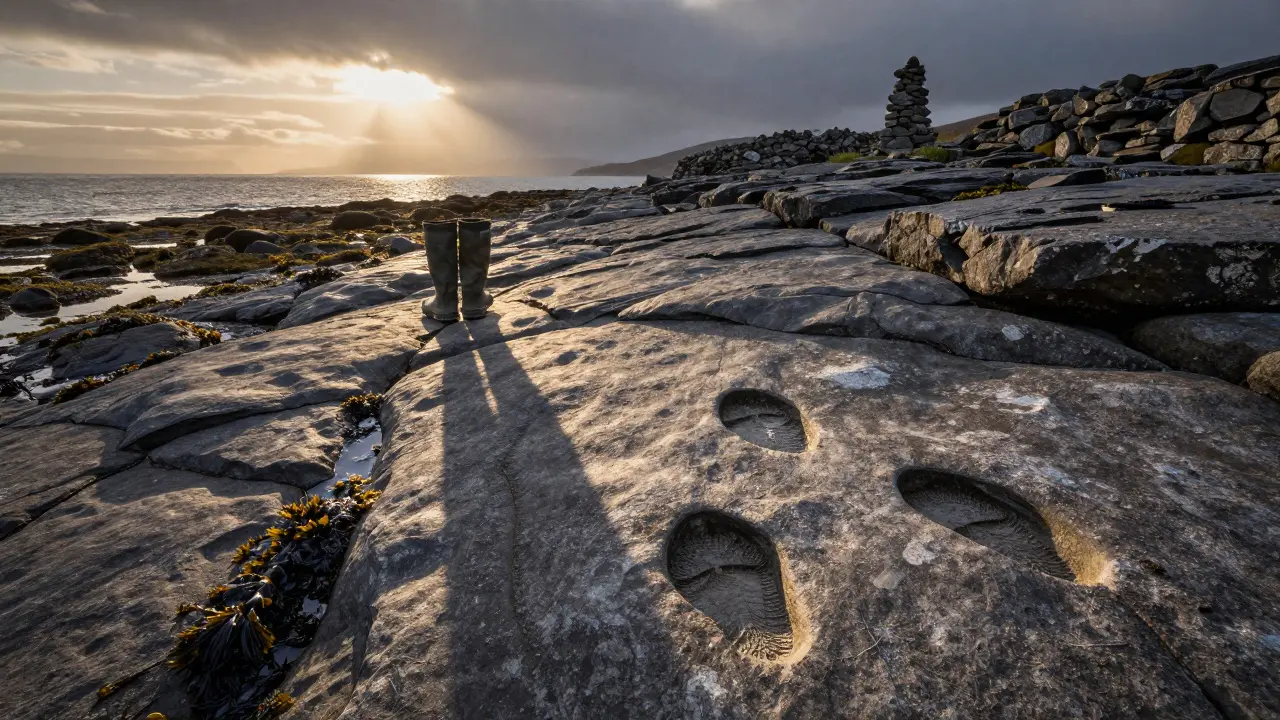
On the west coast of the Isle of Skye, just south of the village of Staffin, a stretch of rocky beach holds some of the most ancient secrets in Scotland. These aren’t just ordinary rocks - they’re fossilized dinosaur footprints, pressed into stone over 170 million years ago. Thousands of visitors come each year to see them, but many show up at the wrong time, get stuck on the tide, or miss the best views because they didn’t check the tide schedule. If you want to see these tracks without getting your boots soaked or your car stranded, here’s exactly what you need to know.
Where to Find the Dinosaur Footprints
The dinosaur footprints are located along the rocky shoreline at Staffin Bay, about a 10-minute walk from the small car park off the A863 road. You’ll see a clear path marked by stone cairns leading down to the beach. The footprints are scattered across a wide slab of limestone, exposed only when the tide is low. Some are deep and clear - you can see the three-toed impressions of theropods like Allosaurus or Megalosaurus. Others are faint, worn by centuries of waves. A few even show drag marks from tails or the scuffle of a fleeing prey.
These aren’t replicas. They’re real. Scientists from the University of Edinburgh have studied them since the 1980s. One trackway, about 20 feet long, shows a dinosaur walking at a steady pace - its stride, weight, and speed can still be calculated. No other site in Britain has such a long, continuous set of footprints from the Middle Jurassic period.
How to Get to the Beach
The car park is small - only about 10 spaces - and fills up fast in summer. Arrive before 9 a.m. if you can. There’s no public transport directly to the site, so driving is your best bet. From Portree, take the A863 west for about 12 miles. Look for the brown tourist sign for ‘Dinosaur Footprints’ just past the Staffin Hotel. Park on the shoulder, not on the road. The walk down is steep in places, with loose gravel. Wear sturdy shoes. Sandals won’t cut it.
There’s no fence or barrier. The rocks are slippery, especially after rain. Keep kids close. The tide comes in fast here. One local told me he once saw a family trapped on the rocks for two hours because they didn’t realize the tide was rising. They had to be rescued by the coastguard. Don’t be that family.
Tide Times That Matter
You only get a 2- to 3-hour window to see the footprints clearly. That window changes every day. In winter, the best time is usually between 10 a.m. and 1 p.m. In summer, it shifts to 3 p.m. to 6 p.m. because the tides are higher and slower.
Here’s what to look for:
- Low tide must be below 1 meter (3.3 feet) for the main trackway to be fully exposed.
- A tide of 0.5 meters or lower is ideal - you’ll see every claw mark.
- Never go if the tide is above 1.5 meters. You’ll see nothing but water.
Check the tide forecast before you leave. The UK Hydrographic Office publishes accurate times for Staffin. You can find them online or use the free Coastal Tides app. Don’t rely on general Skye tide apps - they’re often wrong for this exact spot.
Last June, a group of students came at 2 p.m. expecting to see the prints. The tide was still at 1.8 meters. They left frustrated. The next day, they came back at 4:15 p.m. - tide was 0.3 meters. They spent two hours on the rocks, sketching and photographing. One of them later posted a photo of a perfect three-toed print next to their boot - it went viral on Instagram.
What to Bring
- Waterproof boots - the rocks are wet, and the air is damp even on sunny days.
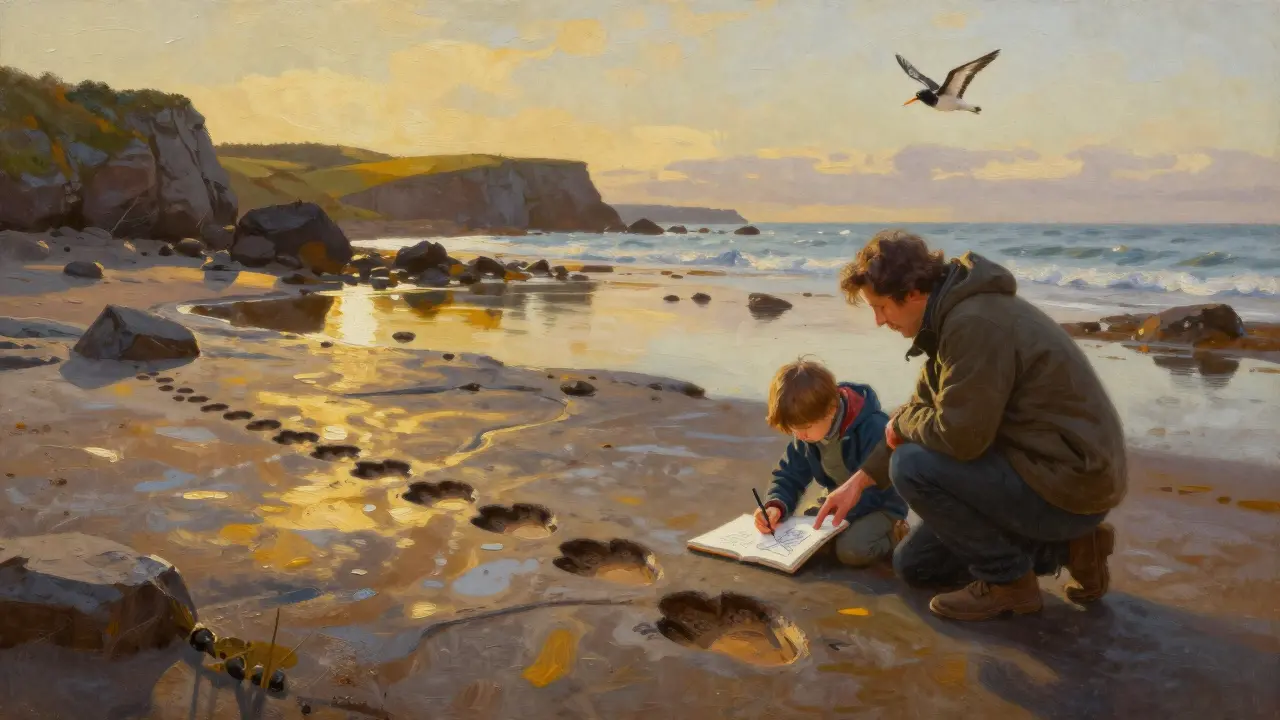
- A small notebook and pencil - many prints are too fragile to touch, but you can sketch them.
- A camera with a macro lens - the details are tiny. A phone won’t capture the depth.
- Warm layers - wind off the sea can drop the temperature by 10°C in minutes.
- A thermos of tea - you’ll be standing still for a while, and the wind bites.
Don’t bring drones. The area is protected under the Wildlife and Countryside Act. Flying over the site can disturb nesting birds like peregrine falcons and oystercatchers. Rangers patrol the area in summer. Fines start at £500.
Why These Footprints Are Special
Most dinosaur tracks are found in deserts or dry riverbeds. Skye’s were made in tidal mudflats - the same kind of environment where modern shorebirds walk today. That means the dinosaurs weren’t just passing through. They lived here. They hunted here. They came back to the same beach, season after season.
Some prints are from juveniles. Others are from adults over 6 meters long. One set shows a large dinosaur turning sharply - maybe chasing prey, maybe avoiding a rival. The pattern suggests social behavior. That’s rare in the fossil record.
Unlike the bone-rich quarries of North America, Skye’s site gives us movement, not just skeletons. We know how these animals moved. How fast they walked. How they reacted to the tide. It’s not just a fossil site - it’s a snapshot of a living world.

When to Visit
Spring and early autumn are the best times. Summer is crowded. Winter is cold, but you’ll have the beach to yourself. In November and February, you might be the only person there. The light is low, the sky is moody, and the footprints look even older than they are.
Don’t go in heavy rain. The rocks turn slick as glass. The path down becomes dangerous. Wait for a clear day after a few dry days. The prints show up best in direct sunlight. Overcast days make them hard to see.
If you’re planning a longer trip, combine this with a walk to the Old Man of Storr or a drive to the Quiraing. Both are less than 30 minutes away. But don’t rush. Spend at least two hours at Staffin. Sit on a rock. Watch the waves. Imagine a dinosaur stepping here 170 million years ago - right where you’re standing.
What Not to Do
- Don’t climb on the rocks to get a better angle. You’ll damage the prints.
- Don’t pour water on them to make them ‘pop’ - that’s illegal and harmful.
- Don’t use chalk or paint to outline them. People have tried. It ruins the surface.
- Don’t leave trash. Even a plastic bottle can wash into the sea and kill marine life.
There’s a small information board at the car park with a map of the tracks. Take a photo of it. It shows exactly where the main prints are. You’ll thank yourself later.
Final Tip: The Best Time of Day
Go just after low tide. That’s when the rocks are dryest and the sun is still high enough to cast sharp shadows. The shadows make the prints stand out like relief sculptures. Around 4 p.m. in late April, or 2 p.m. in October, the light hits just right. That’s when the footprints look alive - as if the dinosaur just stepped away.
Bring a blanket. Sit. Look. Listen. The sea whispers against the stone. The wind carries the scent of salt and seaweed. And beneath your feet, something older than mountains still speaks.
Can I touch the dinosaur footprints at Staffin?
No, you should not touch them. The footprints are fossilized and extremely fragile. Even light pressure from a finger can cause microscopic damage over time. The site is protected under UK heritage law. Touching, scraping, or pouring water on them is illegal and can result in a fine. You can photograph them, sketch them, or study them - but leave them untouched.
Are the dinosaur footprints visible all year round?
Yes, but only when the tide is low enough to expose them. In winter, low tide often happens during daylight hours, making it easier to visit. In summer, the tides are higher and shift to late afternoon or evening. You need to check daily tide tables. Even in December, if the tide drops below 1 meter, the prints are visible. The key isn’t the season - it’s the tide level.
Is there parking at the Staffin dinosaur site?
Yes, there’s a small, free car park off the A863, just before the footpath down to the beach. It holds about 10 cars. It fills up quickly in summer, especially on weekends. Arrive early. If the car park is full, do not park on the road. It’s illegal and blocks emergency access. The nearest alternative is the Staffin Hotel parking, but they may not allow public use.
What kind of dinosaurs made these footprints?
The prints were made by theropod dinosaurs - meat-eating, two-legged predators. Scientists believe they were likely Megalosaurus or Allosaurus, both common in Europe during the Middle Jurassic. Some smaller prints may belong to juvenile individuals. The size of the footprints suggests the largest dinosaurs were around 6 to 7 meters long. No bones have been found here, but the trackways tell us more about how they moved than bones ever could.
Can I bring my dog to the dinosaur footprints?
Yes, dogs are allowed but must be kept on a lead at all times. The area is a protected habitat for ground-nesting birds like oystercatchers and lapwings. A loose dog can scare them off their nests, leading to chick deaths. Also, the rocks are uneven and slippery - your dog could slip or get hurt. Bring water for your dog, and clean up after them. There are no bins at the site - take everything back with you.
Is the walk to the footprints suitable for children?
The path down is steep and rocky, with loose stones. It’s not wheelchair accessible. For children under 10, it’s manageable if you’re careful and supervise closely. Older kids will enjoy the adventure - it’s like a real-life treasure hunt. Bring a small bag with snacks and water. Avoid bringing toddlers or babies in strollers - the path is too rough. Many families bring a camera and a notebook for kids to sketch the prints - it turns the visit into a learning experience.
Comments (9)
-
James Boggs December 22, 2025
Thank you for this incredibly detailed guide. The tide timing information alone is worth the read. I’ve been to Skye twice and missed the footprints both times because I didn’t check the local tide tables. This time, I’m printing this out and taping it to my dashboard.

-
selma souza December 23, 2025
There is no excuse for not checking the UK Hydrographic Office’s official tide data. Relying on third-party apps is negligent, and anyone who does so should not be allowed near a protected heritage site. The author’s warning about fines for drones is not overly cautious-it is legally necessary.

-
Lissa Veldhuis December 23, 2025
Ugh I went there last July and some dude was literally pouring water on the prints like they were a goddamn sidewalk chalk drawing and took selfies with his dumbass kids. Like bro it’s 170 million years old not a sandcastle at Disney. I wanted to throw his phone in the sea.

-
Addison Smart December 23, 2025
What’s so profound about this site isn’t just the science-it’s the quiet continuity. A theropod walked here when the continents were still stitching themselves together, and now we stand in the same tidal mud, our boots sinking slightly, our breath visible in the salt wind. We’re not visitors. We’re temporary guests in a space that outlived empires. That’s why the rules matter. That’s why we don’t touch. That’s why we leave no trace. This isn’t tourism. It’s reverence.

-
Michael Jones December 24, 2025
Just sit there and listen to the waves and feel the stone beneath you and remember you’re standing where something ancient moved and lived and breathed and that’s all you need to know

-
allison berroteran December 26, 2025
I visited this site last October with my 12-year-old niece. We brought sketchbooks and colored pencils, and she spent over an hour tracing the outline of one particularly clear trackway with her fingers-just above the surface, never touching. She later wrote a poem about it: ‘The dinosaur didn’t know he was leaving history. He just wanted to catch his dinner.’ I cried. Not because it was poetic, but because it was true. The best way to honor these prints isn’t with photos or hashtags-it’s with quiet attention. Thank you for reminding us how to be still.

-
Frank Piccolo December 27, 2025
Look I get it, Scotland’s got its little fossil beach and it’s cute, but let’s be real-this is just a bunch of rocks. We’ve got entire dinosaur graveyards in Montana with bones still in the ground. You don’t need a 20-page guide to walk on a beach. I mean, come on. This is peak ‘Instagram nature tourism’-overhyped, overvisited, overwritten. If you’re flying halfway across the world for this, you’ve got bigger problems than tide tables.

-
Barbara & Greg December 29, 2025
Mr. Piccolo, your comment reflects a troubling disregard for paleontological heritage. The significance of these tracks lies not in their quantity but in their context-tide-based behavior, locomotion patterns, and ecological interaction. These are not ‘rocks’-they are a behavioral archive. To reduce them to a comparison with North American quarries is not just ignorant, it is culturally imperialistic. The UK has preserved this site with care; perhaps you should too.

-
David Smith December 30, 2025
They should just put a fence around it and charge $50 entry. This place is getting too popular. I went last year and there were 17 people there. 17! It’s supposed to be sacred. Now it’s like a tourist trap with people posing like they’re in a National Geographic shoot. Someone’s gonna step on a print and then sue the government. I told them this would happen.
