
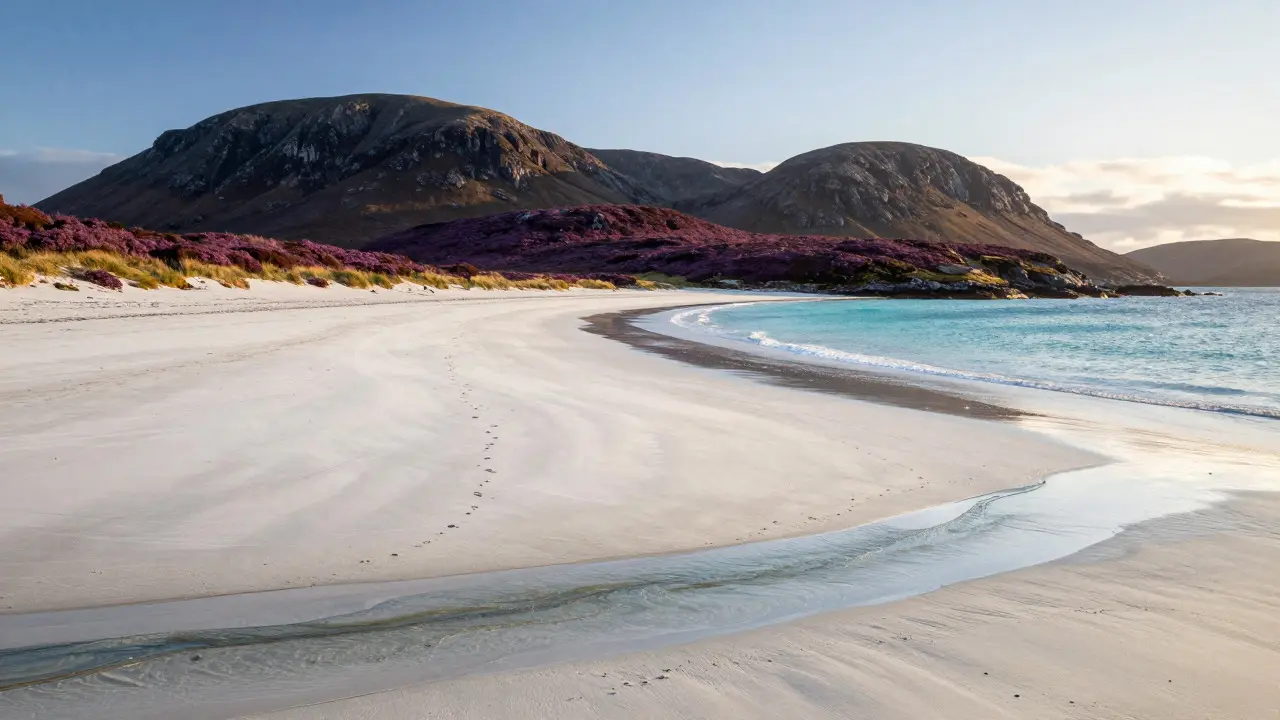
Most people picture Scotland as misty highlands and rugged cliffs. They forget the coastline. It is the longest in the United Kingdom, stretching over 18,000 kilometers. That means you have an incredible variety of shorelines. You can find golden dunes that rival the Caribbean. You can also find stark, dramatic black sands formed by ancient volcanoes. This guide breaks down exactly where to go, what to expect, and how to plan your trip without the usual tourist traps.
The Golden Coast: Where Scotland Meets the Mediterranean
If you are chasing that classic beach holiday vibe, look west. The Isle of Arran is often called "Scotland in Miniature" because it packs every landscape type into one small island. Its crown jewel is Brodir Bay. The sand here is fine, pale, and incredibly soft. It looks like sugar. The water is calm, protected by a natural reef, making it safe for swimming if you don't mind the temperature dropping below 15°C even in August.
Further north, on the Outer Hebrides, you will find some of the most spectacular scenery in Europe. Luskentyre on Harris is famous for its long stretch of white sand backed by purple heather and dark mountains. It is a photographer’s dream. However, getting there requires effort. There are no roads directly to the beach. You hike through a burn (a stream) or take a boat. This keeps the crowds thin compared to mainland spots.
On the mainland, Machrihanish Beach in Kintyre offers wide, sweeping sands with views across to Ireland on clear days. It is a Blue Flag beach, which means the water quality is monitored and meets strict EU standards. Families love this spot because the gradient is gentle, and there are plenty of facilities nearby.
The Dark Side: Volcanic Beauty and Dramatic Contrast
Not all Scottish beaches are light-colored. In fact, some of the most striking visuals come from the darker shores. These areas tell a different geological story. They are shaped by basalt and volcanic rock rather than limestone or quartz.
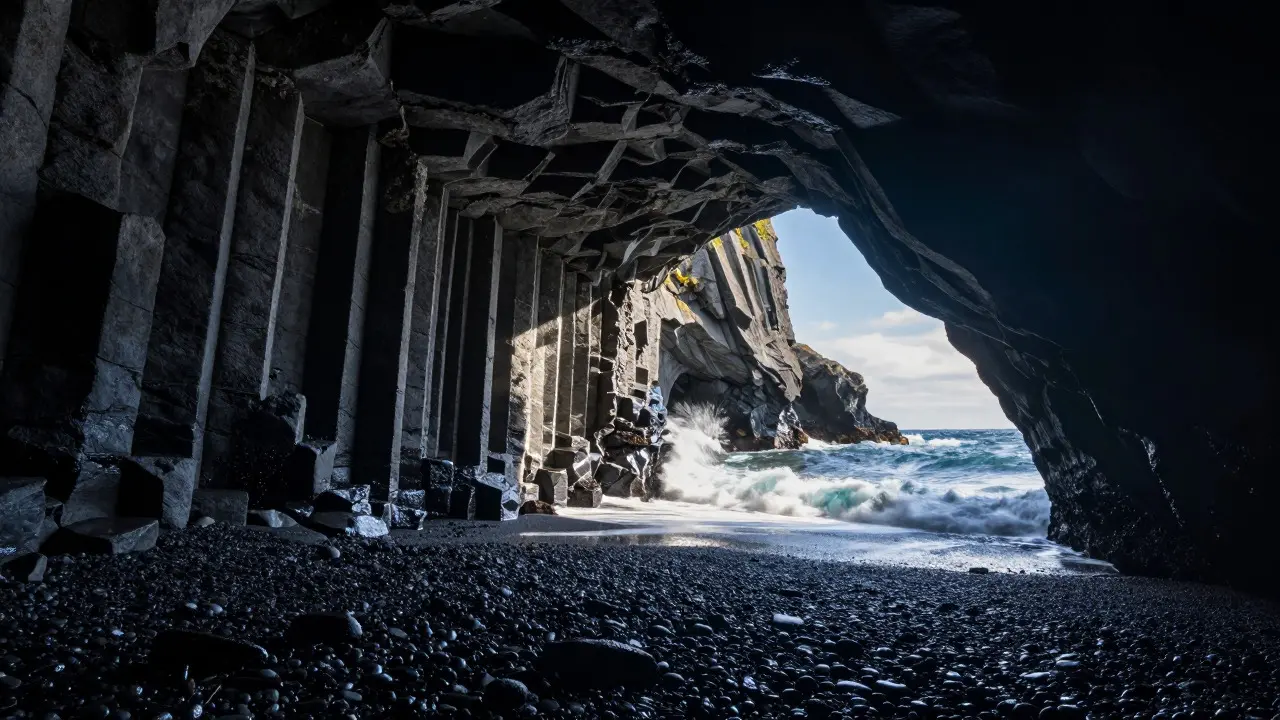
Fingal’s Cave on Staffa is the ultimate example. The cave itself is carved from hexagonal basalt columns, similar to the Giant’s Causeway in Northern Ireland. The surrounding beach is composed of dark, coarse stones and black sand. The acoustics inside the cave are legendary; Mendelssohn was inspired by the sound of the waves echoing off the walls to write his "Hebrides Overture." Visiting Staffa requires a boat tour from Iona or Mull, but the visual impact is worth the cost.
Closer to the mainland, Ardnamurchan Point features rugged black pebble beaches. Here, the contrast between the dark stones and the bright green grass is stunning. It is not a place for sunbathing. It is a place for walking, looking out at the Atlantic, and feeling the raw power of the ocean. The weather changes fast here. One minute it is sunny, the next it is gale-force winds. Always check the forecast.
Hidden Gems: Quiet Spots Away from the Crowds
You do not need to travel to the islands to find beautiful beaches. The east coast has its own charm, though the sands are often finer and the waters calmer due to the sheltered nature of the Firths.
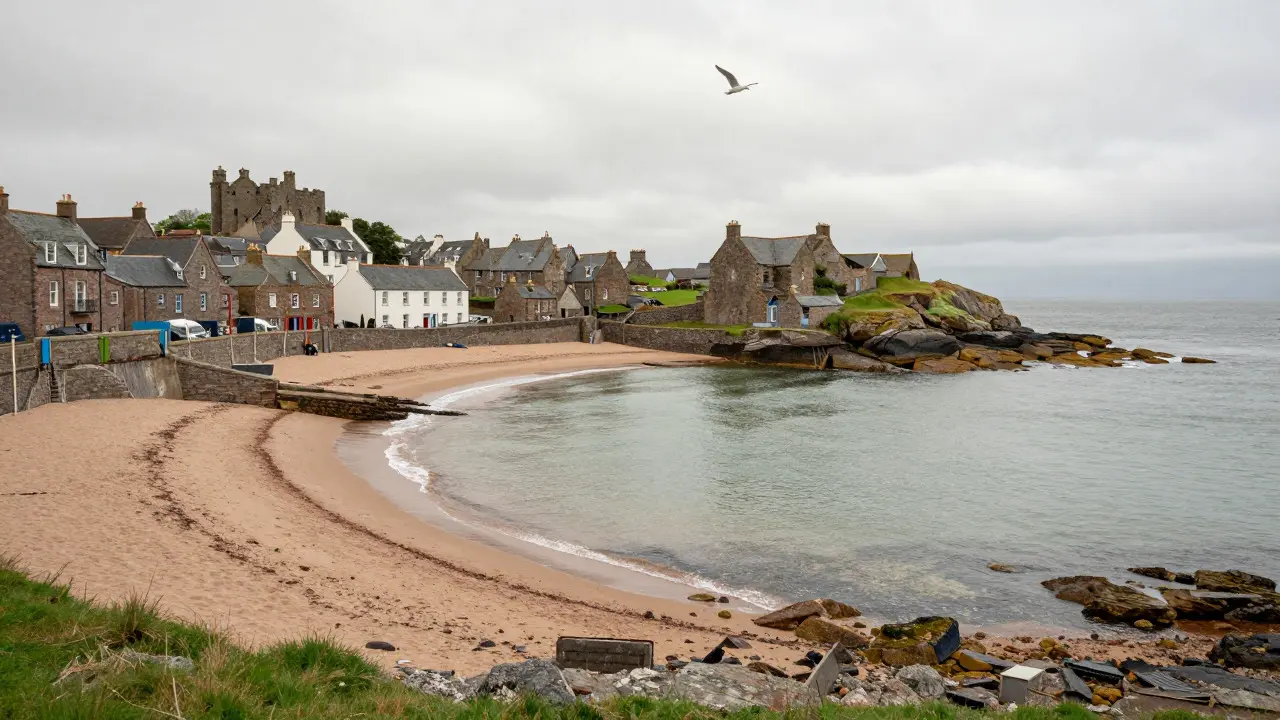
Crail Beach in Fife is a hidden gem. It is a sandy cove tucked away in a historic fishing village. The water is clean, and the atmosphere is relaxed. You can combine a swim with a walk around the old castle ruins. It feels authentic, not manufactured for tourists.
In the north-east, Portmoak Beach near Stonehaven offers a long stretch of sand that changes with the tide. At low tide, you can walk miles along the shore. At high tide, it becomes a secluded bay. The local community takes pride in keeping it clean, and there are regular litter picks organized by volunteers.
Practical Tips for Visiting Scottish Beaches
Planning a beach trip in Scotland requires a different mindset than visiting southern Europe. Here are the key things to keep in mind:
- Water Temperature: Even in peak summer, the sea rarely exceeds 16-17°C. A wetsuit is recommended for serious swimmers. For casual dips, bring a towel and change quickly.
- Weather Variability: Sun and rain can coexist. Pack layers. A waterproof jacket is essential, even if the sky is blue when you leave home.
- Tides Matter: Many Scottish beaches have extreme tidal ranges. Check the tide tables before you go. Some paths are only accessible at low tide. Getting cut off by rising water is dangerous.
- Facilities: Remote beaches often lack toilets, cafes, or parking. Bring your own food, water, and waste bags. Leave no trace.
- Wildlife: Keep a safe distance from seals, especially during pupping season (late summer). Do not feed them. They are wild animals.
Comparison: Choosing Your Beach Type
| Feature | White Sand Beaches (e.g., Luskentyre) | Black Volcanic Beaches (e.g., Staffa) | East Coast Coves (e.g., Crail) |
|---|---|---|---|
| Best For | Photography, hiking, solitude | Dramatic scenery, geology enthusiasts | Families, relaxation, history |
| Accessibility | Difficult (boat/hike required) | Moderate (boat tours available) | Easy (car access, parking) |
| Swimming Conditions | Cold, calm waters | Rough, cold, rocky | Moderate, sheltered |
| Amenities | Limited or none | None on site | Cafes, shops nearby |
| Crowd Level | Low to moderate | Low (tour group dependent) | Moderate in summer |
Sustainability and Conservation
Scotland’s coastlines are fragile ecosystems. Erosion is a major issue, exacerbated by climate change. Rising sea levels and stronger storms threaten both natural habitats and infrastructure. When you visit, be mindful of your impact.
Stay on marked paths. Off-trail walking can damage sensitive vegetation that holds the dunes together. Avoid disturbing nesting birds. Many beaches are designated Sites of Special Scientific Interest (SSSIs). Signs are usually posted. Respect them.
Support local businesses. Buy ice cream from the village shop instead of bringing plastic bottles from the city. It reduces waste and helps the local economy survive the off-season.
What is the warmest month to visit Scottish beaches?
July and August are typically the warmest months, with air temperatures averaging 15-18°C. However, the sea remains cold year-round. If you want warmer water, consider indoor pools or heated spas in coastal towns.
Are there any nude beaches in Scotland?
Scotland does not have officially designated nude beaches. While some remote spots may see occasional naturists, public decency laws still apply. It is best to stick to standard swimwear unless you are on private land with permission.
Can I camp near Scottish beaches?
Yes, Scotland has a "Right to Roam" law, allowing wild camping almost anywhere, including near beaches, provided you follow guidelines. Camp quietly, leave no trace, and avoid damaging vegetation. Designated campsites are also available for those who prefer facilities.
Is it safe to swim in Scottish seas?
Swimming can be safe, but risks exist. Cold water shock is a real danger. Always enter the water slowly. Be aware of rip currents, especially on exposed coasts. Lifeguards are rare outside of major Blue Flag beaches in summer. Swim with a buddy and never turn your back on the ocean.
How do I get to remote beaches like Luskentyre?
Access varies. Luskentyre requires a hike or boat ride. Other remote beaches may require driving on narrow single-track roads. Park legally, pay for parking where required, and respect local residents. Public transport options are limited in rural areas.