
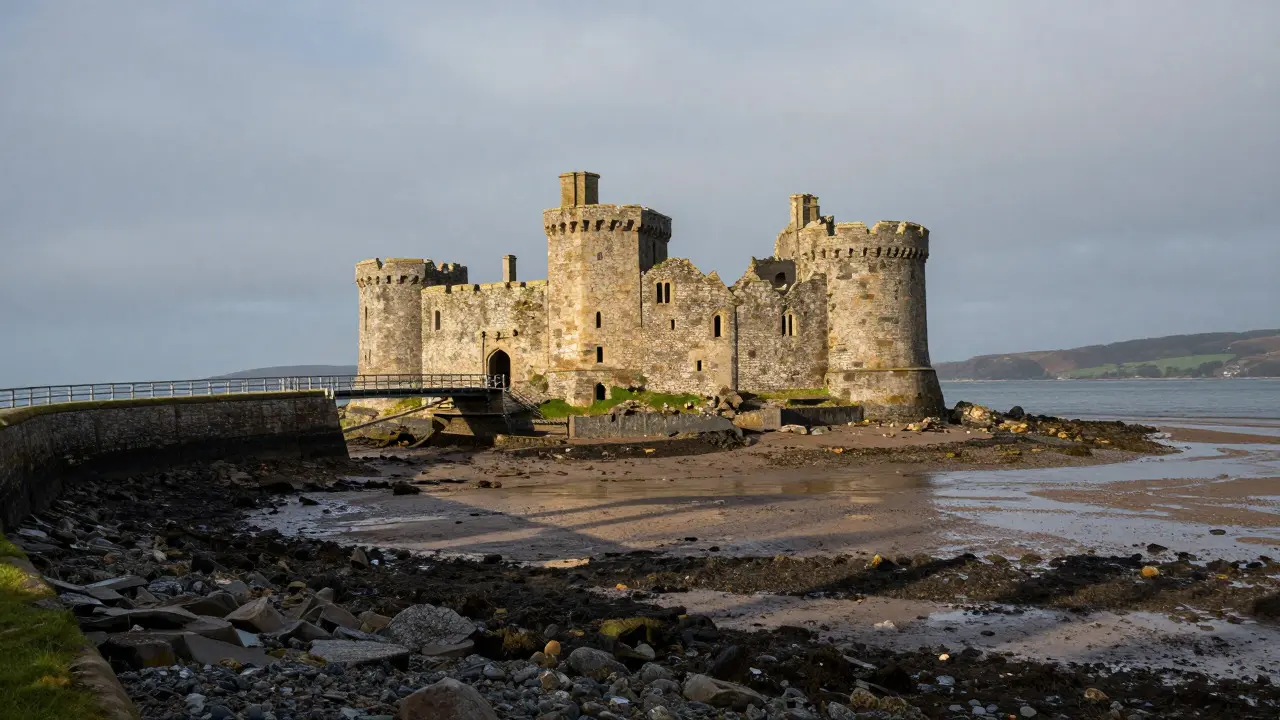
Most people expect a Scottish castle to sit proudly on a hilltop, commanding the landscape with stone walls that have stood for centuries. Rothesay Castle defies this expectation completely. Instead of dominating the view from above, it sits low, surrounded by water, looking more like a fortress island than a traditional residence. This unique positioning isn't just for show; it is the result of nearly 800 years of strategic military planning, royal ambition, and architectural evolution. If you are planning a visit to the Isle of Bute, understanding why this castle looks the way it does will transform your experience from a simple photo op into a deep dive into medieval history.
The castle offers a rare glimpse into how defensive structures adapted to coastal environments in the Middle Ages. It is not just a ruin; it is a layered archaeological site where you can walk through the remains of a royal palace, a fortified gateway, and a complex moat system. For travelers based in Dundee or further south, fitting Rothesay Castle into a day trip requires some logistics, but the reward is one of the most atmospheric historic sites in Scotland. Here is everything you need to know about the history, architecture, and practicalities of visiting this iconic landmark.
The Strategic Importance of Rothesay Castle
To understand the castle, you first have to understand its location. The Isle of Bute is situated in the Firth of Clyde, acting as a crucial gateway between the west coast of Scotland and the rest of the country. In the 13th century, controlling this waterway was essential for anyone wanting power in the region. The Comyn family, powerful lords who held sway over much of western Scotland, recognized this early on. They began constructing the initial fortifications around 1240, taking advantage of a natural tidal island to create a defensible position.
The castle's primary function was control. It guarded the approach to the mainland and served as a base for launching expeditions or repelling invaders. When King Robert the Bruce seized the castle in 1306, he didn't just take a building; he secured a vital strategic node in his campaign for Scottish independence. The Comyns had built it to project power, but Bruce turned it into a symbol of resistance. This shift in ownership highlights the castle's role not just as a home, but as a political instrument. Its position allowed the rulers of Bute to monitor shipping traffic and tax goods moving through the firth, making it an economic engine as well as a military stronghold.
The surrounding waters play a critical role in this strategy. The moat, which we will discuss in detail later, was originally a natural tidal channel. Over time, it was widened and deepened to ensure that even at high tide, the castle remained isolated from easy access. This isolation forced attackers to rely on boats, which could be easily intercepted or destroyed. The geography itself was the first line of defense, reducing the need for excessively high walls compared to inland castles.
Architectural Evolution: From Fortification to Palace
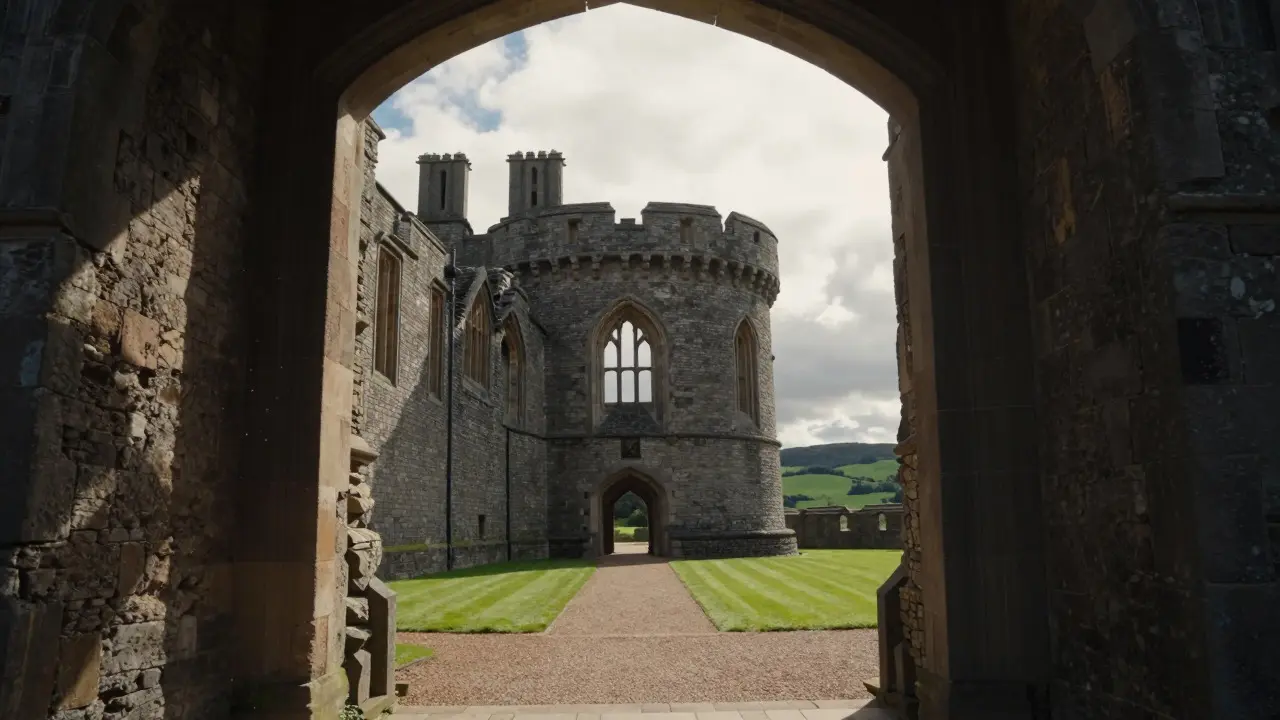
Walking through the ruins today, you might wonder why there are two distinct styles of stonework. That is because Rothesay Castle went through two major phases of construction, each reflecting the changing needs of its owners. The earlier phase, associated with the Comyns and early Stewart kings, focused heavily on defense. You can see this in the thick curtain walls and the robust gatehouse designed to withstand siege weapons.
However, by the late 15th century, the threat of invasion had diminished, and the focus shifted toward comfort and status. James IV of Scotland visited frequently and invested significantly in transforming the castle into a royal residence. This era introduced more refined architectural elements, including larger windows, decorative stonework, and spacious halls suitable for entertaining nobility. The contrast between the grim, functional lower levels and the more elegant upper chambers tells the story of Scotland's transition from a fractured kingdom of warring clans to a centralized monarchy.
One of the most striking features is the layout of the inner ward. Unlike many concentric castles, Rothesay has a relatively open plan within its walls, allowing for gardens and outdoor spaces. This reflects the influence of continental European design trends that reached Scotland through trade and marriage alliances. The use of local sandstone gives the structure a warm, golden hue that contrasts beautifully with the grey granite of the sea walls, a deliberate aesthetic choice that emphasized wealth and refinement.
The Moat: Engineering a Defensive Barrier
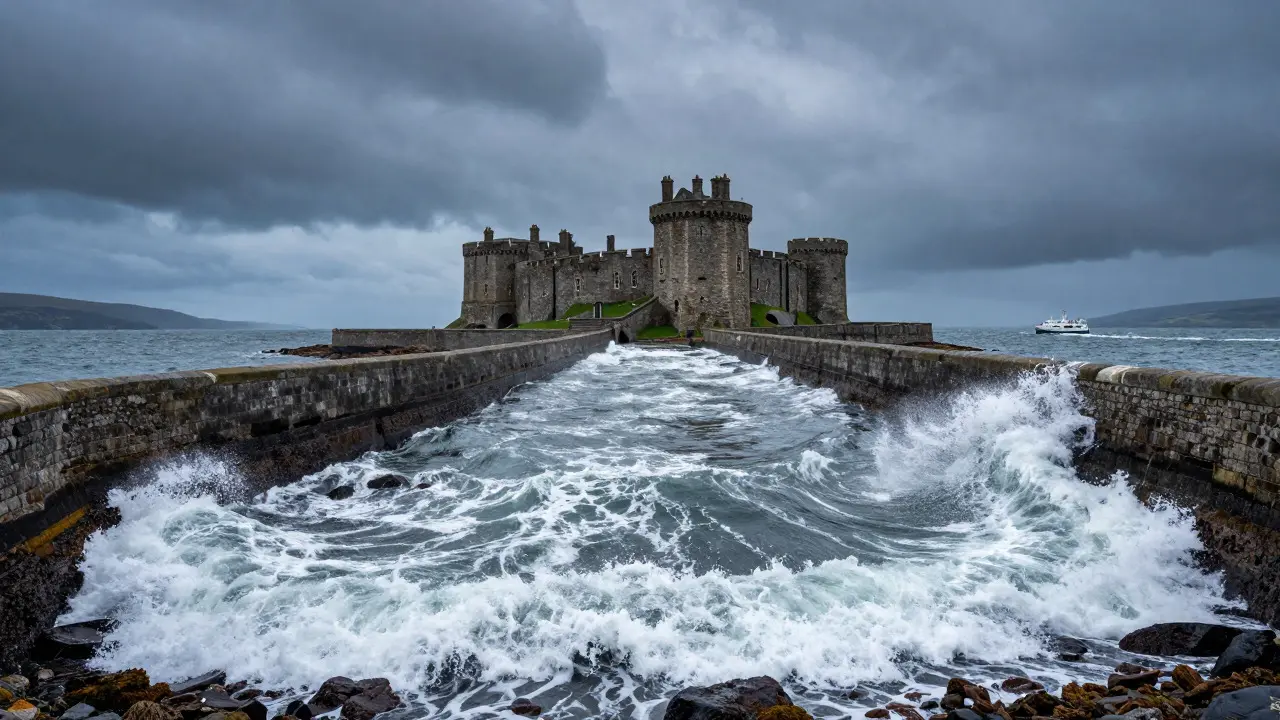
If there is one feature that defines Rothesay Castle, it is the moat. But this is not a stagnant pool of water filled with lily pads. It is a dynamic engineering feat that utilizes the natural tides of the Firth of Clyde. At low tide, the moat reveals a muddy, rocky bed, exposing the foundations of the outer defenses. At high tide, it becomes a wide, navigable channel that completely isolates the castle island.
The construction of the moat involved significant labor. Workers dug out the earth and rock to deepen the natural inlet, creating a barrier that was difficult to cross without specialized equipment. The width of the moat varies, but at its narrowest point, it still required a bridge or ferry to cross. This bridge was controlled by the castle garrison, meaning entry was strictly regulated. During times of conflict, the bridge could be raised or destroyed, leaving attackers stranded in the water.
Today, visitors cross a modern footbridge that spans the moat, offering a perfect vantage point to appreciate the scale of this defensive measure. Standing on the bridge, you can feel the isolation that the original inhabitants experienced. The sound of the waves crashing against the stone walls serves as a reminder of the constant vigilance required to maintain control of such a strategic location. The moat also serves an ecological purpose now, supporting marine life and providing a habitat for birds and fish, blending historical significance with environmental value.
| Feature | Description | Historical Significance |
|---|---|---|
| Gatehouse | A fortified entrance with portcullis slots and arrow slits. | Controlled access to the inner ward; defended against direct assaults. |
| Curtain Walls | Thick stone walls enclosing the castle grounds. | Provided structural integrity and protection from artillery fire. |
| Royal Chambers | Refined living quarters with large windows and hearths. | Indicates the castle's use as a royal residence during the Stewart period. |
| Moat | Tidal water channel surrounding the castle. | Natural defense mechanism leveraging the Firth of Clyde's tides. |
| Well | Deep well inside the inner ward. | Ensured water supply during sieges, critical for long-term survival. |
Planning Your Day Trip to the Isle of Bute
Getting to Rothesay Castle involves a bit of planning, especially if you are coming from outside the immediate area. The most common route for visitors starting from Dundee or Edinburgh is to drive to the port of Wemyss Bay or Gourock on the mainland. From there, you take a ferry operated by Caledonian MacBrayne (CalMac) to Rothesay town. The ferry ride takes approximately 30 minutes and offers stunning views of the coastline and islands.
Once you arrive in Rothesay, the castle is located right on the edge of the town, near the harbor. It is easily accessible on foot, making it convenient for those who prefer not to rent a car on the island. However, renting a car allows you to explore other attractions on Bute, such as Mount Stuart House and Garden, which is just a short drive away. Combining these visits makes for a full and rewarding day trip.
Timing your visit is crucial. The castle is open daily during the summer months, typically from April to October, with extended hours. In winter, opening times are reduced, so check the official website before traveling. Aim to arrive early in the morning to avoid crowds and enjoy the tranquility of the site. The light is particularly beautiful in the morning, casting long shadows across the ruins and highlighting the texture of the stonework.
Don't forget to pack appropriate clothing. Weather on the Isle of Bute can change quickly, and the exposed location of the castle means it can be windy. Comfortable walking shoes are essential, as the terrain includes uneven stone paths and grassy areas. Bring a camera to capture the dramatic views of the moat and the surrounding sea. There are no cafes inside the castle, but there are several options in Rothesay town nearby, where you can grab a coffee or a meal after your visit.
Why Rothesay Castle Stands Out Among Scottish Castles
Scotland is home to hundreds of castles, ranging from towering keeps to crumbling ruins. So, what makes Rothesay Castle special? It is the combination of its unique setting, its rich history, and its accessibility. Unlike many castles that require climbing steep hills or navigating difficult terrain, Rothesay is flat and easy to explore. This makes it ideal for families and visitors with mobility issues.
The castle also offers a tangible connection to key figures in Scottish history. Walking through the same halls where Robert the Bruce and James IV once walked creates a sense of continuity with the past. The interpretive signs and audio guides provide context, helping you visualize the castle in its prime. Whether you are a history buff or simply looking for a picturesque spot to spend a few hours, Rothesay Castle delivers a memorable experience.
Furthermore, the castle is part of a broader cultural landscape. The Isle of Bute itself is a destination worth exploring, with its charming villages, scenic walks, and friendly locals. Visiting Rothesay Castle is often the highlight of a trip to Bute, but it is complemented by the island's overall atmosphere of relaxation and natural beauty. It is a place where history comes alive, not just in books, but in the stones beneath your feet.
How much does it cost to enter Rothesay Castle?
Entry fees vary depending on the season and whether you are a resident or visitor. As of 2026, adult tickets typically range from £8 to £12. Children under 16 usually enter for free. Family tickets are available at a discounted rate. Check the Historic Environment Scotland website for the most up-to-date pricing and any special offers.
Is Rothesay Castle wheelchair accessible?
Yes, the castle grounds are largely accessible. There is a ramp leading from the car park to the main entrance, and the paths within the castle are mostly flat and paved. However, some areas may have uneven surfaces due to the nature of the ruins. Visitors with specific mobility needs should contact the site in advance to ensure all facilities meet their requirements.
What is the best time of year to visit Rothesay Castle?
The best time to visit is between May and September when the weather is generally warmer and drier. The castle is open longer during these months, and you can enjoy the surrounding gardens and landscapes. Summer weekends can be busy, so consider visiting mid-week for a quieter experience. Spring and autumn offer fewer crowds and vibrant colors, though days are shorter.
Can I stay overnight on the Isle of Bute?
Yes, there are various accommodation options on the Isle of Bute, including hotels, bed and breakfasts, and self-catering cottages. Staying overnight allows you to explore the island at your own pace and avoid the rush of day-trippers. Booking in advance is recommended, especially during peak tourist season.
Are there guided tours available at Rothesay Castle?
Guided tours are occasionally offered, particularly during school holidays and special events. These tours provide deeper insights into the castle's history and architecture. Self-guided tours using audio guides or printed materials are always available. Check the event calendar on the Historic Environment Scotland website for upcoming guided tour schedules.