
The Allure of the Unknown
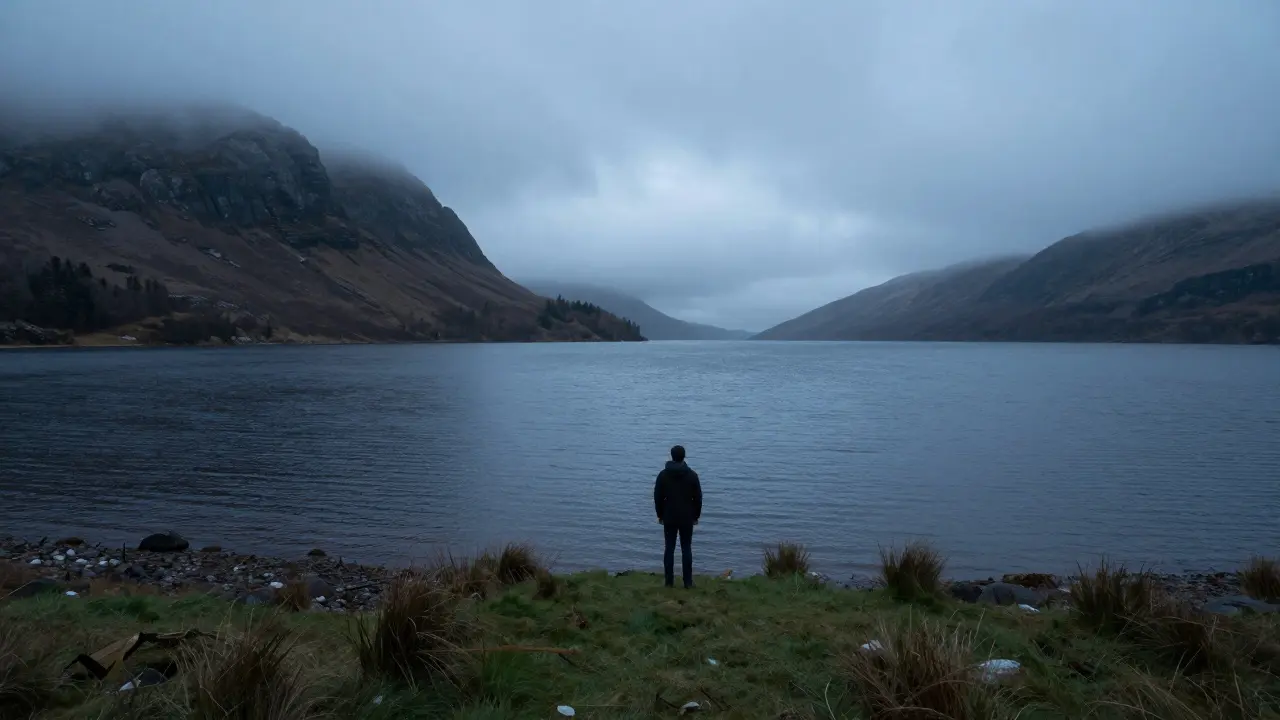
There is a specific kind of chill that runs down your spine when you stand on the banks of Loch Ness, a large freshwater loch in the Scottish Highlands stretching 37 kilometers long and plunging to depths of over 230 meters. It’s not just the cold Highland air. It’s the weight of history, mystery, and millions of disappointed tourists who have stared into those dark, peat-stained waters hoping for a glimpse of something impossible. For decades, the world has been captivated by the idea of Nessie, the legendary cryptid said to inhabit Loch Ness, often depicted as a plesiosaur-like creature with a long neck and small head. But beyond the postcards and souvenir shops lies a fascinating intersection of folklore, psychology, and rigorous scientific inquiry. This isn’t just a story about a monster; it’s a case study in how we perceive the unknown.
From Pictish Stones to Modern Myth
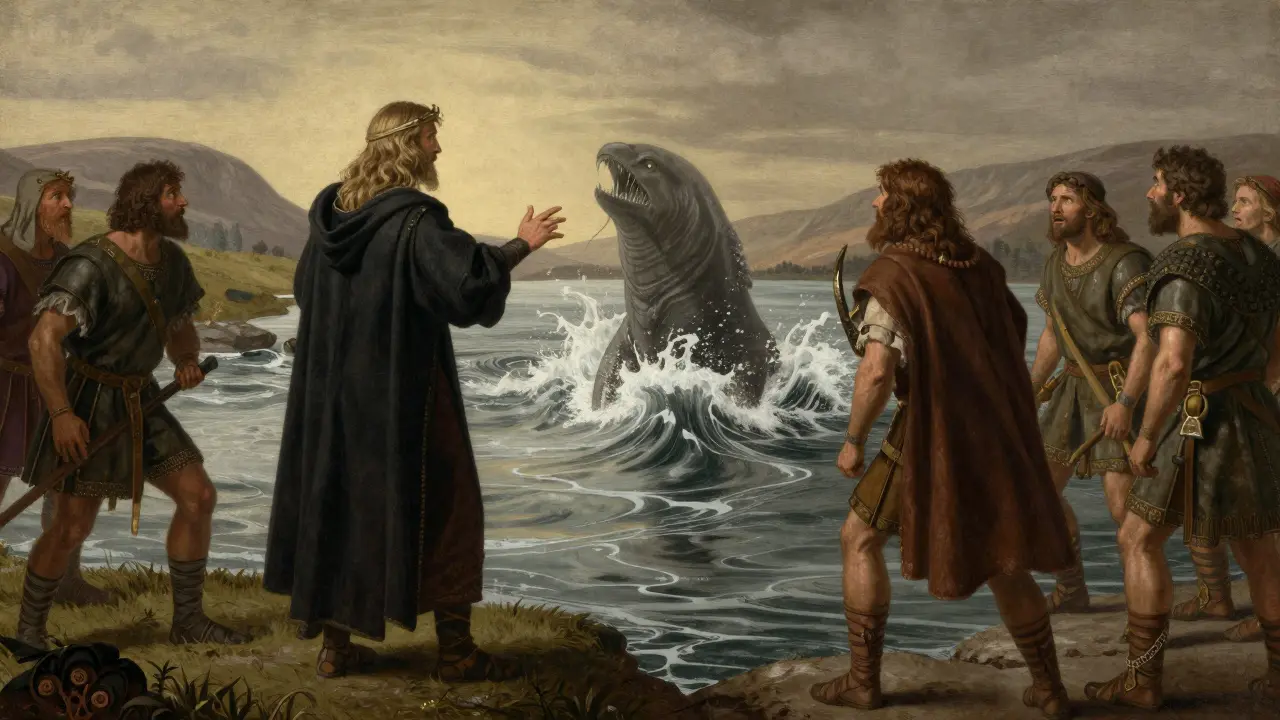
To understand why Nessie persists, we have to look back further than the famous 1934 photograph. The roots of the legend are tangled in the misty past of Scotland. One of the earliest references comes from the Adomnán's Life of Columba, a hagiography written in the late 7th century describing Saint Columba encountering a water beast near the River Ness. Adomnán wrote that a local tribe was burying a man killed by a "water beast" when Columba arrived. He allegedly commanded the beast to leave, and it did. While this sounds like a miracle, historians and folklorists see it differently. It suggests that large, dangerous animals were known to inhabit these waters, or perhaps that the stories served a social function-keeping people away from treacherous currents.
Fast forward to the 20th century, and the myth exploded. In 1933, roads were built around the loch, giving visitors unprecedented access. Suddenly, sightings skyrocketed. The most iconic piece of evidence, the "Surgeon’s Photograph," showed a long-necked creature rising from the water. It looked convincing enough to sell newspapers worldwide. Decades later, it was revealed to be a hoax-a toy submarine with a carved head attached, created by Marmaduke Wetherell and others. Yet, even after the deception was exposed, the legend didn’t die. It mutated. Why? Because the human brain is wired to find patterns, especially in ambiguous visual data. This phenomenon, known as pareidolia, a psychological phenomenon where the brain perceives a specific, often meaningful image in a random or vague visual pattern, plays a huge role in Nessie sightings. A log floating upside down? A wave crest? To an expectant eye, it looks like a neck.
The Science Steps In: Sonar and DNA
If folklore provided the spark, science provided the microscope. Over the last century, numerous expeditions have attempted to solve the mystery using technology rather than faith. In the 1960s and 70s, teams used early sonar equipment. They detected large objects moving beneath the surface. Some reports claimed objects up to 20 meters long. Skeptics argued these could be schools of fish, thermal layers in the water (thermoclines), or geological features. Water acoustics are tricky. Sound bounces off different densities, creating ghosts on the screen. Without visual confirmation, sonar data remains inconclusive.
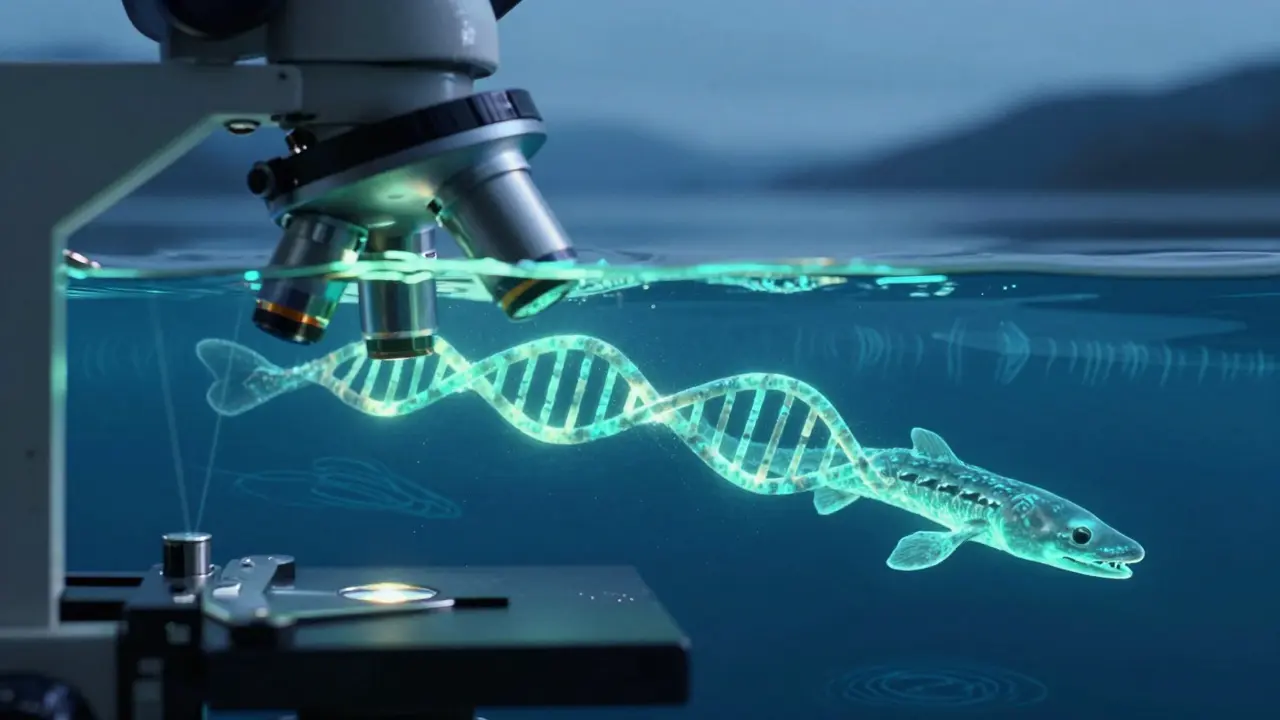
Then came the gold standard of modern biology: environmental DNA (eDNA). In 2018 and again in 2019, researchers from the University of Oxford and other institutions conducted massive eDNA surveys. They collected thousands of water samples from across the loch. The idea was simple: every animal sheds skin cells, feces, and mucus. If a giant reptile lived there, its DNA would be in the water. The results were definitive. There was no trace of crocodilian or plesiosaur DNA. Instead, they found vast amounts of European eel, Anguilla anguilla, a species of catadromous fish that lives in freshwater but migrates to the Sargasso Sea to breed DNA. Specifically, female eels. Large female eels can grow up to two meters long and have a distinct shape that, when partially submerged, could easily be mistaken for a long neck and body. This doesn't prove Nessie *is* an eel, but it provides a plausible biological explanation for many sightings.
| Evidence Type | Reliability | Key Findings/Limitations |
|---|---|---|
| Visual Sightings | Low | Subjective; prone to pareidolia and misidentification of waves/logs. |
| Sonar/Pings | Moderate | Detects movement but cannot identify species; often confused with fish schools. |
| Photographs/Videos | Very Low | Most famous images proven hoaxes; low resolution leads to ambiguity. |
| Environmental DNA | High | No reptile DNA found; high concentration of large eel DNA detected. |
| Historical Records | Moderate | Early accounts likely refer to known animals or exaggerations. |
Why We Can't Let Go of the Myth
So, if the science says "no monster," why do people still believe? And more importantly, why does it matter? The persistence of Nessie speaks to a deeper human need. In an increasingly digital, mapped, and explained world, the idea of a hidden, wild secret feels comforting. It represents the last frontier of the unknown right here in Europe. Cryptozoology, the field of study investigating animals whose existence is suggested by anecdotal evidence but not yet confirmed by mainstream science thrives on this tension between skepticism and wonder. For many, dismissing Nessie entirely feels like killing magic. But accepting the scientific findings doesn't kill the magic; it shifts it. The loch itself is magical. Its depth, its age, its ecosystem-it’s a natural wonder regardless of what swims in it.
Moreover, the economic impact is real. Thousands of visitors flock to the Loch Ness Centre and Exhibition, an interactive visitor center near Drumnadrochit that explores the legend through science and history every year. Local businesses rely on the curiosity economy. However, there’s a growing movement to rebrand the experience. Instead of chasing a ghost, the focus is shifting toward the actual ecology of the Highlands. Birdwatchers, geologists, and historians find plenty to explore. The loch supports rare species of birds and plants. The surrounding landscape tells the story of ice ages and ancient civilizations. These are tangible, verifiable wonders that don’t require a hoax photo to validate them.
The Future of the Search
Will the search ever end? Probably not. As long as there are dark waters and curious humans, there will be monsters. But the nature of the investigation is changing. New technologies like autonomous underwater vehicles (AUVs) allow for detailed mapping of the lakebed without disturbing the environment. Projects like the Nessie Project continue to monitor the loch, not necessarily to find a dinosaur, but to understand the health of the ecosystem. They track water quality, fish populations, and invasive species. In this sense, the quest for Nessie has evolved into a broader conservation effort. The monster may be gone, but the mission to protect the loch remains vital.
For the traveler visiting today, the advice is simple: go with open eyes and an open mind. Don’t go looking for proof; go looking for perspective. Stand on the shore. Listen to the wind. Read the old stories. Then, look at the water and appreciate it for what it is-a deep, mysterious, beautiful part of Scotland’s natural heritage. You might not see a neck breaking the surface, but you’ll likely see something far more valuable: yourself, reflected in the quiet majesty of the Highlands.
Has Nessie ever been scientifically proven to exist?
No. Despite numerous investigations using sonar, cameras, and environmental DNA, there is no credible scientific evidence that a large, unknown creature lives in Loch Ness. Recent eDNA studies found no reptile DNA, only significant amounts of eel DNA.
What is the most likely explanation for Nessie sightings?
Most sightings are attributed to pareidolia (misinterpreting random shapes), large waves, logs, or known animals like otters, seals, or large European eels. The unique lighting and weather conditions on the loch can distort perceptions significantly.
Could a plesiosaur survive in Loch Ness?
Biologically, it is highly unlikely. Plesiosaurs were marine reptiles that required warm waters and abundant food sources. Loch Ness is cold, acidic, and lacks sufficient biomass to support a breeding population of large predators. A single survivor would also face issues finding mates and avoiding detection for millennia.
Why did the Surgeon's Photo turn out to be a hoax?
The photo, taken in 1934, was revealed to be a fake in the 1990s. It was created by Marmaduke Wetherell and others using a toy submarine with a carved head. The creator confessed before his death, admitting it was done to boost tourism and interest in the legend.
Is it worth visiting Loch Ness if Nessie isn't real?
Absolutely. Loch Ness is a stunning natural landmark surrounded by historic castles, beautiful landscapes, and rich cultural heritage. The area offers excellent hiking, birdwatching, and historical tours, making it a top destination in Scotland regardless of the monster legend.