
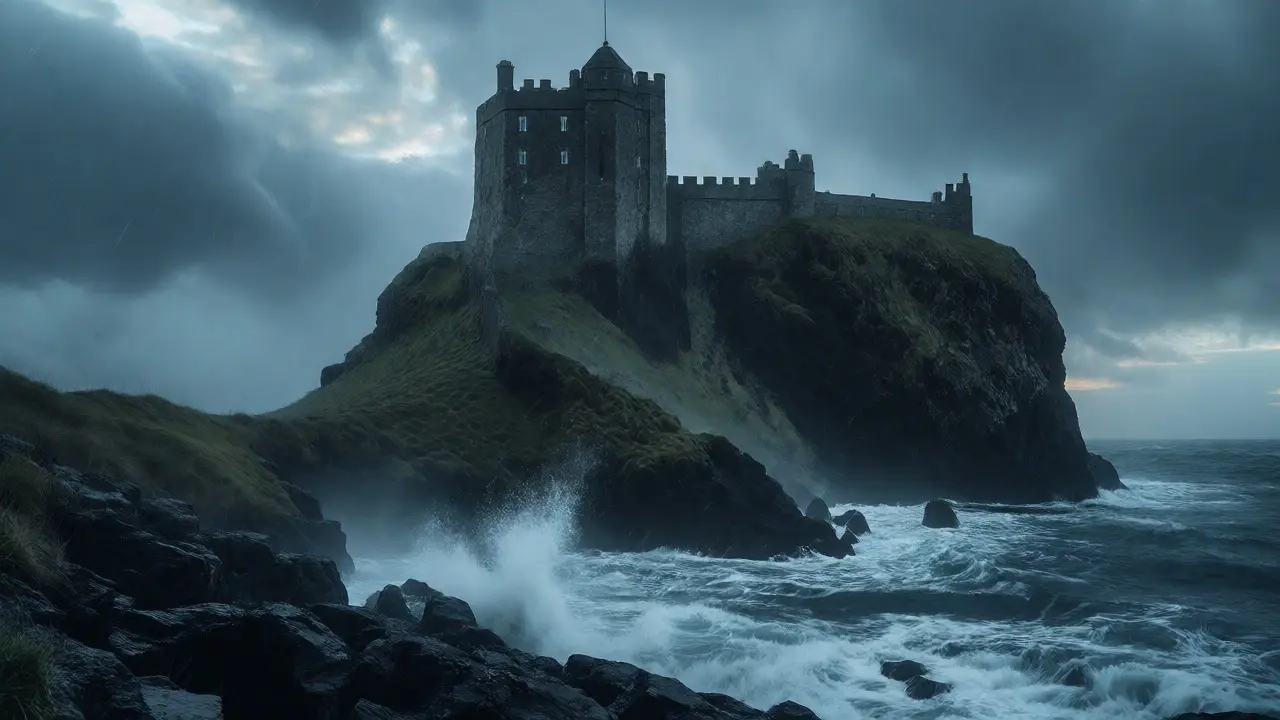
You walk past a ruin in the Highlands, stones crumbling into the heather, and you wonder who lived there. Was it a king plotting war? A farmer freezing in winter? The truth is far messier and more interesting than the movie version of Medieval Scotland suggests. It wasn't just bagpipes and tartan. It was a brutal, vibrant world where power shifted like sand, and survival depended on knowing your neighbors-and which ones to fear.
The Shape of Power: From Fortresses to Palaces
If you think of castles as just big stone boxes, you're missing the point. In medieval Scotland, a castle was a statement. Early on, we built duns-hillforts with wooden palisades-because timber was everywhere and enemies were few but fast. By the 12th century, the Normans brought their love for massive stone keeps. Take Dunnottar Castle, perched on a sheer cliff near Stonehaven. It wasn't just pretty; it was nearly impossible to starve out because it had its own well and access to the sea.
But not every lord could afford a keep. Many relied on tower houses, smaller, vertical structures that were cheaper to build and easier to defend. These weren't grand halls for feasts; they were fortified homes. If you were a minor laird in Fife around 1400, you likely slept in a tower house, locked the door at dusk, and kept a sword by your bed. The architecture tells you everything about the threat level. Thick walls meant high tension. Large windows came later, when cannons made thick walls less useful and comfort became a priority.
| Structure Type | Primary Era | Key Feature | Typical Occupant |
|---|---|---|---|
| Hillfort (Dun) | Pre-1100s | Natural elevation + timber fence | Local chieftain |
| Motte-and-Bailey | 1100-1200 | Earth mound + wooden keep | New Norman lords |
| Stone Keep | 1200-1350 | Thick limestone/granite walls | Kings & major earls |
| Tower House | 1350-1500 | Compact, vertical defense | Lairds & barons |
Who Ruled Whom? The Messy Reality of Kingdoms
We often talk about "Scotland" as if it was one unified nation from day one. It wasn't. For centuries, it was a patchwork. You had the Gaelic-speaking north and west, the Norse-controlled islands, and the Anglo-Norman south. King David I tried to glue this together in the 12th century by introducing feudalism, but local loyalty mattered more than royal decree. Think of it like a modern corporation where regional managers ignore the CEO. A clan chief in the Highlands cared about his people's safety and cattle rights, not about paying taxes to Edinburgh. This fragmentation led to constant friction. When Edward I of England tried to dominate Scotland in the late 1200s, he exploited these divisions. He played nobles against each other, promising land to whoever switched sides. That's why Robert the Bruce's rise was so significant-he didn't just fight the English; he crushed internal rivals who wanted to stay neutral or switch allegiance again.
The concept of kingship itself changed. Early kings ruled through consensus and gift-giving. Later monarchs, influenced by European models, claimed divine right and absolute authority. This shift caused huge political instability. If you were a bishop in St Andrews in 1300, your job wasn't just spiritual; you were a key political player, mediating between warring factions and managing vast church lands.
Daily Grind: What Did Regular People Actually Do?
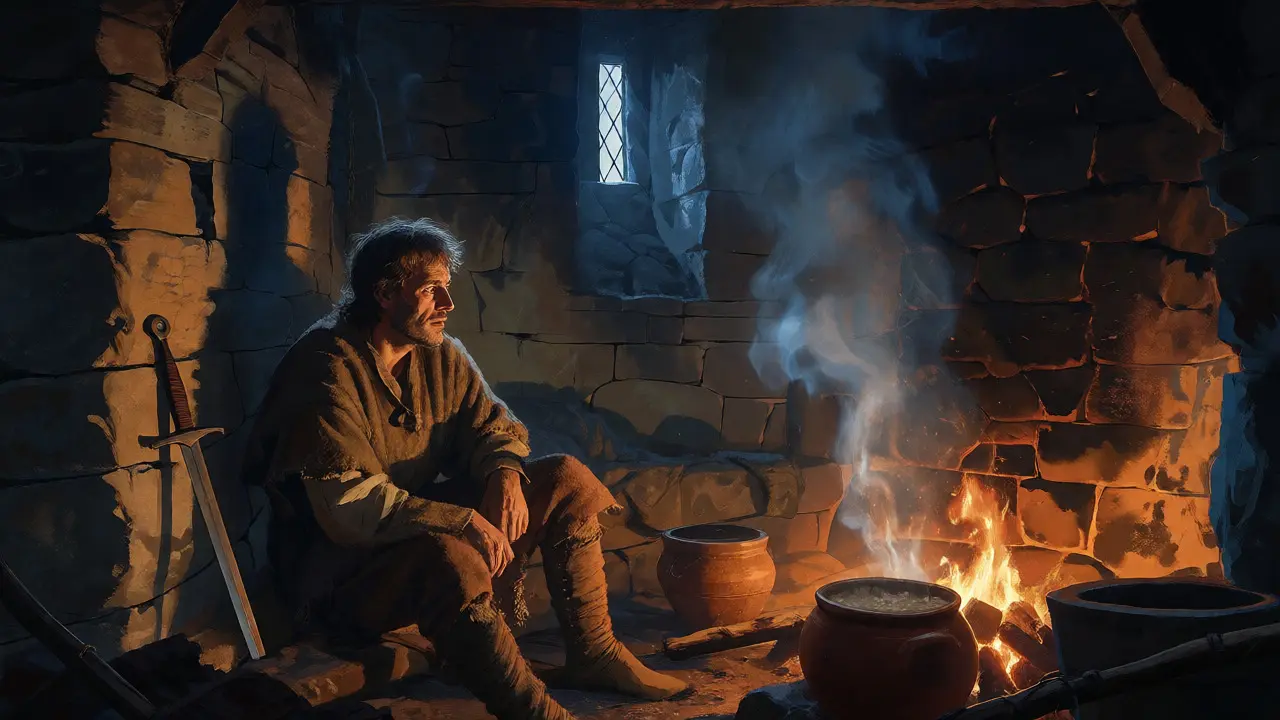
Forget the romanticized village scenes. Medieval Scottish life was hard, short, and repetitive. Most people were peasants bound to the land. They didn't have surnames in the modern sense until the 1500s; you were "John son of Malcolm" or "Mary from the hill." Identity was tied to place and kin, not paperwork.
Farming dictated the rhythm of life. In the Lowlands, you grew oats and barley because wheat struggled in the damp climate. Oats became porridge and bread. Barley turned into ale, which was safer to drink than water. If you lived in the Highlands, you herded cattle. Cattle were currency. Stealing a neighbor's cow was a capital offense, not just petty theft. Wars were often fought over livestock raids, known as "creachs," rather than territory.
- Diet: Heavy on grain, vegetables like kale and onions, and occasional salted fish or pork. Fresh meat was rare for the poor.
- Clothing: Wool tunics and hose. Dyes were expensive, so most clothes were undyed brown or grey. Tartan patterns existed but weren't the rigid clan identifiers we see today.
- Work: Men plowed, women spun wool and brewed ale. Children worked from age six or seven.
Hygiene was... creative. Public baths existed in towns, but rural folk used streams. Fleas and lice were universal companions. Medical care relied on herbal remedies and prayer. If you broke a leg, you set it yourself or paid a local bone-setter. Infection killed more people than battle wounds did.
Law, Order, and the Fear of God
Justice was swift and public. There were no police forces. If someone stole from you, you pursued them. If they resisted, violence followed. Courts operated under two systems: Brehon law in the Gaelic areas, which focused on compensation (fines), and Common law in the south, which favored punishment (execution or mutilation). Imagine being accused of theft in Aberdeen in 1450. You'd stand before a burgh court, likely presided over by a merchant council. If found guilty, you might be fined a shilling or whipped in the market square. Serious crimes like murder required blood money paid to the victim's family to prevent endless feuds. This system worked only if both parties accepted the judgment. Often, they didn't. That's why private armies were common among the nobility.
The Church held immense power beyond spirituality. Monasteries like Arbroath Abbey owned huge tracts of land and acted as banks, storing wealth and lending money. Abbot leaders were effectively CEOs of religious corporations. If you needed a loan to buy seed, you went to the abbot, not a king.
Trade and Towns: The Rise of Burghs
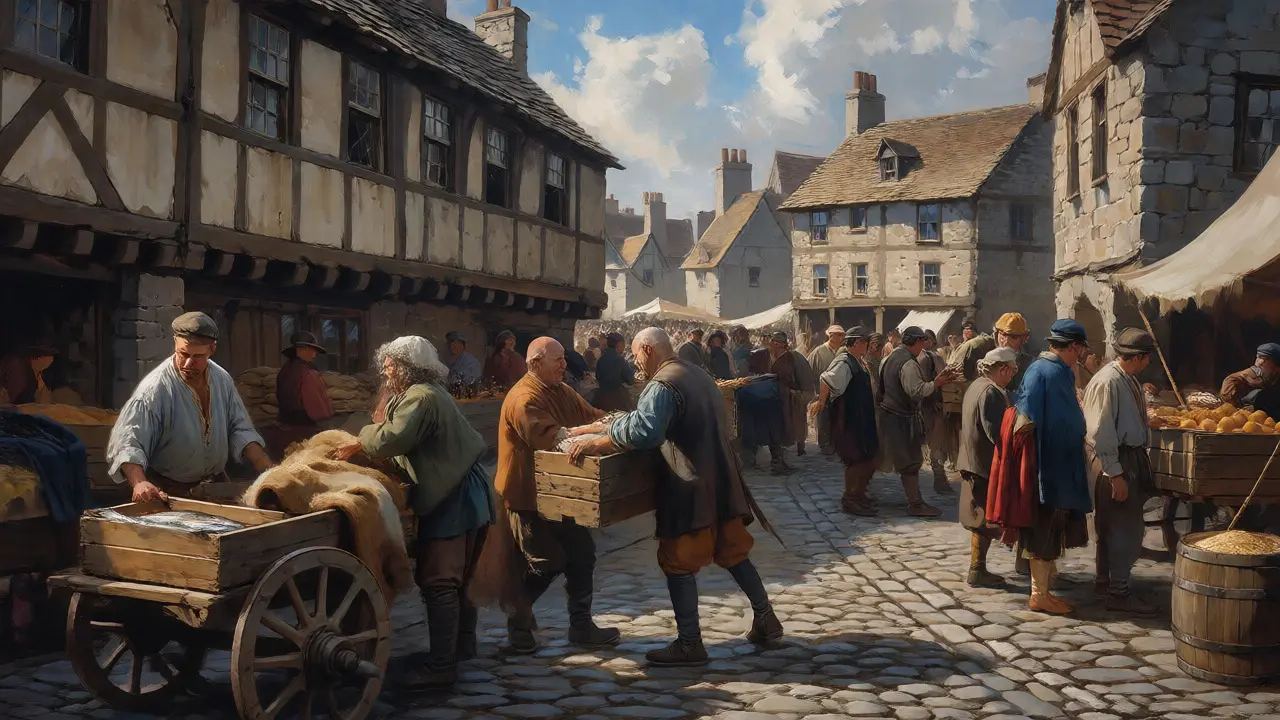
Scotland wasn't isolated. We traded heavily with France, the Netherlands, and Scandinavia. This network created wealthy towns called burghs. Edinburgh, Stirling, and Dundee grew rich exporting wool, hides, and salmon. Importing wine, cloth, and spices. If you were a merchant in Dundee in the 1400s, you dealt with complex customs duties and foreign laws. You spoke Scots, maybe some French, and negotiated with Hanseatic traders from Germany. These towns had their own councils and courts, separate from rural feudal law. They were hubs of innovation, bringing new building techniques and ideas from Europe.
However, trade also brought risk. Piracy was rampant. Ships leaving Leith were regularly raided by French or English privateers. Insurance didn't exist, so losing a cargo meant bankruptcy. Merchants formed guilds to share risks and regulate quality. If your wool was bad, the guild fined you. Reputation was everything.
The End of an Era: How It All Changed
The medieval period didn't end with a bang, but with a slow fade. Gunpowder changed warfare, making castles obsolete. The Renaissance brought new ideas about human potential, challenging the Church's monopoly on knowledge. The Reformation in the 1560s shattered the Catholic infrastructure that had held society together for centuries. By 1500, the old ways were cracking. Clan chiefs began wearing doublets instead of plaids. Lawyers replaced bards as record-keepers. The idea of a unified "Scottish" identity started to solidify, driven by shared opposition to England and shared Protestant faith after the Reformation. But the roots remained deep. The legal traditions, the clan loyalties, and the architectural landscape we see today are direct descendants of those turbulent, fascinating centuries.
Did everyone wear tartan in medieval Scotland?
No. While woven fabrics with checked patterns existed, they weren't standardized by clan. Tartan as a strict identifier of specific families is largely a 19th-century invention popularized by Sir Walter Scott. Medieval clothing was mostly undyed wool or simple dyed tunics based on status, not lineage.
Were Scottish castles always stone?
Not initially. Early medieval defenses were earthworks and timber palisades (Motte-and-Bailey). Stone construction became common in the 12th century due to Norman influence and improved quarrying technology. Many early stone keeps were actually built on top of older wooden fortifications.
What was the main food source for peasants?
Oats and barley dominated the diet. Wheat was difficult to grow in the wet Scottish climate. Peasants ate oatcakes, porridge, and drank ale made from barley. Vegetables like kale and onions supplemented the grain, while meat was a rare luxury reserved for festivals or special occasions.
How did the legal system work without police?
It relied on community enforcement and compensation. In Gaelic areas, Brehon law focused on fines paid to victims. In southern burghs, courts imposed physical punishments or executions. Feuds were common if judgments were rejected, leading to private conflicts resolved by force or negotiated settlements involving 'blood money'.
Was Scotland part of England during the medieval period?
No, Scotland remained an independent kingdom throughout the medieval period, though it faced repeated invasions and political pressure from England. The Union of Crowns happened in 1603, and the political union occurred much later in 1707. During the medieval era, Scotland had its own parliament, laws, and monarchy.
Comments (10)
-
Lauren Martin October 7, 2026
Let's cut through the romanticized fluff, shall we? This analysis is superficial at best. You're conflating feudal fragmentation with mere 'messiness' without addressing the structural economic drivers behind the shift from Brehon law to Common Law. The transition wasn't just about Edward I playing games; it was a deliberate imposition of Norman administrative hegemony designed to extract surplus value from a pre-capitalist agrarian base. Your claim that 'local loyalty mattered more than royal decree' ignores the coercive mechanisms of the burgh system which actively undermined clan autonomy through market dependency. Furthermore, attributing the decline of castle defense solely to gunpowder is an oversimplification of military logistics and siege engineering evolution. We need to look at the fiscal constraints on maintenance costs versus the diminishing returns on defensive investment in a centralized state model. The data simply doesn't support your narrative of organic cultural drift.

-
evelyn starcher October 8, 2026
Finally someone gets it right!! 🏴 It’s so frustrating when people think Scotland was just one big happy family back then. NO! It was brutal and divided and WE survived it because we are tough as nails. 💪 The part about Robert the Bruce crushing internal rivals is exactly what needs to be said. We didn't just fight England; we fought ourselves into unity. That takes guts. ❤️🔥

-
Ian Mason-Laurence October 9, 2026
The distinction between 'duns' and later stone keeps is well-drawn, though I would argue the term 'hillfort' is somewhat generic for the Iron Age context implied by 'pre-1100s'. Most duns are indeed Iron Age, but the continuity into the early medieval period is complex. Also, the assertion that wheat struggled in the damp climate is accurate for many regions, but specific microclimates in the Carse of Gowrie did allow for successful grain cultivation earlier than suggested. A minor point, but precision matters in historical geography.

-
Tommy Cahyadi October 10, 2026
Oh wow, thanks for the lecture. Really needed this deep dive into why my ancestors probably hated each other. I’ll keep my sarcasm in check while you enjoy your comfortable bed instead of sleeping next to a sword. Enjoy the porridge.

-
Anthony . October 11, 2026
I think there’s a beautiful complexity here that we often miss. 🌍 It’s not just about power shifts or survival, but about how human connection formed in the cracks of those systems. When you talk about identity being tied to place and kin rather than paperwork, it reminds us that community was a lived experience, not a legal status. 🤝 The resilience shown in adapting to harsh climates and fragmented politics speaks to a universal human capacity for adaptation. Let’s honor the messiness as part of the story, not just a problem to be solved. ✨💙

-
Marisa Marroquin October 13, 2026
It is genuinely fascinating to consider the sheer texture of their existence. One imagines the rough scratch of undyed wool against skin, the pervasive smell of peat smoke and unwashed bodies, and the constant, gnawing hunger that dictated every waking moment. The idea that ale was safer than water adds such a visceral layer to our understanding of their daily routine. It paints a picture of a world where comfort was a distant dream and survival was a communal, gritty endeavor. Truly evocative writing.

-
Kathy Mccoy October 14, 2026
This is such a great reminder of how resilient people were! 💪 It’s easy to get caught up in the kings and castles, but focusing on the farmers and the women brewing ale really grounds the history. You’re doing a wonderful job highlighting the everyday heroes who kept society running. Keep shining a light on those untold stories! 🌟

-
Ejike Ugwu October 15, 2026
You know who benefits from this narrative? The English. They want you to believe Scotland was always chaotic so they could justify stepping in. But look closer. The 'creachs' weren't just random raids; they were sophisticated economic warfare. And don't get me started on the Church acting as banks. Who controlled the Abbeys? It wasn't just faith, it was control over wealth flow. If you trace the lineage of these 'feudal lords', you'll see connections that go deeper than any textbook admits. The truth is hidden in plain sight. 👀🕵️♂️

-
Kathleen Johnson October 15, 2026
While the prose is adequate, the sourcing is nonexistent. You mention 'Brehon law' and 'Common law' as if they were static entities, ignoring centuries of judicial divergence and local variation. Also, the claim that tartan is a 19th-century invention is widely accepted, yet you gloss over the evidence of earlier patterned textiles found in archaeological sites like the Falkirk Hoard. Lazy scholarship. Try citing primary sources next time.

-
jyotshna Senapati October 16, 2026
I felt personally attacked by the comment above. 😤 Why does everyone have to be so negative? Lauren Martin, you sound like you’ve never actually visited a ruin in the Highlands. You sit in your air-conditioned room analyzing 'surplus value' while real people died freezing in those castles. It’s disrespectful to reduce their suffering to economic jargon. Some of us actually care about the human element, not just your academic ego trip. Go touch some grass. Or better yet, go visit Dunnottar Castle and feel the wind hit your face. Then come back and tell me about 'logistics'. 🙄
