
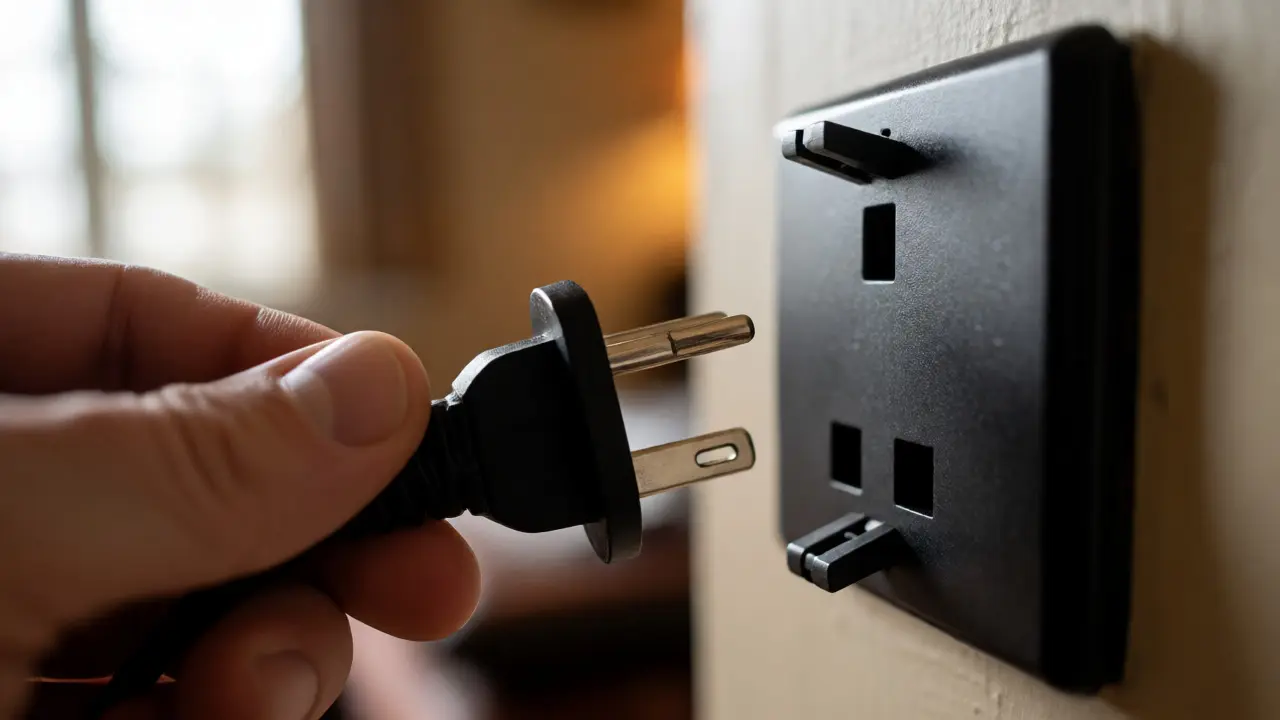
You’ve just landed at Edinburgh Airport or perhaps driven up the M90 to Dundee. You’re excited about the Highlands, the whisky distilleries, and the castles. But there’s a small, nagging problem sitting in your suitcase: your phone charger has two flat prongs, and every socket in Scotland looks like it belongs on a spaceship. If you try to jam a US or European plug into a Scottish wall without thinking, you’ll either break the pin or trip the breaker. Here is the reality check: UK plug types are unique, robust, and non-negotiable.
This isn’t just about convenience; it’s about not frying your expensive laptop or starting a fire in a B&B. Scotland uses the same electrical standard as the rest of the United Kingdom, but knowing exactly what that means for your specific devices can save you a headache. Let’s cut through the confusion and get your gadgets powered up so you can focus on the scenery.
The Standard Socket: What Is Type G?
If you look at a wall outlet in a Scottish hotel, pub, or home, you are looking at a Type G electrical socket characterized by three rectangular pins arranged in a triangular pattern. This design was introduced in the UK in 1947 and remains the sole standard today. Unlike the two-pronged plugs common in Europe (Type C) or North America (Type A/B), the Type G includes an earth pin that is longer than the other two. This length difference acts as a key; it pushes open plastic shutters covering the live and neutral slots before the other pins can enter. It’s a safety feature designed to prevent children from sticking fingers-or metal objects-into the holes.
Because of this shutter mechanism, you cannot simply force a two-pin plug into a Type G socket. The shutters won’t move. You need a proper adapter that mimics the three-pin geometry. Furthermore, the fuse inside the plug itself is a critical component. Every UK plug contains a fuse, usually rated at 3A or 13A, depending on the device’s power draw. If you buy a cheap, uncertified adapter from a street vendor in London or Glasgow, ensure it has its own fuse. Without one, a fault in your device could cause the adapter to melt rather than blowing a safe circuit.
Voltage and Frequency: Do You Need a Converter?
This is where most travelers get confused. They think they need a heavy transformer because their hair dryer says "110V" and the UK runs on 230 Volts alternating current at a frequency of 50 Hertz. While the UK officially standardized on 230V in 2003 to align with EU harmonization, the actual supply often hovers around 240V. This is significantly higher than the 110-120V used in the USA, Canada, and Japan.
Here is the rule of thumb: Check the label on your device. If it says "Input: 100-240V," you only need a plug adapter. Modern electronics like laptops, smartphone chargers, camera batteries, and e-readers are almost universally dual-voltage. They have internal switch-mode power supplies that handle the change seamlessly. However, if you bring a high-wattage appliance like a curling iron, straightener, or hair dryer that only supports 110V, you need a voltage converter. These converters are bulky and often struggle with heating elements. Honestly? Leave the 110V-only hair dryer at home. Buy a cheap dual-voltage one locally or use the one provided by your accommodation. Converting voltage for heating appliances is inefficient and risky.
| Device Type | Voltage Label | Action Required | Risk Level |
|---|---|---|---|
| Smartphone/Laptop Charger | 100-240V | Plug Adapter Only | Low |
| Electric Shaver | 100-240V | Plug Adapter Only | Low |
| US Hair Dryer | 110-120V Only | Voltage Converter + Adapter | High (Fire/Melt) |
| Clothes Iron | 110V Only | Voltage Converter + Adapter | High |
| Camera Battery | 100-240V | Plug Adapter Only | Low |
Buying the Right Adapter in Scotland
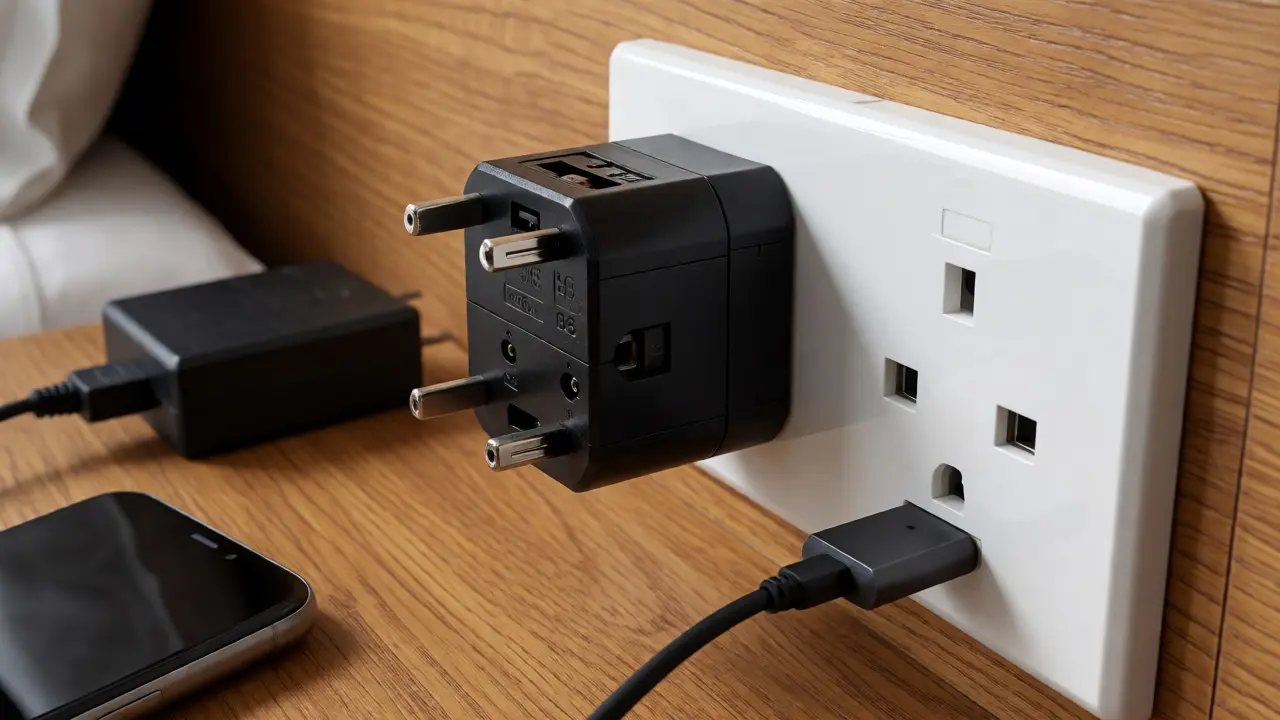
Should you buy your adapter before you leave or once you arrive? If you are coming from outside the UK, buying beforehand is safer. You know exactly what you are getting. In Scotland, you will find adapters in supermarkets like Tesco or Sainsbury’s, pharmacies, and tourist shops in major hubs like Edinburgh and Glasgow. However, prices in tourist hotspots can be inflated. A basic Type G adapter might cost £1 in a local hardware store but £5 in a shop near Edinburgh Castle.
Look for adapters marked with the BS 1363 standard. This certification ensures the adapter meets British safety regulations. Avoid universal adapters that have sliding pins and no fuses. They are notorious for poor contact, leading to sparking and overheating. If you are traveling with multiple devices, consider a multi-port USB charger. Many modern hotels and hostels in Scotland now provide USB-A and USB-C ports built directly into the wall sockets or bedside lamps. This reduces the number of physical adapters you need to carry. Just remember: even if a hotel offers a USB port, you still need a Type G plug for your laptop power brick.
Specific Considerations for Rural Scotland
Scotland is vast. While cities like Aberdeen and Inverness have modern electrical infrastructure, rural areas present different challenges. If you are staying in a remote croft, a historic castle hotel, or a bothy in the Highlands, the wiring might be older. Some very old properties may still have legacy outlets, though this is rare. More commonly, you might encounter limited socket availability. Older buildings were wired when people owned fewer appliances.
In these scenarios, a multi-socket extension lead is your best friend. Bring a short, high-quality extension cord with a Type G plug. This allows you to charge your phone, tablet, and camera simultaneously from a single wall point. Also, be aware of power cuts. Rural Scotland experiences more frequent outages due to weather conditions, especially during winter storms. Having a portable power bank charged and ready is a practical precaution. If you are renting a self-catering cottage, ask the owner if the property has surge protection. Lightning strikes are common in exposed coastal and mountainous areas, and unprotected sensitive electronics can be damaged.
Safety Tips and Common Pitfalls
One of the biggest mistakes travelers make is ignoring the fuse rating. If you plug a high-power device like a space heater into a low-rated adapter, the fuse in the adapter will blow. This is good-it protects your device. But if you replace it with a higher-rated fuse just to keep things running, you risk melting the adapter. Always match the fuse rating to the device’s requirements.
Another pitfall is assuming all UK regions are identical. While Northern Ireland also uses Type G, some older installations in border towns might have mixed standards due to historical cross-border trade with Ireland (which uses Type G but historically had variations). In Scotland, however, Type G is absolute. Don’t rely on anecdotes from friends who visited London ten years ago; the standard hasn’t changed, but the quality of available adapters has improved.
Finally, respect the wet environment. Scotland is rainy. Never use electrical devices near open windows or in bathrooms unless the socket is specifically rated for bathroom use (usually indicated by IP ratings). Portable heaters should never be plugged into extension leads that are coiled tightly, as this can cause heat buildup and fire hazards. Uncoil your extension cords fully when using high-draw appliances.
Frequently Asked Questions
Can I use my US phone charger in Scotland without an adapter?
No. Physically, the US plug will not fit into the Scottish Type G socket. You must use a plug adapter. However, you do not need a voltage converter if your charger supports 100-240V, which most modern phone chargers do.
Is the voltage in Scotland exactly 230V?
Officially, yes, it is standardized to 230V. In practice, the grid often delivers closer to 240V. Most modern electronics are designed to tolerate this variance, but older 110V-only appliances may overheat or fail if used without a proper voltage converter.
Do hotels in Scotland provide adapters?
Some international chain hotels may lend adapters upon request, but it is not guaranteed. Boutique B&Bs and self-catering accommodations rarely provide them. It is always safer to bring your own.
What happens if I plug a 110V device into a Scottish socket?
If the device is purely resistive (like a simple heater), it will run hotter and potentially burn out quickly. If it has electronic components, it may suffer permanent damage or start a fire. Always check the input voltage label first.
Are USB ports common in Scottish hotels?
Yes, many newer hotels and recently renovated guesthouses now install sockets with integrated USB-A and USB-C charging points. This is convenient for phones and tablets but does not replace the need for a Type G adapter for larger devices.