
You’ve got a surname that sounds vaguely Scottish. Maybe it’s MacDonald, or Campbell, or something you can barely pronounce but see on a tattooed arm at the pub. You want to know if your great-grandfather really fought at Culloden, or if your family actually owned land in the Highlands before they moved to Glasgow for work. But where do you start? The internet is full of dodgy websites selling fake tartans and "clan chief" titles for £20.
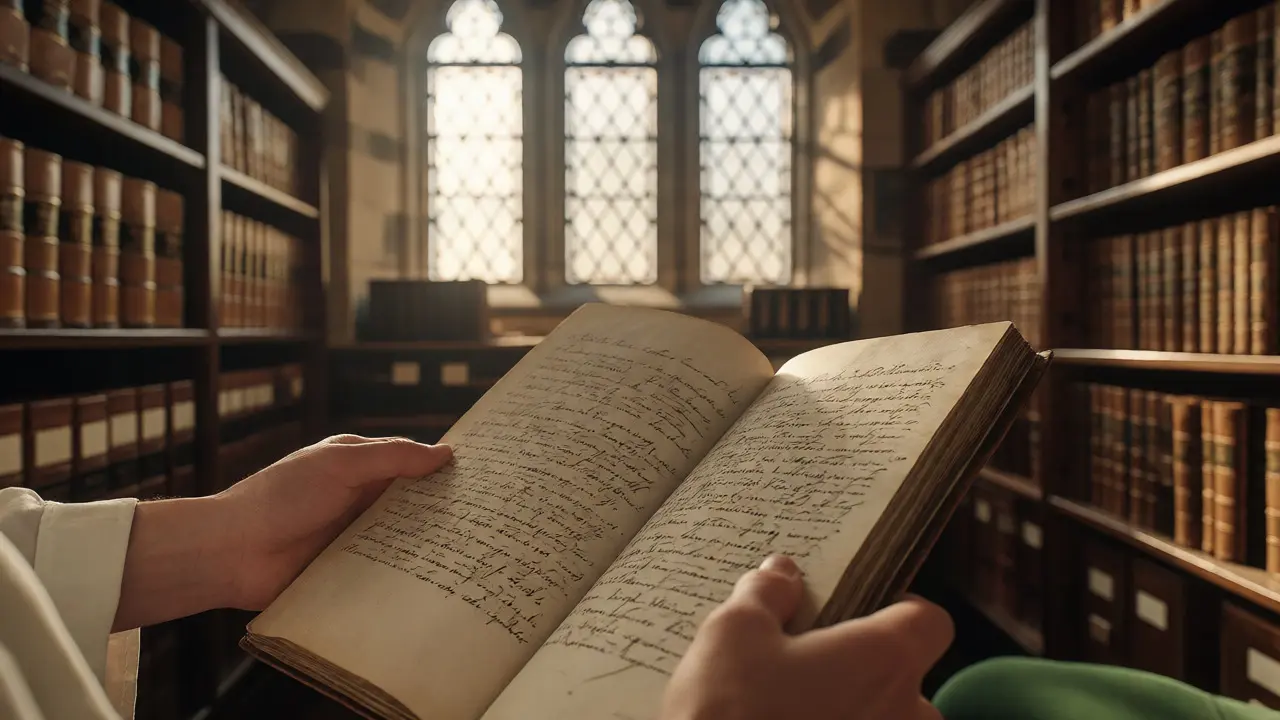
Real answers aren't found in gift shops. They are found in heritage centres, which are specialized facilities dedicated to preserving local history, genealogical records, and cultural artifacts. Unlike standard museums, these centres focus on community narratives and archival research. If you are serious about tracing your roots, you need to go where the primary sources live. This isn't just about looking at old swords; it's about accessing birth registers, parish kirk session minutes, and estate maps that tell the actual story of who your people were.
Why Heritage Centres Beat Online Databases Alone
Sites like Ancestry.co.uk or Findmypast are great starting points. They have digitized millions of records. But they don't have everything. And more importantly, they lack context. When you visit a heritage centre, you get access to physical archives that haven't been scanned yet. You also get human expertise.
Volunteers and archivists at these centres often know the local families by name. They can point out that while the official record says your ancestor was a farmer, the local oral history suggests he was also a smuggler. That nuance changes your family tree from a list of dates into a narrative. Plus, many rural parishes had their records destroyed or lost during various conflicts or administrative errors. Local centres often hold private collections-diaries, letters, photographs-that never made it into national archives.
The Big Players: National Records and Major Trusts
If you are planning a trip specifically for genealogy, two names dominate the landscape. First, there is National Records of Scotland. It holds the statutory records for all of Scotland, including civil registration (births, deaths, marriages) from 1855 onwards, census data, and church records prior to 1855. Their main search room is in Edinburgh, but they have smaller search rooms across the country.
Then there is the National Trust for Scotland, which manages over 130 properties. While not all are heritage centres in the strict archival sense, many historic houses and castles they manage have dedicated visitor centres with extensive information about the families who lived there. For example, visiting Craigievar Castle isn't just about admiring the architecture; the staff can help you understand the Forbes family lineage that built it.
Here is how the major resources compare when you are trying to decide where to spend your time:
| Resource Type | Primary Focus | Best For | Access Method |
|---|---|---|---|
| National Records of Scotland | Official Civil & Church Records | Pre-1900 ancestors, legal proof | In-person search rooms, online index |
| Local Heritage Centres | Community stories, unpublished archives | Rural ancestors, social context | Free entry, volunteer-led research |
| Clan Societies | Tartan, heraldry, broad lineage | General clan affiliation, souvenirs | Membership fees, limited archives |
| University Libraries | Academic papers, estate papers | Aristocratic lines, specific estates | Appointment-based, restricted access |
Regional Hotspots for Clan Research
Scotland is diverse. Your ancestors' experience in the Lowlands was vastly different from those in the Islands. You need to target your visits based on geography.
The Highlands and Islands
If your roots are in the north, head to Inverness. The Highland Archive Centre is crucial here. It holds records for the former counties of Caithness, Sutherland, Ross and Cromarty, Inverness-shire, and Nairnshire. Many Highland families were displaced during the Clearances. These records often show where people went after being evicted, linking Highland origins to Lowland industrial cities.
For islanders, the Lewis and Harris Museum offers unique insights into crofting life. Standard civil records might be sparse due to the remoteness of some islands, but local oral histories and church session books fill the gaps. Remember, many islanders didn't have surnames in the modern sense until quite late; they used patronymics (John son of Donald). Heritage centre volunteers are trained to decode this.
The Central Belt and Lowlands
This is where most Scots ended up during the Industrial Revolution. Glasgow and Edinburgh have massive archives. But don't overlook smaller towns. Dundee, where I live, has excellent resources for tracing jute mill workers and whaling captains. The Dundee City Archives holds detailed employment records from companies like Jute Works Ltd., which can tell you exactly when your grandfather started work and what his wages were.
In Glasgow, the Glasgow City Archives is invaluable for Irish immigrants who settled there in the 19th century. Many arrived with no paper trail. Parish records from Catholic churches in Glasgow often provide the only link back to County Donegal or Cork.
The Borders
The Border Reivers era left a messy paper trail. Families like Armstrong, Elliot, and Scott were involved in cross-border raiding. Official English records often miss them because they operated in the 'Debatable Lands'. The Borders Heritage Centre specializes in this turbulent period. They can help distinguish between a legitimate tenant farmer and a reiver who was technically an outlaw.
How to Prepare for Your Visit
Walking into a heritage centre without preparation is like going to a library without knowing the Dewey Decimal System. You will waste hours. Do this before you book your ticket:
- Gather Known Facts: Write down every date, place, and name you already know. Even approximate dates help. "Born around 1840 in Perth" is better than nothing.
- Check Opening Hours: Many rural heritage centres are run by volunteers and may only open three days a week. Call ahead.
- Bring Identification: Some archives require photo ID to issue a reader card.
- Pencil Only: Most archives forbid ink pens to protect documents. Bring pencils and a notebook.
- Ask About Fees: Entry is usually free, but certified copies of certificates cost money. Know the current rates.
Common Pitfalls in Clan History
Let's address the elephant in the room: "I am a MacLeod, so I must belong to the MacLeod Clan." Not necessarily. Clan membership in the medieval sense was about loyalty to a chief, not bloodline. By the Victorian era, romantic notions of clans were revived, leading to many people adopting tartans that had no historical connection to their ancestors.
When researching, avoid relying solely on "Clan Societies" for genealogical proof. They are great for social events and general info, but they rarely hold primary source records. Use them for context, not evidence. Always verify claims against primary documents like baptismal registers or sasines (property records).
Another trap is assuming everyone was literate or named correctly. Clerks wrote phonetically. A "McDonald" might appear as "M'Donald," "MacDonald," or even "Dowall." Search engines are bad at fuzzy matching. Human eyes scanning microfilm or original ledgers catch these variations.
The Value of Oral History
Some of the best heritage centres actively collect oral histories. This is gold dust. Imagine finding a recording of your great-aunt describing her childhood home, the smell of the peat fire, the songs they sang. These recordings capture the sensory details of life that dry statistics miss.
Projects like the Scottish Oral History Collection preserve thousands of interviews. If your ancestors were part of a specific industry-mining, fishing, weaving-there might be recorded testimonies from people who worked alongside them. This adds emotional depth to your family tree.
Next Steps After Your Research Trip
Once you've visited a heritage centre, don't let the findings gather dust. Digitize any photos or documents you copied. Share your discoveries with other relatives. You might find a cousin who has the missing piece of the puzzle-a diary entry, a photograph, a letter.
Consider joining a local family history society. Groups like the Federation of Family History Societies offer support, workshops, and indexing projects. Volunteering to transcribe records helps preserve them for others and keeps you engaged with the process.
Researching Scottish ancestry is a marathon, not a sprint. Heritage centres are your checkpoints. They provide the fuel-the facts, the context, and the inspiration-to keep going. Whether you are standing in the cold rain outside a ruined castle in Skye or sitting in a warm archive in Edinburgh, you are connecting with the real lives behind the legends.
Do I need to pay to enter heritage centres in Scotland?
Most local heritage centres and archives charge no admission fee for viewing records. However, obtaining certified copies of certificates (like birth or marriage certificates) usually incurs a small fee. Some larger tourist-focused heritage sites may charge entry, but purely archival locations are typically free.
Can I trace my clan origin if I don't have a Scottish surname?
Yes. Many Scots emigrated and changed their names, or married into non-Scottish families. Start with your earliest known Scottish ancestor, regardless of surname. Look at where they lived and worked. Local heritage centres can help identify if that area was dominated by a specific clan or family group, providing geographical clues even without a traditional clan name.
What is the difference between a museum and a heritage centre?
A museum primarily displays objects and tells a curated story through exhibits. A heritage centre focuses on preservation and access to records. While both may have exhibits, a heritage centre's core function is often to assist visitors with research using archives, libraries, and databases. Museums are for viewing; heritage centres are for investigating.
Are online records enough for Scottish genealogy?
Online records cover the basics well, especially post-1855 civil registrations and many pre-1855 Old Parochial Registers. However, they miss unindexed records, private papers, court cases, poor law records, and local newspapers. Physical visits to heritage centres reveal these hidden layers, offering a more complete picture of your ancestors' lives.
How far back can I trace my Scottish ancestry?
With good luck and thorough research, you can often trace back to the 1700s using parish records. Going further back to the 1600s is possible but difficult due to record survival issues. Tracing to the medieval period (before 1600) usually requires focusing on aristocratic or landowning families, as records for common folk are rare or non-existent before the 17th century.
Comments (15)
-
Lauren Martin October 1, 2026
Let's cut through the sentimental drivel, shall we? This article fundamentally misunderstands the epistemological framework of genealogical verification. You are conflating 'narrative coherence' with 'primary source evidence.' Heritage centres do not possess some magical ontological status that supersedes digitized records; they merely house physical artifacts that require the same rigorous peer-review methodology to interpret.
The author suggests that oral history provides 'nuance,' but this is a category error. Oral testimony is notoriously unreliable due to mnemonic decay and retrospective bias. Relying on a volunteer's anecdote about a smuggler ancestor over a parish register entry is methodologically unsound. It introduces subjective noise into a dataset that demands objective clarity. Furthermore, the distinction drawn between museums and heritage centres is arbitrary. Both are curated spaces where power dynamics dictate which narratives are preserved and which are discarded.
If you want real answers, you need to understand the socio-economic context of record-keeping in Scotland, not just visit a building. The idea that local archivists 'know families by name' implies a pre-modern social cohesion that rarely existed outside of specific kinship networks. Most rural parishes were fragmented communities with fluid identities. To suggest that these volunteers can decode patronymics better than an algorithm trained on millions of OCR-scanned documents is simply naive. Algorithms don't get tired, they don't have biases about who was a 'smuggler' versus a 'farmer,' and they certainly don't charge you for certified copies. Stop romanticizing the archive and start analyzing it properly.

-
Ian Mason-Laurence October 3, 2026
While Lauren raises valid points regarding the limitations of oral history, she overlooks the critical issue of record survival rates in the Highlands and Islands. National Records of Scotland holds the statutory records, yes, but as the post correctly notes, many rural parishes suffered from administrative errors or destruction during conflicts. In these specific geographic contexts, the 'dodgy websites' often lack the granular detail found in private collections held by local trusts.
Moreover, the assertion that algorithms are superior ignores the complexity of Scottish surnames prior to standardization. A search engine may fail to link 'M'Donald' to 'MacDonald' without human contextual understanding of regional dialects. Heritage centres provide that essential linguistic bridge. It is not about sentimentality; it is about accuracy in ambiguous cases.

-
Marisa Marroquin October 4, 2026
I find myself gently disagreeing with the harsh critique above. There is something undeniably profound about holding a document that your great-grandfather actually touched. It transcends mere data extraction. It becomes a tactile communion with the past. 🌿
Also, the point about Dundee’s jute mills is fascinating. I recently visited a small archive there, and the employment ledgers revealed wage disparities that official census data completely obscured. It painted a vivid picture of economic struggle that no spreadsheet could convey. Sometimes, the 'noise' Lauren mentions is actually the signal of human experience.

-
Tommy Cahyadi October 5, 2026
Great guide. Just remember that half the people walking into these places are looking for a tartan to wear to a wedding, not actual lineage. Don't let them ruin the vibe for the serious researchers. 😐

-
Anthony . October 7, 2026
Love this perspective! 🤩 It really highlights how important community connection is in research. I think we sometimes forget that genealogy isn't just about names and dates; it's about understanding the lives people lived.
The section on the Borders Reivers is particularly interesting because it shows how complex identity can be. We tend to simplify history into neat boxes, but those raiders didn't care about modern borders. Heritage centres help us see that messiness, which I think is beautiful. 🌈 Keep up the good work sharing these resources!

-
Liam Whelan October 9, 2026
Wait, did anyone else catch the bit about patronymics?? I had no idea that was still used so late. That explains why my family tree makes zero sense when I look at old records. Thanks for clearing that up. 👍🏼

-
Mithilesh Singh October 10, 2026
This is precisely what happens when one relies on commercial entities rather than state institutions. The internet sells you a fantasy. The State preserves the truth. Do not be deceived by the charm of a volunteer. They are unpaid labor filling gaps in government neglect. Support your national archives first. Always.

-
Shaina Silver-Baird October 12, 2026
We must consider who funds these heritage centres. Often, it is private trusts with their own agendas. Are we certain that the 'oral histories' collected are representative, or are they cherry-picked to fit a nationalist narrative? I suspect that the 'community narratives' mentioned are carefully curated to exclude dissenting voices or inconvenient truths about land ownership and displacement. One should approach these sources with extreme skepticism.

-
Elizabeth Calwell October 12, 2026
Oh, please don't be so cynical! These centres are lifelines for so many people trying to reconnect with their roots. ❤️ I’ve seen firsthand how a simple visit can heal generational wounds. If a volunteer shares a story that brings someone peace, who cares if it’s 'methodologically unsound'? It’s human connection. And honestly, having a physical place to go is so much more welcoming than staring at a screen alone. Let’s celebrate these spaces, not tear them down! ✨

-
evelyn starcher October 12, 2026
Scootland forever!! 🏴 Ignore the Americans talking about 'epistemology'. They wouldn't know a kirk session minute if it hit them in the face. Real Scots know that the heart of our history is in the local halls, not in some sterile digital database. Proud to support our local heritage! 💪🏻😤

-
Kathleen Johnson October 14, 2026
The comparison table is somewhat reductive. It implies a clear hierarchy that doesn't exist in practice. Many university libraries hold estate papers that are crucial for aristocratic lines, yet they are listed last. Also, the claim that clan societies hold 'limited archives' is misleading; some hold significant heraldic records. But overall, the advice to prepare before visiting is sound. Walking in blind is indeed inefficient.

-
Sabrina Silvani October 15, 2026
records are never neutral. they are shaped by who wrote them and who kept them. the idea that we can access 'the actual story' is a comforting illusion. we only ever access fragments. heritage centres preserve fragments. online databases index fragments. both are incomplete. accept the uncertainty. stop looking for definitive proof in a world built on loss.

-
Ejike Ugwu October 15, 2026
Bro, you sure these 'volunteers' aren't just gatekeepers? I feel like half the time they hide the good stuff from tourists. Like, why would they give you the full diary of the landlord but not the servant? Suspicious. Very suspicious. 🕵️♂️💸
,

-
Kathy Mccoy October 16, 2026
For those planning a trip, definitely check the opening hours! I made the mistake of driving two hours to a centre in the Highlands only to find it closed for lunch and then early on Fridays. Call ahead, seriously. It saves so much frustration. Also, bring pencils, not pens! Learned that the hard way. 😅

-
jyotshna Senapati October 17, 2026
It is quite presumptuous to assume everyone has a 'Scottish surname' worth tracing. Some of us have mixed heritage where the Scottish line is thin. Does this guide account for those of us whose ancestors married out early? Or is it only for the pure-blooded enthusiasts? Just wondering. 🤔
