
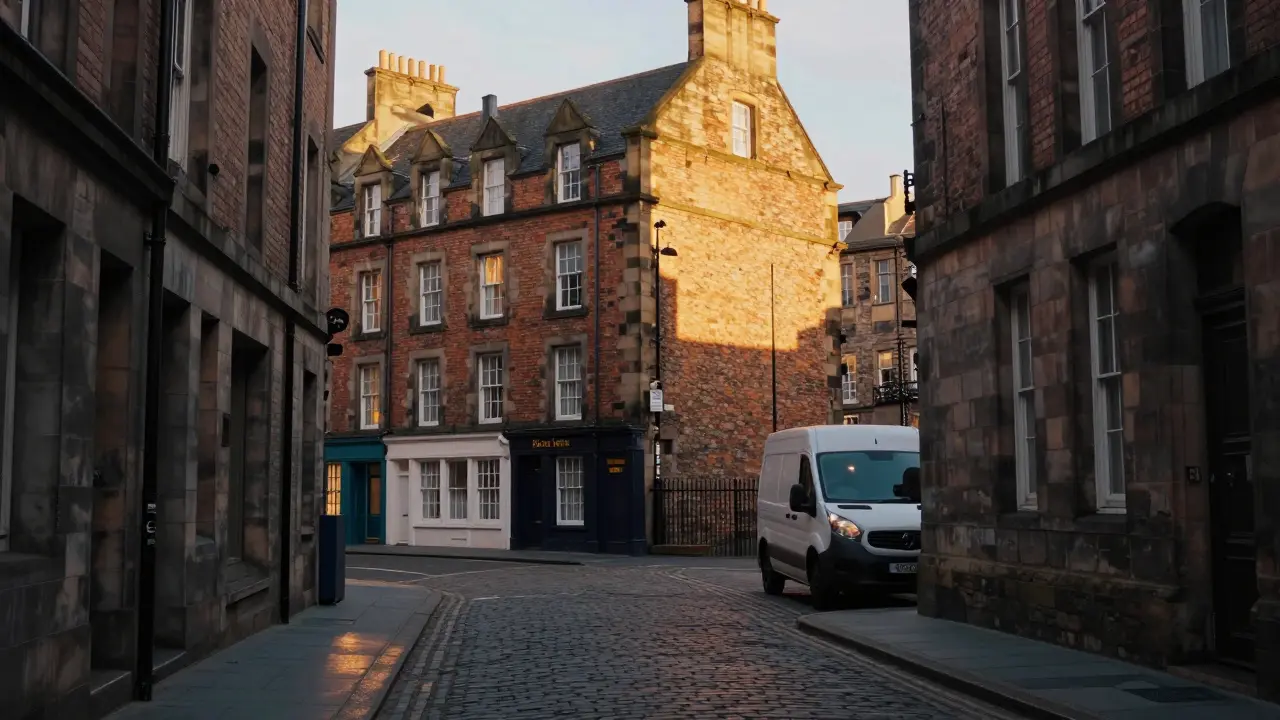
Glasgow is not just a backdrop; it is often a co-star. When you walk through the streets here, you are treading on ground that has seen everything from gritty drama to high-fantasy epics. From the red brick warehouses of the Merchant City to the imposing stone of the Gothic Revival cathedral, the architecture provides texture that digital effects simply cannot replicate. As someone who takes the train up from Dundee regularly, I know how quickly the scenery shifts once you cross the border. It changes from the softer Lowland landscape to the hard lines of Victorian industry. For visitors and locals alike, hunting down these spots adds a whole new layer to exploring the city.
The Industrial Canvas of Merchant City
If you want to understand modern drama set in Scotland, you have to start with the warehouse district. This area is where commerce and creativity collide.
Merchant City is a historic district in the centre of Glasgow known for its early-19th-century tenements and warehouse conversions. Also known as East End Cultural Quarter, it has been the setting for countless productions because the narrow alleys and cobbled streets feel timeless. Companies frequently choose this neighborhood for period pieces, but also for contemporary thrillers. The lighting here is unique. During the winter months, the low sun hits the sandstone, creating a golden glow that cinematographers chase year-round.You will often see production vans parked near High Street or St Andrew Square. While filming doesn't happen every day, the set dressing remains. The cobblestones are worn smooth by centuries of trade, which adds a realistic friction to scenes involving running or chasing. It stands in contrast to the flat concrete of modern suburbs. This texture is what makes the city so popular with directors.
Gritty Realism in the East End and Govan
While the center of town offers beauty, the working-class neighborhoods offer soul. The East End has always been the heart of the city’s narrative struggle. In the late 20th century, this area became synonymous with the cult classic Trainspotting.
For fans of Danny Boyle’s work, the housing estates around Springburn and Hutchesontown provide the bleak, atmospheric backdrops that defined 90s British cinema. Walking through Hutchesontown today feels different; gentrification has brought cafes to some corners, but the tall tower blocks still loom over the sky. They cast long shadows that are perfect for darker storytelling. Similarly, the shipyards in Govan, though largely silent now, retain a heavy industrial aesthetic.
It was here that the show Shameless found its footing. Although the story is Irish-American, the production team looked to similar environments in Scotland and Northern Ireland, often utilizing Glasgow’s east coast to mimic the working-class struggle. The terraced houses in Pollokshaws or parts of Dalmarnock have been used extensively for these types of family dramas. The proximity of the homes means actors can run between sets quickly, saving daylight hours during shoots.
Fantasy and History in the West
Move across the river, and the vibe shifts again. The West End is dominated by Victorian elegance. This is where university life meets royal history.
| Location Area | Typical Genre | Key Feature | Famous Production |
|---|---|---|---|
| Merchant City | Drama / Comedy | Cobbled Streets | Breadwinner |
| Govan | Thriller / Crime | Industrial Yards | Shameless |
| Pollok Country Park | Fantasy / Period | Natural Landscape | Outlander |
| Glasgow Cathedral | Historical / Epic | Gothic Architecture | Rob Roy |
At the top of the hill, Glasgow Cathedral rises above the trees. It is often the stand-in for medieval Europe or mystical settings when filmmakers need ancient stone that looks authentic. You won’t find this kind of preservation in London or Dublin as easily. The lack of surrounding high-rises helps frame the shot without ruining the illusion. Nearby, the Necropolis provides quiet, moss-covered headstones that fit perfectly into ghost stories or mystery plots.
Pollok Country Park is the largest public park in Glasgow featuring a country house and woodland walks. It served as a key exterior location for various fantasy productions including scenes resembling Winterfell for certain periods. The expansive grounds allow for wide drone shots that wouldn’t be possible in dense urban centers. Many people assume all Scottish filming happens in the Highlands, but the rolling hills of South Lanarkshire are accessible from the city center within thirty minutes. This convenience keeps budgets lower while maintaining scenic variety.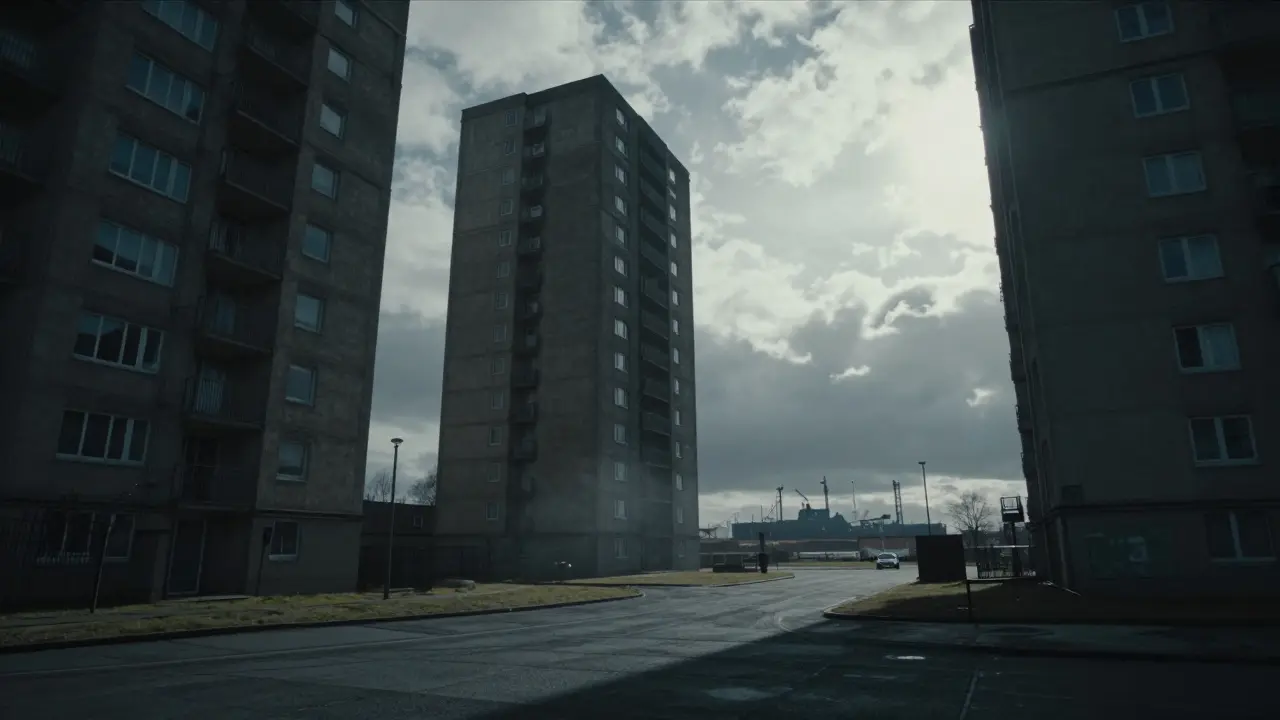
Tours, Access, and Permits
Visiting these locations requires planning. Most of these are public spaces, but active shoots change access patterns. If you spot cones blocking the road, the production team might be locking off the street for safety. Local residents usually get notified weeks in advance, but tourists miss that memo.
For serious enthusiasts, joining a guided walking tour makes sense. These guides know the exact angles used for specific shots. They will tell you which bench was used for the confession scene or which doorway appeared in the climax of a popular series. However, do expect crowds if a show is currently airing. During filming seasons, the local hotels fill up, and prices rise.
Photography is generally allowed in public parks and on the streets, but there are restrictions on commercial usage. If you plan to shoot a video blog, check the guidelines. Sometimes, even a tripod attracts attention from security in private heritage sites like Kelvingrove Art Gallery. The staff there are friendly but protective of the art collections.
The Economic Impact of Sets
Why does the city council support these shoots? The answer lies in the economic boost. A major production brings hundreds of crew members who stay in local hostels and eat at nearby restaurants. It puts money directly into the pockets of small businesses. Organizations like Scottish Screen help coordinate these efforts, ensuring the locations remain manageable for daily commuters while maximizing tourist potential.
Scottish Screen is the national organization promoting and supporting film and television production in Scotland. Their role includes managing location databases and connecting producers with local resources. They ensure the city benefits from increased media visibility. This symbiotic relationship means that even when cameras aren’t rolling, the marketing value persists. People visit to see where their favorite characters lived.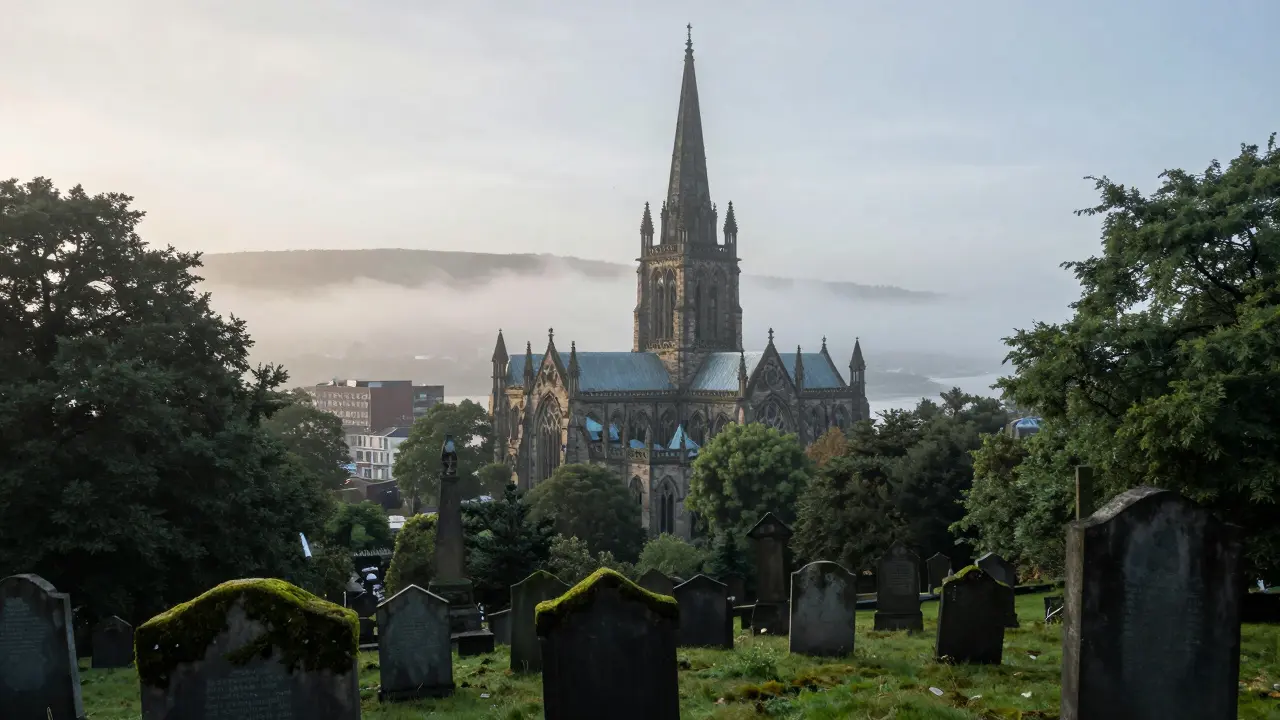
Seasonal Considerations for Visitors
Timing matters greatly when planning your own photoshoot or sightseeing. In the summer, the light stays long into the evening, allowing for more exploration. However, the weather can turn quickly. Rain washes the color out of the streets, but it also creates reflections that photographers love. Winter brings short days and harsher contrasts. The mist rolling off the River Clyde in November adds a moody atmosphere that is difficult to recreate artificially.
Some locations are less visible in winter due to tree coverage dropping, while others open up. Plan your route based on the light. East-facing streets catch the morning sun, which is better for portrait-style shots. The West End buildings face away from the afternoon sun, casting deep shadows that hide imperfections in older masonry.
Future of Filming in Glasgow
As we move deeper into 2026, digital technology is changing how scenes are captured. Some backgrounds are now extended digitally, but physical locations remain crucial for the foreground action. Actors need real walls to touch and stairs to climb. The city continues to invest in infrastructure to handle large crews better. With high-speed rail connections improving from other UK cities, more international crews are choosing Glasgow over London or Los Angeles.
Looking ahead, sustainable filming is a growing priority. Producers are expected to reduce waste on set. This affects how the city manages the cleanup after a shoot. It ensures that when the trucks leave, the neighborhood returns to normal as soon as possible. This balance is essential for maintaining community goodwill.
Frequently Asked Questions
Can I take photos of filming locations?
Yes, you can photograph public streets and parks freely. However, if a professional shoot is underway with closed roads, you may be restricted from entering the perimeter for safety reasons. Always respect "No Filming" signs placed by temporary security crews.
Where were the scenes from Trainspotting filmed?
Most outdoor scenes were filmed in the East End, specifically around Springburn, Hutchesontown, and Barrowlands. The interior shots of the apartments were recreations built on studio floors, not actual private residences.
Is there a tour available for these sites?
Several independent companies run "Film Trail" walking tours that stop at specific landmarks like Merchant City and the Cathedral. Booking in advance is recommended during peak tourist seasons between April and September.
What is the best time to visit Glasgow for light?
Late spring and early autumn offer the best balance of soft light and decent weather. Morning hours around 8 AM to 10 AM provide excellent sunlight hitting the stone facades before the clouds typically roll in later.
Does Glasgow allow commercial filming?
Commercial filming requires permits from the City Council. Individual tourists taking personal photos do not need permission, but using drones commercially usually requires approval due to flight safety regulations over populated areas.
Comments (15)
-
Rakesh Kumar March 26, 2026
The sheer intensity of the red brick warehouses feels alive when you walk there.
You can almost hear the ghosts of industry echoing off the cobblestones.
Cinematographers chase that golden glow for a reason.
It transforms ordinary streets into cinematic gold.
Visitors need to embrace the gritty beauty of the Merchant City.
Every corner holds a story waiting to be captured on film.

-
Bill Castanier March 26, 2026
Great breakdown of the industrial history zones.

-
Chuck Doland March 27, 2026
The architectural integrity discussed here warrants significant attention.
Many modern urban centers lack such preserved historical continuity.
The Gothic Revival elements provide a structural narrative.
Filmmakers utilize this texture for authentic period pieces.
Digital effects cannot fully replicate physical stone decay.
Preservation societies often overlook the commercial benefit of filming.
Local businesses gain exposure through visual media representation.
Council regulations balance safety with public access effectively.
Seasonal lighting patterns dictate shoot schedules primarily.
Winter mist adds atmospheric depth unavailable elsewhere.
Summer daylight duration increases production efficiency significantly.
Residents must tolerate temporary disruptions during shoots.
Economic returns justify minor inconveniences largely.
Tourism boards leverage these productions for marketing campaigns.
Sustainable practices remain necessary for community goodwill.

-
Madeline VanHorn March 28, 2026
Tourists ruin these places anyway and the locals know it too.

-
Glenn Celaya March 28, 2026
i hate that they close roads all the time and dont warn anyone
security is everywhere its annoying

-
Wilda Mcgee March 29, 2026
Your perspective highlights the vital symbiosis between art and infrastructure.
We must cherish these textured landscapes before they fade away completely.
The narrative quality embedded in the stone tells tales of centuries past.

-
Chris Atkins March 30, 2026
really cool info thanks for sharing it i love seeing the city come alive

-
Jen Becker March 31, 2026
Winter light is overrated compared to summer clarity.

-
Ryan Toporowski March 31, 2026
I totally get what you mean about the vibe!
Those shots look amazing though 😍
Definitely worth checking out the tours 🎥🎬

-
Samuel Bennett March 31, 2026
They claim natural light is best but the grid changes seasons artificially now.
Crews know the real schedule which affects the weather patterns.
Why do we trust the official photos when shadows shift?

-
Rob D April 1, 2026
US production hubs handle massive crews without shutting down entire districts.
Glasgow seems stuck in the past regarding logistics and planning.
Our cities manage permits faster than Scotland does right now.

-
Franklin Hooper April 1, 2026
The phrasing regarding district management lacks grammatical precision.
One should avoid comparative superlatives without statistical backing.
This statement requires citation to support the assertion.

-
Jess Ciro April 2, 2026
Surveillance drones are likely hiding behind those clouds watching the sets.
Public spaces are monitored closely to control who enters the zone.
Do not trust the tour guides completely either they record everything.

-
saravana kumar April 2, 2026
Waste of time chasing movie locations instead of living life normally.
These spots are just fancy backdrops with nothing real about them.

-
Tamil selvan April 3, 2026
That is a very valid observation indeed.; Thank you for sharing your perspective.; We must consider all factors carefully.
