
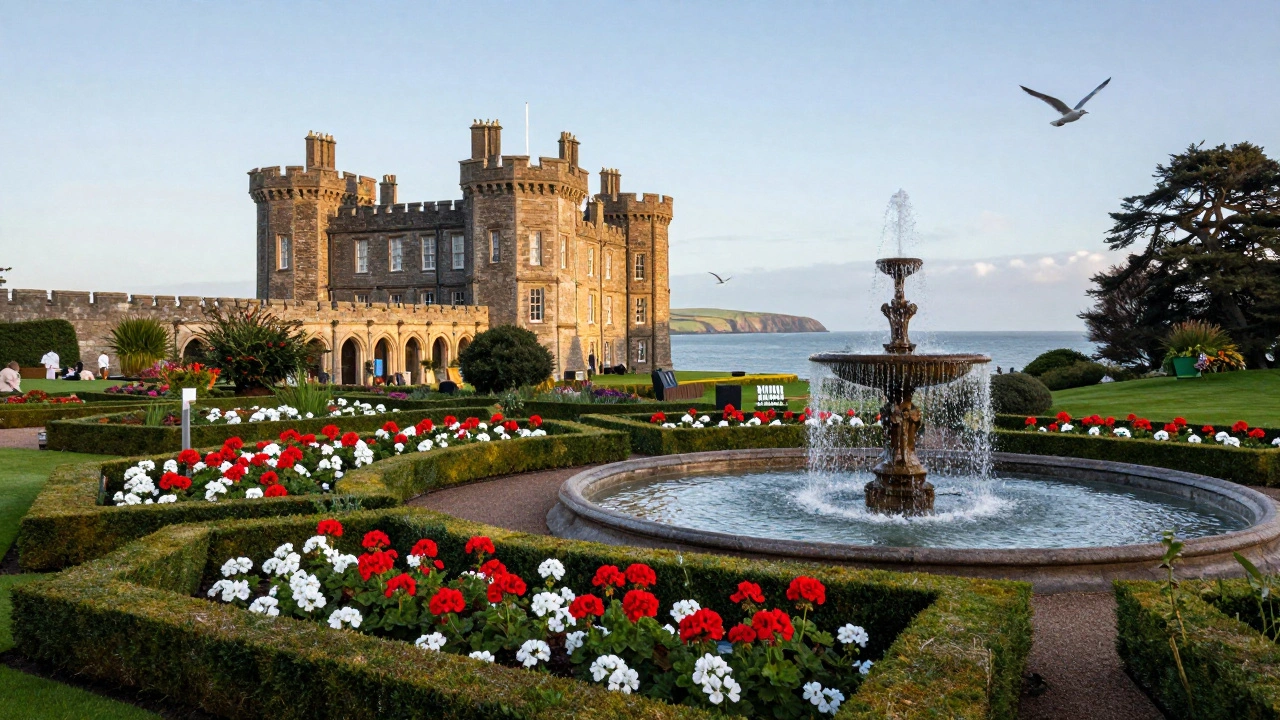
When you think of Scottish castles, you might picture misty highlands and crumbling stone towers. But Dunrobin Castle is different. Perched on the northeast coast of Sutherland, it’s not just a relic-it’s a living piece of aristocratic history with gardens that rival those of Versailles. The castle itself, with its 189 rooms and French château-style towers, draws crowds. But the real magic? It’s in the gardens.
Where the Gardens Meet the Sea
The gardens at Dunrobin stretch over 30 acres, wrapping around the castle like a green velvet cloak. Unlike most Scottish gardens that fight the wind and cold with tough shrubs and heather, Dunrobin’s designers embraced the challenge-and turned it into art. The terraced lawns slope down toward the North Sea, giving visitors a dramatic backdrop of ocean cliffs and sky. On a clear day, you can see the Isle of Eigg on the horizon. The air smells of salt and rosemary, and the sound of waves blends with the trickle of fountains.
The garden layout follows a strict formal design: geometric flower beds, symmetrical pathways, and clipped hedges that look like they’ve been trimmed by the same hand for 150 years. This isn’t accidental. The 19th-century architect Sir Charles Barry, who also worked on the Houses of Parliament, redesigned the gardens to match the castle’s grandeur. He borrowed from French and Italian styles, then softened them with local plants that could survive the harsh coastal winds.
What Makes These Gardens Unique?
Most formal gardens in Britain are tucked behind stone walls. Dunrobin’s are open to the elements. That’s why the planting choices are so deliberate. You won’t find delicate tulips here. Instead, the garden relies on hardy evergreens-yew, boxwood, and holly-that hold their shape through winter gales. In spring, the beds explode with color: hyacinths, daffodils, and early roses that bloom despite the chill. By July, the rose garden is in full swing, with over 300 varieties of hybrid teas and climbers trained along stone arches.
One standout feature is the Japanese Garden. It was added in the 1930s by the Sutherland family, who had ties to Japan through trade and diplomacy. Unlike traditional Japanese gardens that aim for quiet solitude, Dunrobin’s version is bold and colorful, blending cherry trees with rhododendrons and stone lanterns. It’s not authentic in the Zen sense-but it’s deeply personal, a reflection of a family’s global connections.
Then there’s the Parterre Garden, directly below the castle’s main terrace. This is where the garden’s French influence shines. The beds are filled with intricate patterns made from low box hedges, filled with seasonal flowers that change every six weeks. In summer, it’s all red and white geraniums. In autumn, chrysanthemums and ornamental kale take over. The design is so precise, you can see the patterns from the castle’s upper windows-a visual treat for the lords and ladies who once watched from above.
The Fountain and the Birds
At the heart of the lower garden sits the grand fountain, a 19th-century marvel powered by gravity from a hidden reservoir. It doesn’t use pumps. Water flows naturally from a hillside tank, rising 20 feet into the air before cascading back down. It’s been restored twice-once in the 1980s and again in 2022-to keep it running without electricity. Locals say the fountain’s sound carries farther on still mornings, almost like a lullaby for the castle.
The gardens are also a birdwatcher’s paradise. Over 120 species have been recorded here, including rare Arctic terns that nest on the cliffs nearby. The garden’s ponds attract kingfishers, and the old oak trees are home to red squirrels, a species that’s vanished from much of the Scottish lowlands. You’ll often see visitors with binoculars, quietly watching a peregrine falcon circle above the terraces.

History Written in Leaves and Stone
Dunrobin has been home to the Dukes of Sutherland since the 1400s. But the gardens as you see them today? They’re mostly the work of the 1st Duke’s wife, Lady Emily, in the 1840s. She traveled across Europe, studied palace gardens in France and Italy, and brought back ideas-and plants. She ordered rare rhododendrons from the Himalayas, imported marble statues from Italy, and even had a greenhouse built to grow citrus trees in the Scottish cold. The greenhouse is gone now, but its footprint remains, marked by a sunken garden filled with citrus-scented herbs.
The castle and gardens survived wars, financial crashes, and even a fire in 1884. Each time, the family rebuilt-not just the stone, but the plants. That’s why the gardens feel so alive. They’re not frozen in time. They’re a conversation between generations: the 19th-century ambition, the 20th-century pragmatism, and the 21st-century care.
What to See and Do
Plan your visit for late May to early July. That’s when the gardens are at their peak. The castle opens at 10 a.m., but the gardens are accessible from 9:30 a.m. for early visitors who want the quiet. Wear sturdy shoes-the paths are cobbled and uneven in places. There’s a free audio guide available at the entrance, but if you’re into history, ask for the gardener’s tour. It’s only offered on weekends and runs for 45 minutes. You’ll learn how they keep the hedges so sharp without electric trimmers (they use hand shears, and the team has 12 full-time gardeners).
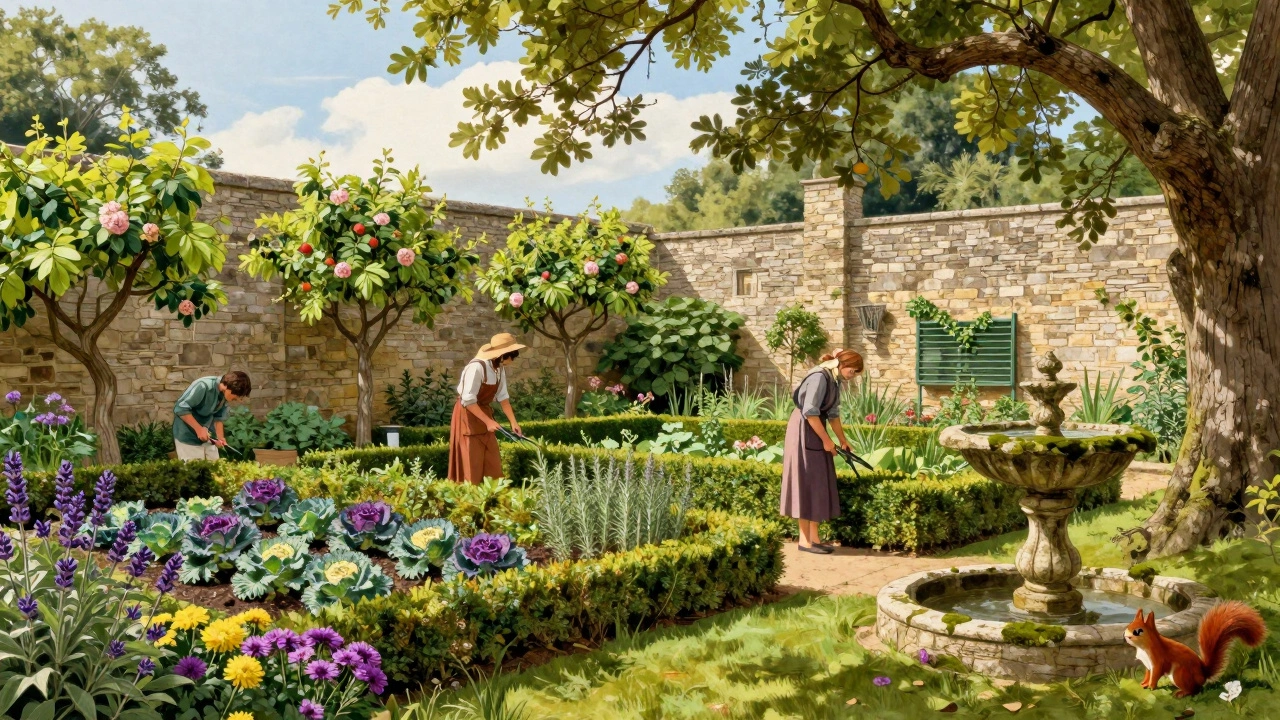
Don’t miss the Walled Garden, tucked behind a stone wall near the car park. It’s the oldest part of the garden, dating back to the 1700s. Inside, you’ll find fruit trees trained against walls, a vegetable patch that supplies the castle’s kitchen, and a small herb garden with plants used in medieval remedies-lavender for headaches, sage for sore throats, and rosemary for memory.
There’s also a children’s play area shaped like a pirate ship, but it’s tucked away so it doesn’t clash with the formal design. Parents appreciate that-no one wants their child’s laughter to drown out the fountain.
Why Visit Dunrobin When There Are So Many Castles?
Scotland has over 1,000 castles. Many are ruins. Some are museums. Dunrobin is both. It’s a home. The family still lives in part of the castle, and the gardens are maintained with the same care they’ve had for centuries. You’re not just looking at history-you’re walking through it. The roses were planted by someone’s great-great-grandmother. The fountain still works because someone decided it was worth fixing.
It’s rare to find a place where grandeur and intimacy live side by side. At Dunrobin, you can stand on the top terrace and feel the weight of centuries. Then turn around and sit on a bench near the rose garden, watching a bumblebee buzz from bloom to bloom. That’s the magic. It’s not just about the scale. It’s about the care.
How to Get There
Dunrobin Castle is near the village of Golspie, about 12 miles northeast of Brora on the A9. The nearest train station is Golspie, with direct services from Inverness and Edinburgh. From the station, it’s a 10-minute walk or a short taxi ride. There’s ample parking, including spaces for electric vehicles and coaches. The gardens are open daily from April through October, 9:30 a.m. to 6 p.m. In November and March, hours are shorter-check the official website before you go. Winter visits are limited, but the castle’s interior remains open for guided tours.
What Visitors Say
“I came for the castle. I stayed for the garden.” That’s a quote from a visitor’s review posted in 2024. It’s not unusual. Many people plan a quick stop, then end up spending three hours wandering the paths. One couple from Australia told the staff they’d traveled across three continents and hadn’t seen a garden that felt so alive. “It didn’t look like a showpiece,” they wrote. “It looked like someone still loved it.”
Final Thoughts
Dunrobin Castle Gardens aren’t just beautiful. They’re a testament to persistence. In a country where nature often reclaims what humans build, these gardens have held their ground-not by force, but by devotion. The roses bloom. The fountain flows. The hedges stay sharp. And every year, more people come to see what happens when human artistry meets the wild north.
Are Dunrobin Castle Gardens open year-round?
The gardens are open daily from April through October, with hours from 9:30 a.m. to 6 p.m. In November and March, the gardens are open on weekends only, with shorter hours. The castle interior remains accessible for guided tours during winter months, but the outdoor gardens are closed due to weather and maintenance.
Is there an entry fee for the gardens?
Yes, there is a combined ticket for the castle and gardens. As of 2025, adult tickets cost £19.50, with discounts for seniors, students, and families. Children under five enter free. Garden-only access is not available-the ticket includes entry to both the castle and the grounds.
Can you picnic in the gardens?
Picnicking is allowed only in designated areas near the car park and the Walled Garden entrance. You cannot picnic on the formal terraces or near the fountains to protect the planting schemes. There’s a café on-site serving light meals, sandwiches, and hot drinks if you prefer not to bring your own.
Are the gardens wheelchair accessible?
Most of the main garden paths are paved and wheelchair accessible, including the terraces and the Walled Garden. However, some areas, like the Japanese Garden and the lower slopes near the sea, have steep or uneven terrain. A mobility scooter loan service is available free of charge at the entrance-just ask at the ticket desk.
Do the gardens have any rare or unusual plants?
Yes. The garden holds several rare specimens, including a 200-year-old magnolia tree brought from China in the 1820s, and a collection of Himalayan rhododendrons that bloom in late spring. The herb garden includes plants like tarragon and feverfew that were used in 18th-century medicine. The rose garden has over 300 varieties, including a rare 1830s hybrid called ‘Dunrobin’s Pride’ that only grows here.
Comments (12)
-
Mark Brantner December 12, 2025ok but like... who even HAS 189 rooms?? i bet the cleaning staff gets a free castle vacation just for showing up. also the fountain runs on GRAVITY?? that’s wild. i thought we were past this in 2025.

-
Kate Tran December 13, 2025i went last june and honestly? the rose garden nearly made me cry. the scent just hits you outta nowhere. also the gardener’s tour? 100% worth it. they use hand shears and i swear one guy’s got a 30-year relationship with that boxwood hedge.

-
amber hopman December 15, 2025i love how this place doesn’t try to be ‘authentic’-it’s just deeply personal. the japanese garden isn’t zen, it’s a family love letter. and that’s way more beautiful than any perfectly raked gravel.

-
Jim Sonntag December 16, 202512 full-time gardeners? for a garden? in scotland? i’m impressed. also the fact they still use gravity for the fountain is the kind of dumbass genius i respect. someone’s ancestor just said ‘nah, we ain’t用电’ and now it’s a tourist attraction.

-
Deepak Sungra December 18, 2025bro this is just a rich person’s fantasy. like sure the roses are pretty but imagine having to trim hedges every day for 200 years. someone’s soul is in that boxwood. also why is the fountain still working? someone’s gotta be magic.

-
Tasha Hernandez December 19, 2025i’m not saying it’s fake but… who decided the roses were worth saving after the fire? and why does no one talk about how the family probably just used slave labor to plant all those Himalayan rhododendrons? history is pretty when you ignore the blood.

-
Anuj Kumar December 20, 2025this is all propaganda. castles are for tourists. the real scotland is pubs and rain. someone spent a fortune to make grass look like a grid. that’s not art. that’s control.

-
Christina Morgan December 21, 2025the fact that the castle still has people living in it makes this feel alive in a way no museum ever could. it’s not a monument-it’s a home. and the way the garden adapts season to season? that’s real stewardship.

-
Jack Gifford December 22, 2025just a heads up-the ‘Dunrobin’s Pride’ rose? it’s a hybrid tea from 1837. the original cutting was smuggled in by a botanist who got kicked out of the royal gardens for being too obsessed. that’s the kind of drama you don’t get in brochures.

-
Sarah Meadows December 24, 2025this is why america needs to stop importing european elitism. a garden this manicured? it’s not nature-it’s a performance. and who pays for this? taxpayer money? nope. just trust funds and inherited guilt.

-
Nathan Pena December 26, 2025The architectural synthesis of French formalism with Scottish coastal pragmatism is, frankly, a fascinating case study in colonial horticultural appropriation. The Sutherlands didn’t ‘adapt’-they imposed a Eurocentric aesthetic onto a landscape that had its own ecological logic. The Japanese garden? A performative exoticism masquerading as cultural appreciation. And the fountain? A monument to unsustainable aristocratic labor. This isn’t ‘devotion’-it’s performance art for the wealthy.

-
Tamil selvan December 27, 2025I must respectfully disagree with the tone of some comments above. The care, the continuity, the sheer human dedication behind these gardens is not elitism-it is reverence. For 600 years, this family has chosen to nurture, not dominate. The hedges are trimmed by hand because someone decided beauty is worth the effort. The fountain flows because someone believed in legacy over convenience. This is not a performance. It is a quiet, stubborn act of love, repeated every day, in rain or wind, for no audience but the sea and the birds. And perhaps that is the most noble thing of all.
